
Artificial intelligence systems like ChatGPT are notorious for being power-hungry. To tackle this challenge, a team from the Centre for Optics, Photonics and Lasers (COPL) has come up with an optical chip that can transfer massive amounts of data at ultra-high speed. As thin as a strand of hair, this technology offers unrivalled energy efficiency.
Published in Nature Photonics, the innovation harnesses the power of light to transmit information. Unlike traditional systems that rely solely on light intensity, this chip also uses the phase of light, in other words, its shift.
By adding a new dimension to the signal, the system reaches unprecedented performance levels, all while maintaining a tiny size. «We're jumping from 56 gigabits per second to 1,000 gigabits per second,» says PhD student Alireza Geravand, the first author of the study.
The equivalent of 100 million books transferred in 7 minutes
The research team sees massive potential for training AI models. «At 1,000 gigabits per second, you could transfer an entire training dataset—the equivalent of over 100 million books—in under seven minutes. That's about the time it takes to brew a cup of coffee,» Geravand adds. And all of this would only consume 4 joules of energy—just enough to heat one millilitre of water by one degree Celsius.
The breakthrough relies on microring modulators—tiny ring-shaped devices made from silicon that can manipulate light to encode information. The system uses two pairs of rings: one for intensity, the other for phase.
Today's AI data centres rely on tens or even hundreds of thousands of processors, communicating like neurons in the brain. Each processor spans a few millimetres, but when you add it all up, the infrastructure quickly becomes enormous, and so does the energy to power it. «You end up with a system that's kilometres long,» says the PhD student. With their new technology, the units can communicate quickly and efficiently as if they were only a few metres apart—a considerable advantage as AI demand continues to grow.
This technology could hit the market in the coming years. Companies like NVIDIA are already starting to use microring modulators albeit limited to light intensity.
«Ten years ago, our lab laid the groundwork for this technology. Today, we're taking it to the next level. Maybe in a few years, the industry will catch up, and this innovation will make its way into the real world,» Geravand concludes.
Reference
Ultrafast coherent dynamics of microring modulators
Alireza Geravand, Zibo Zheng, Farshid Shateri, Simon Levasseur, Leslie A. Rusch & Wei Shi
https://www.nature.com/articles/s41566-025-01686-1
Université Laval

Scientists at Rice University and University of Houston have developed an innovative, scalable approach to engineer bacterial cellulose into high-strength, multifunctional materials. The study, published in Nature Communications, introduces a dynamic biosynthesis technique that aligns bacterial cellulose fibers in real-time, resulting in robust biopolymer sheets with exceptional mechanical properties.
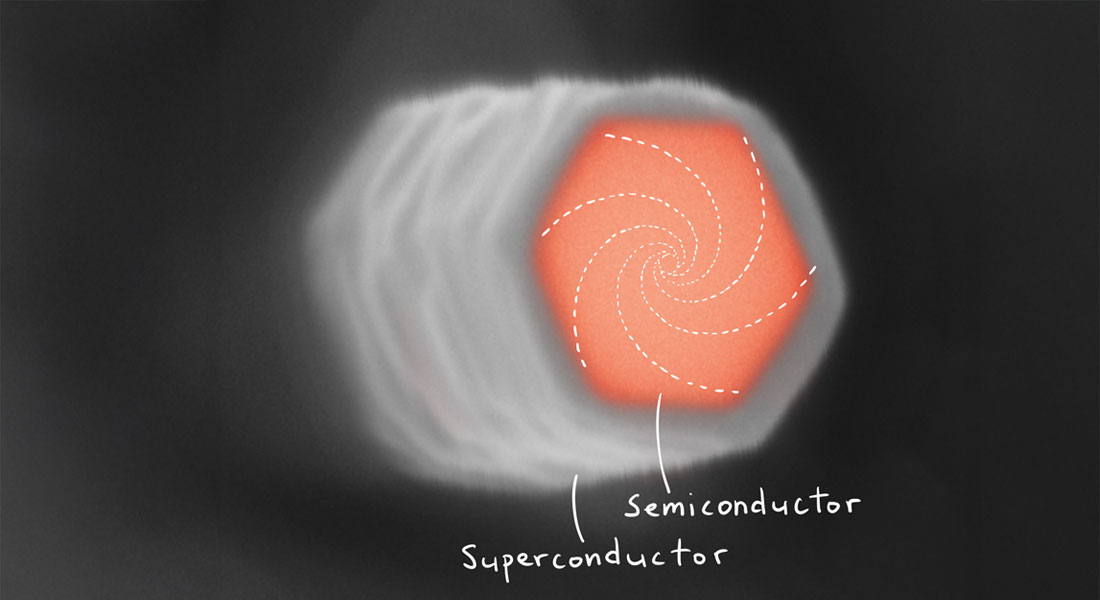
In a growing and very competitive research landscape in quantum, this work demonstrates the versatility of the semiconductor–superconductor platform to realize and study new types of quantum states.

On July 8, 2025, physicists from Aalto University in Finland published a transmon qubit coherence dramatically surpassing previous scientifically published records. The millisecond coherence measurement marks a quantum leap in computational technology, with the previous maximum echo coherence measurements approaching 0.6 milliseconds.
This week in nanotech
$18.9M raised
4 funding rounds · 34 deals tracked
New products
 Ti-WCMBN Nanomaterialia Featured
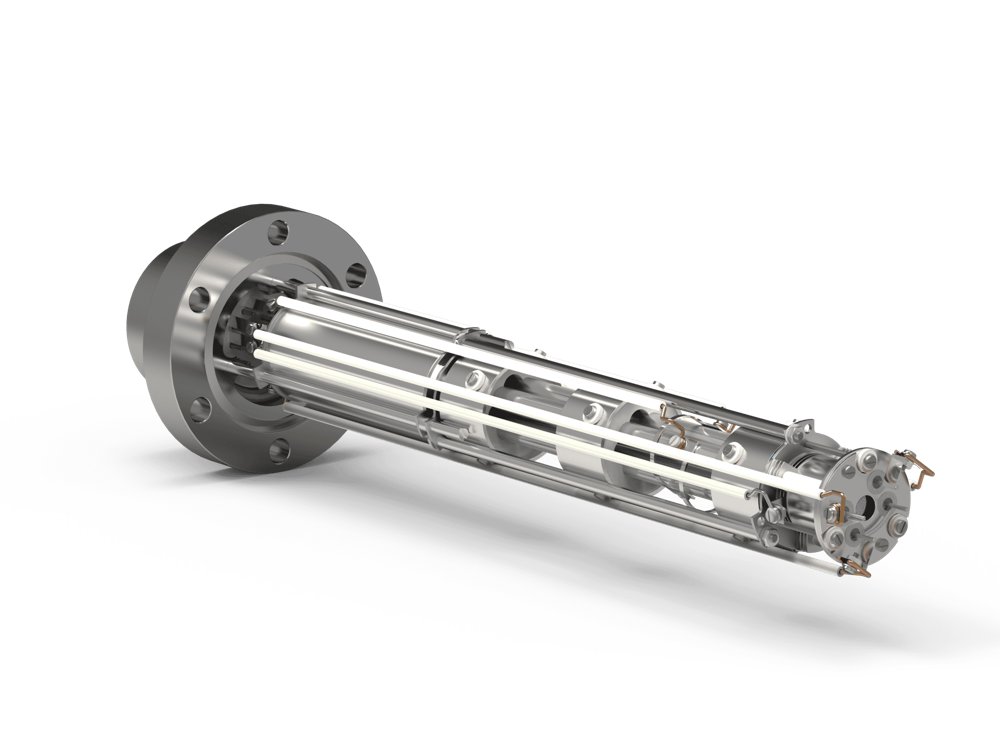 DLS-1 Mass Spectrometer for Fusion Gas AnalysisHiden Analytical Featured
 CruciblesBasis Materials
Market insights
Last 30 days: Semiconductors & Electronics was the busiest vertical: 52 of 170 events (31%).
Money raised per month