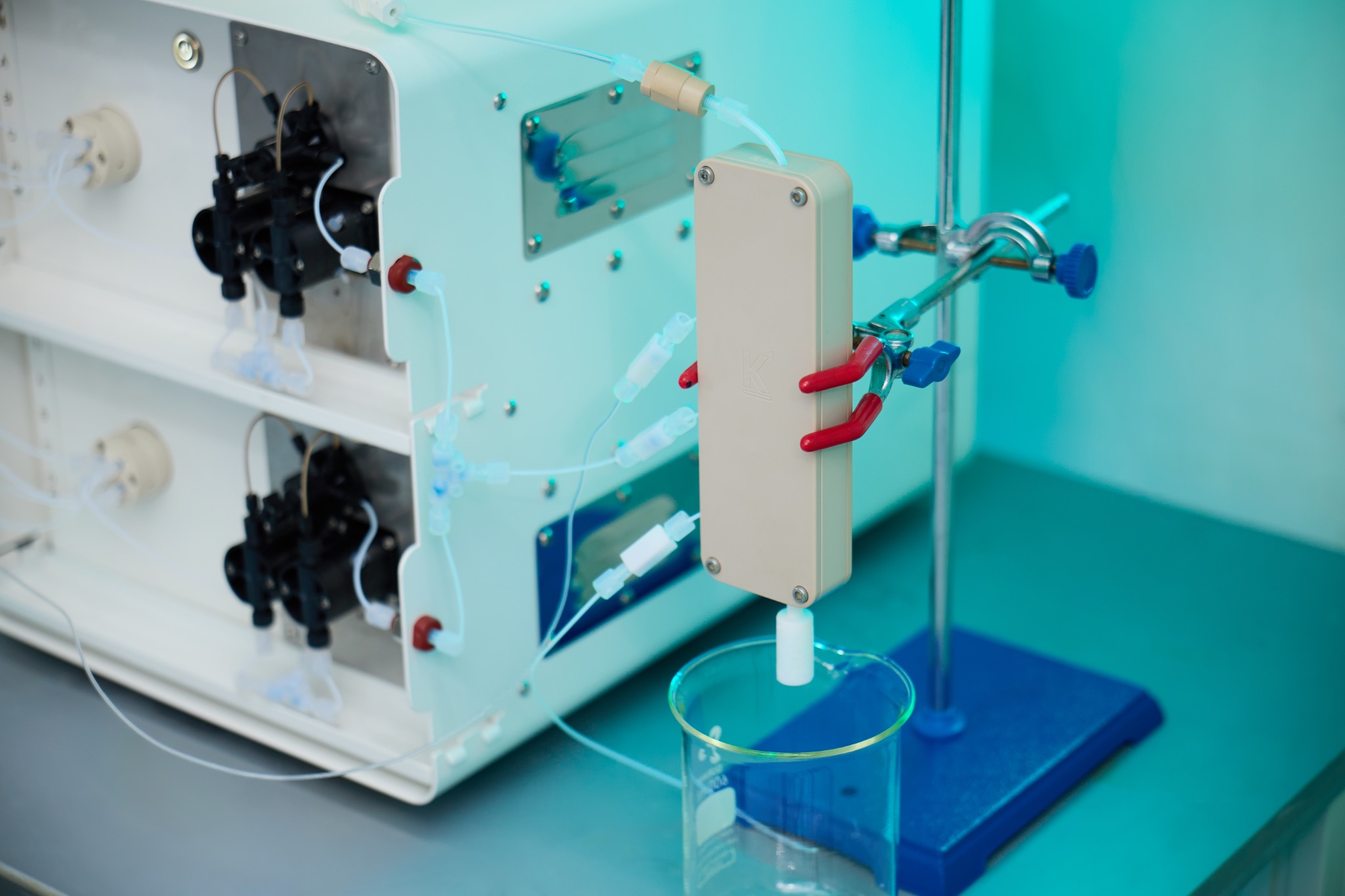
Accelerated Materials has introduced the K1 Pro, an automated four-reagent microreactor for 1 kg/day synthesis of nanoparticles. The company said the system is built around its patented annular flow reactor, a thin liquid film driven by a high-velocity gas core.
The reactor gives shear rates up to 10⁶ s⁻¹ and micromixing in as little as 0.5 ms. According to the company, this provides precise control of particle size, morphology and crystallinity without extreme temperatures or pressures.
The K1 Pro has up to 4 continuous dosing and selector valves, which let users switch up to 16 reagents inline and remove the task of reagent preparation. Automated priming and rinsing between runs is intended to increase throughput, and 5 high-precision pressure sensors collect process data.
The system includes AMLearn, described as code free AI optimisation across up to 25 variables and 4 objectives. The company says this can reduce experimental workload by as low as 50% compared to conventional factorial design.
The K1 Pro produces particles from 3 nm to microns, including metal oxides, quantum dots, MOFs, 2D materials, metals and organic nanoparticles. It has a benchtop footprint, fits a standard fume hood and replaces a 50L reactor. Applications cited include semiconductors, pharmaceuticals, energy storage and speciality chemicals.
Processes developed on the K1 Pro can move to the company's K10 and K100 systems with minimal reconfiguration. Accelerated Materials describes this as the first commercial route from 1 to 100 kg/day without re-optimising.
Source: Accelerated Materials news
Quanova has selected Quandela's MosaiQ quantum computer for a quantum research and education program at Quang Trung University in Quy Nhơn, Gia Lai, with support from Nam A Bank. The project will lead to the deployment of Vietnam's first quantum computer.
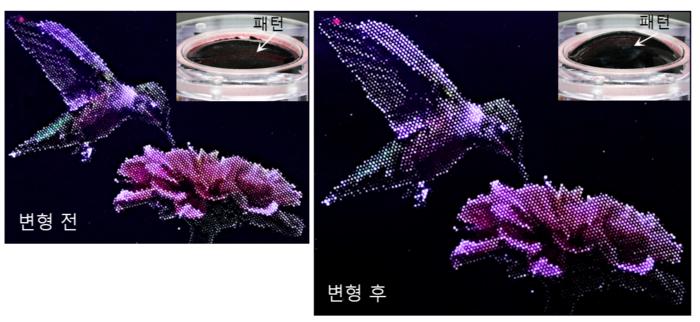
A joint team has created the first ultra-high-resolution stretchable quantum dot display that keeps its image sharp while stretching like skin. By chemically bonding quantum dots to an elastic polymer and stamping fine patterns via a new LIFT process, they reached 16,000 pixels per inch and 53,300 nits, far surpassing earlier stretchable devices, with stable operation at 65% elongation. The advance could accelerate commercial wearable displays and electronic skin.

Breakthrough allows researchers to create materials with tailored properties, unlocking unprecedented control over their optical and electro
This week in nanotech
$558.4M raised
6 funding rounds · 37 deals tracked
New products
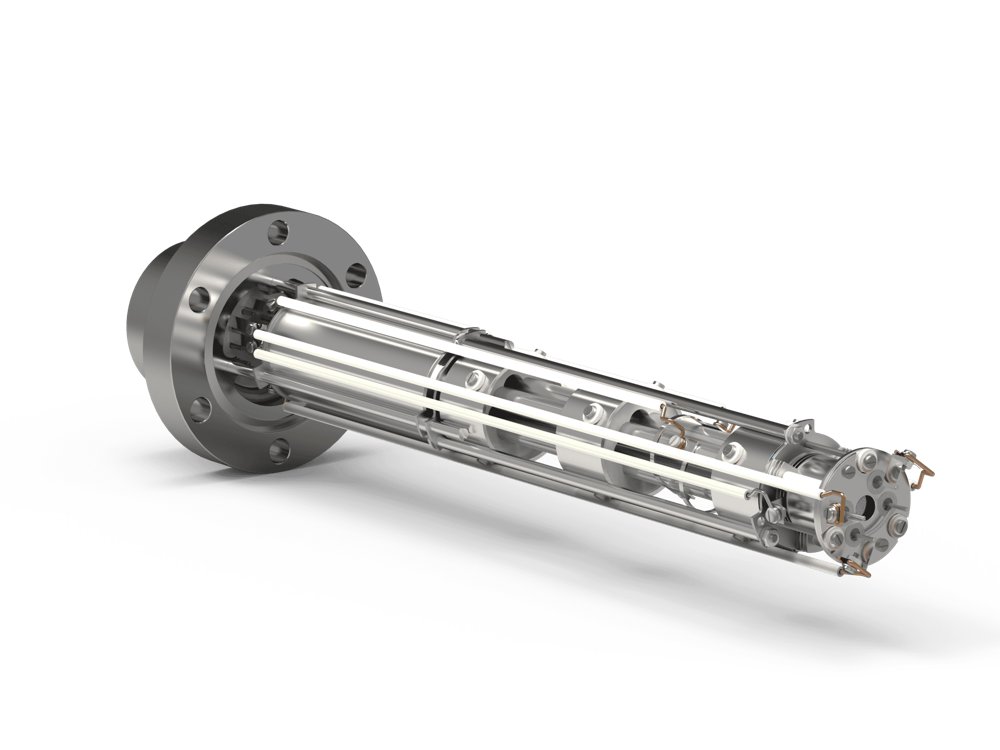 DLS-1 Mass Spectrometer for Fusion Gas AnalysisHiden Analytical Featured
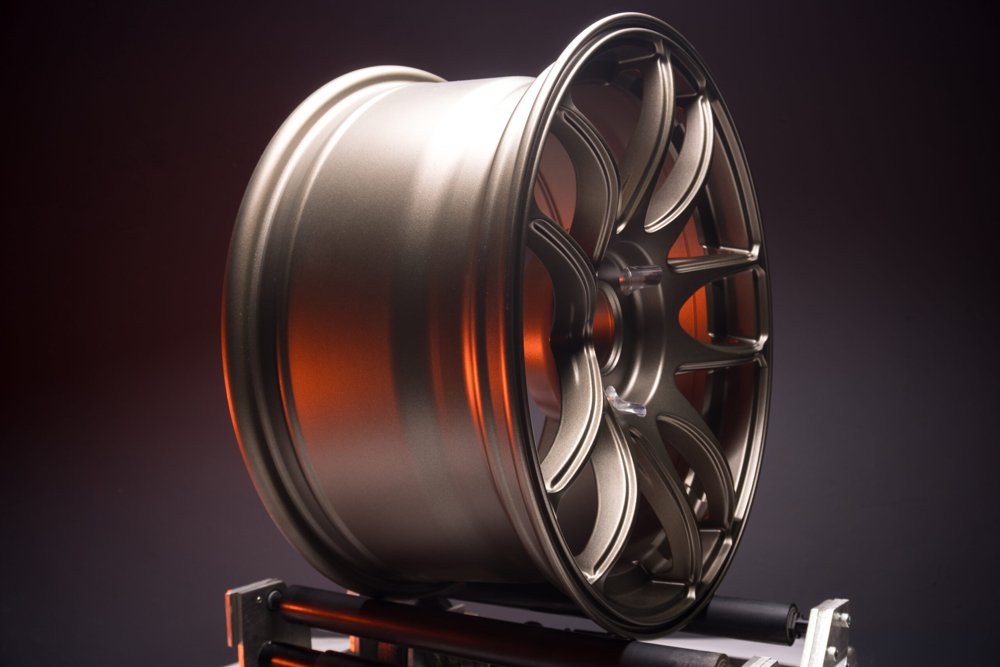 Ti-WCMBN Nanomaterialia Featured
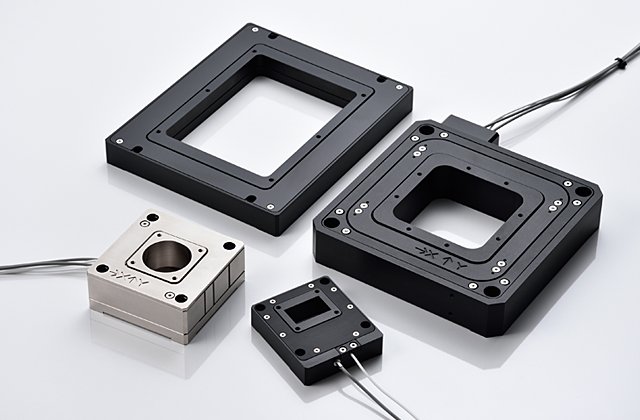 PKVH / PKVL ZAxis With an opening modelTHK PRECISION CO.,LTD.
Market insights
Last 30 days: Quantum Technologies drew the most money: $2.15B.
Money raised per month