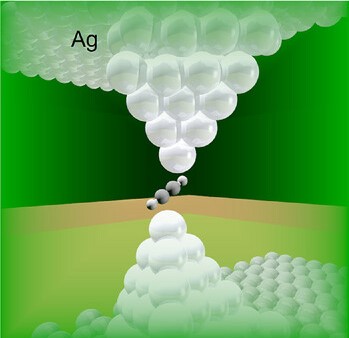
Silver-based atomic switches that create stable electrical connections between individual molecules and electrodes have been developed by researchers from Japan, addressing a key challenge in wiring molecular electronics. The switch operates by forming and breaking silver atomic filaments when a voltage is applied and reversed, corresponding to the “on” and “off” states. This method enables the scalable integration of molecular components, paving the way for ultra-compact and energy-efficient circuits built from single molecules.
Future electronic circuits may not be built from silicon, but from individual molecules. Scientists have already demonstrated molecular electronics functioning as rectifiers, switches, and memory units. Such devices are expected to be smaller and more energy-efficient than today’s electronics. However, a key challenge lies in forming stable electrical contact between molecules and metal electrodes, which is essential for assembling individual components into a functional circuit.
One solution to this problem is the use of an atomic switch (AS), a clever alternative to traditional mechanical switch. Instead of moving parts, AS relies on chemical reactions that move metal ions or trigger redox changes to create and break conductive paths. This makes it simpler, more reliable, and easier to integrate into next-generation molecular circuits.
Towards realizing the use of AS in molecular circuits, researchers from Institute of Science Tokyo (Science Tokyo), Japan, have now demonstrated a silver-based AS that can be used to connect individual molecules within a solid-state environment. The study, published online in the journal Small on October 25, 2025, marks a step toward creating molecular junctions capable of linking different molecular electronic components.
The research team was led by Associate Professors Satoshi Kaneko and Tomoaki Nishino, together with graduate students Dr. Akira Aiba and Mr. Sekito Nishimuro from Science Tokyo, in collaboration with Dr. Tohru Tsuruoka and Dr. Kazuya Terabe from the National Institute for Materials Science and Dr. Marius Buerkle from the National Institute of Advanced Industrial Science and Technology.
“The utilization of AS enables stable molecular wiring within a solid-state environment, allowing voltage to be applied directly to functional molecules. This approach eliminates the need for mechanical manipulation of electrodes, simplifying device design and enabling parallelization and integration, which are key steps toward scalable molecular electronics,” says Kaneko.
The AS forms on a thin film of tantalum oxide (Ta2O5). Acetylene gas molecules are introduced, and a small voltage is applied to form silver atomic filaments that connect to these molecules. When a positive voltage is applied, silver atoms move and form a filament that bridges the electrodes, turning the switch “on.” Reversing the voltage breaks the filament, turning the switch “off.”
Upon the rupture of the filament, an acetylene molecule becomes trapped between the remaining silver atoms, forming a molecular junction. In this state, the acetylene molecule itself bridges the gap between the electrodes and allows current to pass through. A further change in voltage eventually breaks this molecular junction, completing the switching cycle. The Ta2O5-based silver AS operated stably at low voltages (around 0.3 V) under both ultra-high vacuum conditions and in an acetylene environment.
The team confirmed that their switch worked as designed, using a technique called inelastic electron tunneling spectroscopy. This method detects the tiny vibrations of molecules when electricity passes through them. The acetylene molecules produced clear vibrational signals, showing they were directly connected to the silver filament and helping to carry current. Moreover, the device’s conductance showed values that ranged from 10-3– 10-1 G0, typical of single-molecule junctions, confirming that the electrical connection existed at the molecular level.
This new technique removes the need for physically adjusting electrodes to form molecular junctions, a process that has long limited molecular electronics to laboratory experiments. By using atomic switches, multiple molecular junctions can be created automatically and simultaneously, paving the way for a reliable and scalable fabrication method.
“The findings are expected to contribute significantly to the development of energy-efficient molecular devices, such as switches and sensors, that leverage the quantum properties of molecules,” says Kaneko.
This breakthrough brings us closer to ultra-compact and energy-efficient devices, where entire electronic circuits are constructed from single molecules.
Reference
Redox-Induced Atomic Switch as Platform for Molecular Electronics Devices
Akira Aiba, Marius Buerkle, Satoshi Kaneko, Tohru Tsuruoka, Sekito Nishimuro, Kazuya Terabe, Tomoaki Nishino
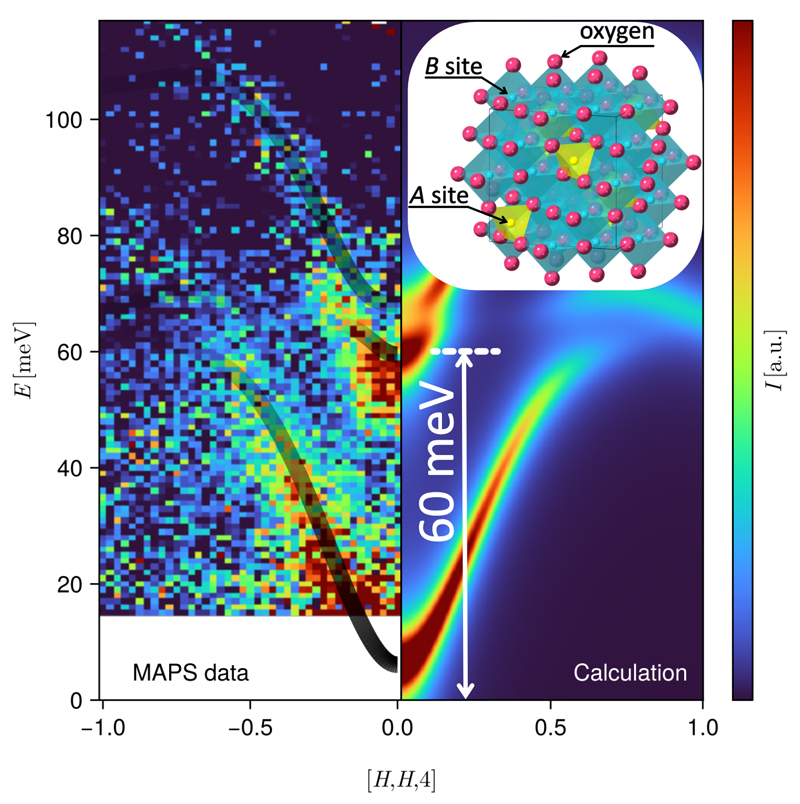
By measuring the spin dynamics over a broad energy range with neutron spectroscopy on a single crystal, the team identified a large band splitting of about 60 millielectronvolts (meV) between two magnon branches, a 3 meV anisotropy gap in the lower branch, and an avoided crossing near 75 meV in the upper branch. The researchers were then able to reproduce these important features quantitatively using theoretical calculations based on spin-wave theory.
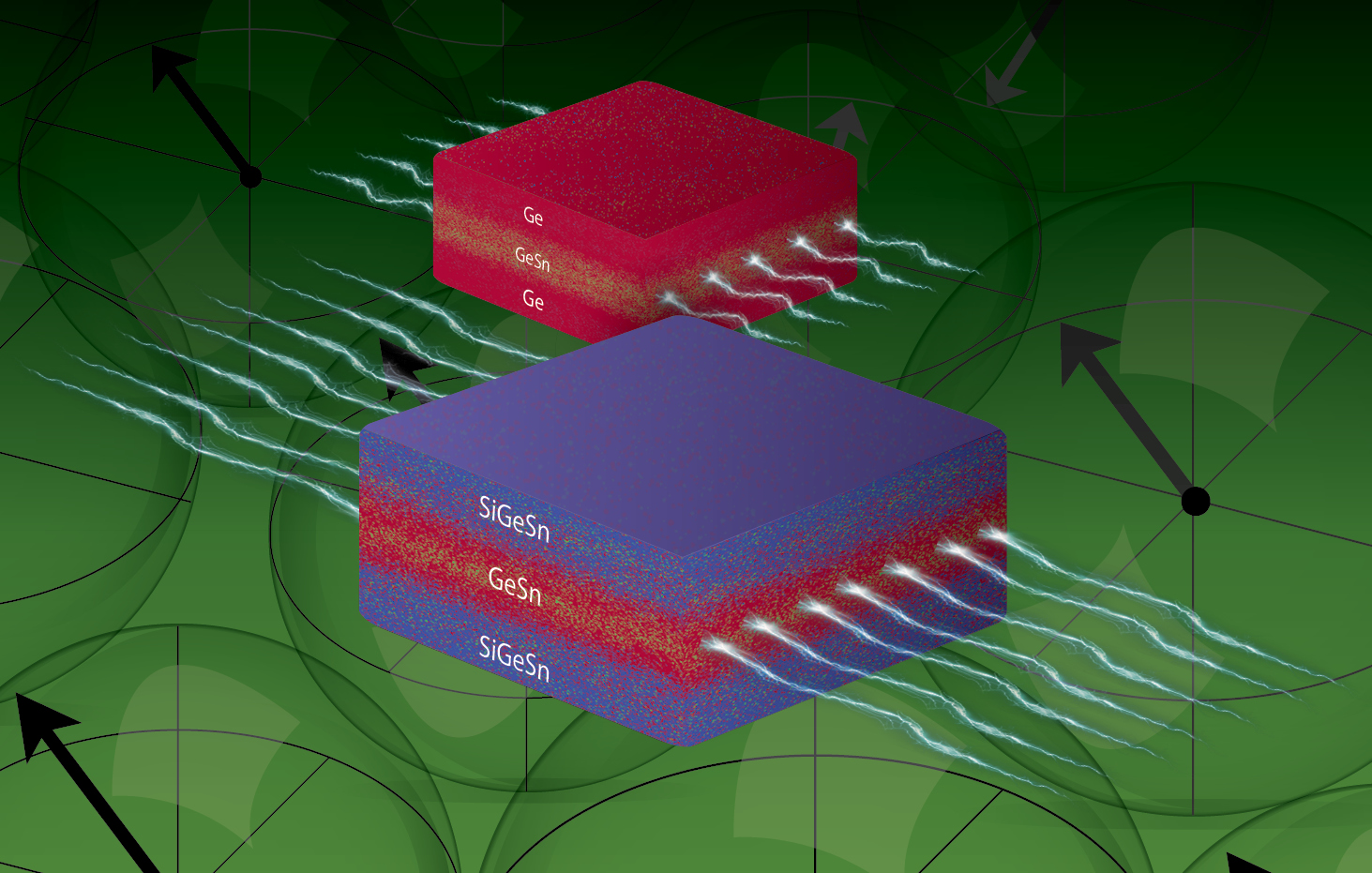
To visualize a quantum well, imagine a marble rolling in a groove between two raised edges. The marble can only move back and forth. A quantum well controls electrical current in a similar way, confining it in an ultrathin layer of material. This confinement improves how quickly you can encode information in light. The new paper shows how to make these wells work even better, whether for quicker downloads and smoother online experiences or for better qubits and more efficient transmission of...

It is something like the “Holy Grail” of physics: unifying particle physics and gravitation. The world of tiny particles is described extremely well by quantum theory, while the world of gravitation is captured by Einstein’s general theory of relativity. But combining the two has not yet worked – the two leading theories of theoretical physics still do not quite fit together. There are many ideas for such a unification – with names like string theory, loop quantum gravity, canonical quantum g...
This week in nanotech
$18.9M raised
4 funding rounds · 28 deals tracked
New products
 Nion-compatible In Situ STEM Holders for Electrical BiasingHummingbird Scientific Featured
 DLS-1 Mass Spectrometer for Fusion Gas AnalysisHiden Analytical Featured
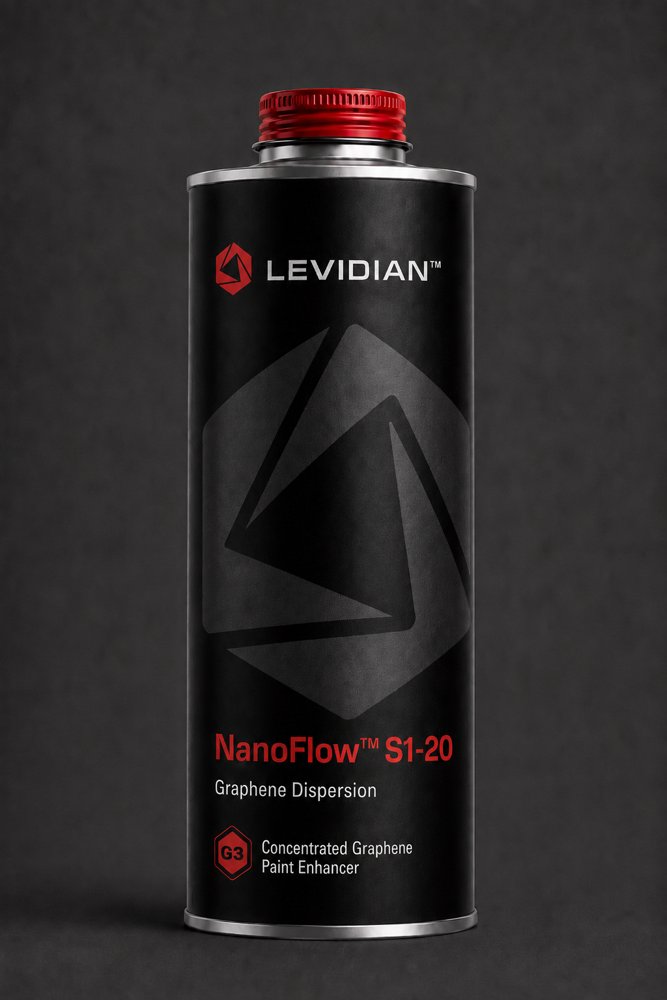 NanoFlow® S1-20Levidian
Market insights
Last 30 days: Semiconductors & Electronics was the busiest vertical: 44 of 143 events (31%).
Money raised per month