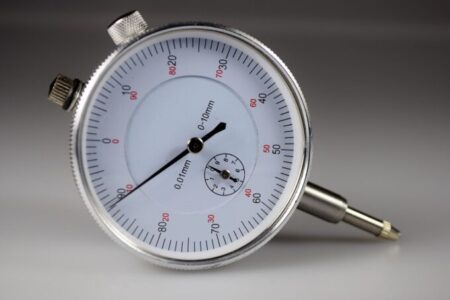
Baikowski supplies 3N and 4N high-purity α-alumina powders in binder-free spray-dried and Ready-to-Press forms for ceramic precision balls and reference spheres used in metrology and dimensional control. MgO-doped formulations are also available for specific densification and grain-growth requirements.
The company lists BA15 and PBA6 spray-dried grades, available in binder-free and Ready-to-Press forms. BA15-W | Baikalox® is a 4N, 100% α-alumina with a typical specific surface area of 17 m²/g. A binder-containing version, BA15-WL, is available for Ready-to-Press use.
PBA6-WL | Baikalox® is a 3N Ready-to-Press α-alumina with a BET specific surface area of 4 m²/g. PBA6-W is the binder-free spray-dried option. PBA6-WL contains 500 ppm MgO.
The company states that powder selection should address green-density uniformity, densification and microstructure control. It cites Lu and Lannutti, who found that initial density gradients in spray-dried alumina compacts adversely affected dimensional tolerances after sintering.
Baikowski supports powder selection and formulation for uniaxial pressing, cold isostatic pressing, ceramic injection molding and suspension-based forming. ZTA solutions are offered for alumina–zirconia composites.
Source: Baikowski news
AlixLabs AB has started a six-month evaluation project to assess its APS™ technology for advanced semiconductor patterning within the NanoIC pilot line, coordinated by imec.
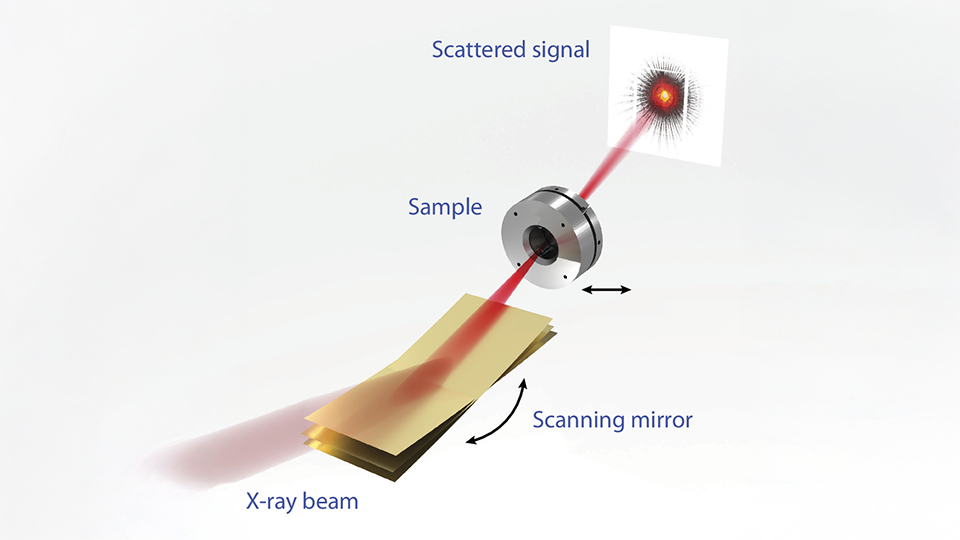
Sometimes a change of perspective can make a world of difference. A team of scientists from PETRA III, Centre for X-ray and Nanoscience (CXNS) at DESY, and MAX IV has rearranged the method in which one can use an X-ray beam to image a sample without using high-quality lenses. The method, called ptychography, has been widely used at synchrotrons and free-electron lasers to analyse the inner workings of materials quickly enough while avoiding major damage to the sample by the X-rays. The team h...
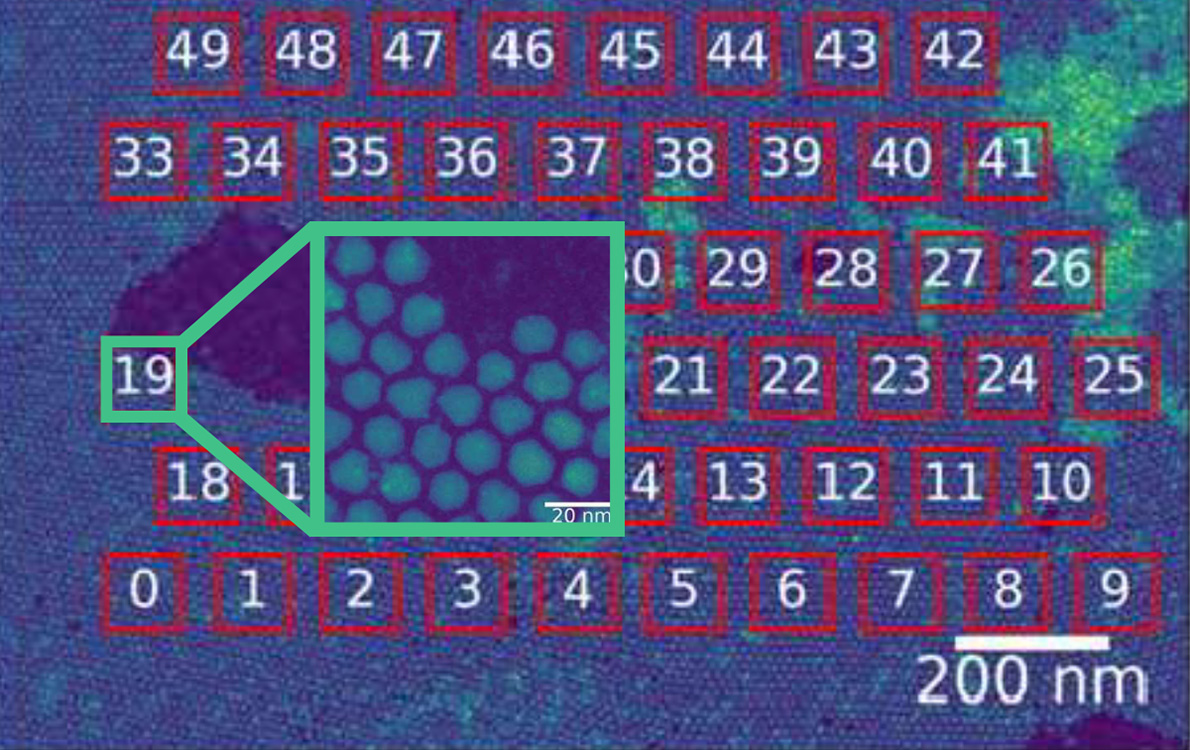
“We now have a way for people to interact with a detector on one side and a supercomputer on the other side with a simple webpage called Distiller in the middle,” said Peter Ercius, interim facility director of the National Center for Electron Microscopy (NCEM) at Berkeley Lab’s Molecular Foundry. “We’re moving towards getting huge amounts of data processed in an automated way with minimal human intervention.”