University of Birmingham
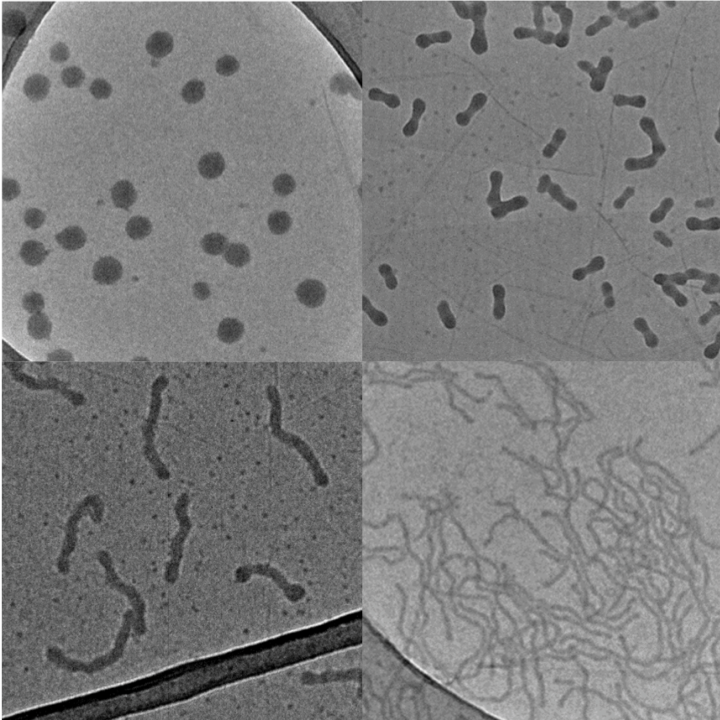
A new technique in chemistry could pave the way for producing uniform nanoparticles for use in drug delivery systems.
Scientists have been investigating how to make better use of nanoparticles in medicine for several decades. Significantly smaller than an average cell, nanoparticles are more similar in size to proteins. This makes them good at interacting with biomolecules and transporting drug molecules attached to their surface across cell membranes.
To date, however, only a handful of nanoparticle-based drugs have succeeded in reaching the clinic. This is because of the challenges in controlling the size and shape of nanoparticles - and understanding fully how these variables affect the way the particles behave in the body.
In a new study, published in Nature Communications, researchers from the University of Birmingham and the University of Bath have demonstrated a technique that will allow chemists to more closely control the size and shape of nanoparticles.
Dr Tom Wilks, in the University of Birmingham's School of Chemistry, is one of the lead authors of the study. He explains: "If you change the shape of a nanoparticle from, for example, a spherical to a cylindrical shape, others have shown that this can have a dramatic effect on how it interacts with cells in the body, and how it is distributed through the body. By being able to control the size and shape, we can start to design and test nanoparticles that are exactly suited to an intended function."
Currently, to produce differently shaped nanoparticles for drug delivery scientists have to develop a bespoke chemical synthesis for each, which can be a laborious, time-consuming and expensive process.
The technique developed by the Birmingham researchers offers a deceptively simple way of streamlining this process. The team started with a base nanoparticle, made of a polymer, and added a second polymer in solution. The polymers are designed so they want to bond to each other, so the second polymer is driven into the core of the nanoparticle, forcing it to expand. The exact size and shape of the nanoparticle is then determined simply by how much of the second polymer is added.
"The precise way that these polymers were designed and the control we have over how much of the second polymer is added means we can accurately predict the shape of the nanoparticle, and have a high degree of control over its size," explains Dr Wilks.
The team believe the process could also be reproduced with other polymers, meaning the process could be adapted for any number of applications involving nanoparticles, from photonics to fuel cells.
"This is an important first step in being able to effectively harness nanoparticles for a whole host of applications, but there are a lot of questions still to answer," says Dr Wilks. "For example, in the field of drug delivery, we need to know much more about what would happen once drug molecules are introduced to our nanoparticles, as well as how the sizes and shapes of the nanoparticles can be optimised for different uses."
Anisotropic polymer nanoparticles with controlled dimensions from the morphological transformation of isotropic seeds
Zan Hua, Joseph R. Jones, Marjolaine Thomas, Maria C. Arno, Anton Souslov, Thomas R. Wilks & Rachel K. O’Reilly
Nature Communications volume 10, Article number: 5406 (2019)
DOI: 10.1038/s41467-019-13263-6
Contact information:
Tom Wilks
Postdoctoral researcher at School of Chemistry, University of Birmingham
t.r.wilks@bham.ac.uk
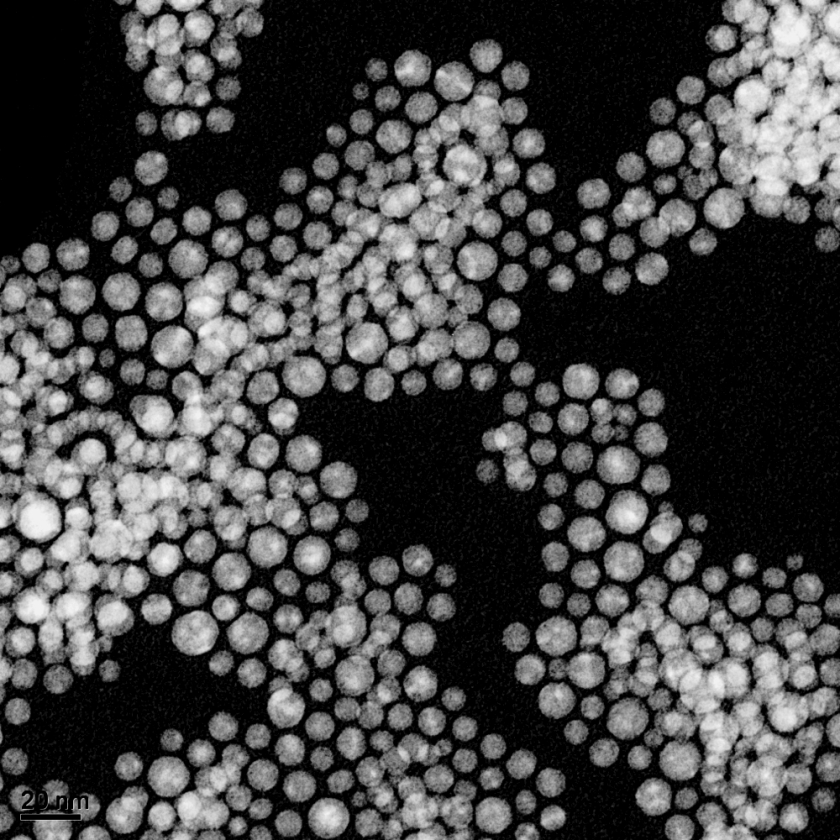
Silver nanoparticles with diameters of ~10 nm deliver the best performance as electrocatalysts. The silver particles are sprayed onto the electrode together with a conductive carbon powder. The ideal mixture consists of 20 per cent by mass silver and 80 per cent by mass carbon powder. This image was taken using a transmission electron microscope (TEM). © HZB Via electrolysis, CO₂ can be reduced to CO, a raw material for further chemical products such as fuels. Within the GreenQuest Project,...
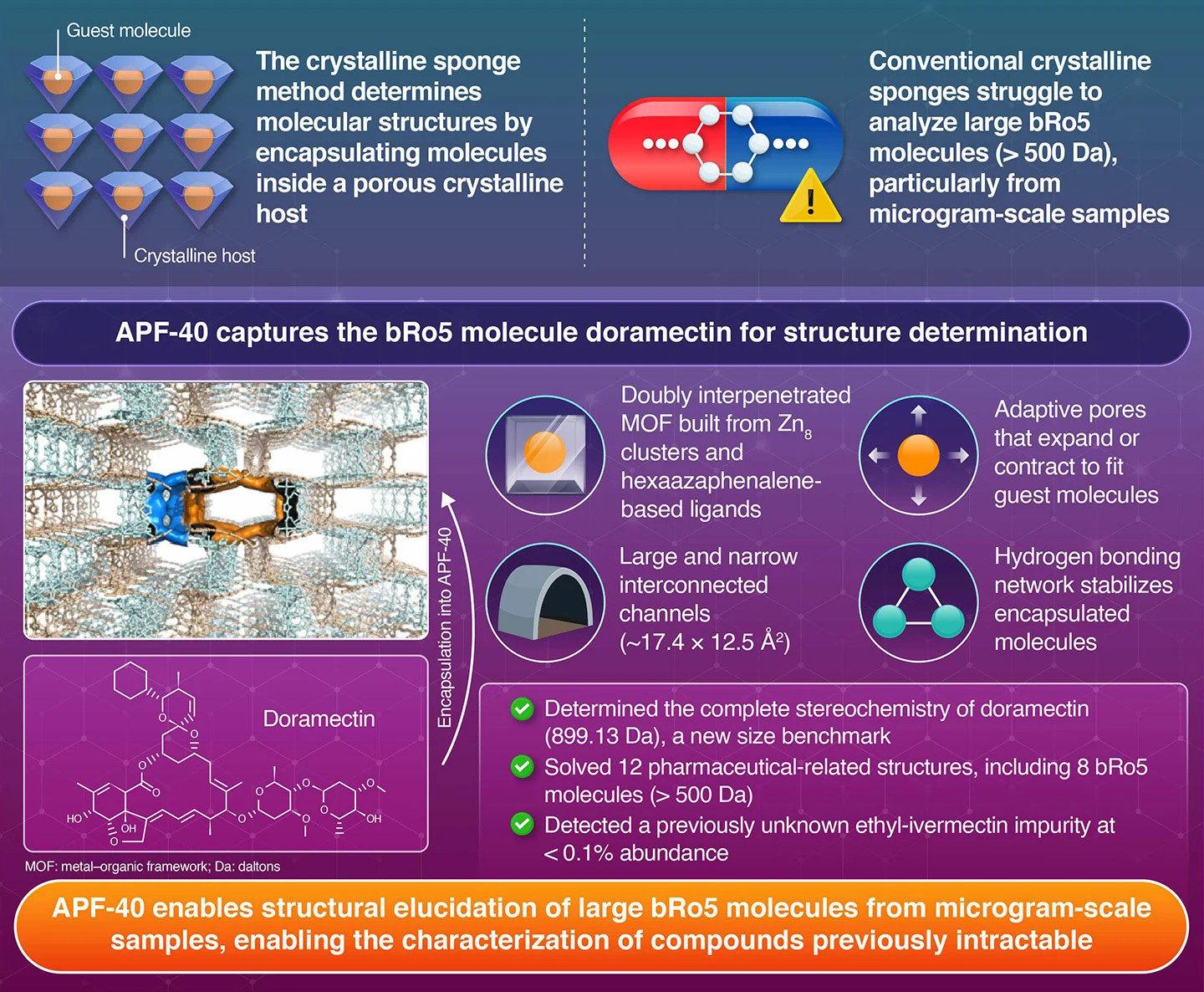
A flexible metal–organic framework developed by researchers from Institute of Science Tokyo enables the structural determination of large "beyond rule of 5" molecules from microgram-scale samples. Using APF-40 as a crystalline sponge, the researchers determined the structures of 12 pharmaceutical-related molecules, including the 899 Da drug molecule doramectin and trace ivermectin derivatives. The method could aid drug discovery, natural products research, and the characterization of rare...
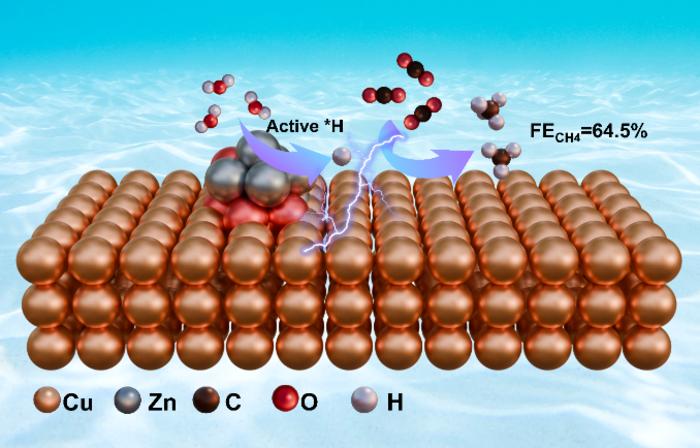
image: CuZn800@C was constructed via solvothermal method and utilizes the high-temperature volatility of zinc to prepare through calcination at different temperatures, which displays a high methane Faradaic efficiency of 64.5% and a remarkable partial current density of -551.3 mA/cm2 at -1.7 V vs. RHE, along with excellent stability. Zn and Cu form a tandem reaction system. Zn sites promote water splitting to provide protons, while Cu sites reduce the energy barrier for *CO hydrogenation....