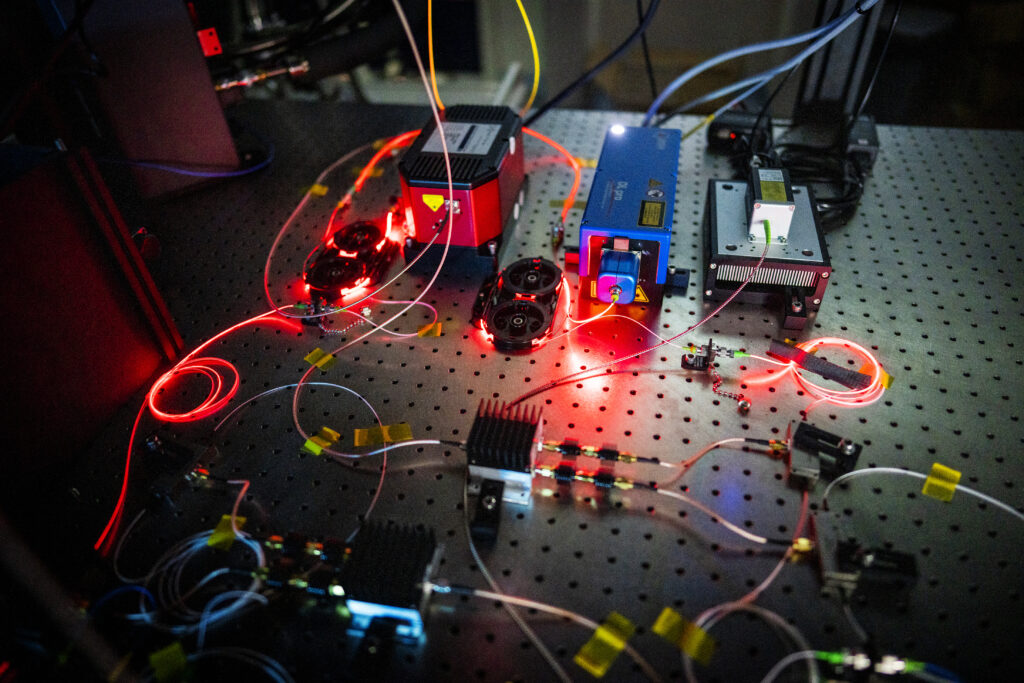
Researchers from Fujitsu, TU Delft, and QuTech have developed a prototype for a new type of quantum computer based on tin-vacancy (SnV) centres in diamond. The system, developed under a collaboration that began in 2020, combines diamond spin qubits with integrated photonics on a chip. It represents an early, system-level step toward a modular quantum computer in which separate quantum processors are connected using light.
Rather than demonstrating a large-scale quantum processor, the prototype addresses a key challenge for future quantum computers: how different components can be integrated in an architecture that can grow beyond a single chip. While several hardware platforms are currently being explored for quantum computing—including superconducting circuits, trapped ions, neutral atoms and semiconductor spins—diamond spin qubits offer a complementary approach. Their ability to interface with light makes them a strong candidate for modular, optically connected architectures.
The current prototype contains a single diamond-based quantum module that integrates spin qubits with on-chip photonic components. It operates at the relatively warm temperature of approximately 1.55 kelvin (−271.6 °C). The prototype is set to be accessible through Fujitsu’s Hybrid Quantum Computing Platform. By bringing together spin qubits, integrated photonics, chip fabrication, hardware control and platform access, it establishes a foundation for more advanced systems.
Connecting quantum modules with light
Scaling a quantum computer is not simply a matter of placing more qubits on one chip. Future systems might need separate quantum modules that can exchange quantum information efficiently. Diamond spin qubits offer an interesting route for this, as electron spins associated with colour centres can interact with photons. This creates the possibility of connecting qubits across chips, or even between separate cryogenic systems, using optical links.
For this prototype, the researchers focused on SnV centres: atomic-scale defects in diamond with optical properties that make them promising interfaces between stationary spin qubits and travelling photons. The system combines a nanoscale piece of diamond containing a single SnV centre with an alumina optical waveguide. The waveguide guides photons emitted by the SnV centre and forms part of a photonic integrated circuit.
Bringing these elements together is an important engineering step towards an architecture in which multiple quantum modules could be linked.
From one module to many
The current prototype does not yet demonstrate optical connections between multiple quantum-computing modules. However, it validates the core technologies needed to work towards such a system.
The partners plan to continue developing the architecture, with the aim of building a system consisting of multiple quantum modules in 2027. Demonstrating that such systems can be scaled to useful numbers of high-quality qubits remains a substantial scientific and engineering challenge. This prototype represents an important first step in that direction.
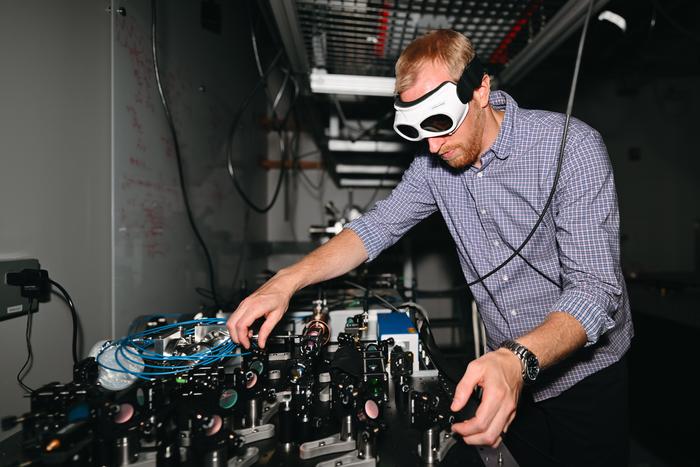
Breakthrough from a team led by Jacob Covey, associate professor in the University of Chicago’s Pritzker School of Molecular Engineering and Department of Physics, turns helium-3’s low mass into a quantum resource
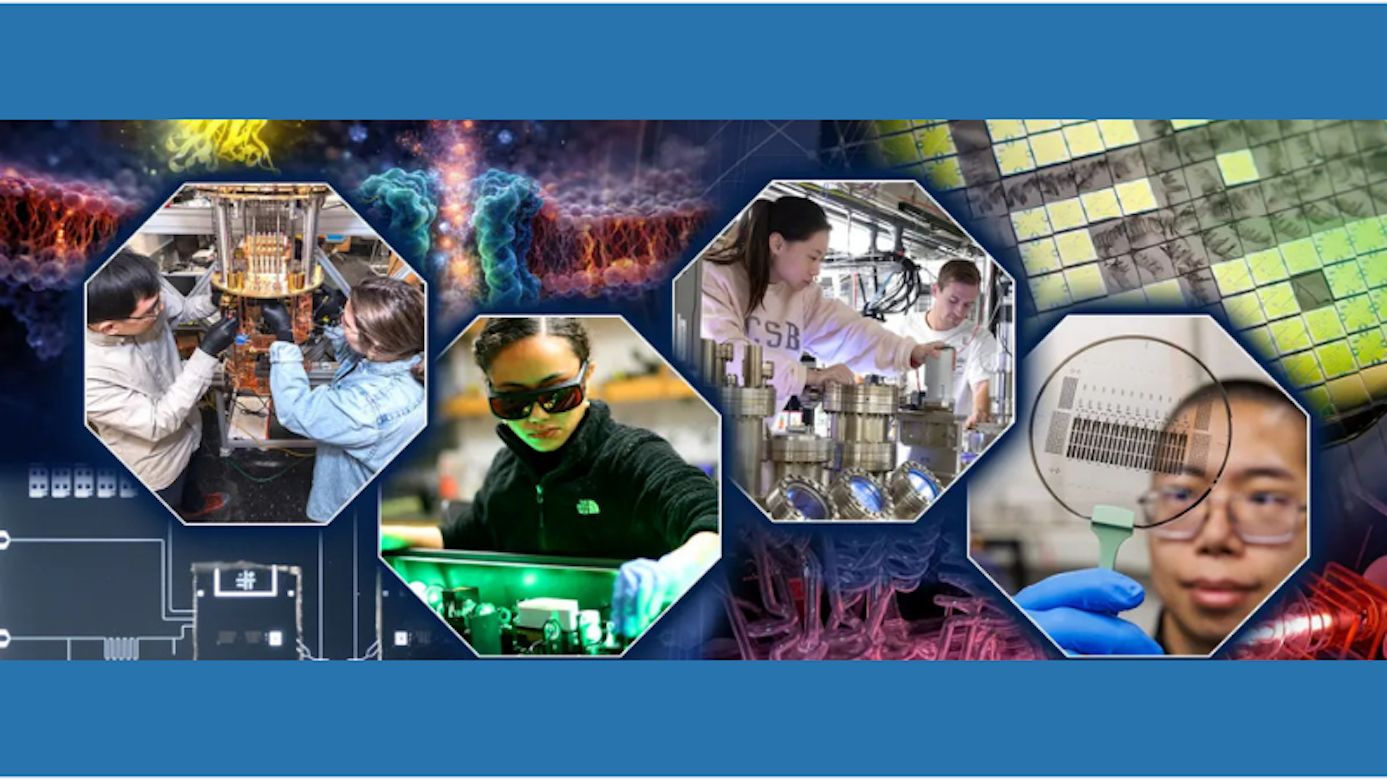
Courtesy of the National Science Foundation The NSF's Quantum Leap Challenge Institutes are taking on some of the hardest scientific hurdles in the global race to create powerful quantum-based technologies. Two UCLA computer scientists will help lead major national efforts to address some of quantum computing’s biggest challenges, serving as co-principal investigators for separate research institutes backed by five-year, $37.5 million grants from the National Science Foundation. The two...

Researchers at the University of Cambridge have identified a stricter criterion for when quantum computers can outperform classical machines. Magic states, special qubit configurations required for universal quantum computation, are necessary but not always sufficient. Many states previously regarded as useful magic can still be simulated efficiently on classical computers. The team used the Kirkwood–Dirac distribution, a 1945 quasi-probability framework associated with Paul Dirac, to disting...
This week in nanotech
$13.6M raised
3 funding rounds · 20 deals tracked
New products
 Ti-WCMBN Nanomaterialia Featured
 DLS-1 Mass Spectrometer for Fusion Gas AnalysisHiden Analytical Featured
 Hold Down & Release Mechanisms (HDRM) REACT – 5KN, 15KN and 35KN space qualified resettable mechanismsARQUIMEA
Market insights
Last 30 days: Quantum Technologies was the busiest vertical: 61 of 192 events (32%).
Money raised per month