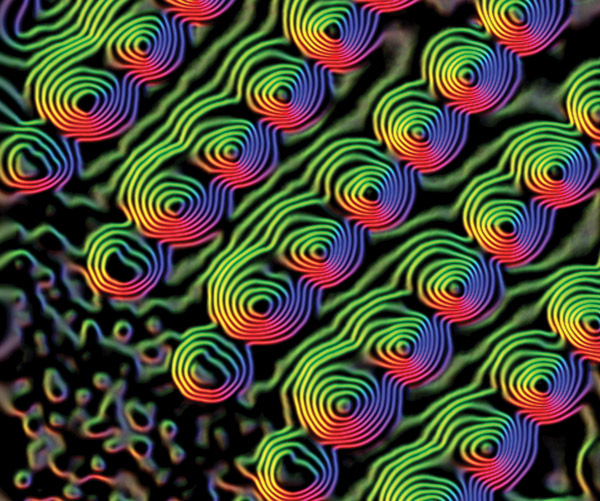
RIKEN researchers have brought low-energy devices based on spintronics one step closer, by measuring the dynamics of tiny magnetic vortices.
At present, all our information technologies are based on conventional electronics, which involves shunting electric charge around circuits. However, electrons have another property known as spin, which could be exploited to make faster and more efficient devices.
Hazuki Kawano-Furukawa of the RIKEN Center for Emergent Matter Science and her co-workers are leading efforts to develop this field of spintronics. In particular, they are exploring the use of nanoscale magnetic whirlpools called skyrmions.
“Skyrmions can be controlled with significantly smaller currents or electric fields,” explains Kawano-Furukawa. “This makes them highly promising for future applications in information and communication technologies, such as computer memory that doesn’t need power to keep stored data.”
The team focused on the material manganese monosilicide—a helimagnet, so-called because the spins in its molecular lattice align in helical patterns. Extremely sensitive equipment was necessary to measure the lowest energy magnetic excitations in the skyrmion states.
“The only method that fulfills both the spatial and energy resolution requirements for this purpose is the neutron spin echo technique,” says Kawano-Furukawa. “We conducted experiments using the state-of-the-art IN15 neutron spin echo spectrometer at the Institut-Laue-Langevin in Grenoble, France. This instrument boasts the highest performance in the world for studying the dynamics of materials in magnetic fields.”
The spin echo method works by illuminating a sample with a beam of neutrons, and measuring how the sample’s magnetic fields affect the spin and velocity of the neutrons.
Through their observations, the team verified theoretical predictions that the string-like structures of skyrmions cause an asymmetric dispersion of excitations in the lattice of manganese monosilicide. In Kawano-Furukawa’s words, these excitations ‘know’ if they are traveling parallel or antiparallel to the cores of the skyrmion whirlpools. This confirmation of theory opens up the way to better exploit skyrmions.
The team had to wait two years to confirm their results. “We conducted our initial experiment in October 2018,” she says. “However, to draw final conclusions, we needed to confirm that the behavior was observed only in the skyrmion phase, and not in another magnetic structure called the conical phase. Due to the COVID-19 pandemic, the follow-up experiment was postponed to January 2021 and was carried out remotely, posing various challenges.”
The team now intends to conduct further research on how magnetic skyrmions are generated. “We aim to investigate the coexistence of the conical and skyrmion phases in manganese monosilicide,” says Kawano-Furukawa.
Reference
Asymmetric slow dynamics of the skyrmion lattice in MnSi
Minoru Soda, Edward M. Forgan, Elizabeth Blackburn, Emma Campillo, Vasyl Ryukhtin, Ingo Hoffmann, Akiko Kikkawa, Yasujiro Taguchi, Hideki Yoshizawa & Hazuki Kawano-Furukawa
Kopin Corporation has secured an $18.6 million sole source award from the Office of the Secretary of War through the U.S. Army Contracting Command under the IBAS program. The award brings Kopin's total IBAS funding to $34 million.
Emerson has integrated NevadaNano's MPS 6.0 technology into the Rosemount 628MP Combustible Gas Sensor for use with the Rosemount 928 Wireless Gas Monitor. MPS 6.0 consumes 1.35 mW and needs no field calibration.
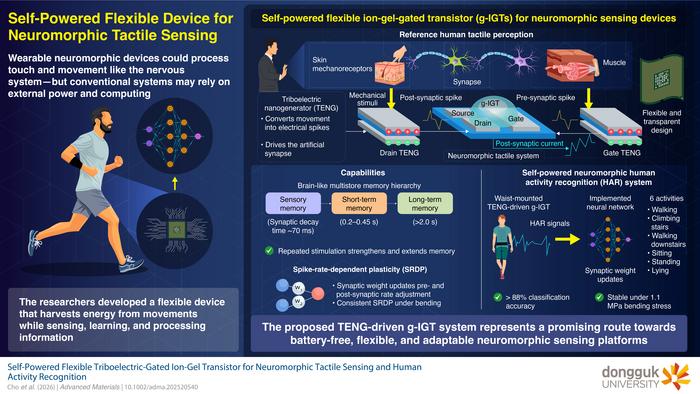
The proposed TENG-driven g-IGT is a flexible, self-powered neuromorphic device capable of reproducing multiple memory states and spike-rate-dependent learning Neuromorphic devices, which are designed to emulate aspects of biological neural networks, are promising candidates for developing low-power and intelligent sensing technologies, including wearable applications. Among the device architectures explored for neuromorphic computing, graphene-channel ion-gel-gated transistors (g-IGTs) are...
This week in nanotech
$271M raised
6 funding rounds · 28 deals tracked
New products
 Nion-compatible In Situ STEM Holders for Electrical BiasingHummingbird Scientific Featured
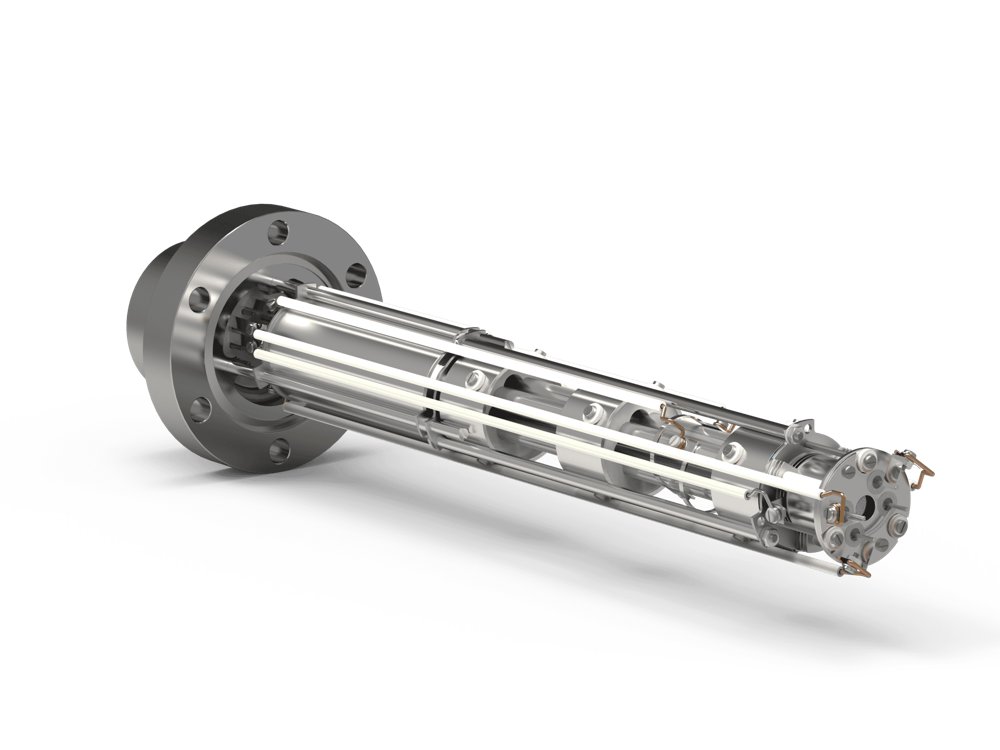 DLS-1 Mass Spectrometer for Fusion Gas AnalysisHiden Analytical Featured
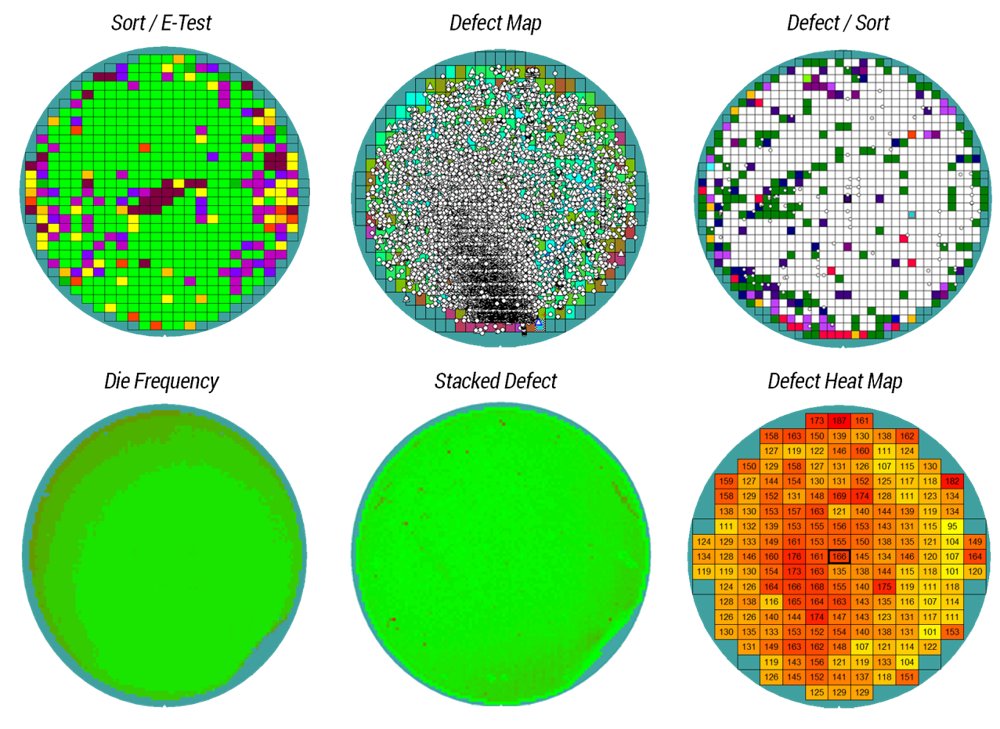 Discover Mapping SuiteOnto Innovation
Market insights
Last 30 days: Quantum Technologies drew the most money: $3.17B.
Money raised per month
Behind the deal
Who led Xanadu Quantum Technologies Limited’s $10M Grant?
See the investors with Insights Pro →