University of Cologne
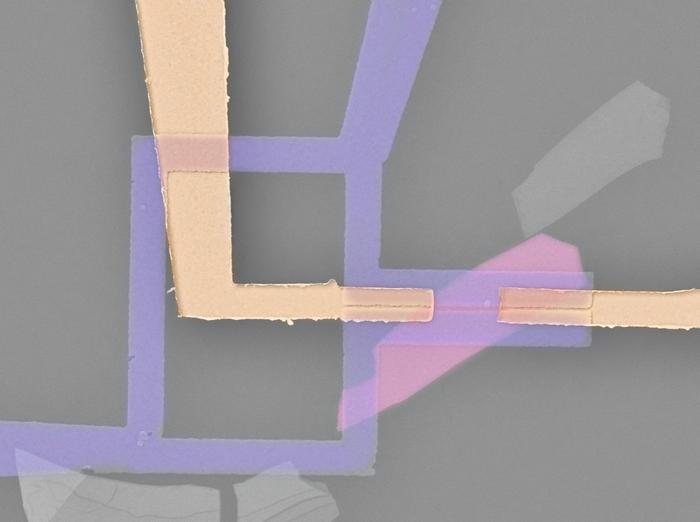
One approach to making information storage in quantum computing less prone to errors is known as topological quantum computing. It relies on special quantum states that are expected to be more resistant to local disturbances. Physicists at the University of Cologne have now observed quantum states that behave as predicted in a material system considered promising for this approach. Their findings, published under the title “Tunneling spectroscopy of topological insulator Josephson junctions” in Science Advances, support a theoretical description of how superconductivity interacts with the surface of a topological insulator.
Topological insulators are materials that insulate electricity in their interior but conduct it along their surfaces. When combined with a conventional superconductor, their surface states are predicted to support a special form of superconductivity known as topological superconductivity. If realized, this could provide a route to Majorana-zero modes, quantum states being investigated for their potential use in topological quantum bits, or qubits. Demonstrating and controlling these states experimentally remains a challenge.
To investigate the predicted behavior, Dr Jakob Schluck, Ella Nikodem (M.Sc.) and colleagues in the Topological Matter Laboratory Cologne, led by Professor Yoichi Ando, studied a structure called a Josephson junction. It consists of two superconductors connected by a non-superconducting region. Using tunneling spectroscopy, the researchers probed the quantum states inside the junction while varying the phase difference between the two superconductors.
The team observed highly transmissive Andreev states, which form when electrons and holes interact at a superconducting junction. The states appeared across a range of charge-carrier densities, consistent with the predicted behavior of electrons at the topological insulator’s surface. When the researchers applied a magnetic field, they also found these states concentrated in specific regions of the junction, as theory predicts. “Understanding how superconductivity interacts with the distinctive electronic properties of topological insulators is essential for assessing their potential for topological quantum computing,” says Professor Yoichi Ando.
The experimental results agree with theoretical predictions based on the model proposed by Liang Fu and Charles Kane in 2008, as well as numerical simulations carried out by the group of Professor Fabian Hassler at RWTH Aachen University.
“It is super exciting to see our experimental results align so well with theoretical predictions. This is very encouraging in terms of future applications in quantum computing,“ adds Ella Nikodem.
An important question remains open: do the observed states undergo the predicted closing and reopening of an energy gap? Such a change could signal a transition to topological superconductivity, in which certain quantum states may be protected against local disturbances. This protection is one of the reasons topological quantum computing is considered a promising route towards more robust quantum bits. In the current experiment, the transition remains to be confirmed with more precise measurements. “To demonstrate the topological phase transition in this system, we need to improve the experiment’s energy and time resolution — this is the next step on the roadmap of the Ando lab,” Jakob Schluck explains.
The research brought together experimental physicists at the University of Cologne and theoretical researchers at RWTH Aachen University. Both groups are part of the Matter and Light for Quantum Computing (ML4Q) Cluster of Excellence, established in 2019 within the Excellence Strategy of the German federal and state governments. The cluster connects researchers at the universities of Cologne, Aachen and Bonn and Forschungszentrum Jülich to advance fundamental research into quantum computing.
Reference
Tunneling spectroscopy of topological insulator Josephson junctions
Jakob Schluck, Ella Nikodem, Anton Montag, Alexander Ziesen, Mahasweta Bagchi, Fabian Hassler, and Yoichi Ando
Cornell researchers have redrawn the phase diagram of uranium ditelluride, showing the material can host two distinct flavors of superconductivity at once and that the two coexist and interact under pressure. The work settles years of uncertainty and positions uranium ditelluride as the leading candidate for a topological superconductor, a long-sought material that could unlock advances in quantum computing.
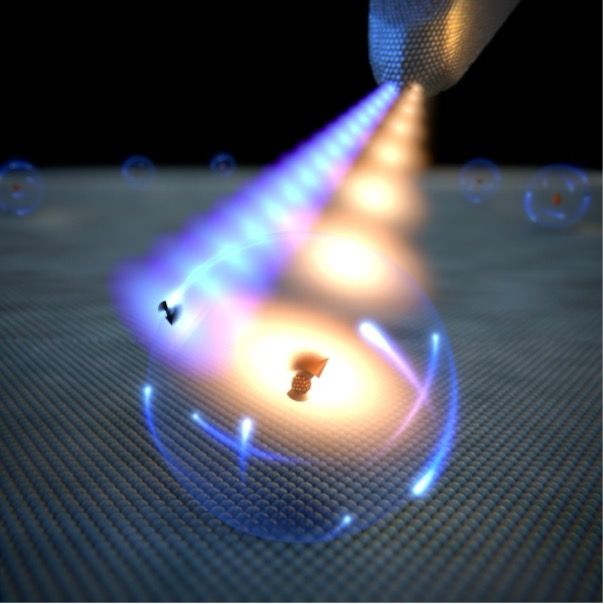
Researchers at Delft University of Technology have used radio waves to control the nuclear spin of a single atom, a feat previously thought impossible. By applying simultaneous signals to an atom's electron and nucleus with a converted scanning tunnelling microscope, the team flipped the nuclear spin even when the two spins were largely disentangled.
Seven organizations including Nautilus Technologies, Fujitsu company 1Finity, IIJ, Waseda University and Nagoya University have begun building a distributed quantum computing platform that links quantum clusters with the Tsurugi relational database over ultra-low-latency optical networks.
This week in nanotech
$548.4M raised
2 funding rounds · 19 deals tracked
New products
 DLS-1 Mass Spectrometer for Fusion Gas AnalysisHiden Analytical Featured
 Ti-WCMBN Nanomaterialia Featured
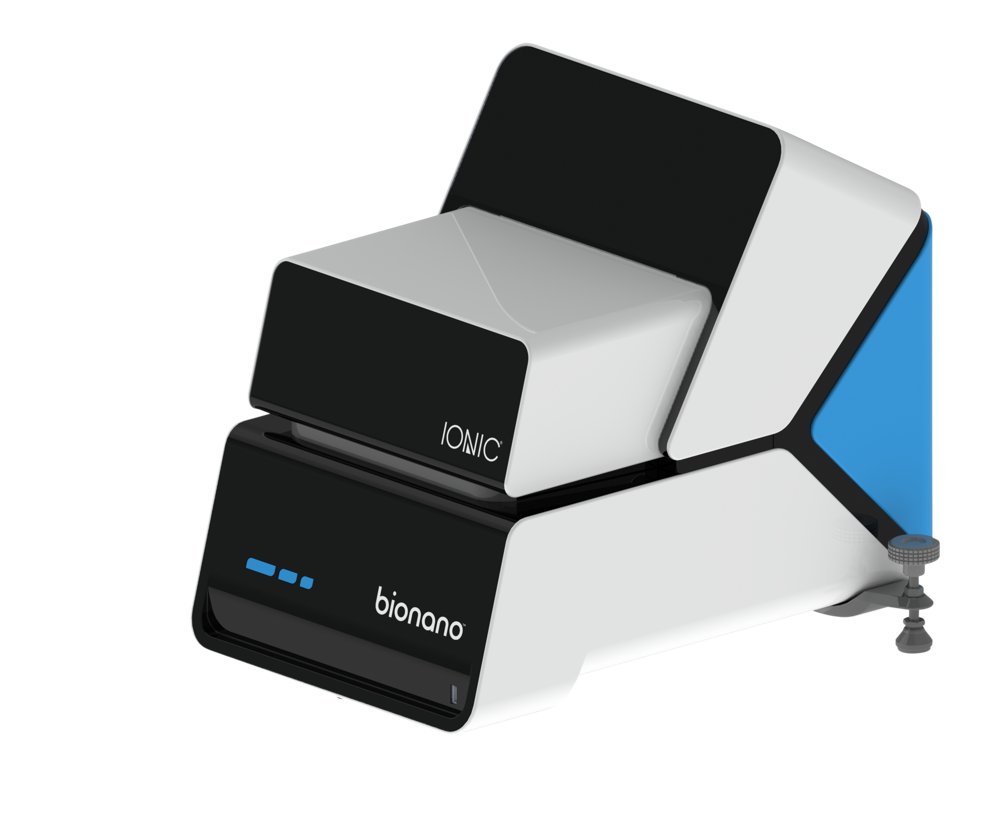 Ionic® Purification SystemBionano Genomics, Inc.
Market insights
Last 30 days: Quantum Technologies drew the most money: $2.15B.
Money raised per month