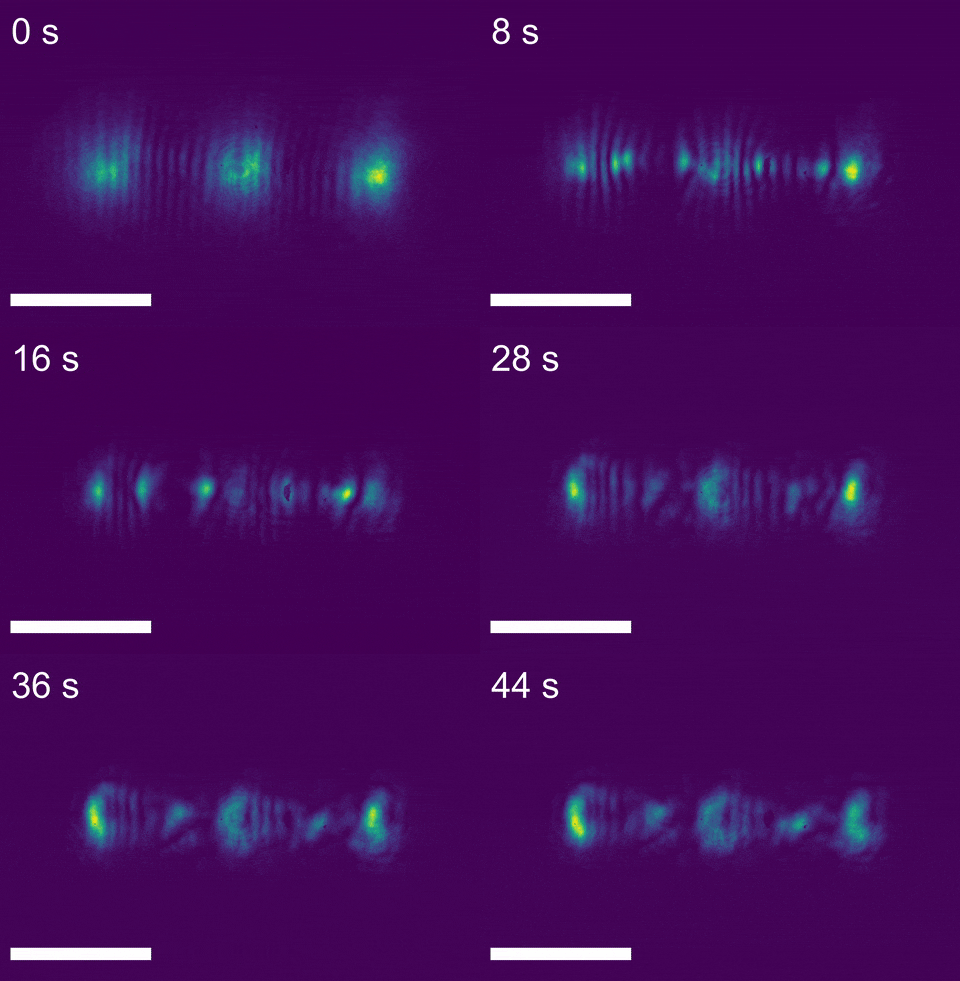
Researchers from McMaster University and the University of Pittsburgh have created the first functionally complete logic gate – a NAND gate (short for “NOT AND”) – in a soft material using only beams of visible light. The discovery, published in Nature Communications, marks a significant advance in the field of materials that compute, in which materials themselves process information without traditional electronic circuitry.
“This project has been part of my scientific journey for over a decade,” said first author Fariha Mahmood, who began studying the gels as an undergraduate researcher at McMaster and is now pursuing postdoctoral research at the University of Cambridge. “To see these materials not only respond to light but also perform a logic operation feels like watching the material ‘think.’ It opens the door to soft systems making decisions on their own.”
Mahmood is joined by authors Anna C. Balazs, distinguished professor of chemical and petroleum engineering, and Victor V. Yashin, research assistant professor at Pitt’s Swanson School of Engineering; and corresponding author Kalaichelvi Saravanamuttu, professor of chemistry and chemical biology at McMaster.
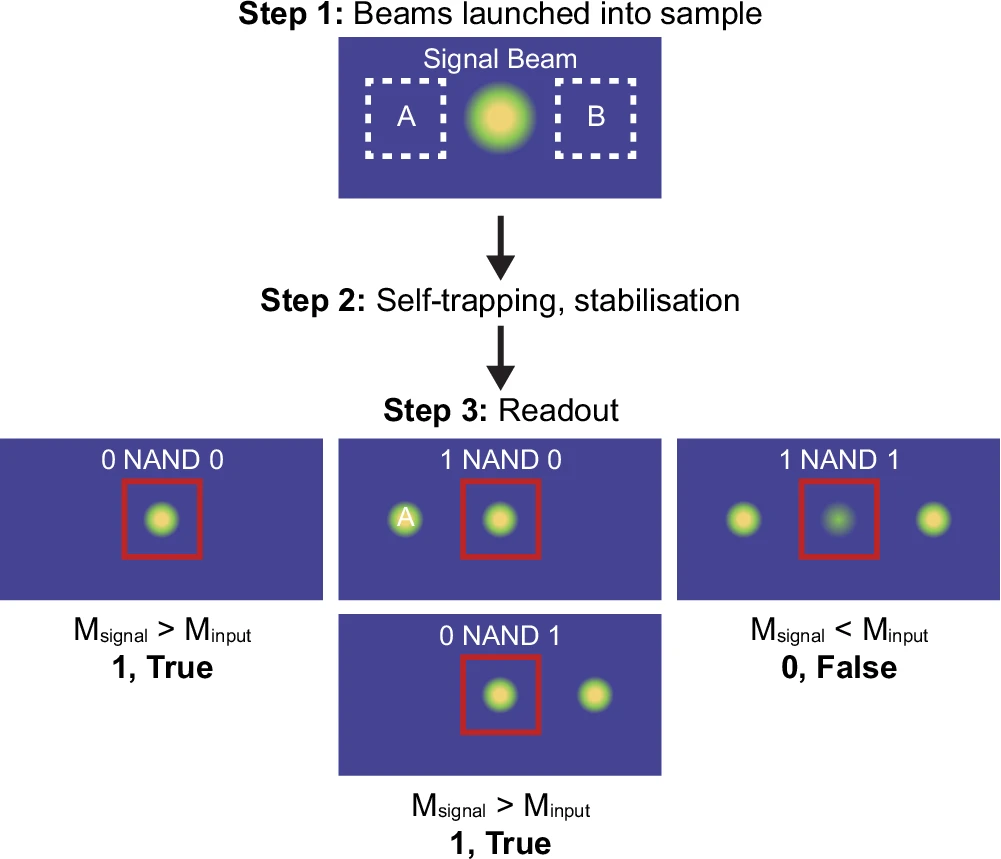
The group demonstrated that shining three self-trapped light beams into a specially engineered hydrogel can execute a NAND logic operation, one of the most fundamental building blocks of computing. Because all other digital logic gates can be built from NAND, the achievement establishes soft, photoresponsive materials as a realistic platform for autonomous, computation-capable systems.
A Material that Computes, Not Just Responds
The work builds directly on early theoretical and computational studies by Balazs and her Swanson School collaborator, the late Steven P. Levitan, professor of electrical and computer engineering, who passed away in 2016. Their landmark papers (including a 2016 Science Advances study) introduced the idea that oscillating chemical gels and other responsive materials could act as networks that sense, communicate, and compute. The latter work also involved the efforts of Yan Fang, Levitan’s graduate student at the time (now Assistant Professor at Kennesaw State University ), and Dr. Victor Yashin, a researcher in the Balazs group.
Those studies laid the conceptual groundwork for “materials that compute” – systems in which the material and the computer are the same entity, capable of performing tasks such as pattern recognition, synchronization, or decision-making without traditional circuitry.
“This is what we’ve always imagined – materials that don’t just respond to a stimulus, but process it,” Balazs said. “It’s a beautiful realization of a concept we began exploring more than a decade ago, that soft materials, through their own internal physics and chemistry, can carry out simple operations typically done by electronics.”
How Light Becomes Logic
The material at the center of the breakthrough is a merocyanine-functionalized hydrogel that contracts when illuminated. When a laser beam enters the gel, the local contraction increases the refractive index, causing the beam to “self-trap” – narrowing and brightening as it travels through the material.
In earlier work, Saravanamuttu and others found that two beams of light in the same gel compete, each inhibiting the other’s ability to self-trap. This tug-of-war behavior becomes richer when additional beams are added.
“With three beams, we began to see consistent patterns of interaction that weren’t visible before,” Mahmood said. “The middle beam is always dimmer because it’s fighting both of its neighbors. That reliable behavior is what lets us map a logic operation onto a soft material.”
Saravanamuttu emphasized the study’s broader significance. “What excites me is the framework this establishes. We’re showing that computer logic – something we usually think of as the domain of electronics – can be carried out by a material through its own chemistry and physics. It’s a very different way of thinking about how materials can function.
“It’s exciting that just three beams of light and a polymer network can map directly onto a Boolean logic operation,” Saravanamuttu added. “You don’t need wires, electrodes, or external circuits. The material processes the inputs and determines the output entirely by its internal dynamics.”
Simple Yet Elegant Decision-Making
While this system cannot compete with semiconductor processors in speed or data density, nor is it intended to, the implications are profound for fields where materials must make decisions independently:
“These systems don’t aim to replace silicon – they aim to mimic the remarkable autonomy of biological materials,” Balazs said. “A soft material that can sense, compute, and respond on its own opens entirely new design spaces.”
The study also establishes a framework that could allow multiple logic operations to occur simultaneously inside the same gel sample. Because the input and output signals are all beams of light, they can be routed, combined, or cascaded without wiring.
For Balazs, the work is also a personal milestone, bringing full circle the ideas she developed with Levitan. “Steven believed deeply that materials could someday compute,” she said. “To see that vision realized experimentally is incredibly meaningful.”
Reference
A functionally complete logic gate in a soft photoresponsive hydrogel
Fariha Mahmood, Victor V. Yashin, Anna C. Balazs & Kalaichelvi Saravanamuttu
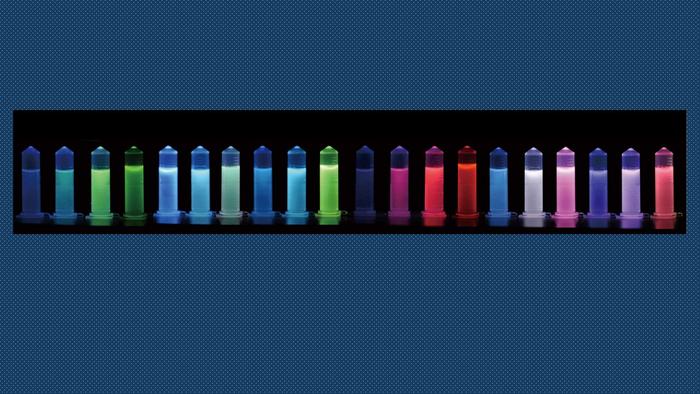
The team’s breakthrough, reported in Nature on 19 November 2025, emerged from reimagining how light is generated. Instead of forcing current through insulating nanocrystals, the researchers wrapped them in specially-designed organic semiconductor molecules. These tailored ligands acted as molecular intermediaries, capturing electrons and holes under an electric field and transferring their energy to the lanthanide ions inside the crystal. The result was bright, stable light emission across th...

Researchers at the Cavendish Laboratory, University of Cambridge have developed a new method to electrically power insulating nanoparticles, a feat previously thought impossible under normal conditions. By attaching organic molecules that act as tiny antennas, they have created the first-ever light-emitting diodes (LEDs) from these materials. The breakthrough, published in Nature, opens the door to a new generation of devices with applications ranging from deep-tissue biomedical imaging to hi...
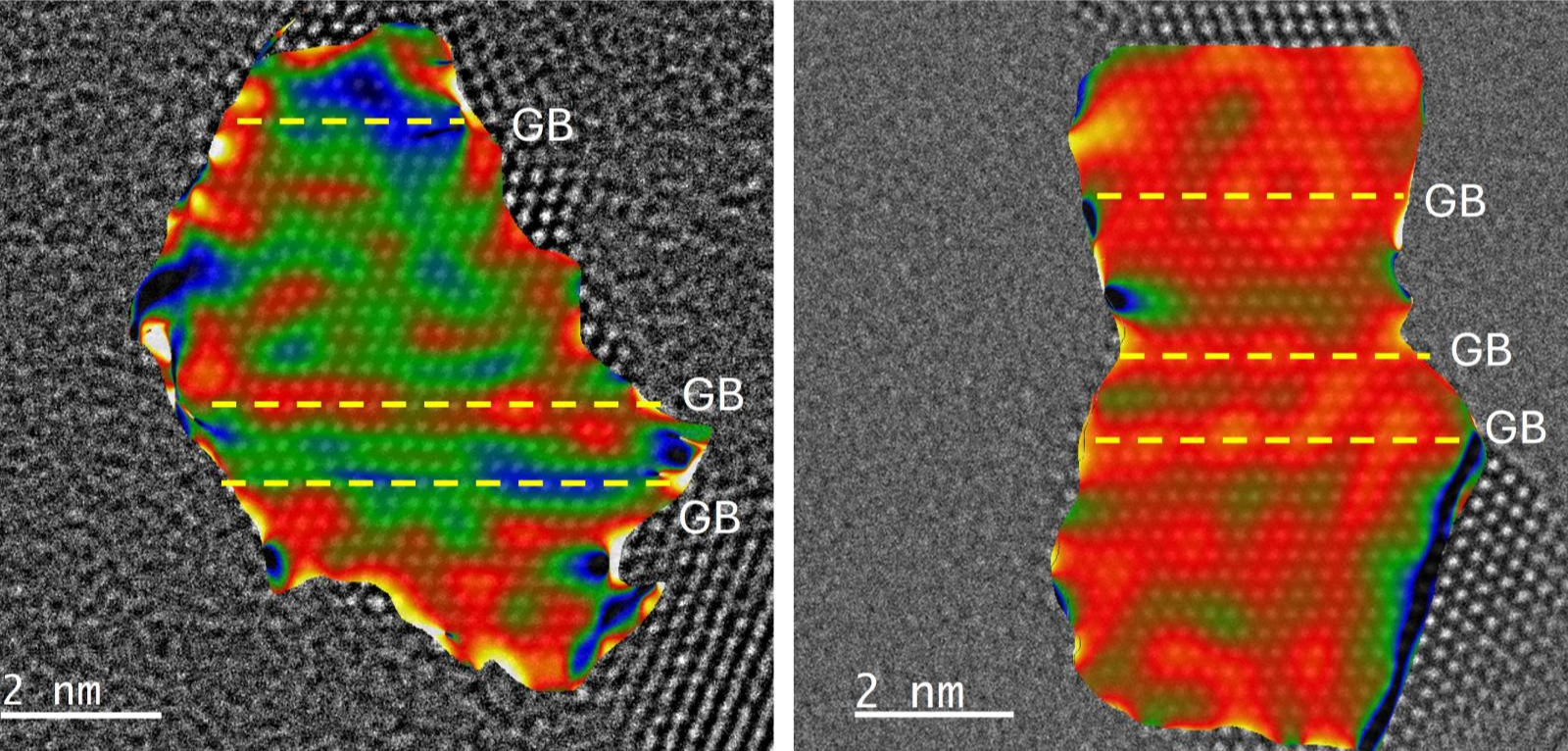
The formation of metal hydrides is important to a wide range of energy technologies, from hydrogen storage to fusion materials. Researchers used palladium (Pd) nanoparticles, which have a high hydrogen affinity and can be precisely synthesized, as a model system for studying the insertion of hydrogen into a metal. They synthesized Pd nanoparticles, interconnected into assemblies with a high density of Σ3(111) grain boundaries (GBs), to probe the role of GBs in hydridation. They found that the...
This week in nanotech
$740.7M raised
5 funding rounds · 36 deals tracked
New products
 DLS-1 Mass Spectrometer for Fusion Gas AnalysisHiden Analytical Featured
 Orion Sputtering Deposition SystemsAJA International Featured
 Aether®Lam Research
Market insights
Last 30 days: Quantum Technologies drew the most money: $3.18B.
Money raised per month
Behind the deal
Who invested in Photon Bridge’s $11.2M Series A?
See the investors with Insights Pro →