Vienna University of Technology (TU Wien)
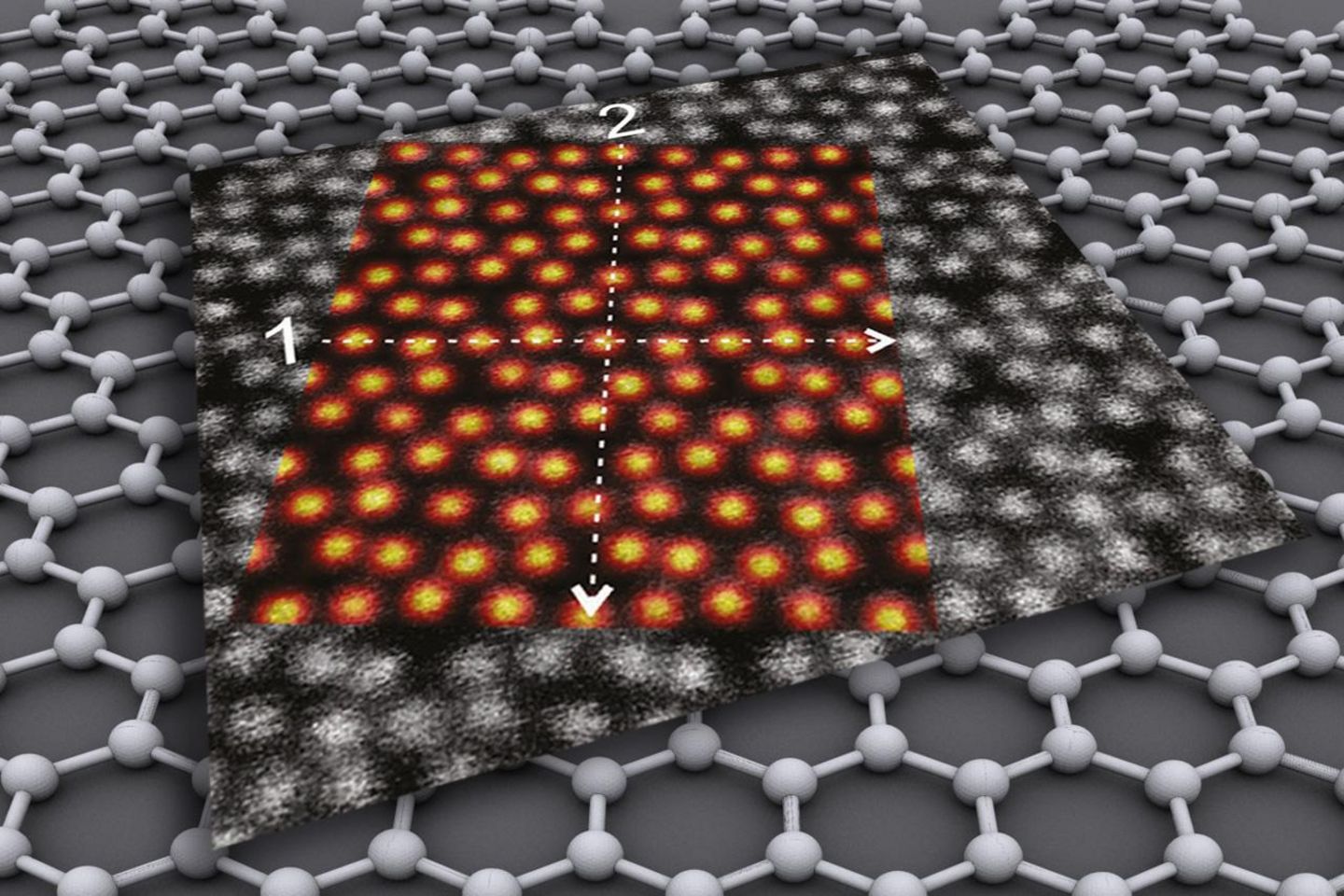
Graphene consists of a single layer of carbon atoms. Exceptional electronic, thermal, mechanical and optical properties have made graphene one of the most studied materials at the moment. For many applications in electronics and energy technology, however, graphene must be combined with other materials: Since graphene is so thin, its properties drastically change when other materials are brought into direct contact with it.
However, combining graphene with other materials at the molecular level is difficult: The way graphene interacts with other materials depends not only on which material you choose, but also on how these materials are brought into contact with the graphene. Rather than sticking a finished material layer to the graphene, the appropriate atoms are brought into contact with the graphene in such a way that they "grow" on the graphene in the desired crystal structure.
Until now the mechanisms of the "growth" of such other materials on graphene have often remained unclear. A new joint study by research teams from the TU Wien and the University of Vienna for the first time observes now how indium oxide grows on graphene. The combination of indium oxide with graphene is important, for example for displays and sensors. The results have now been presented in the scientific journal "Advanced Functional Materials".
Graphene pizza
"As with a pizza, graphene technology is not only dependent on the graphene pizza base but also on its toppings," explains Bernhard C. Bayer from the Institute of Materials Chemistry at the TU Wien, who led the study. "How these toppings are applied to the graphene is, however, crucial."
In most cases, atoms in the gaseous state are condensed on the graphene. In the case of indium oxide, these are indium and oxygen. "But there are many parameters such as background pressure, temperature or the speed at which these atoms are directed at the graphene that influence the result drastically," says Bernhard Bayer. "It is therefore important to develop a fundamental understanding of the chemical and physical processes that actually take place. But to do this, you have to watch the growth process as it proceeds. "
This is exactly what the research team has now succeeded in doing: for the first time, the individual steps of growing indium oxide on graphene were observed in the electron microscope at atomic resolution.
Randomly distributed or perfectly aligned
"What was particularly interesting for us was the observation that, depending on the background pressure, the indium oxide crystallites either arrange themselves randomly on the graphene's crystal lattice or snap perfectly on one another like Lego bricks. This difference in arrangement can have a major impact on the application properties of the combined materials," says Kenan Elibol, first author of the study. The new findings will be useful to make the integration of graphene with other materials more predictable and controllable with respect to future application requirements.
Process pathway controlled evolution of phase and Van‐der‐Waals epitaxy in In/In2O3 on graphene heterostructures
Kenan Elibol, Clemens Mangler, Tushar Gupta, Georg Zagler, Dominik Eder, Jannik C. Meyer, Jani Kotakoski, Bernhard C. Bayer
Advanced Functional Materials (24 June 2020)
Contact information:
Bernhard Christian Bayer-Skoff
Institute of Materials Chemistry, Division Molecular Materials Chemistry, TU Wien
bernhard.bayer-skoff@tuwien.ac.at
Phone: +43 (1) 58801 - 165 228
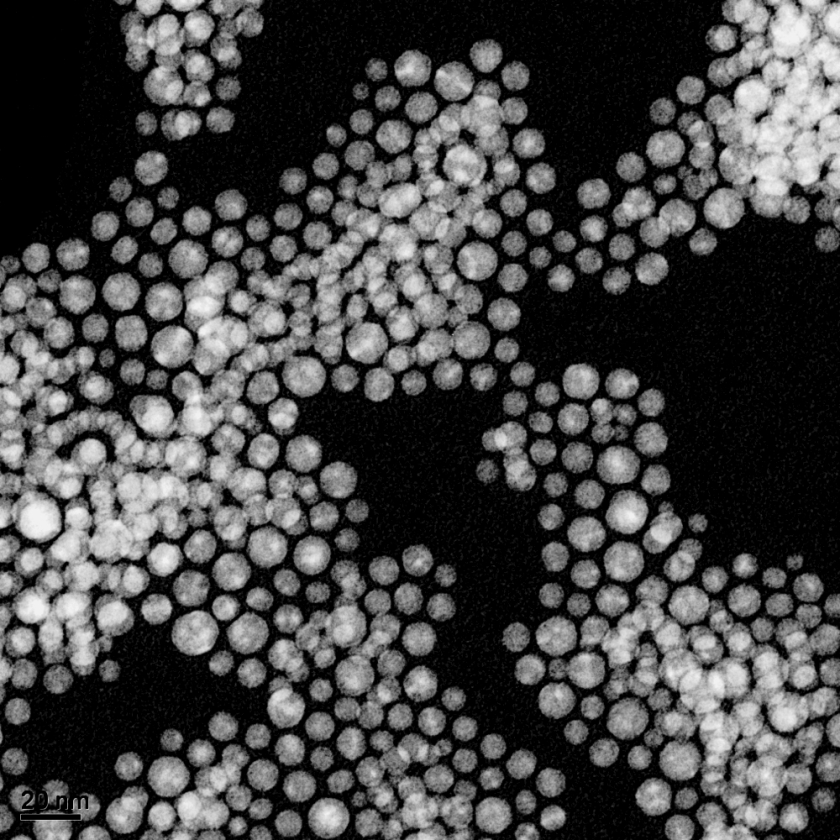
Silver nanoparticles with diameters of ~10 nm deliver the best performance as electrocatalysts. The silver particles are sprayed onto the electrode together with a conductive carbon powder. The ideal mixture consists of 20 per cent by mass silver and 80 per cent by mass carbon powder. This image was taken using a transmission electron microscope (TEM). © HZB Via electrolysis, CO₂ can be reduced to CO, a raw material for further chemical products such as fuels. Within the GreenQuest Project,...
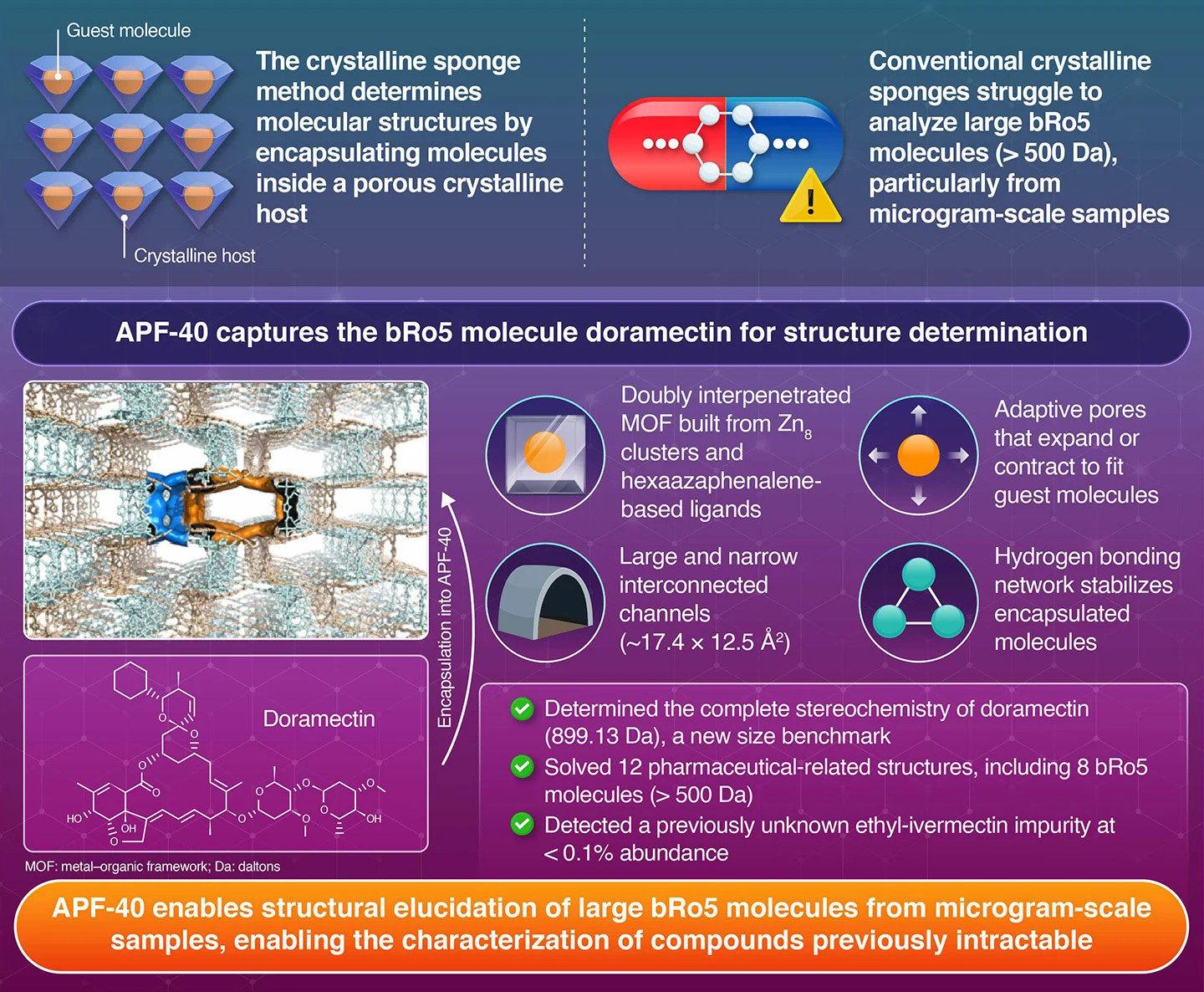
A flexible metal–organic framework developed by researchers from Institute of Science Tokyo enables the structural determination of large "beyond rule of 5" molecules from microgram-scale samples. Using APF-40 as a crystalline sponge, the researchers determined the structures of 12 pharmaceutical-related molecules, including the 899 Da drug molecule doramectin and trace ivermectin derivatives. The method could aid drug discovery, natural products research, and the characterization of rare...
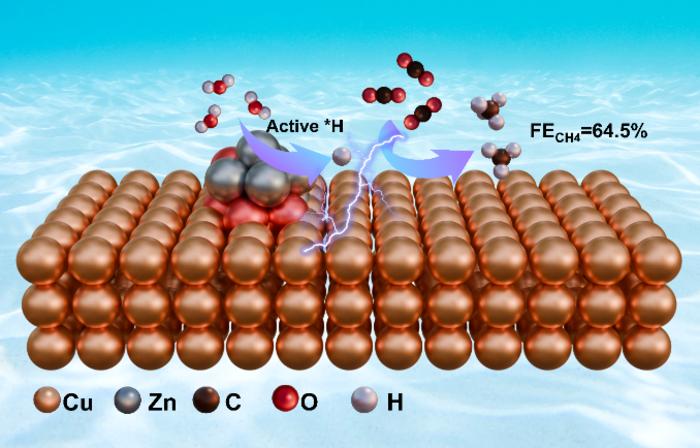
image: CuZn800@C was constructed via solvothermal method and utilizes the high-temperature volatility of zinc to prepare through calcination at different temperatures, which displays a high methane Faradaic efficiency of 64.5% and a remarkable partial current density of -551.3 mA/cm2 at -1.7 V vs. RHE, along with excellent stability. Zn and Cu form a tandem reaction system. Zn sites promote water splitting to provide protons, while Cu sites reduce the energy barrier for *CO hydrogenation....