Helmholtz-Zentrum Berlin für Materialien und Energie
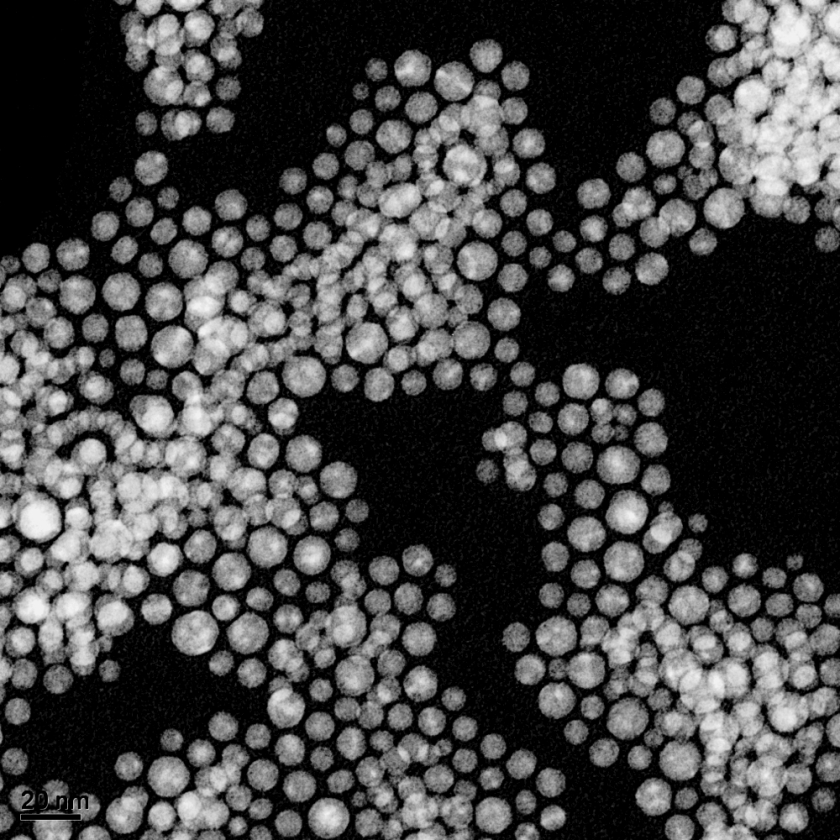
Via electrolysis, CO₂ can be reduced to CO, a raw material for further chemical products such as fuels. Within the GreenQuest Project, an internation team led by HZB chemist Prashanth Menezes has now systematically investigated catalyst layers made of silver nanoparticles, varying both the size of the particles and their density. The best yield was achieved with nanoparticles with diameters of around 10 nm, which were loosely distributed. Furthermore, they demonstrated how the economic efficiency of the electrochemical cell can be enhanced by integrating an additional chemical reaction at the anode, enabling the simultaneous production of a valuable formic acid, hydrogen, and CO in one device.
The greenhouse gas CO₂ can be reduced electrolytically to carbon monoxide (CO) using electrical energy. In subsequent steps, the CO and H₂ generated through electrochemical processes form syngas, which is subsequently converted to DME and further catalytically transformed into green-LFG, primarily comprising propane (C₃H₈) and butane (C₄H₁₀). Provided that the electrical energy for electrolysis is generated from solar or wind power, this technology can be considered carbon neutral, since CO₂ is, so to speak, recycled. Teams from HZB are collaborating with partner institutions in South Africa on this technology within the GreenQUEST project. Their goal is to develop an affordable and sustainable “green” cooking fuel (gLFG) as a cleaner alternative to traditional biomass-based cooking, particularly in rural regions of South Africa where firewood remains an important household energy source.
A team led by Dr Prashanth Menezes at HZB has now demonstrated a way to improve the efficiency and cost-effectiveness of the electrolytical reduction of CO₂ to CO. They systematically investigated catalyst layers made of silver nanoparticles, varying both the size of the particles and their density on a carbon powder material that covers the carbon electrode.
“We already knew that too tiny nanoparticles promote hydrogen evolution, which reduces the carbon monoxide yield. Conversely, nanoparticles that are too large are catalytically less active. We wanted to identify the exact optimum,” says Dr Niklas Hausmann, co-author of the study. Their study shows: The best yield was achieved with nanoparticles with diameters of around 10 nm, which were loosely distributed over the carbon material (0.2 mg per square centimetre of electrode).
A second step brought a further improvement: whilst carbon dioxide is reduced to carbon monoxide at the cathode, an oxygen evolution reaction normally takes place at the anode. This oxygen evolution reaction consumes a great deal of energy, which must be supplied by electricity, and yields only oxygen, which has no economic value. The team has now demonstrated that by adding aldehydes to the electrolyte, the oxygen evolution reaction can be replaced by an aldehyde oxidation reaction. This reduces the energy consumption of the entire process by more than 30 %. In addition, instead of oxygen, useful hydrogen gas and valuable carboxylic acids such as formic acid are produced.
The optimised catalyst based on silver nanoparticles exhibited a Faradaic efficiency of almost 100 % for CO over the remarkably long period of 100 hours. Investigations using X-ray photoelectron spectroscopy confirmed that the electronic and chemical structure of the active silver particles remains largely stable during operation.
“If we combine the production of CO with hydrogen generation and the simultaneous formation of other value-added chemicals such as formic acid, we can improve the overall value of the electrochemical process. The CO and hydrogen can serve as building blocks for the subsequent production of sustainable fuels and chemicals,” says Menezes.
Note: This work was performed within the GreenQUEST project, a collaborative German–South African initiative funded by the BMFTR and led by HZB. The goal is advancing sustainable green liquefied fuel gas (gLFG) production pathways based on circular carbon utilisation.
Reference
Decoupling the Size and Loading Effects in Silver Nanoparticles for Efficient Paired Carbon Dioxide and Formaldehyde Electrolysis
Venkata S. R. K. Tandava, Clara Große, Debabrata Bagchi, Zhenye Zhu, Suptish Ghosh, J. Niklas Hausmann, Carsten Walter, Rosario Suarez Anzorena, Catalina Elena Jimenez, Yasmin Lucero Cobos-Becerra, Jack C. Q. Fletcher, Tobias Sontheimer, Michael Schwarze, Holger Dau, Matthias Driess, Marcus Bär, Prashanth W. Menezes
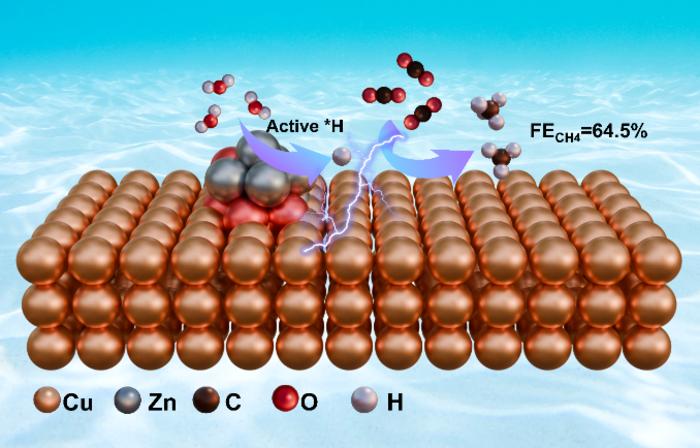
image: CuZn800@C was constructed via solvothermal method and utilizes the high-temperature volatility of zinc to prepare through calcination at different temperatures, which displays a high methane Faradaic efficiency of 64.5% and a remarkable partial current density of -551.3 mA/cm2 at -1.7 V vs. RHE, along with excellent stability. Zn and Cu form a tandem reaction system. Zn sites promote water splitting to provide protons, while Cu sites reduce the energy barrier for *CO hydrogenation....
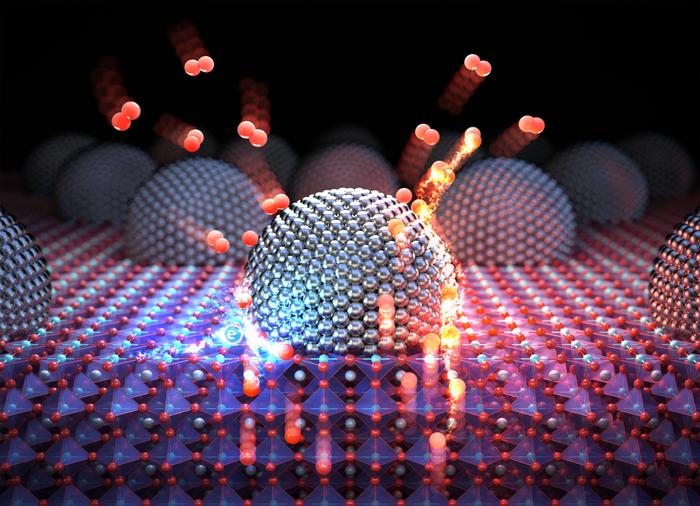
A joint team from SNU, KAIST, and KBSI has identified the distinct reaction sites of silver nanocatalysts in solid oxide cells. During electricity generation the catalyst–electrode interface dominates, while during hydrogen production the nanoparticle surface is key. The finding enables new design principles for higher-efficiency green hydrogen and clean power systems. Published in Energy & Environmental Science.
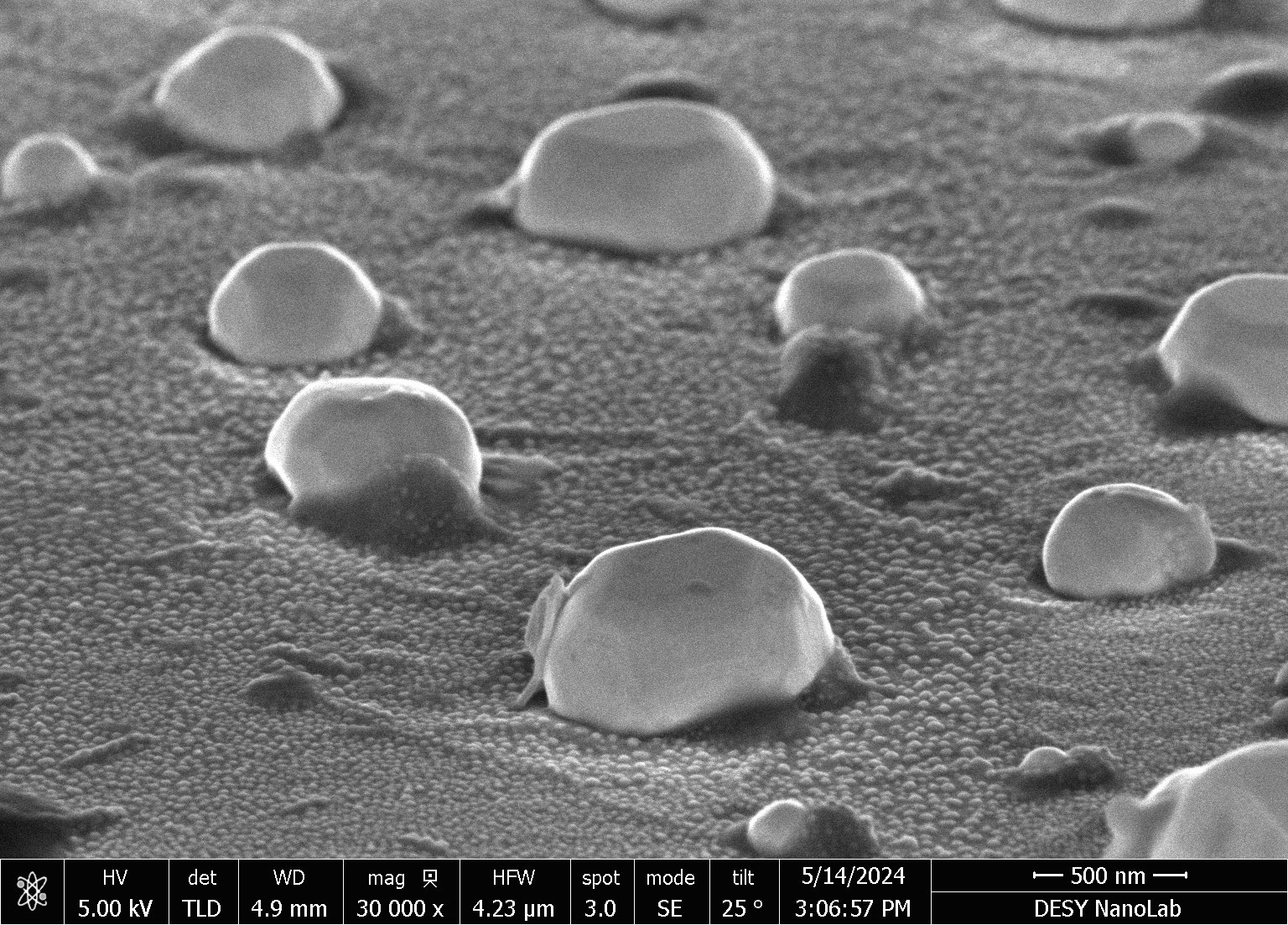
Using a combination of spectromicroscopy at BESSY II and microscopic analyses at DESY's NanoLab, a team has gained new insights into the chemical behaviour of nanocatalysts during catalysis. The nanoparticles consisted of a platinum core with a rhodium shell. This configuration allows a better understanding of structural changes in, for example, rhodium-platinum catalysts for emission control. The results show that under typical catalytic conditions, some of the rhodium in the shell can diffu...
This week in nanotech
11 deals tracked
New products
 Ti-WCMBN Nanomaterialia Featured
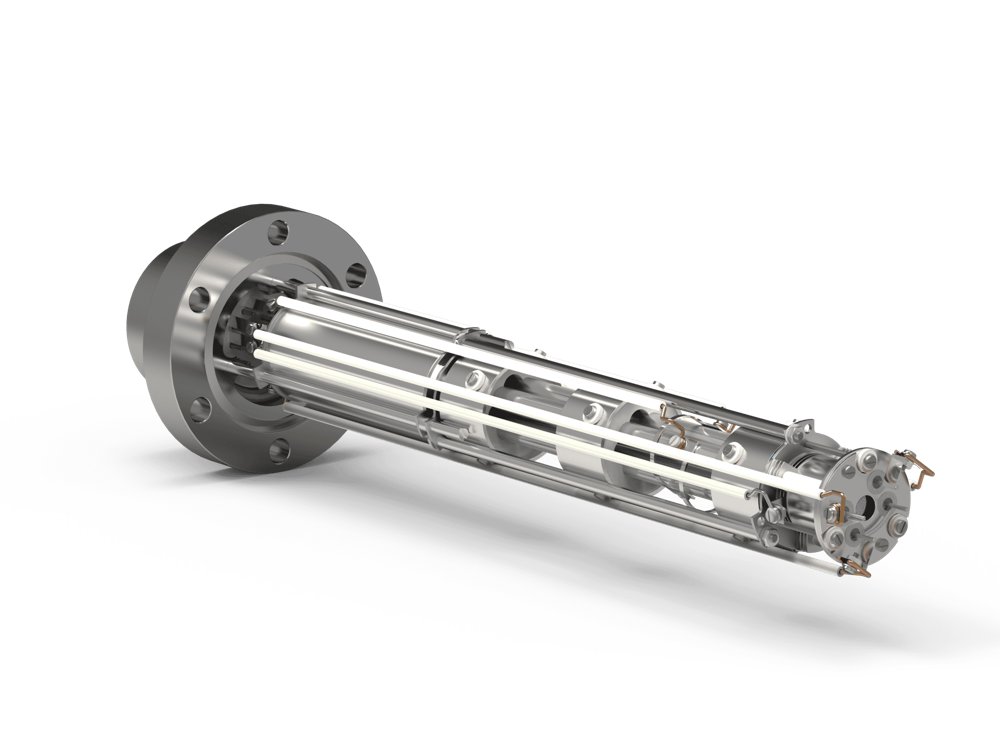 DLS-1 Mass Spectrometer for Fusion Gas AnalysisHiden Analytical Featured
 Aether®Lam Research
Market insights
Last 30 days: Semiconductors & Electronics was the busiest vertical: 48 of 154 events (31%).
Money raised per month
Behind the deal
Who led Sandia National Laboratories’s $3.4M Grant?
See the investors with Insights Pro →