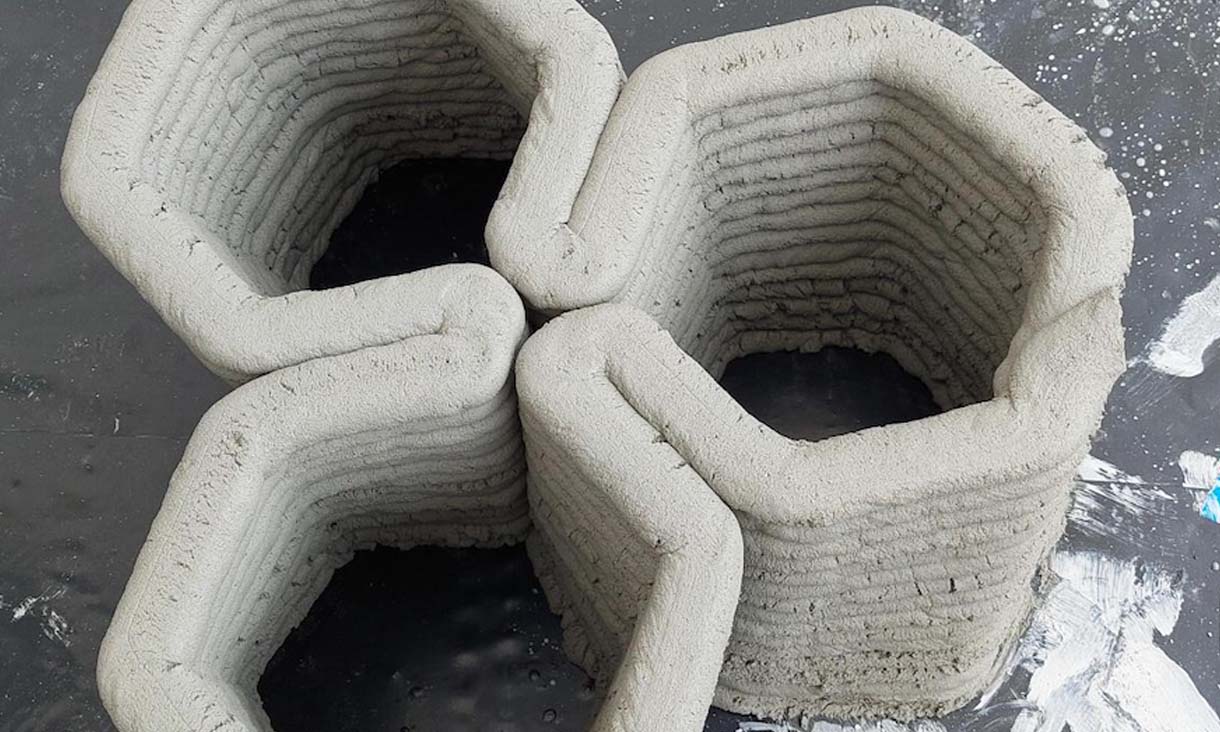
Engineers have added graphene oxide to cement mixture to make stronger 3D printed concrete that is easier to print, paving the way to create potential ‘smart’ walls that can monitor cracks.
The research, conducted by RMIT University and University of Melbourne, is the first to investigate the effects of graphene oxide on the printability and compressive properties of 3D printed concrete.
It found the addition of graphene oxide, a nanomaterial commonly used in batteries and electronic gadgets, gave concrete electrical conductivity and increased the strength of concrete by up to 10%.
Research supervisor and RMIT Associate Professor Jonathan Tran said this concrete had the potential to create ‘smart’ buildings where walls can act as sensors to detect and monitor small cracks.
While current detection methods, such as ultrasonic or acoustic sensors, are non-destructive and widely used in the construction industry to detect large cracks in concrete structures, detecting smaller cracks early is still a challenge.
“The equipment for these methods is often bulky, making it difficult to regularly use for monitoring very large structures like bridges or tall buildings,” said Tran, from the School of Engineering.
“But the addition of graphene oxide creates the possibility of an electrical circuit in concrete structures, which could help detect structural issues, changes in temperature and other environmental factors.”
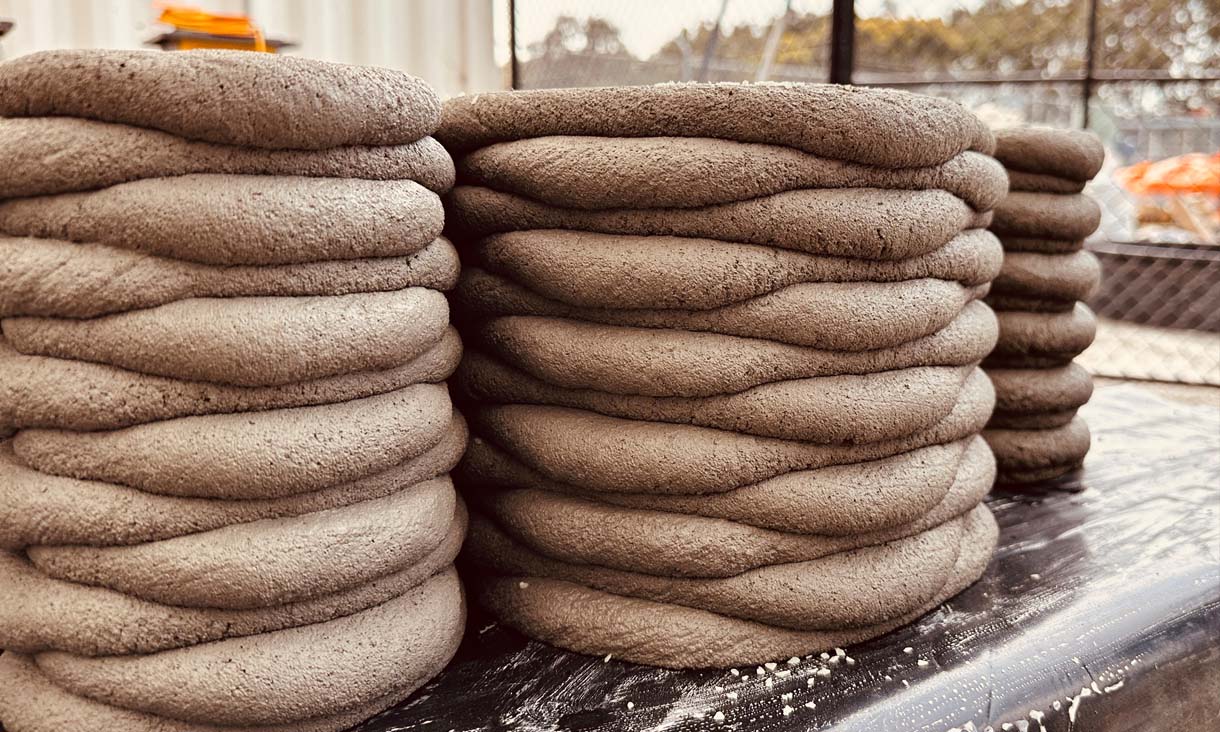
While the research was preliminary, Tran said graphene oxide had the exciting potential to make 3D printed concrete more viable in the construction industry, which could have positive impacts on cost and sustainability.
“Current concrete structures are created using formwork, which is where you create a mold before pouring fresh concrete mixture into it,” he said.
“Formwork requires a lot of labour, time and money, and it often creates a lot of waste.
“With 3D printed concrete, not only does it help save time, money and labour, but you can also create more complex structures and reuse some construction waste in cement-based materials.”
As 3D printed concrete uses layer-by-layer printing, it can potentially lead to weaker bonds between each layer, but the addition of graphene oxide in concrete makes it easier to extrude, creating better inter-layer bonding, which can also help maximise strength.
“Graphene oxide has functional groups on its surface, which are like sticky spots on the surface of a material that can grab onto other things,” Tran said.
“These 'sticky spots' are mainly made of various functional groups containing oxygen, which play a crucial role in facilitating its stronger bonds with other materials like cement. This strong bonding can improve the overall strength of the concrete.
“However, more research is needed to test if concrete with graphene oxide can match or surpass the strength of traditionally cast concrete.”
Too much of a good thing
Lead researcher and RMIT PhD candidate Junli Liu said the strength of the concrete could be increased if the bond between graphene oxide and the concrete mixture was improved.
The research tested two dosages of graphene oxide in cement and found the lower dosage (0.015% of the weight of cement) was stronger than the higher one (0.03% of the weight of cement).
Tran said adding too much graphene oxide could impact the strength and workability of the concrete mix, which can cause potential issues with printability, strength and durability.
“Concrete is a carefully balanced mixture. Adding too much graphene oxide can disrupt this balance, particularly the hydration process, which is crucial for concrete strength,” Tran said.
“Too much graphene oxide can impact the flow of concrete, making it harder to extrude and therefore creating a structure with more gaps between layers of concrete.
“Graphene oxide can also clump together instead of spreading out evenly, which can create weak spots in the concrete and reduce its overall strength.”
The next phase of the research will study the electrical conductivity of graphene oxide in concrete and test its viability as a potential smart material.
Reference
Exploration of using graphene oxide for strength enhancement of 3D-printed cementitious mortar
Junli Liu, Phuong Tran, Thusitha Ginigaddara, Priyan Mendis
https://www.sciencedirect.com/science/article/pii/S2772369023000385
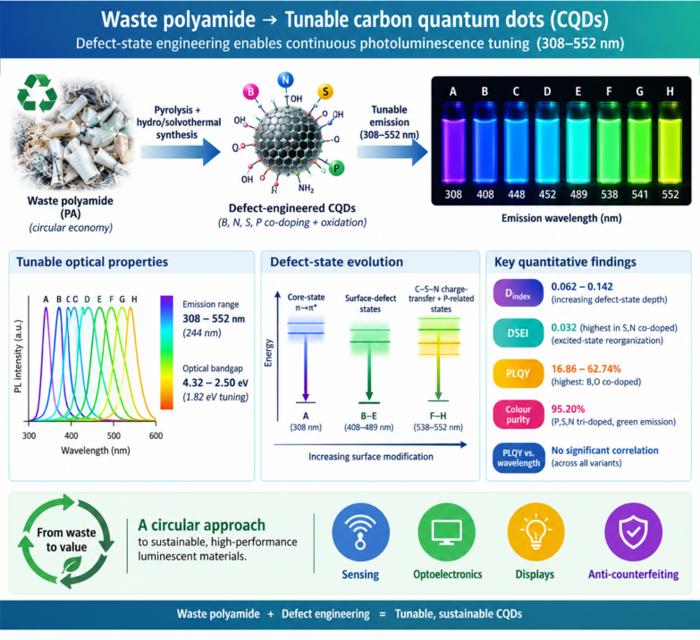
Waste polyamide-derived CQDs show continuous photoluminescence tuning from 308 to 552 nm through sequential defect-state engineering, with optical transition energies decreasing from 4.32 to 2.50 eV. @Christian Ebere Enyoh from Saitama University Carbon quantum dots (CQDs) are fluorescent carbon nanomaterials with potential applications in sensing, optoelectronics, displays, anti-counterfeiting, and environmental technologies. Their optical properties can be adjusted by modifying the carbon...
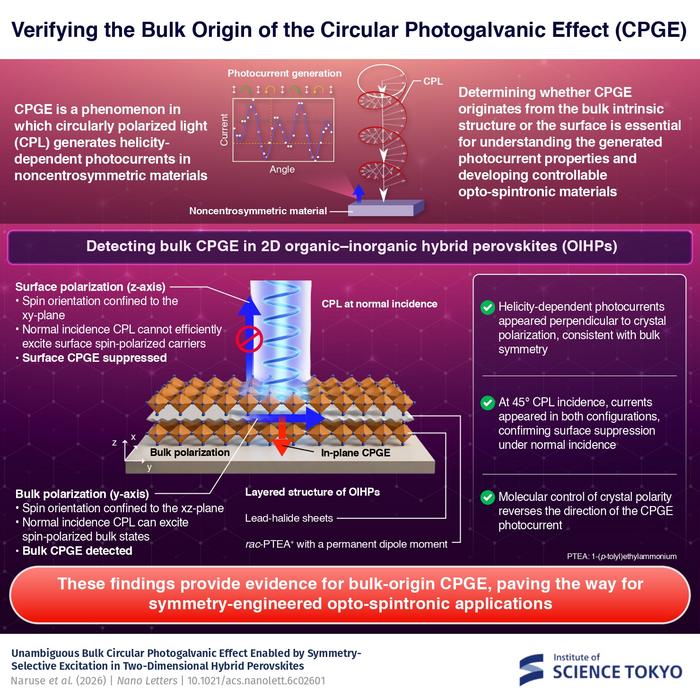
The researchers used circularly polarized light at normal incidence and found that helicity-dependent photocurrents appeared perpendicular to the crystal’s polarization but vanished when measured parallel to it, supporting a bulk origin of CPGE. @Institute of Science Tokyo The circular photogalvanic effect (CPGE), a phenomenon that generates helicity-dependent photocurrents in noncentrosymmetric materials, can originate purely from a crystal's internal structure without contribution from the...
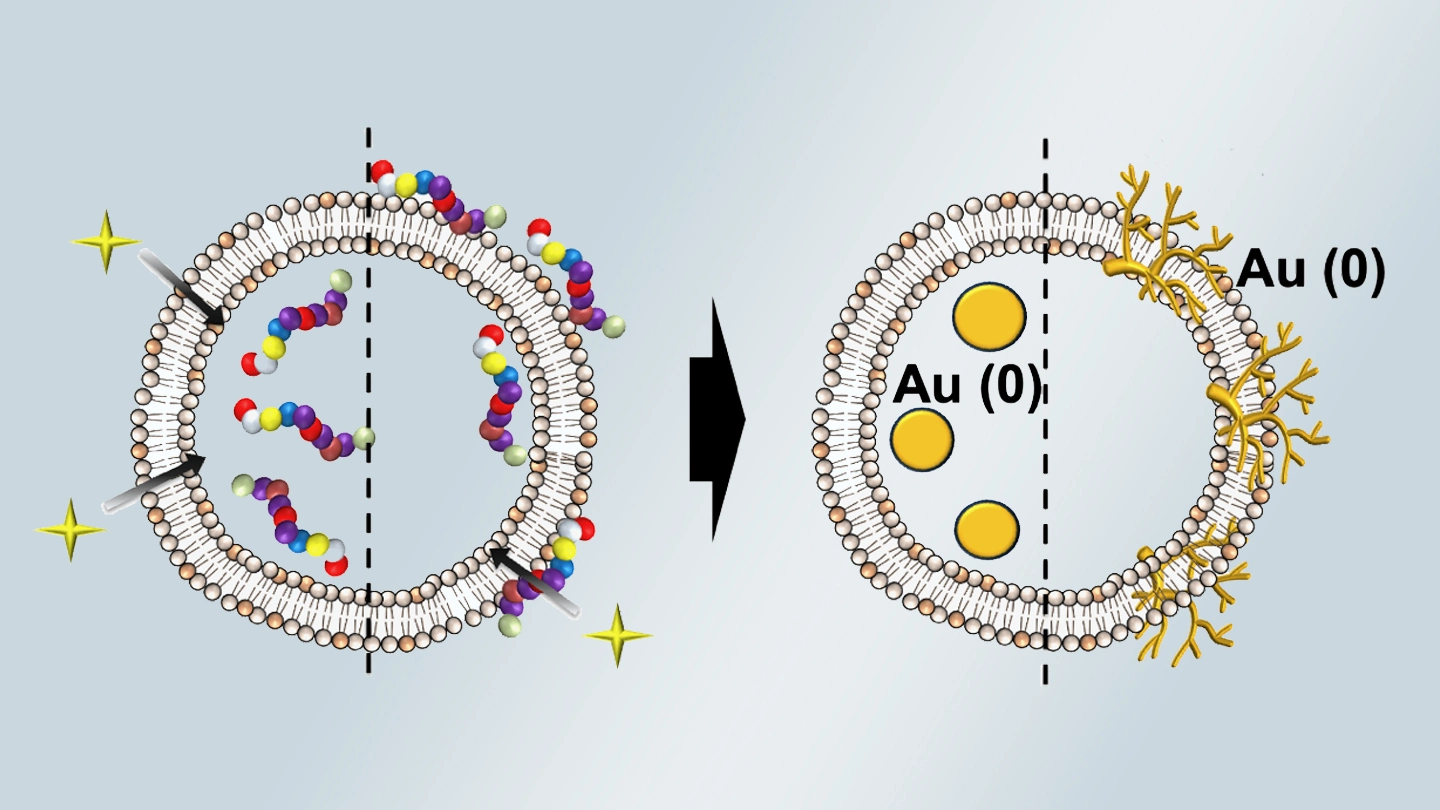
Summary of gold nanoparticle growth programming in liposome based on localization of biomineralization peptide The position of biomineralization peptides within liposomes can influence how gold nanoparticles grow, reports a research team from Institute of Science Tokyo. Peptides localized at the membrane interface promote branched structures, while those confined to the liposome interior favor spherical nanoparticles. The findings offer a new strategy for controlling nanoscale reaction...
