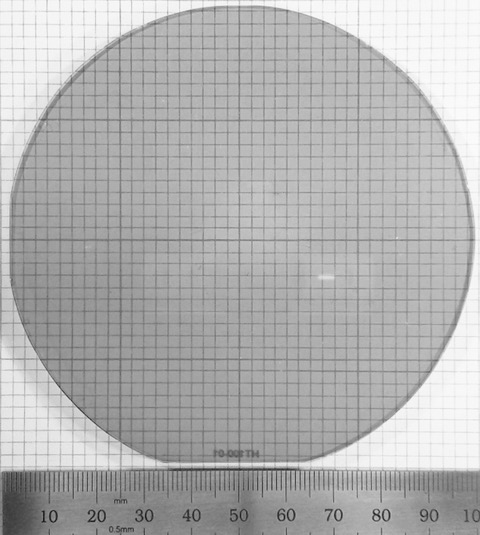
Morrisville, N.C., 3 November 2026. HexaTech, Inc. announced the immediate production release of its new 100 mm diameter single crystal aluminum nitride (AlN) substrate product on November 3, 2026. The company said the release builds on the three-inch diameter substrate launch announced earlier this year.
HexaTech describes itself as the commercial supplier of single crystal physical vapor transport (PVT)-grown AlN substrates. The company said its full range of 2-inch, 3-inch and 100 mm diameter products is available now with standard lead times.
CEO John Goehrke said: "This tremendous accomplishment is the result of a focused development program, supported over the previous 20 years by both public and private investment, and the outstanding HexaTech team. This success will be the basis of our future expansion efforts, as we drive toward 150 mm and beyond, and close the gap with other high-performance wide bandgap materials."
Gregory Mills, HexaTech VP of Business Development, said the 100 mm launch addresses the needs of commercial optoelectronic and high-power radio frequency (RF) customers. He said it lowers the price per unit area threshold, allows for ease of fabrication line insertion and supports rapid scaling of device production.
Dr. Rafael Dalmau, HexaTech Manager of Research and Development, said the company's history of delivering AlN substrate material with structural and surface quality continues with this technical achievement. HexaTech is a wholly-owned subsidiary of Stanley Electric, Tokyo, Japan.
HexaTech said the substrate material is used in UV-C light emitting diodes (LEDs) for disinfection, deep UV lasers for biological threat detection, high voltage switching devices for power conversion, and RF components for satellite communications.
Source: HexaTech news

Cornell researchers combined density functional theory with nonequilibrium Green's function methods to show that an applied electric field can raise or lower the cross-plane thermal conductivity of aluminum nitride depending on field direction relative to crystal polarity, predicting about 334 watts per meter-kelvin at zero field. Complementary experiments on hexagonal boron nitride measured thermal resistance drops of up to 25 percent under strong fields.

Cornell engineers have created a semiconductor with a record bandgap exceeding 7 electron volts, using silicon-doped aluminum gallium oxide grown by suboxide molecular-beam epitaxy on sapphire substrates. The films show room-temperature conductivity more than 100 million times higher than previously reported materials in the colossal bandgap range, and the team built a working diode and field-effect transistor.

Wolfspeed has commercially introduced its proprietary transparent silicon carbide (TSiC) technology for augmented reality, quantum computing and advanced optical applications. The company is advancing 200 mm optical-grade substrates and developing 300 mm TSiC technology.
This week in nanotech
$109M raised
3 funding rounds · 18 deals tracked
New products
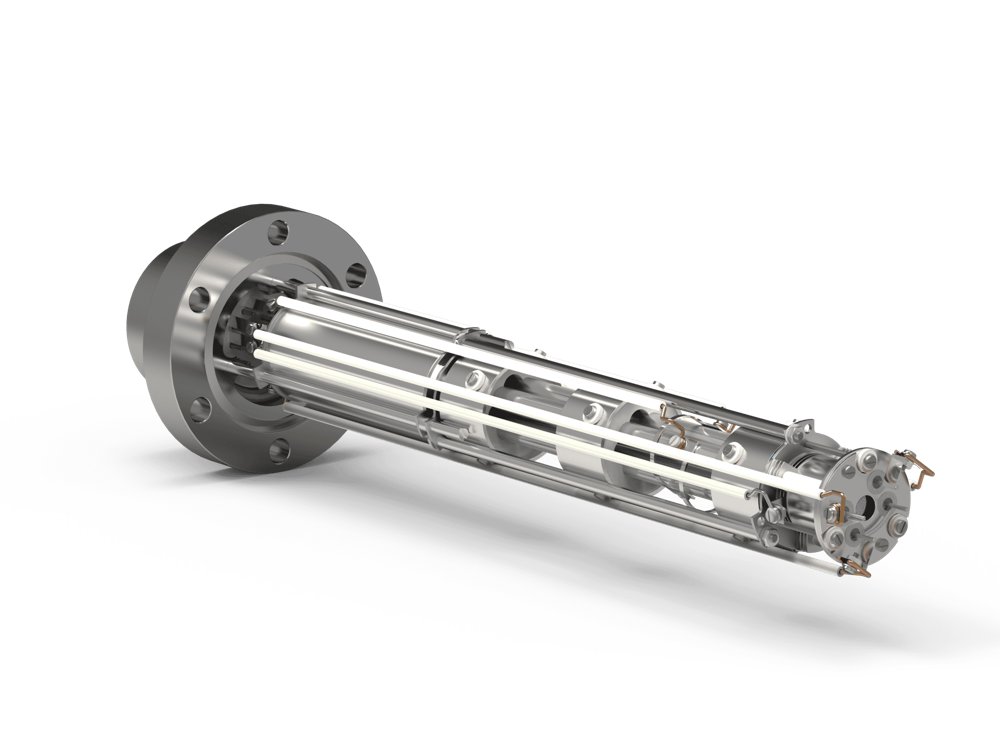 DLS-1 Mass Spectrometer for Fusion Gas AnalysisHiden Analytical Featured
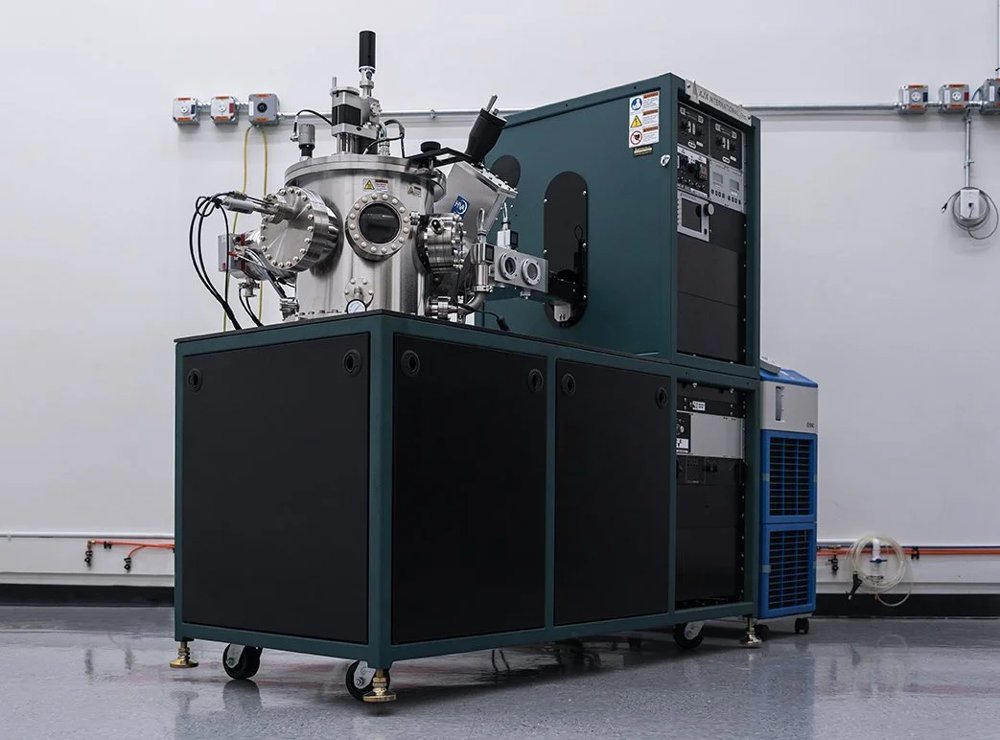 Orion Sputtering Deposition SystemsAJA International Featured
 GiiiGii
Market insights
Last 30 days: Semiconductors & Electronics drew the most money: $545M.
Money raised per month