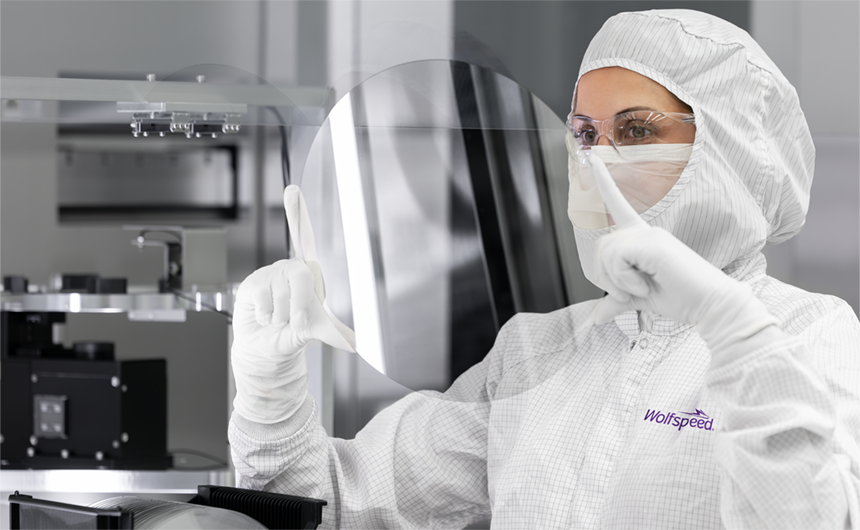
Durham, 29 October 2026. Wolfspeed, Inc. (NYSE: WOLF) announced the commercial introduction of its proprietary transparent silicon carbide (TSiC) technology. The company said the technology expands the potential of silicon carbide to support augmented reality (AR), quantum computing and advanced optical applications.
Wolfspeed's optical-grade TSiC substrates are engineered for low optical absorption and wafer flatness. The company said silicon carbide's high refractive index, low birefringence, hardness and thermal conductivity make it a promising material for AR waveguides. These properties support wider fields of view, improved image quality and more compact wearable devices, according to the release.
In quantum computing, Wolfspeed said TSiC technology can host quantum bits (qubits), preserve their quantum states and transmit quantum information through light within a single silicon carbide crystal. The company said silicon carbide can support all these functions, unlike many alternative materials.
"Wolfspeed's leadership in silicon carbide innovation extends well beyond traditional semiconductor applications," said Katrin Feurle, Vice President, Beyond Power at Wolfspeed. "Our proprietary TSiC technology and extensive intellectual property portfolio position us to help enable breakthroughs in augmented reality, quantum computing and other emerging markets, reinforcing the versatility and transformative potential of silicon carbide."
Barry Silverstein, a display systems and optics industry expert at the University of Rochester and former Chief Technology Officer and Senior Director of Optics and Display Products at Meta Reality Labs, said: "Its exceptionally high refractive index lets a single-layer waveguide do the work that previously took stacked optics, which is the kind of step-change the industry needs to move AR from a novelty into everyday eyewear."
Wolfspeed said the technology is supported by an intellectual property portfolio. The company continues advancing its 200 mm optical-grade substrates while developing 300 mm TSiC technology to support future market requirements. More information, including requests for samples, is available through the company.
Source: Wolfspeed, Inc. news
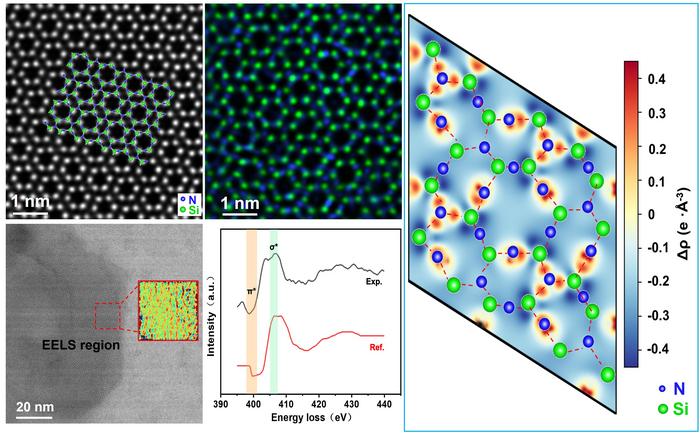
A β-Si3N4 nanolayer about 20 nm thick and continuous over several micrometers has been formed between carbon and silicon carbide without conventional oxide sintering additives, using a porous carbon framework infiltrated with molten silicon. Complementary atomic-resolution imaging resolved both silicon and nitrogen sublattices, confirming the ABAB stacking and corner-sharing tetrahedral network, while electron energy-loss spectroscopy and first-principles calculations linked the spectra to…
Wolfspeed has announced a multiyear supply agreement to provide silicon carbide devices for BorgWarner's next-generation 800V silicon carbide-based inverter platform. BorgWarner is using Wolfspeed's 1200V silicon carbide technology.
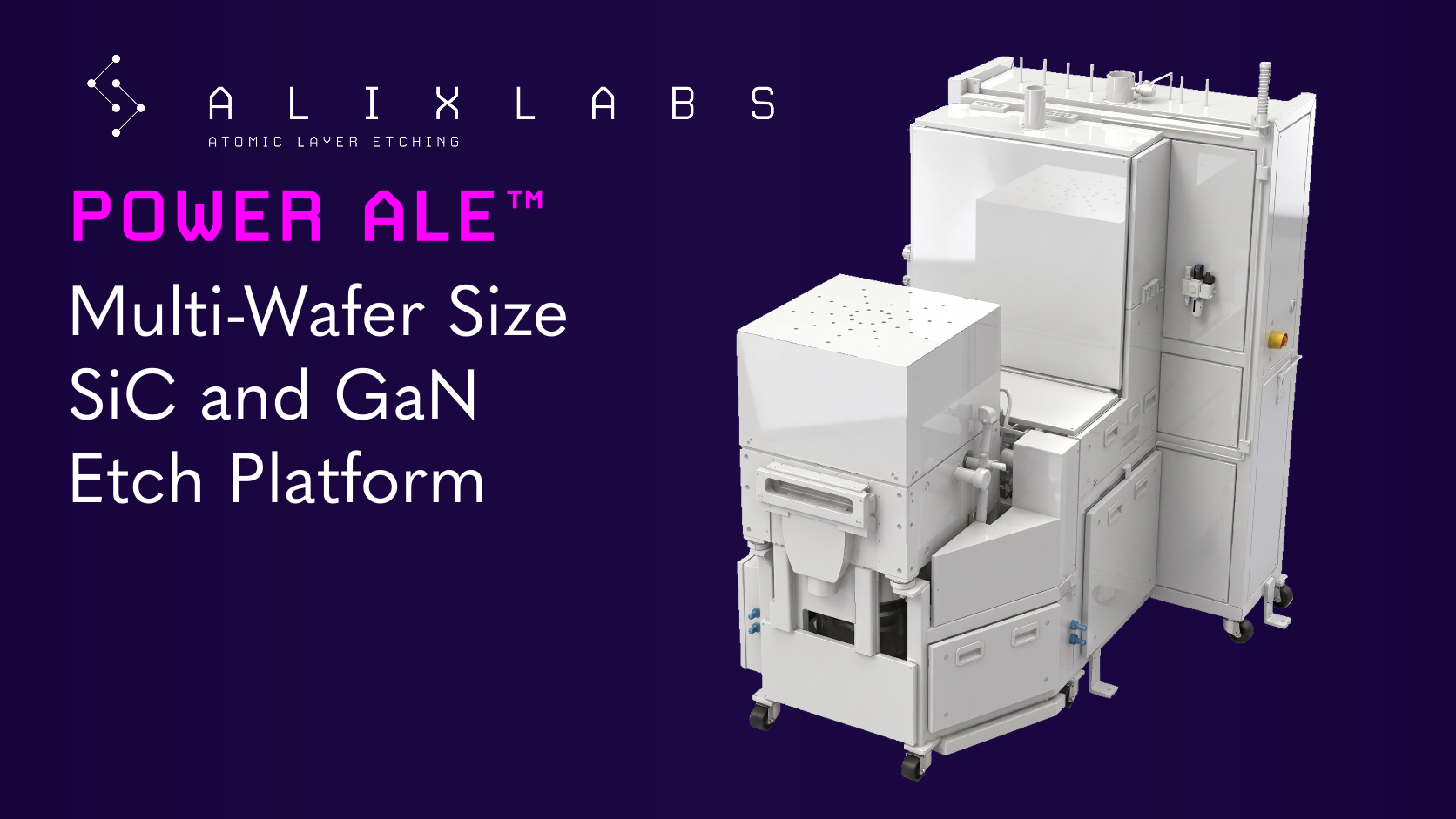
AlixLabs has introduced Power ALE™, an Atomic Layer Etching platform for wide-bandgap power semiconductors. It supports 150, 200 and 300 mm wafers and targets SiC trench sidewall smoothing and GaN HEMT gate recess.
This week in nanotech
$13.6M raised
2 funding rounds · 22 deals tracked
New products
 Ti-WCMBN Nanomaterialia Featured
 Nion-compatible In Situ STEM Holders for Electrical BiasingHummingbird Scientific Featured
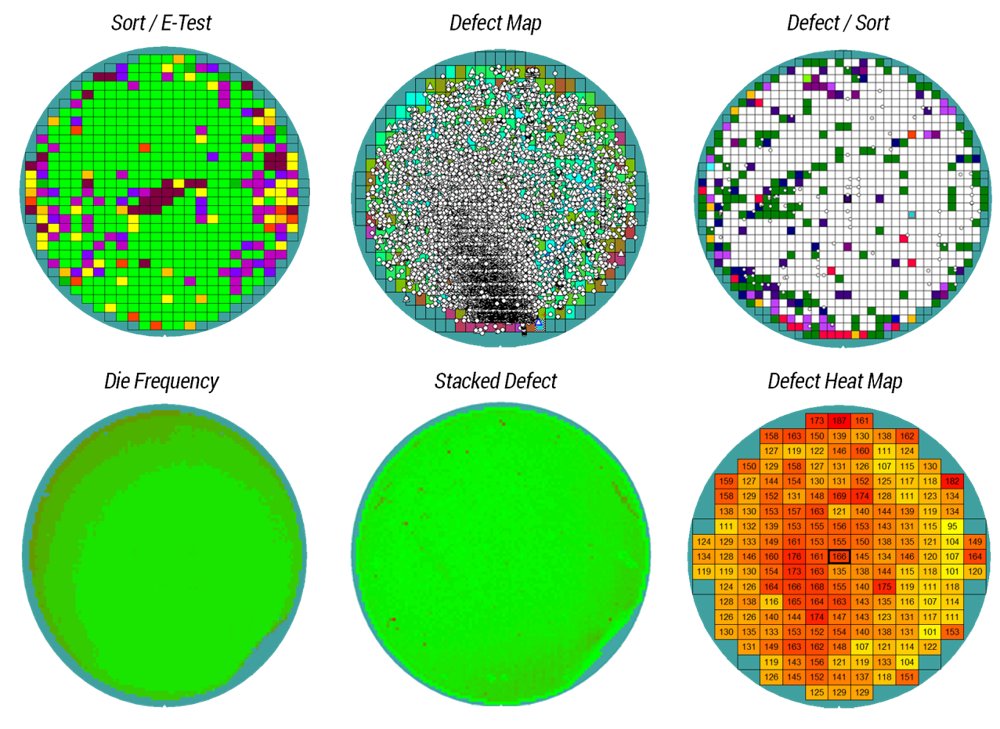 Discover Mapping SuiteOnto Innovation
Market insights
Last 30 days: Quantum Technologies was the busiest vertical: 63 of 197 events (32%).
Money raised per month