Hefei Institutes of Physical Science, Chinese Academy of Sciences
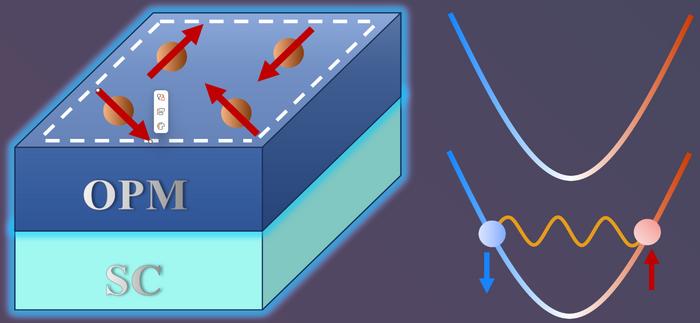
A research team from the High Magnetic Field Laboratory of the Hefei Institutes of Physical Science of the Chinese Academy of Sciences, in collaboration with the Hong Kong University of Science and Technology, has identified a hidden Zeeman field (HZF) in the band structures of odd-parity magnets (OPMs). The finding reveals a previously overlooked feature of these magnetic systems and points to a route toward robust topological superconductivity without external magnetic fields.
The study was published online in Physical Review Letters and selected as an Editors' Suggestion.
Topological superconductors are promising candidates for fault-tolerant quantum computing, but conventional approaches rely on external magnetic fields that can suppress superconductivity and leave topological phases sensitive to disorder. Odd-parity magnets (OPMs), which exhibit momentum-dependent spin splitting despite having no net magnetic moment, offer a potential alternative. However, previous studies have largely overlooked the effects of the intrinsic time-reversal-symmetry breaking associated with their magnetic order.
In this study, using an analytical model of an f-wave magnet on a triangular lattice, the team showed that the band structure of OPMs is shaped by two distinct mechanisms. The non-relativistic spin splitting (NSS) arises from a gauge field induced by magnetic order, which corresponds to a real-space spin-current-loop pattern. The HZF, by contrast, originates directly from time-reversal-symmetry breaking and lifts Kramers degeneracy at time-reversal-invariant momenta.
Self-consistent mean-field calculations further showed that the two effects work together to stabilize superconductivity. The electron-volt-scale NSS locks the spin polarization perpendicular to the HZF, creating a protection mechanism similar to that in Ising superconductivity. This allows conventional s-wave superconductivity to coexist with a strong HZF over a wide parameter range, even beyond the Pauli limit, with the corresponding Zeeman splitting reaching hundreds of millielectronvolts.
Building on this mechanism, the team constructed several topological superconducting phases by introducing s-wave pairing. These phases can host different types of Majorana boundary modes, including Majorana flat bands and unidirectional Majorana edge states, without requiring an external magnetic field.
The findings provide a more complete understanding of OPM band structures and establish these materials as a promising platform for robust, magnetic-field-free topological superconductivity, according to the team.
Reference
Hidden Zeeman Field in Odd-Parity Magnets: An Ideal Platform for Topological Superconductivity
Xun-Jiang Luo, Zi-Ting Sun, Xilin Feng, Mingliang Tian, and K. T. Law
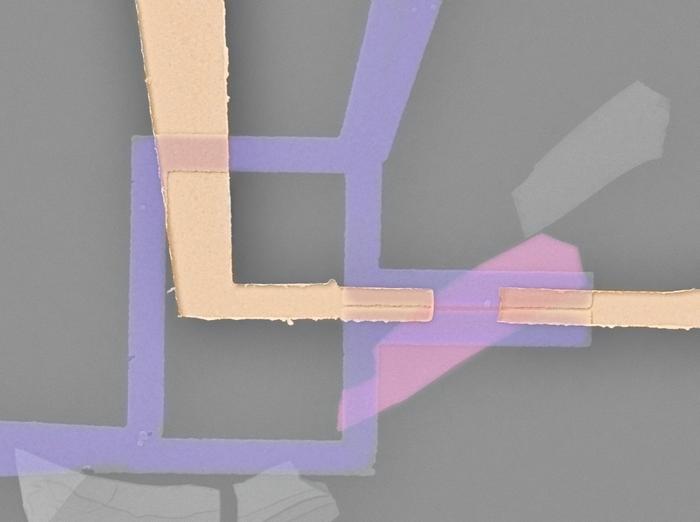
Physicists at the University of Cologne have observed quantum states in a topological insulator Josephson junction that match theoretical predictions, using tunneling spectroscopy to probe highly transmissive Andreev states across a range of charge-carrier densities. The results support a long-standing model of how superconductivity interacts with topological surface states, a key step toward Majorana zero modes and topological qubits.
IonQ and Carahsoft Technology Corp. announced a strategic partnership. Carahsoft will serve as IonQ's Public Sector distributor, enabling Government agencies to purchase IonQ technology through its reseller partners.
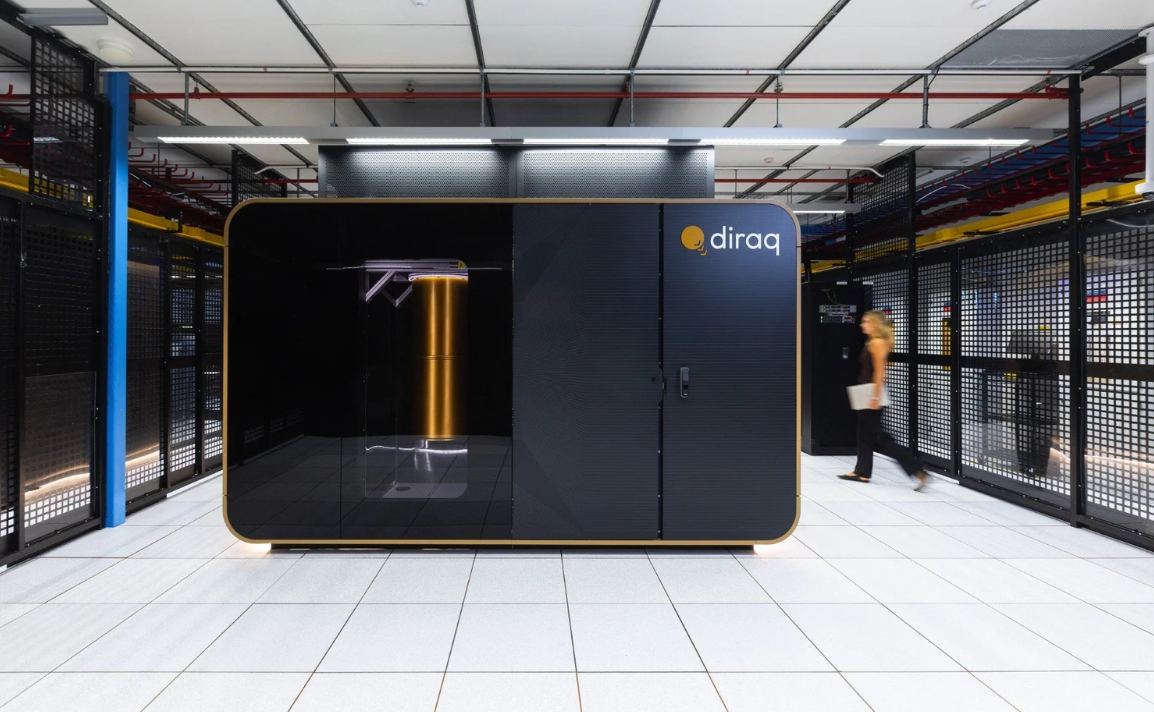
Diraq has installed a silicon spin quantum computer at Equinix in Sydney, Australia. The system runs eight qubits, and Diraq is targeting up to 256 qubits in the same deployed system within the next year.
This week in nanotech
$9M raised
1 funding round · 22 deals tracked
New products
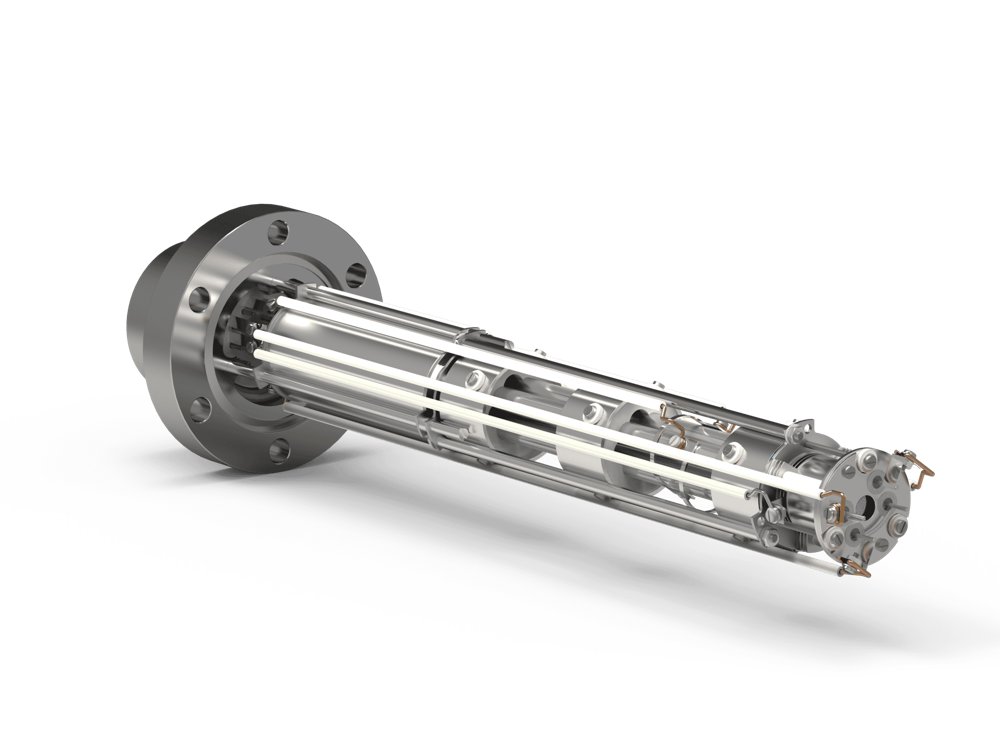 DLS-1 Mass Spectrometer for Fusion Gas AnalysisHiden Analytical Featured
 Ti-WCMBN Nanomaterialia Featured
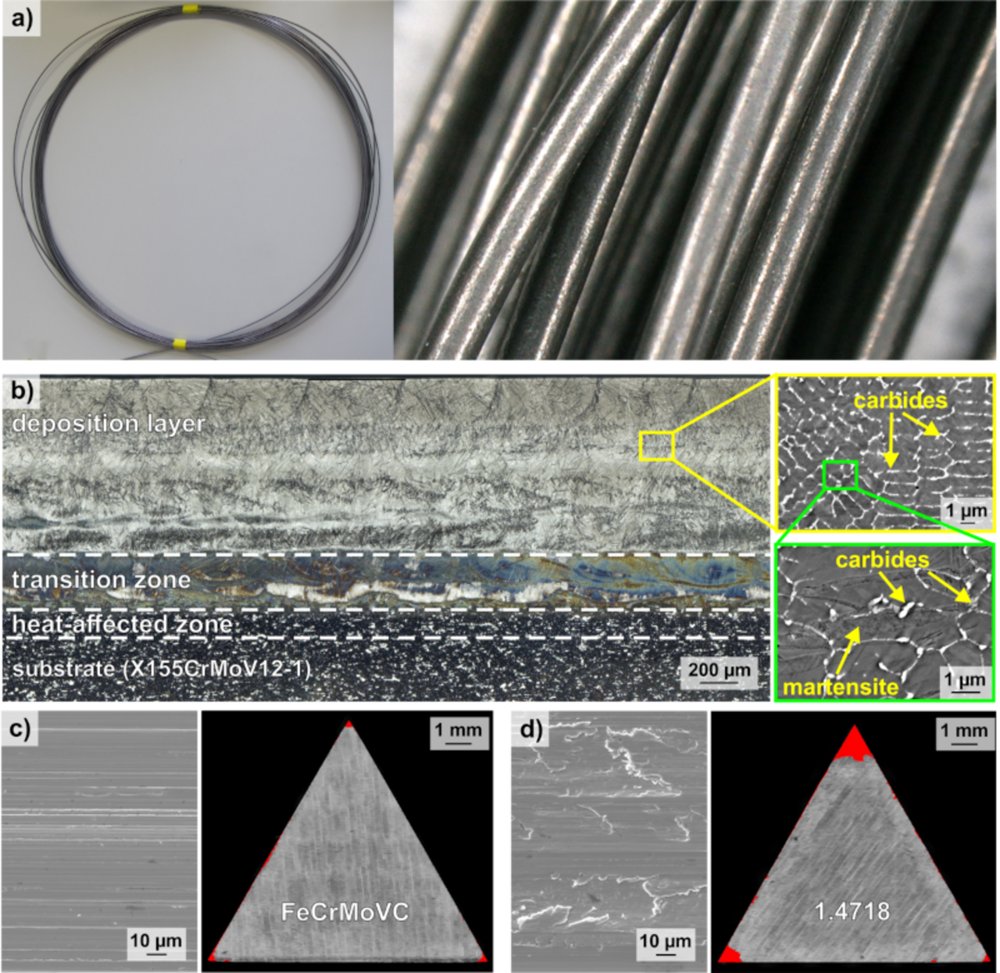 Fe85Cr4Mo8V2C1 wire filler materialLeibniz Institute for Solid State and Materials Research Dresden - IFW Dresden
Market insights
Last 30 days: Quantum Technologies was the busiest vertical: 59 of 192 events (31%).
Money raised per month