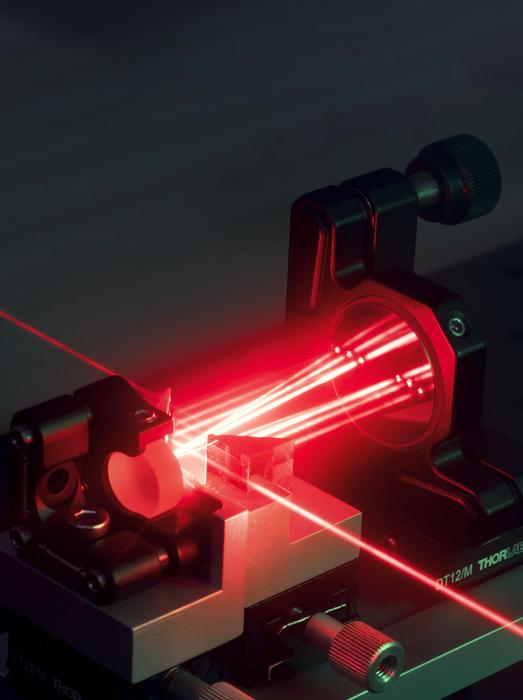
Lasers that emit extremely short light pulses are highly precise and are used in manufacturing, medical applications, and research. The problem: efficient short-pulse lasers require a lot of space and are expensive. Researchers at the University of Stuttgart have developed a new system in cooperation with Stuttgart Instruments GmbH. It is more than twice as efficient as previous systems, fits in the palm of a hand, and is highly versatile. The scientists describe their approach in the journal Nature.
Eighty percent efficiency is possible
“With our new system, we can achieve levels of efficiency that were previously almost unattainable,” says Prof. Harald Giessen, Head of the 4th Physics Institute at the University of Stuttgart. Through their experiments, the researchers demonstrated that achieving 80% efficiency with a short-pulse laser is fundamentally possible. This means that 80% of the power input can actually be used. “For comparison: current technologies achieve only about 35%—which means they lose much of their efficiency and are correspondingly expensive,” explains Giessen.
A lot of energy in an extremely short time
Short-pulse lasers generate light pulses that last only nano-, pico-, or femtoseconds (i.e., a few billionths to quadrillionths of a second). This allows them to concentrate a large amount of energy on a small area within an extremely short time. A pump laser and the laser that emits the short pulses work together. The pump laser supplies a special crystal with light energy. This crystal is the core of the process and transfers the energy from the pump laser to the ultrashort signal pulse. This converts the incoming light particles into infrared light. This makes it possible to carry out experiments, measurements, or production processes that are not possible with visible light. Short-pulse lasers are used in production—for example, for precise and gentle material processing. They are also used in medical technology for imaging processes or in quantum research for particularly precise measurements at the molecular level.
Synchronize laser amplification and bandwidth
“Designing short-pulse lasers efficiently remains an unsolved challenge,” explains Dr. Tobias Steinle, lead author of the study. “In order to generate short pulses, we need to amplify the incoming light beam and cover a wide range of wavelengths.” Until now, it has not been possible to combine both properties simultaneously in a small and compact optical system.” Laser amplifiers with a wide bandwidth require special crystals that are particularly short and thin. Efficient amplifiers, on the other hand, require especially long crystals. Connecting several short crystals in series is one possible way to combine both. It is already being pursued in research. The key is to ensure that the pulses from the pump laser and the signal laser remain synchronized.
New multipass concept
Researchers have now solved this problem with a new multipass procedure. Instead of using a single long crystal or many short crystals, they use a single short crystal and repeatedly run the light pulses through this crystal in their optical parametric amplifier. Between two passes through the crystal, the separated pulses are precisely realigned so that they remain synchronized. The system can generate pulses shorter than 50 femtoseconds, occupies only a few square centimeters, and consists of just five components.
Highly versatile
“Our multipass system demonstrates that extremely high efficiencies need not to come at the expense of bandwidth,” explains Steinle. “It can replace large and expensive laser systems with high power losses, which were previously required to amplify ultrashort pulses.” The new system is highly versatile and can be adapted to other wavelength ranges beyond infrared light as well as to different crystal systems and pulse durations. With this concept, the researchers aim to build small, lightweight, compact, portable, and tunable lasers capable of precisely adjusting wavelengths. They see potential areas of application in medicine, analytics, gas sensor technology, and environmental research.
Reference
Dispersion-engineered multipass optical parametric amplification
Jan H. Nägele, Tobias Steinle, Johann Thannheimer, Philipp Flad & Harald Giessen
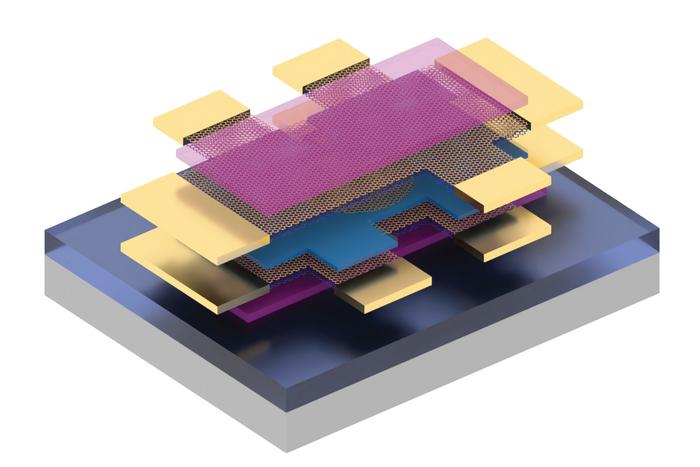
In a promising breakthrough, MIT physicists have today reported their observation of new key evidence of unconventional superconductivity in “magic-angle” twisted tri-layer graphene (MATTG) — a material that is made by stacking three atomically-thin sheets of graphene at a specific angle, or twist, that then allows exotic properties to emerge. MATTG has shown indirect hints of unconventional superconductivity and other strange electronic behavior in the past. The new discovery, reported in th...
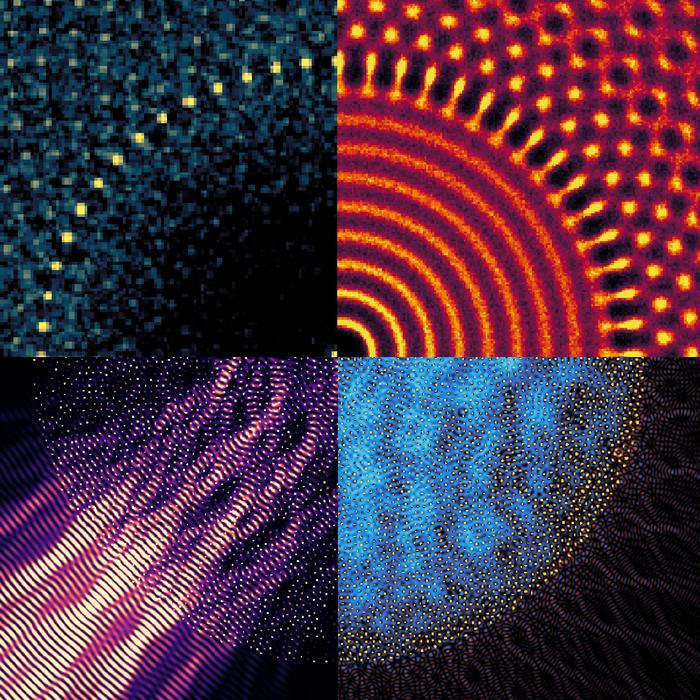
Scientists at New York University report the discovery of “gyromorphs”—a material that combines the seemingly incompatible properties of liquids and crystals and that performs better than any other known structure in blocking light from all incoming angles. The breakthrough, described in the journal Physical Review Letters, marks an innovative way to control optical properties and to potentially advance the capabilities of light-based computers.

Rice University researchers studying a class of atom-thin semiconductors known as transition metal dichalcogenides (TMDs) have discovered that light can trigger a physical shift in their atomic lattice, creating a tunable way to adjust the materials’ behavior and properties. The effect, observed in a TMD subtype named after the two-faced Roman god of transitions, Janus, could advance technologies that use light instead of electricity, from faster and cooler computer chips to ultrasensitive se...
This week in nanotech
$109M raised
3 funding rounds · 18 deals tracked
New products
 Nion-compatible In Situ STEM Holders for Electrical BiasingHummingbird Scientific Featured
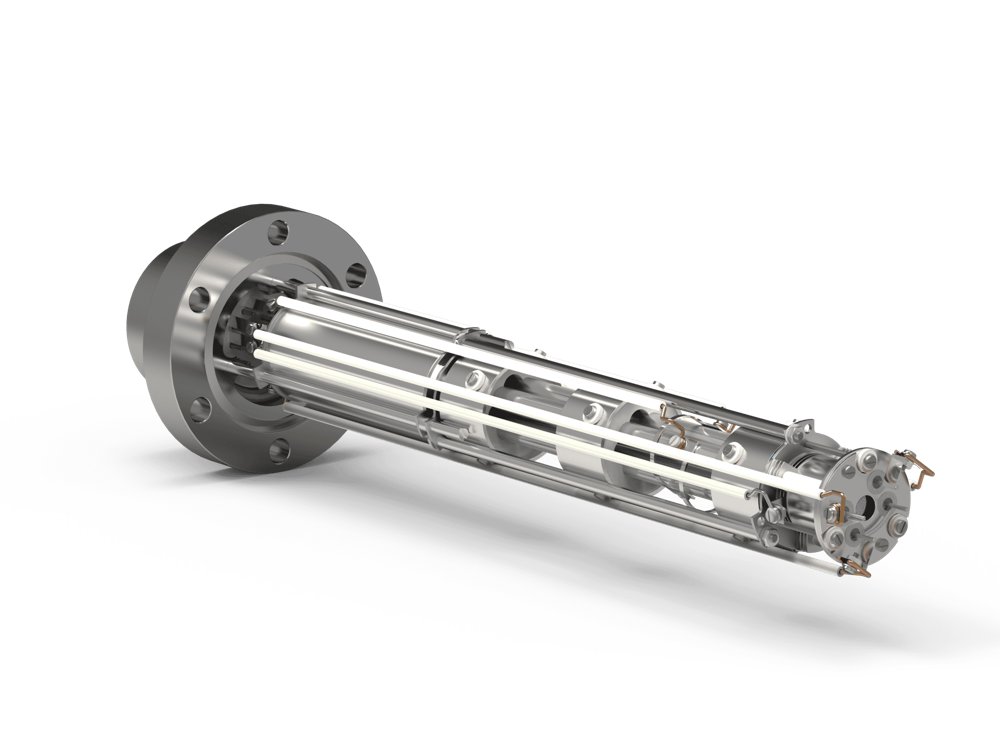 DLS-1 Mass Spectrometer for Fusion Gas AnalysisHiden Analytical Featured
 Talphene™ Graphene AdditivesTalga Group
Market insights
Last 30 days: Semiconductors & Electronics drew the most money: $545M.
Money raised per month