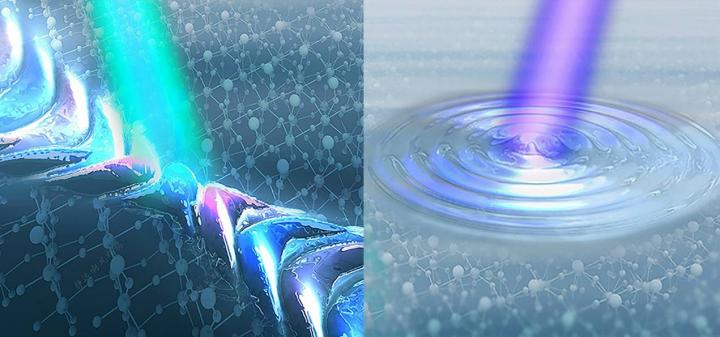
An international team led by researchers from the University of Oviedo and the Centre for Research in Nanomaterials and Nanotechnology (CINN-CSIC), together with scientist from the Basque research centers CIC nanoGUNE, DIPC, Materials Physics Center (CSIC-UPV/EHU), and international collaborators from the Chinese Academy of Sciences, Case Western Reserve University (USA), Austrian Institute of Technology, Paris Materials Centre, and University of Tokyo has discovered an effective method for controlling the frequency of confined light at the nanoscale in the form of phonon polaritons (light coupled to vibrations in the crystal). The results have now been published in Nature Materials.
Research with nanolight based on phonon polaritons has developed considerably in recent years thanks to the use of sheet-structured nanomaterials such as graphene, boron nitride or molybdenum trioxide: the so-called van der Waals materials. Nanolight based on phonon polaritons is very promising because it can live longer than other forms of nanolight, but one of the main drawbacks to the technological applications of this nanolight based on phonon polaritons is the limited frequency ranges characteristic of each material, it exists only in narrow frequency region.
But now, an international team has proposed a novel method that allows to widely extend this range of working frequencies of phonon polaritons in van der Waals materials. This consists in the intercalation of alkaline and alkaline earth atoms, such as sodium, calcium or lithium, in the laminar structure of the van der Waals vanadium pentaoxide material, thus allowing to modify its atomic bonds and consequently its optical properties.
Considering that a large variety of ions and ion contents can be intercalated in layered materials, on-demand spectral response of phonon polaritons in van der Waals materials can be expected, eventually covering the whole mid-infrared range, something critical for the emerging field of phonon polariton photonics.
The finding, published in the journal Nature Materials, will allow progress in the development of compact photonic technologies, such as high-sensitivity biological sensors or information and communication technologies at the nanoscale.
Broad spectral tuning of ultra-low-loss polaritons in a van der Waals crystal by intercalation
Javier Taboada-Gutiérrez, Gonzalo Álvarez-Pérez, Jiahua Duan, Weiliang Ma, Kyle Crowley, Iván Prieto, Andrei Bylinkin, Marta Autore, Halyna Volkova, Kenta Kimura, Tsuyoshi Kimura, M.-H. Berger, Shaojuan Li, Qiaoliang Bao, Xuan P. A. Gao, Ion Errea, Alexey Y. Nikitin, Rainer Hillenbrand, Javier Martín-Sánchez and Pablo Alonso-González
Nature Materials (2020)
DOI: 10.1038/s41563-020-0665-0
Cooperative Research Center (CIC) nanoGUNE
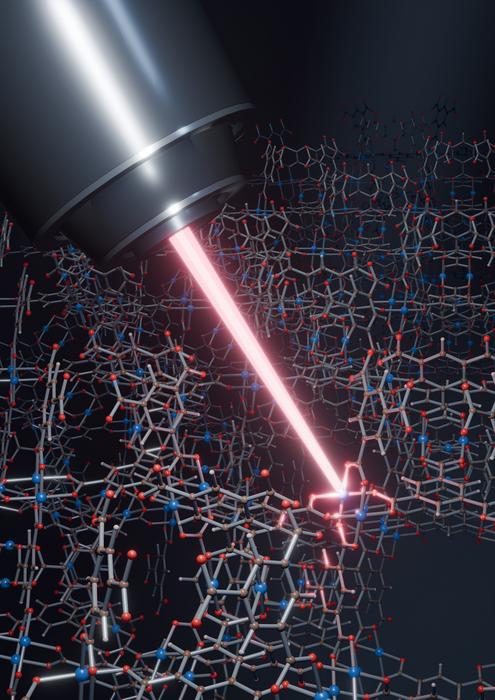
Filling the pores of a copper-based metal-organic framework with imidazolium ionic liquids makes the fragile material hard enough to pattern at room temperature. Treated Cu3BTC2 resisted the crystal damage seen in untreated samples during focused gallium ion beam etching, and researchers produced lines just 130 to 300 nanometres wide. The liquids appear to absorb heat and dissipate charge, and also raised hardness and thermal stability.
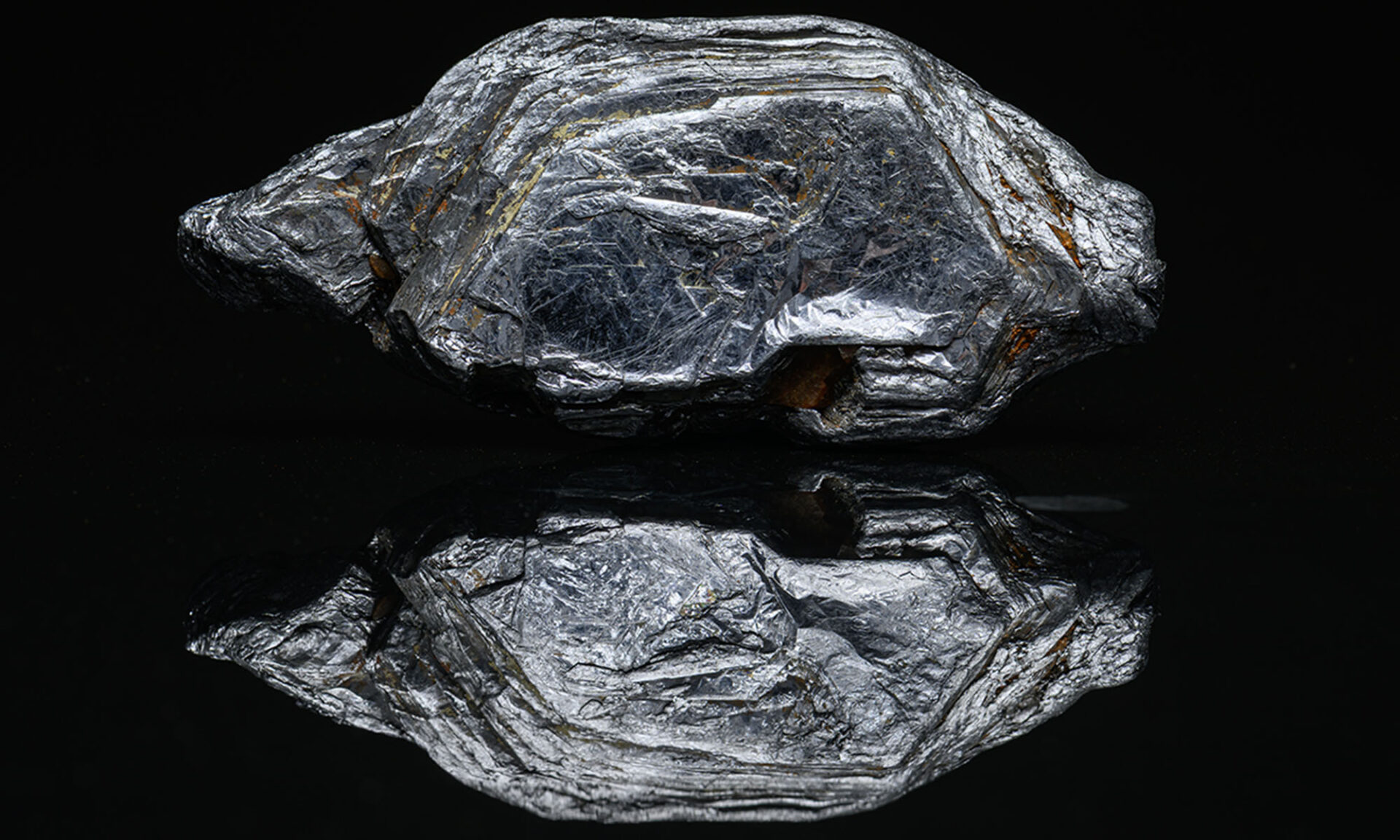
Engineers at the University of Rochester and Technion found that pressing a diamond nanoindenter tip a few nanometers into molybdenum can recrystallize the heat-resistant metal at room temperature, a process normally requiring about 1,000 degrees Celsius. Stopping the test just after the pop-in event reforms crystal grains in a tiny region around the dent, offering a way to repair defects and tailor properties locally.
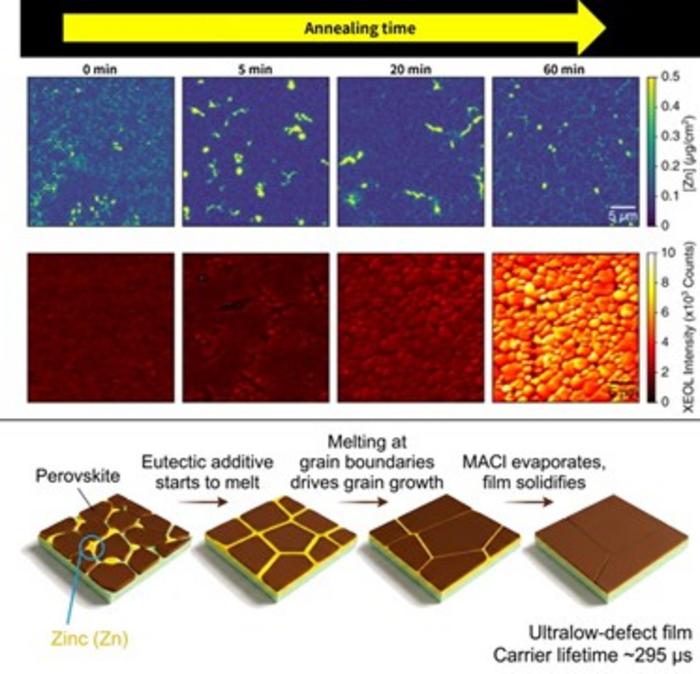
A eutectic mixture of methylammonium chloride and a zinc halide melts at about 100 degrees Celsius, forming a transient liquid layer at perovskite grain boundaries that lets crystals merge into larger, cleaner grains. The resulting films reached a carrier lifetime of roughly 295 microseconds and a surface recombination velocity of 0.3 cm/s, the lowest reported for lead halide perovskites.
This week in nanotech
9 deals tracked
New products
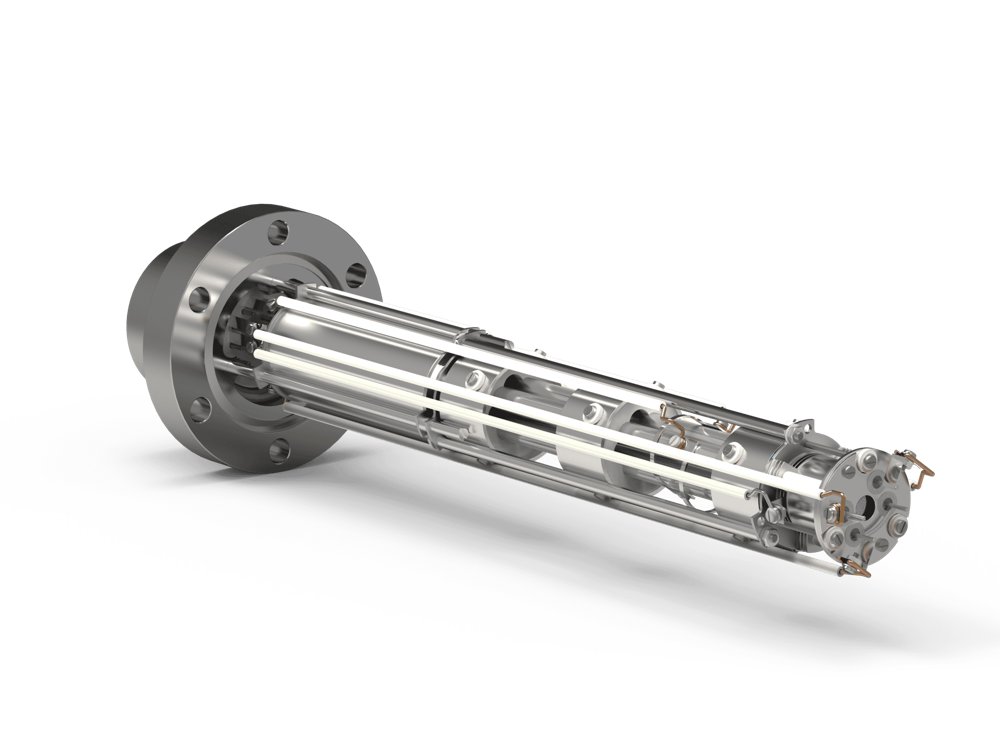 DLS-1 Mass Spectrometer for Fusion Gas AnalysisHiden Analytical Featured
 Ti-WCMBN Nanomaterialia Featured
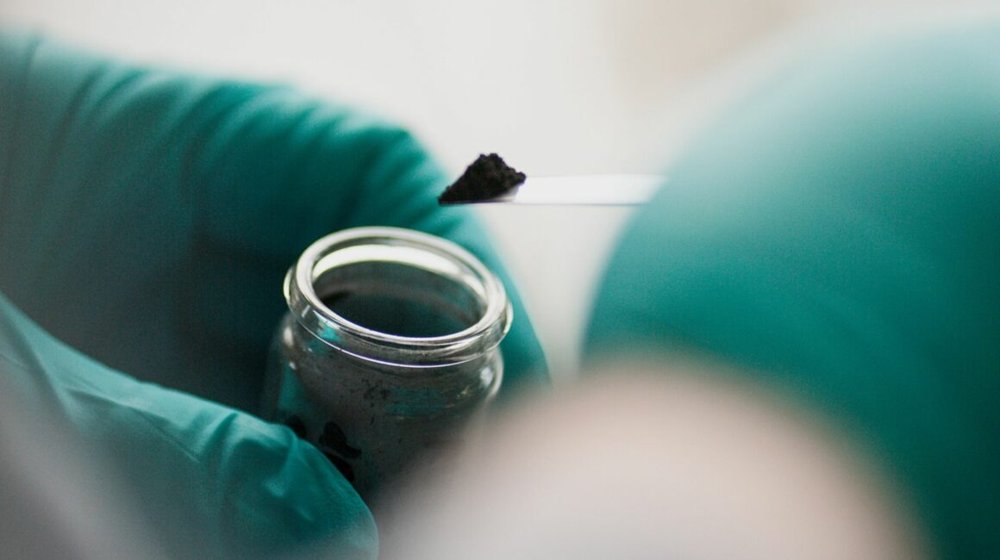 Talphene™ Graphene AdditivesTalga Group
Market insights
Last 30 days: Semiconductors & Electronics was the busiest vertical: 39 of 130 events (30%).
Money raised per month