Science China Press
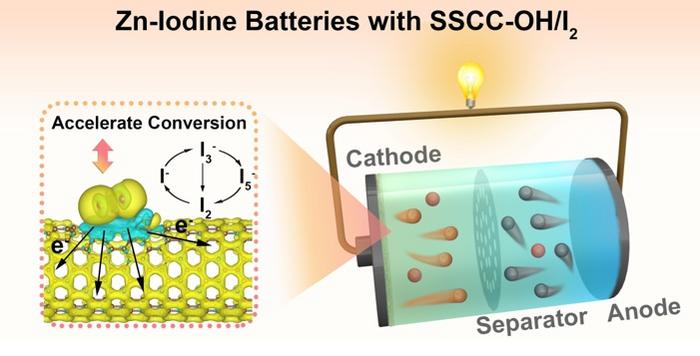
Aqueous zinc-ion batteries (ZIBs) have emerged as promising next-generation energy storage systems, owing to the natural abundance and high theoretical specific capacity of the Zn metal anode, and inherent safety of aqueous electrolytes. Among them, aqueous Zn-I2 batteries stand out by virtue of long cycling stability, great rate performance, and a high theoretical capacity. However, I2-based cathodes face several problems: poor electrical conductivity of I2, the cathode volume changes during cycling, and the shuttle effect of I3−.
To tackle these challenges, researchers at Jilin University and Changchun Institute of Applied Chemistry developed self-supporting carbon nanotube cathodes (SSCC) with controlled surface functional groups. Guided by density functional theory calculations, they compared pristine carbon nanotubes and nanotubes modified with hydroxyl (‒OH), carboxyl (‒COOH) and amine (‒NH2) groups. The calculations showed that ‒OH-modified carbon nanotubes had the strongest adsorption affinity for I2 species. The adsorption energy of I3− on ‒OH-modified nanotubes was −7.42 eV, and the interaction energy was −5.69 eV, stronger than those on pristine, ‒COOH-, and ‒NH2-modified nanotubes.
Experimentally, the SSCC‒OH cathode had a high specific surface area of about 1005 m2/g, which helped confine I2 species inside the nanotube channels. Spectroscopy and microscopy confirmed the functional groups and uniform I2 loading. The optimized cathode, named SSCC-OH/I2, delivered an initial reversible capacity of 175.5 mAh/g at 1 A/g and retained 89.34% of its capacity after more than 10,000 cycles, corresponding to over 3,500 hours. At a high current density of 10 A/g, it still achieved an initial capacity of 120 mAh/g with a cycling life of 93,400 cycles.
Mechanistic studies using in situ Raman spectra and ex situ X-ray photoelectron spectroscopy showed that iodine species were reversibly converted during charge and discharge. In the SSCC-OH/I2 system, I3− completely disappeared at the end of charging and discharging, indicating that the shuttle effect was effectively suppressed. A pouch cell with a high I2 loading of 150 mg delivered an operating voltage of 1.1 V at 3.612 mA/cm2, an actual capacity of 23.8 mAh and 91.7% capacity retention after 350 cycles.
The researchers conclude that functional group chemistry, especially ‒OH modification, provides a simple and effective way to improve iodine conversion kinetics and stabilize aqueous zinc-iodine batteries. The strategy may guide the design of other long-life aqueous energy storage systems. The findings were published in Science China Chemistry.
Reference
Functional group chemistry of carbon nanotube cathode to guide the construction of long-life aqueous Zn-iodine batteries
Zhen-Bang Zhuang, Jun Guo, Jun-Min Yan, Gang Huang, and Xin-Bo Zhang
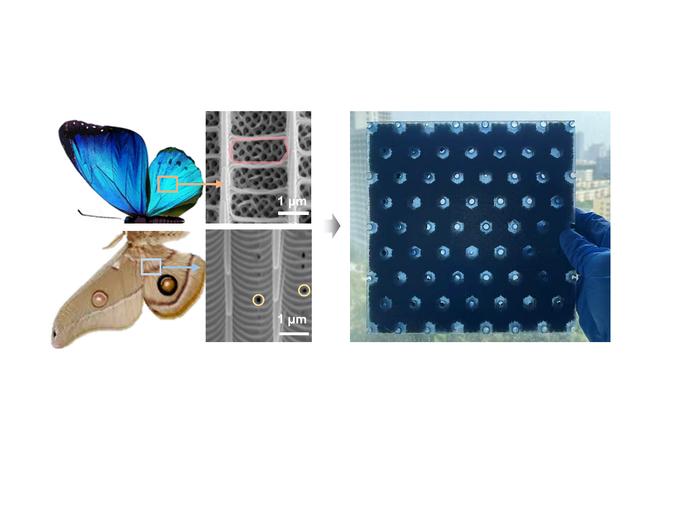
Researchers at Harbin Institute of Technology have printed a 24 mm metamaterial that absorbs impact, shields microwaves and damps low-frequency noise at once. Inspired by butterfly wing scales, it nests a gyroid lattice inside a hexagonal honeycomb, absorbing 21.9 times more impact energy than an equal-weight honeycomb and capturing over 90% of 2-40 GHz radiation and 600-900 Hz sound.
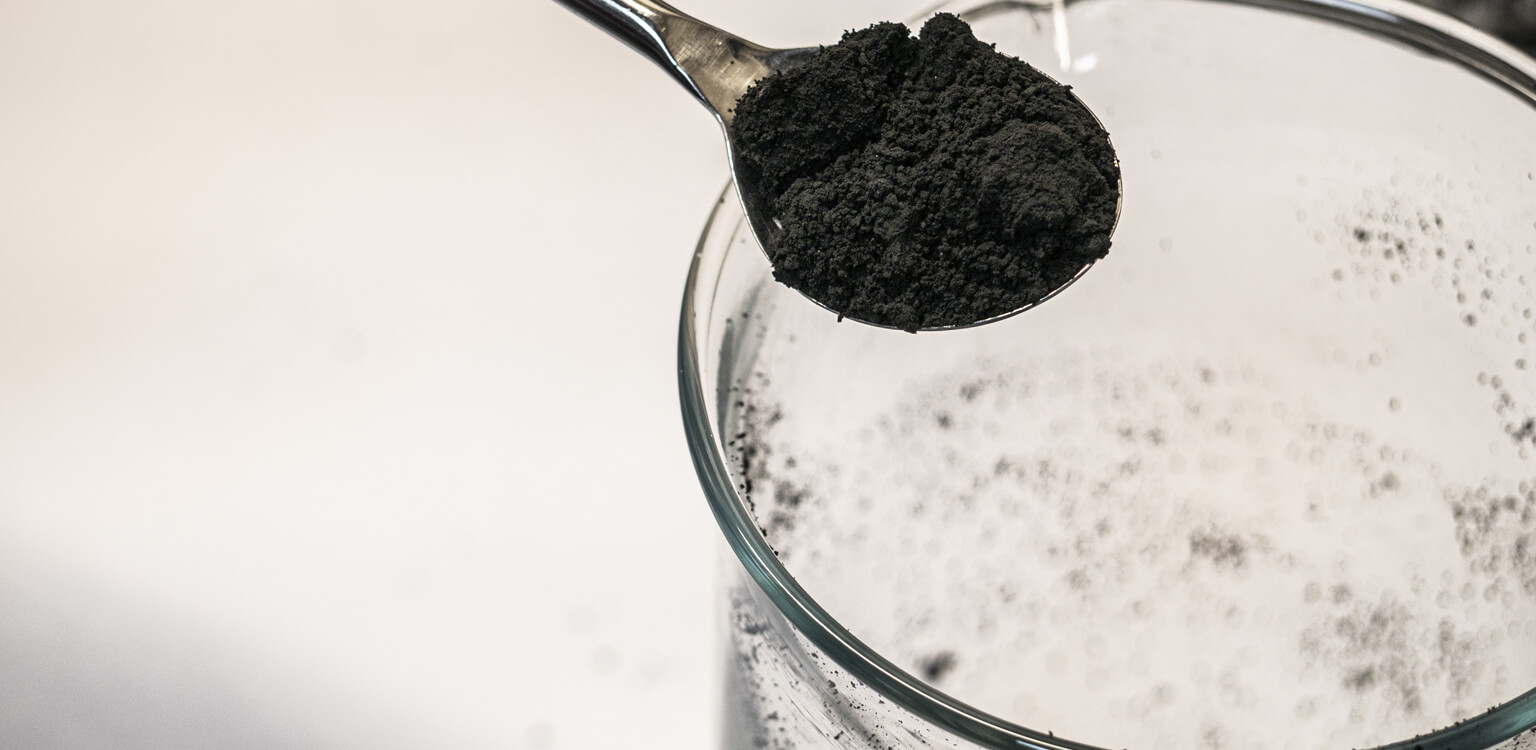
Nanomate by Phi4tech has announced carbon nanomaterials for polymer composites, including carbon nanofibers, reduced graphene oxide, and graphene oxide with metal nanoparticles. The company says these improve mechanical, electrical, and thermal properties.
Wolfspeed and Infineon expanded and extended their long-term silicon carbide wafer supply agreement. The deal adds 200 mm silicon carbide wafers to the existing 150 mm supply.
This week in nanotech
$13.6M raised
2 funding rounds · 22 deals tracked
New products
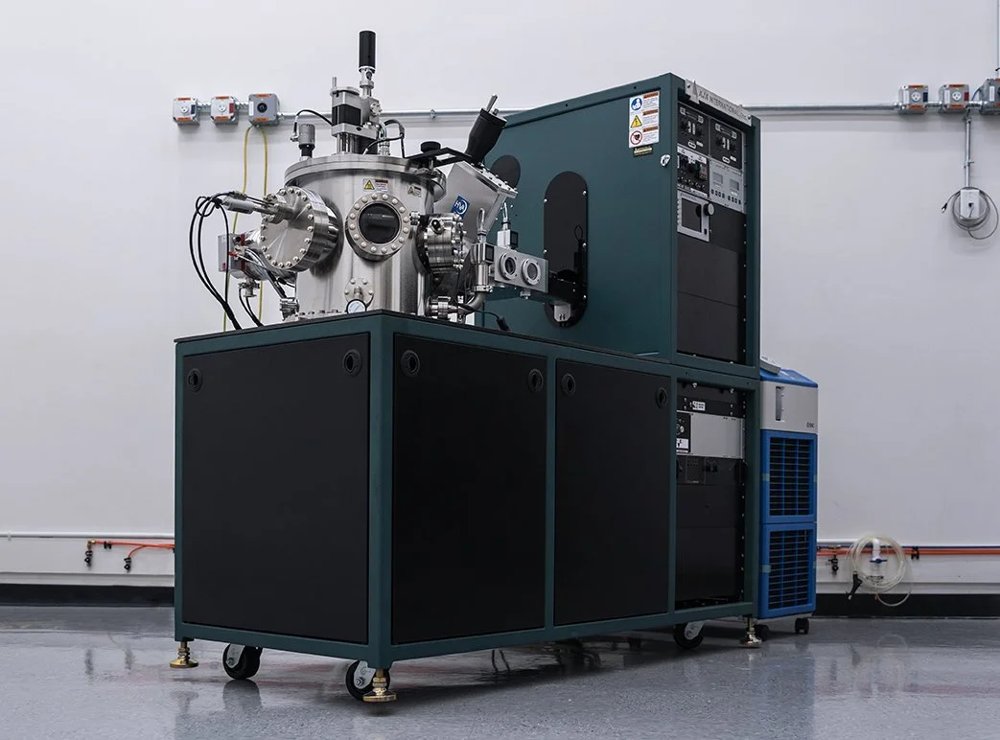 Orion Sputtering Deposition SystemsAJA International Featured
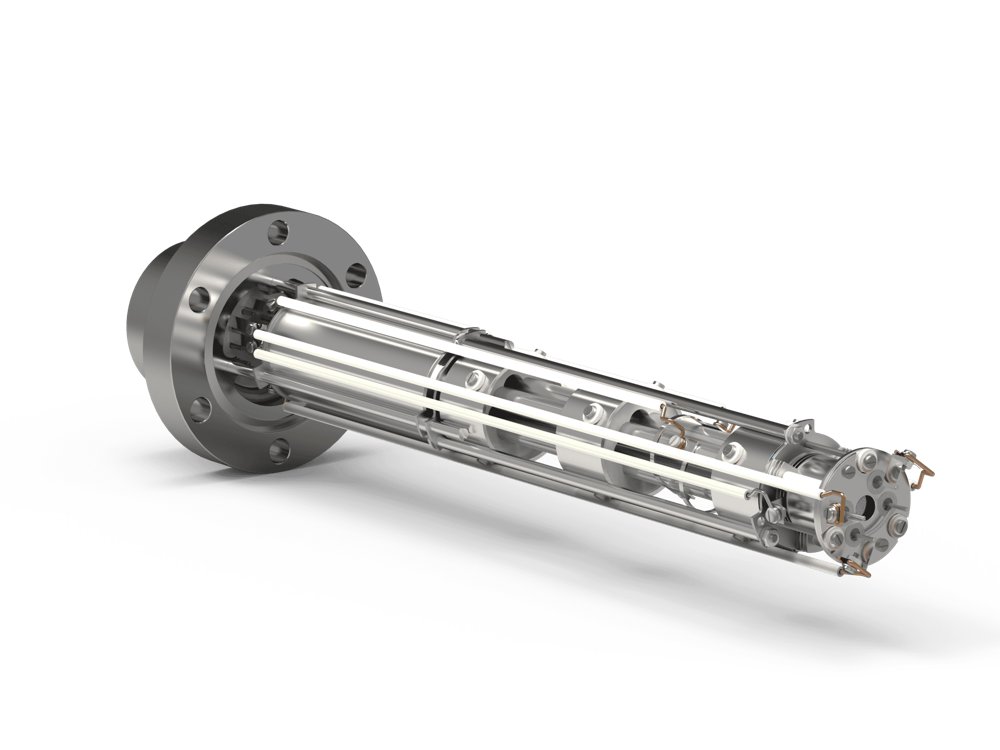 DLS-1 Mass Spectrometer for Fusion Gas AnalysisHiden Analytical Featured
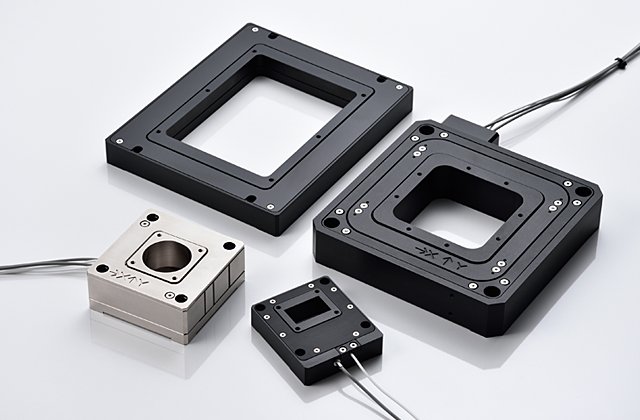 PKVH / PKVL ZAxis With an opening modelTHK PRECISION CO.,LTD.
Market insights
Last 30 days: Quantum Technologies was the busiest vertical: 63 of 197 events (32%).
Money raised per month