13 October 2026. ICN2 and INBRAIN Neuroelectronics have announced the successful completion and results of MINIGRAPH, a European Innovation Council-funded project. The MINIGRAPH consortium developed ultra-thin graphene neural interfaces, implantable electronics and autonomous software, together with a minimally invasive robotic implantation procedure.
Coordinated by ICN2, the consortium included INBRAIN Neuroelectronics, imec, Fraunhofer-Gesellschaft, Leiden University Medical Center, ETH Zurich, NanoFlex Robotics and Palacký University Olomouc. At ICN2, the project involved the Advanced Electronic Materials and Devices Group and the Nanomedicine Lab.
The project used Parkinson's disease as its initial application. It developed graphene neural interfaces based on INBRAIN's proprietary graphene-based thin-film neural electrode technology, generating data supporting more than 10 years of projected stability through accelerated ageing tests. The project also conducted toxicity and biocompatibility studies.
NanoFlex Robotics and ETH Zurich developed the robotic implantation system based on remote magnetic navigation. The procedure was validated in vitro and in vivo in a large-animal model.
"MINIGRAPH brought together the neural interface, intelligent electronics, autonomous software and robotics as a single integrated system," said ICREA Prof. Jose A. Garrido, Vice-Director of ICN2 and Co-Founder and Chief Scientific Officer of INBRAIN.
Source: ICN2 news
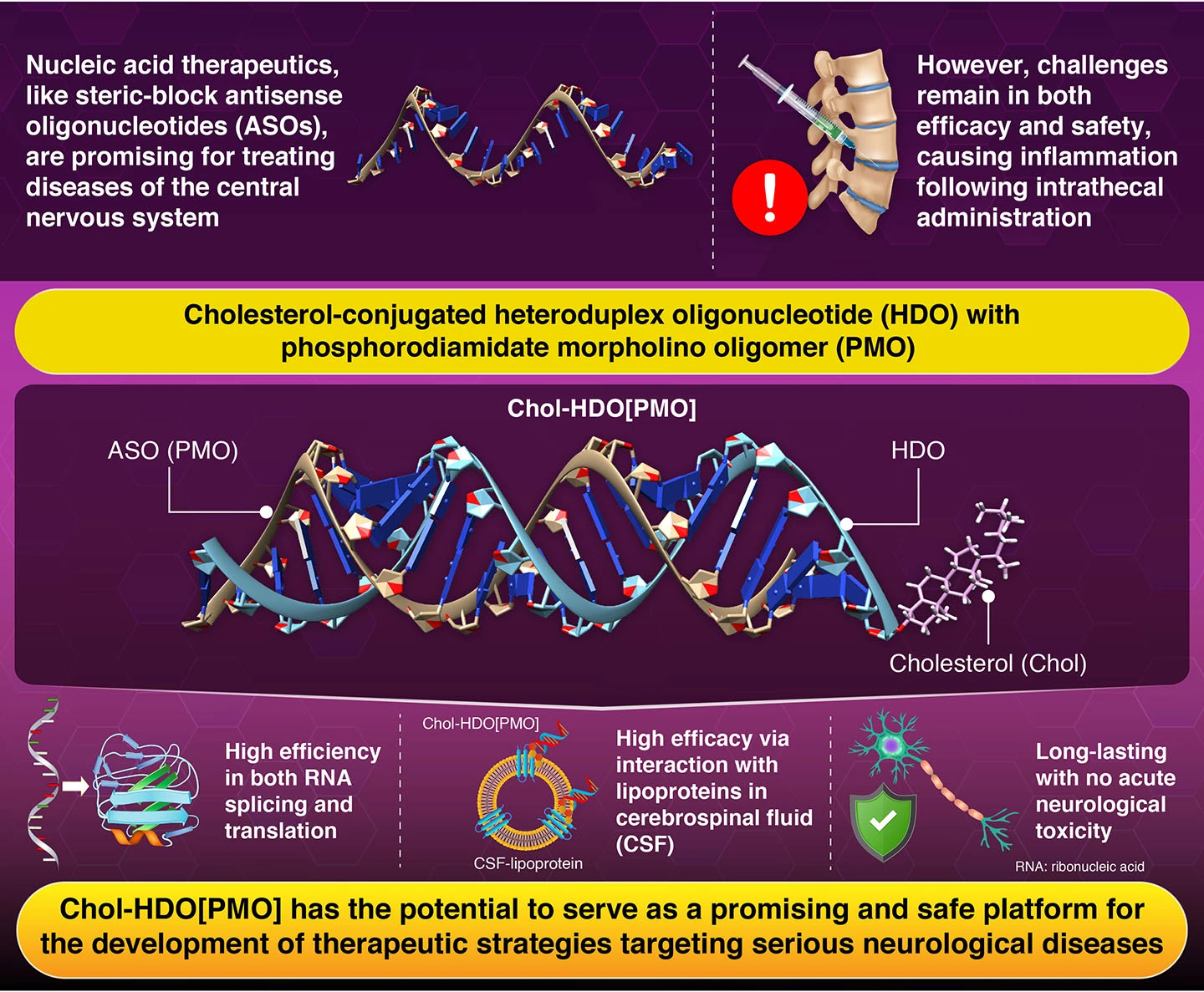
Researchers at the Institute of Science Tokyo have developed Chol-HDO[PMO], a cholesterol-conjugated heteroduplex oligonucleotide pairing a phosphorodiamidate morpholino oligomer with complementary RNA. Delivered into cerebrospinal fluid, it silenced or modulated target genes in mice with up to 16-fold greater potency than conventional antisense designs, and the effect was long lasting. It avoided acute neurotoxicity, weight loss and immune reactions.
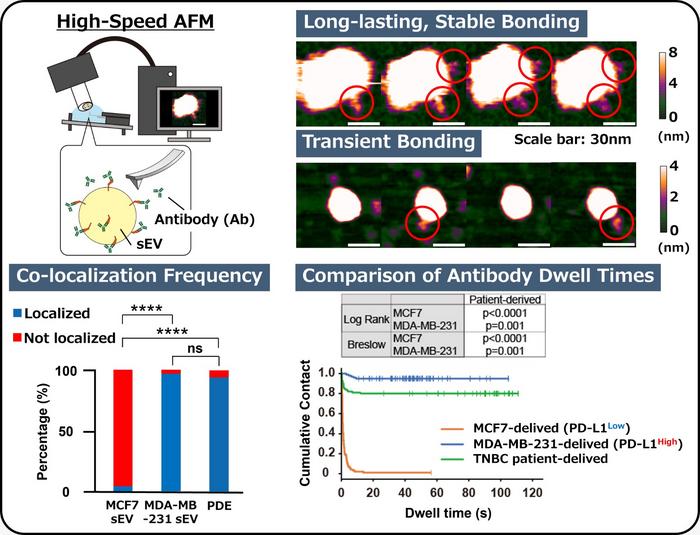
High-speed atomic force microscopy has revealed that the amount of PD-L1 on cancer-derived extracellular vesicles does not indicate how accessible the protein is to antibodies. Researchers at Kanazawa University imaged individual vesicles from two breast cancer cell lines in liquid, finding that over 80 percent of high-PD-L1 vesicles held antibodies persistently, while most low-PD-L1 vesicles showed no stable binding.
An experimental nanoparticle developed by Cedars-Sinai investigators, called HerDox2.0, has been selected for evaluation by the Nanotechnology Characterization Laboratory, a program funded by the National Cancer Institute.