The discovery of superconductivity in two ever-so-slightly twisted layers of graphene made waves a few years ago in the quantum materials community. With just two atom-thin sheets of carbon, researchers had discovered a simple device to study the resistance-free flow of electricity, among other phenomena related to the movement of electrons through a material.
But, the angle of twist between the two layers has to be just right—at the so-called “magic” angle of 1.1 degrees—for the phenomena to be observed. That’s because atoms in the layers want to resist the twist and ‘relax’ back to a zero angle, explains Joshua Swann, a PhD student in the Dean Lab at Columbia. As magic angles vanish, so does superconductivity.
Adding a third layer of graphene improves the odds of finding superconductivity, but the reason was unclear. Writing in Science, researchers at Columbia reveal new details about the physical structure of trilayer graphene that help explain why three layers are better than two for studying superconductivity.
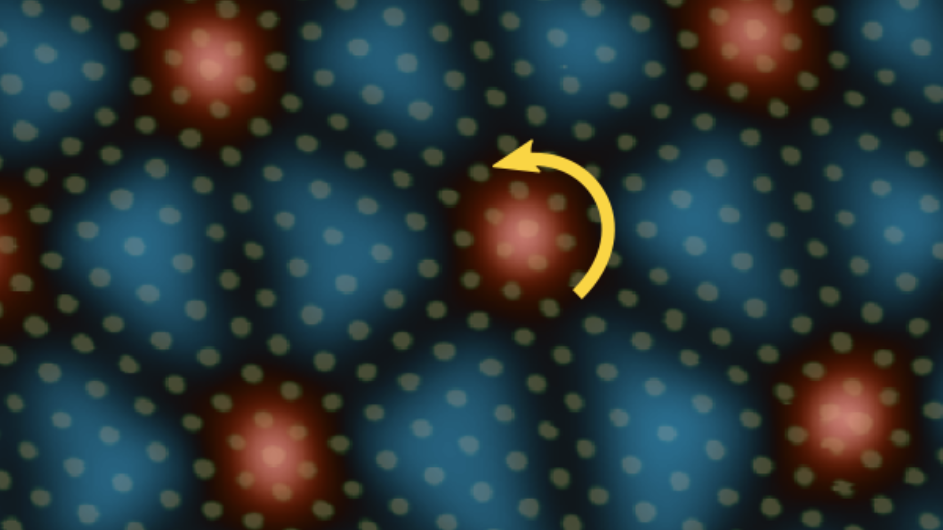
Using a microscope capable of imaging down to the level of individual atoms, the team saw that groups of atoms in some areas were scrunching up into what Simon Turkel, a PhD student in the Pasupathy Lab, dubbed “twistons.” These twistons appeared in an orderly fashion, allowing the device as a whole to better maintain the magic angles necessary for superconductivity to occur.
It’s an encouraging result said Swann, who built the device for the study. “I've made 20 or 30 bilayer graphene devices and seen maybe two or three that superconducted,” he said. “With three layers, you can explore properties that are hard to study in bilayer systems.”
Those properties overlap with a class of complex materials called the cuprates, which superconduct at a relatively high temperature of -220 °F. A better understanding of the origins of superconductivity could help researchers develop wires that won’t lose energy as they conduct electricity or devices that won’t need to be kept at costly-to-maintain low temperatures.
In the future, researchers hope to link what they see in their scans with measurements of quantum phenom in trilayer devices. “If we can control these twistons, which all depend on the angle mismatch between the top and bottom layers of the device, we can do systematic studies of their effects on superconductivity,” said Turkel. “It’s an exciting open question.”
Reference
Orderly disorder in magic-angle twisted trilayer graphene
Simon Turkel, Joshua Swann, Ziyan Zhu, Maine Christos, K. Watanabe, T. Taniguchi, Subir Sachdev, Mathias S. Scheurer, Efthimios Kaxiras, Cory R. Dean, Abhay N. Pasupathy
https://www.science.org/doi/10.1126/science.abk1895
Columbia University in the City of New York
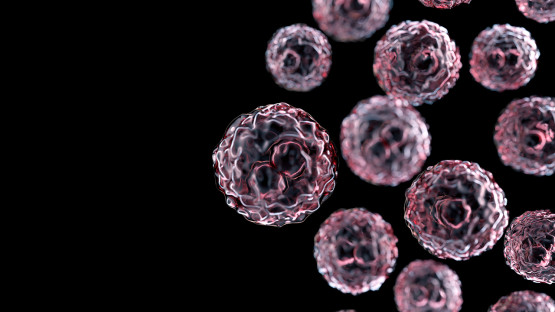
Cornell and Pacific Northwest National Laboratory researchers have developed a predictive model for how crystals such as calcite incorporate silica nanoparticles, revealing that the energy needed to cross water layers at the crystal surface strongly governs uptake, and that amines rather than carboxylic acids bind best.
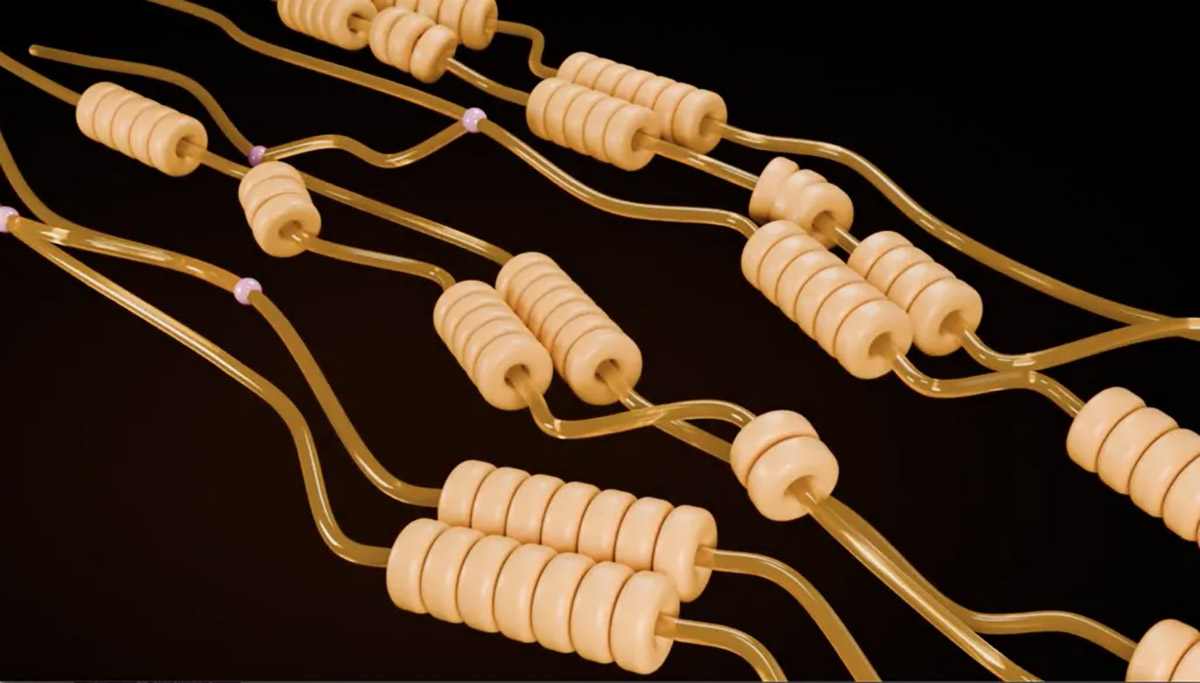
A polymer hydrogel that grows stronger under repeated bending and strain has been developed by chemists, who report the material survived 10,000 bending cycles in tests on a knee-like joint. Made from a biodegradable blend of sugar crystals and polyethylene glycol, the 3D printable material uses sliding cyclodextrin rings to reinforce stressed regions, mimicking collagen.
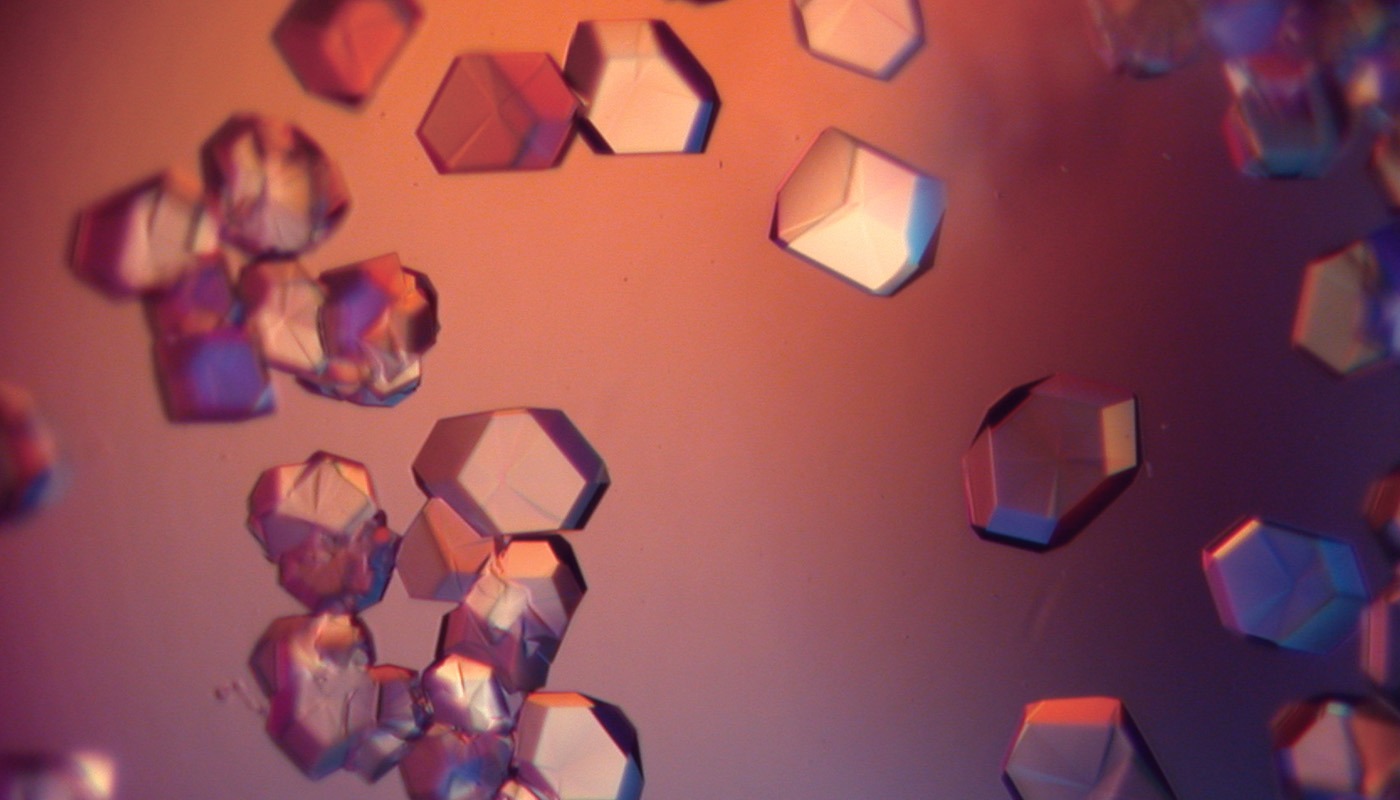
Rigaku has introduced the PhotonJetMAX-S microfocus sealed-tube X-ray source for the XtaLAB Synergy-S, delivering more than twice the diffracted intensity of the PhotonJet-S at a peak power of 50 W.
This week in nanotech
$18.9M raised
4 funding rounds · 31 deals tracked
New products
 DLS-1 Mass Spectrometer for Fusion Gas AnalysisHiden Analytical Featured
 Nion-compatible In Situ STEM Holders for Electrical BiasingHummingbird Scientific Featured
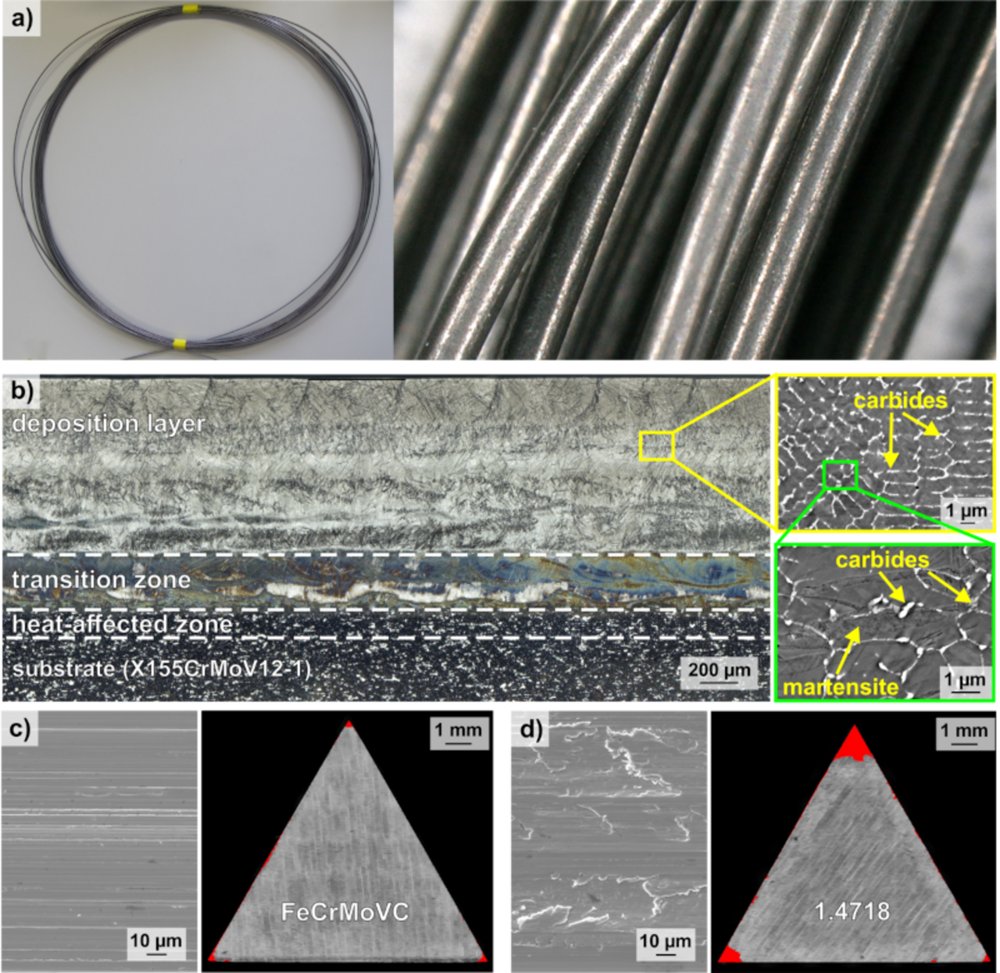 Fe85Cr4Mo8V2C1 wire filler materialLeibniz Institute for Solid State and Materials Research Dresden - IFW Dresden
Market insights
Last 30 days: Semiconductors & Electronics was the busiest vertical: 52 of 170 events (31%).
Money raised per month
Behind the deal
Who led Eindhoven University of Technology’s $1.1M Grant?
See the investors with Insights Pro →