By leveraging the concept of chirality, or the difference of a shape from its mirror image, EPFL scientists have engineered an optical metasurface that controls light to yield a simple and versatile technique for secure encryption, sensing, and computing.
Imagine trying to wear a left-handed glove on your right hand: it doesn’t fit because left and right hands are mirror images that can’t be superimposed on each other. This ‘handedness’ is what scientists call chirality, and it plays a fundamental role in biology, chemistry, and materials science. Most DNA molecules and sugars are right-handed, while most amino acids are left-handed. Reversing a molecule’s handedness can render a nutrient useless or a drug inactive and even harmful.
Light can also be left or right ‘handed’. When a light beam is circularly polarized, its electric field corkscrews through space in either a left-handed or right-handed spiral. Because chiral structures interact differently with these two types of twisted light beams, shining a circularly polarized light on a sample – and comparing how much of each twist is absorbed, reflected, or delayed – lets scientists read out the sample’s own handedness. However, this effect is extremely weak, which makes precise control of chirality an essential but challenging task.
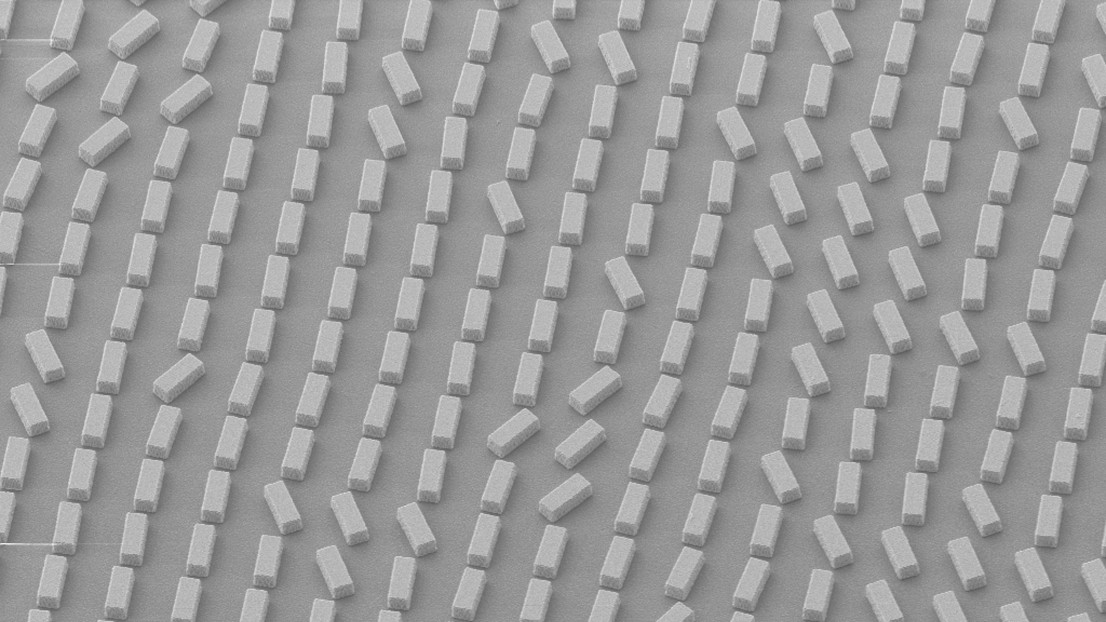
Now, scientists from the Bionanophotonic Systems Laboratory in EPFL’s School of Engineering have collaborated with those in Australia to create artificial optical structures called metasurfaces: 2D lattices composed of tiny elements (meta-atoms) that can easily tune their chiral properties. By varying the orientation of meta-atoms within a lattice, scientists can control the resulting metasurface’s interaction with polarized light.
“Our ‘chiral design toolkit’ is elegantly simple, and yet more powerful than previous approaches, which tried to control light through very complex meta-atom geometries. Instead, we leverage the interplay between the shape of the meta-atom and the symmetry of the metasurface lattice,” explains Bionanophotonics Lab head Hatice Altug.
The innovation, which has potential applications in data encryption, biosensing, and quantum technologies, has been published in Nature Communications.
An invisible, dual layer watermark
The team’s metasurface, made of germanium and calcium difloride, presents a gradient of meta-atoms with orientations that vary continuously along a chip. The shape and angles of these meta-atoms, as well as the lattice symmetry, all work together to tune the response of the metasurface to polarized light.
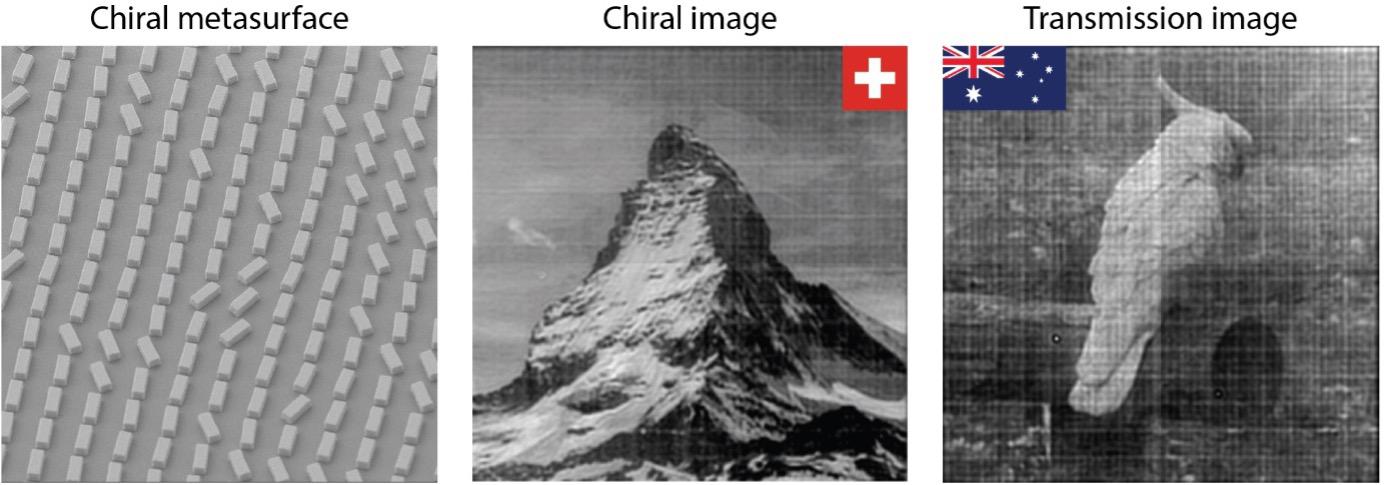
In a proof-of-concept experiment, the scientists encoded two different images simultaneously on a metasurface optimized for the invisible mid-infrared range of the electromagnetic spectrum. For the first image of an Australian cockatoo, the image data were encoded in the size of the meta-atoms – which represented pixels – and decoded with unpolarized light. The second image was encoded using the orientation of the meta-atoms so that, when exposed to circularly polarized light, the metasurface revealed a picture of the iconic Swiss Matterhorn.
“This experiment showcased our technique’s ability to produce a dual layer ‘watermark’ invisible to the human eye, paving the way for advanced anticounterfeiting, camouflage and security applications,” says Bionanophotonics Systems Lab researcher Ivan Sinev.
Beyond encryption, the team’s approach has potential applications for quantum technologies, many of which rely on polarized light to perform computations. The ability to map chiral responses across large surfaces could also streamline biosensing.
“We can use chiral metastructures like ours to sense, for example, drug composition or purity from small-volume samples. Nature is chiral, and the ability to distinguish between left- and right-handed molecules is essential, as it could make the difference between a medicine and a toxin,” says Bionanophotonic Systems Lab researcher Felix Richter.
Reference
Chirality encoding in resonant metasurfaces governed by lattice symmetries
Ivan Sinev, Felix Ulrich Richter, Ivan Toftul, Nikita Glebov, Kirill Koshelev, Yongsop Hwang, David G. Lancaster, Yuri Kivshar & Hatice Altug
https://www.nature.com/articles/s41467-025-61221-2
École Polytechnique Fédérale de Lausanne (EPFL)
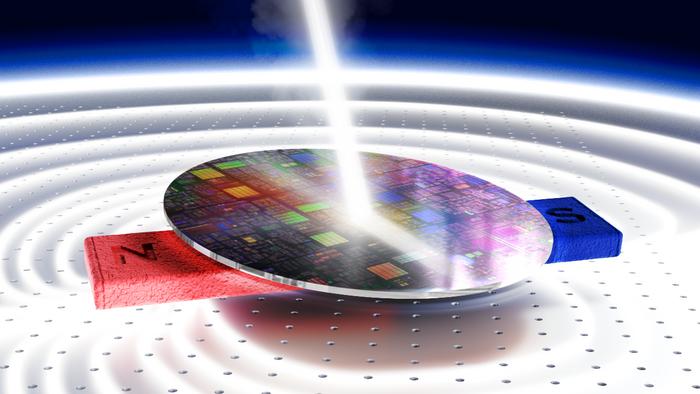
Interestingly, even Edwin Hall, the greatest scientists of all, who discovered the Hall effect, attempted to measure his effect using a beam of light with no success. He summarizes in the closing sentence of his notable paper from 1881: “I think that, if the action of silver had been one tenth as strong as that of iron, the effect would have been detected. No such effect was observed.” (E. Hall, 1881). By tuning in to the right frequency—and knowing where to look—researchers found a way to me...
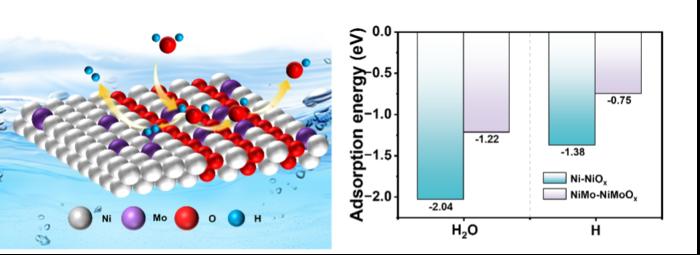
A team of material scientists led by Qiang Wang and Shuang Yuan from Northeastern University in Shenyang, China recently have provided a novel strategy for modulating crystalline-amorphous composites and electronic structures to enhance the hydrogen evolution reaction.
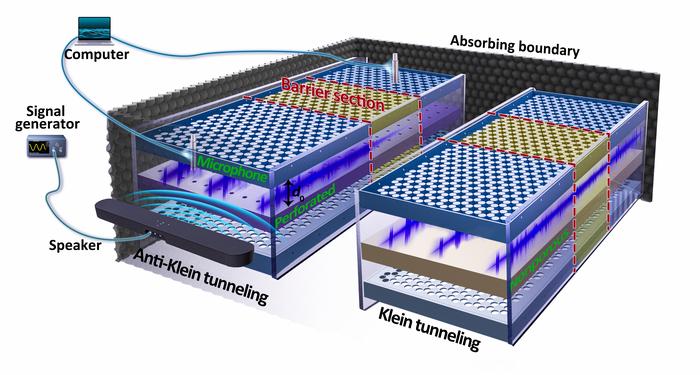
In a groundbreaking experiment, researchers from Tianjin University, Zhejiang University, Northeastern University and University of Science and Technology of China have directly observed anti-Klein tunneling (AKT)—a quantum paradox where chiral particles are entirely reflected instead of passing through an energy barrier. This long-sought quantum-like behavior is realized not with electrons, but with engineered sound waves in a custom-designed bilayer phononic crystal.
This week in nanotech
10 deals tracked
New products
 Nion-compatible In Situ STEM Holders for Electrical BiasingHummingbird Scientific Featured
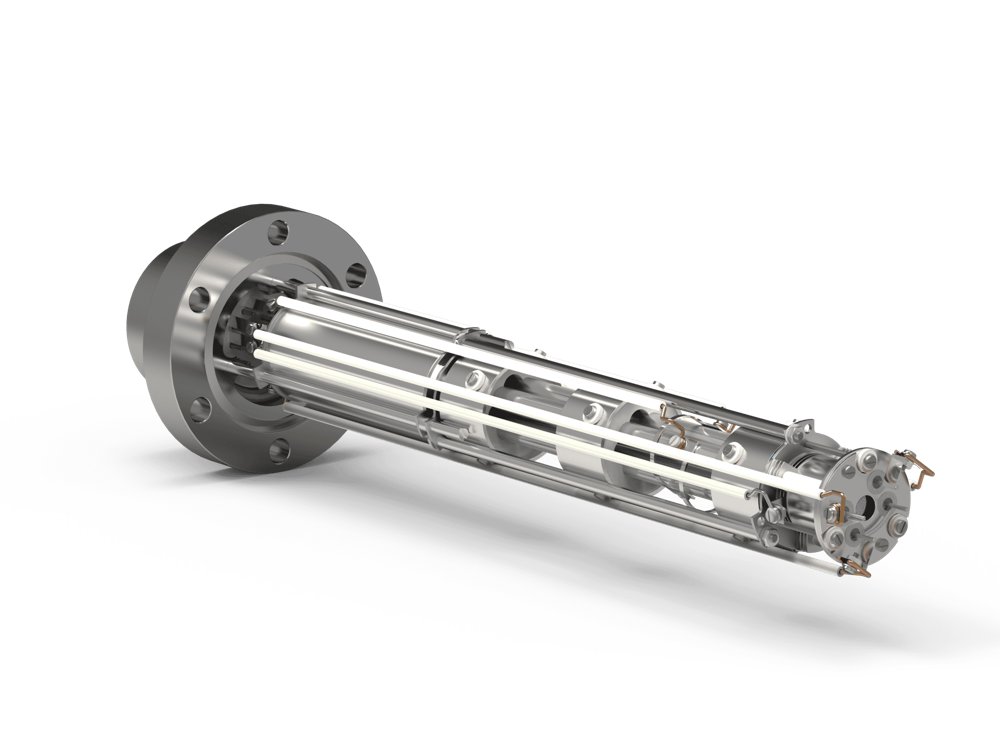 DLS-1 Mass Spectrometer for Fusion Gas AnalysisHiden Analytical Featured
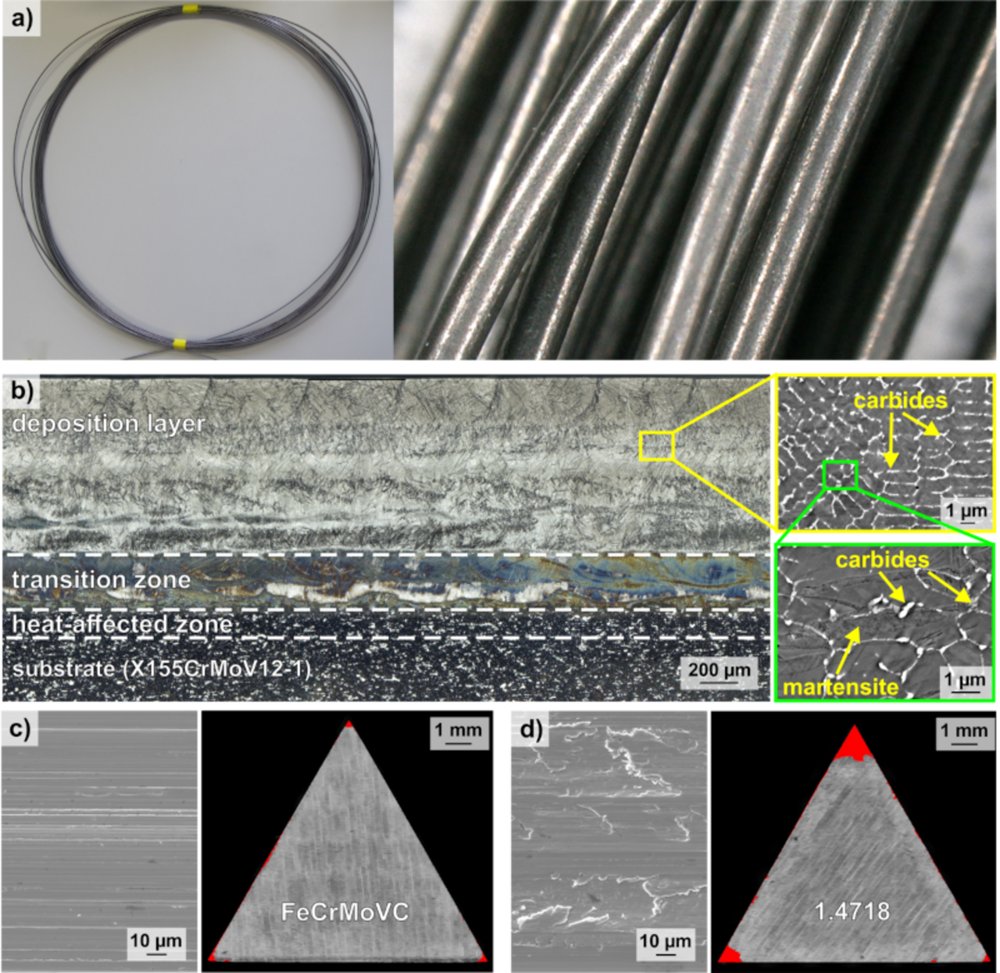 Fe85Cr4Mo8V2C1 wire filler materialLeibniz Institute for Solid State and Materials Research Dresden - IFW Dresden
Market insights
Last 30 days: Semiconductors & Electronics was the busiest vertical: 47 of 150 events (31%).
Money raised per month