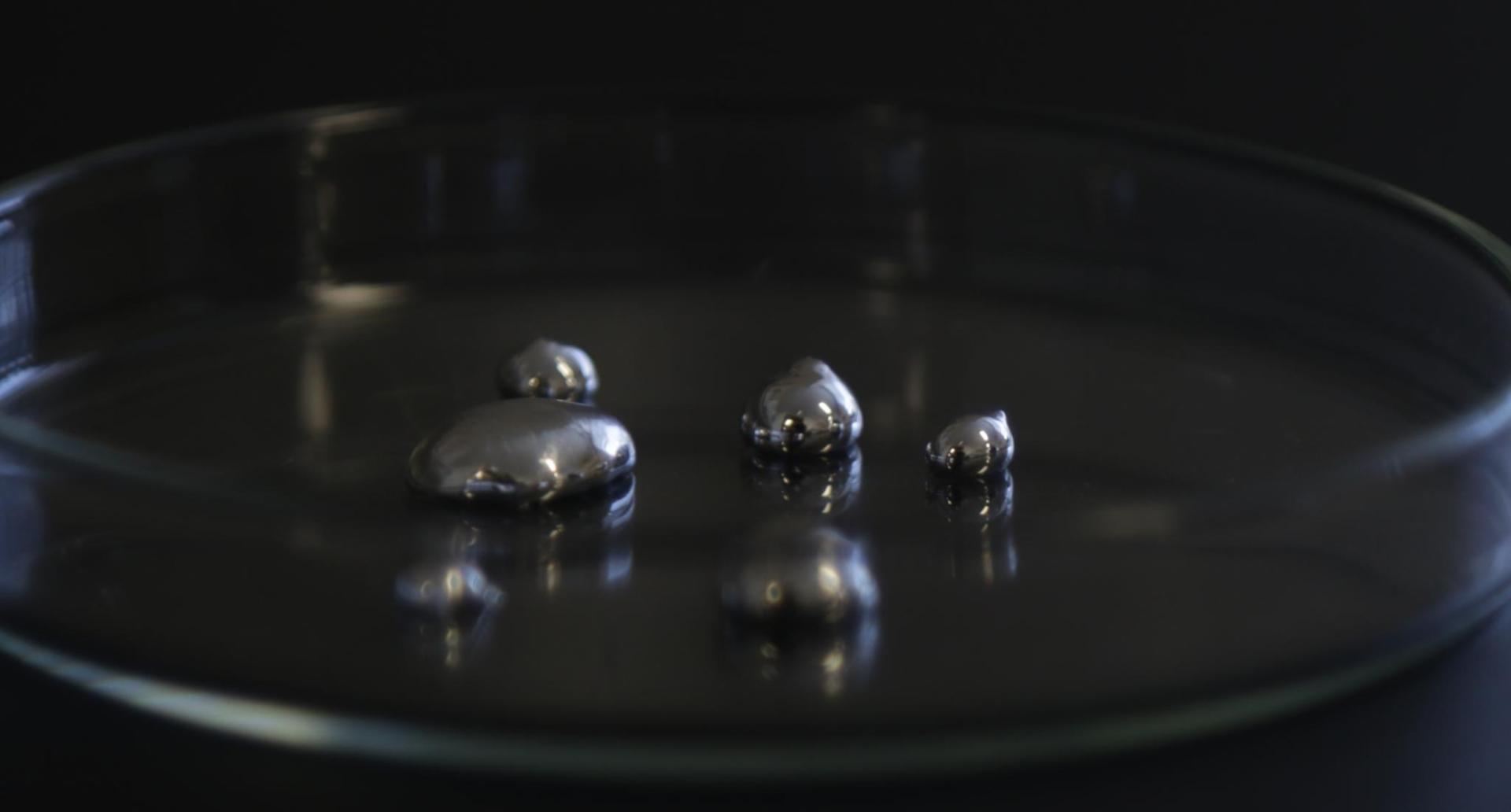
Liquid metals could be the long-awaited solution to "greening" the chemical industry, according to researchers who tested a new technique they hope can replace energy-intensive chemical engineering processes harking back to the early 20th century.
Chemical production accounts for approximately 10-15 percent of total greenhouse gas emissions. More than 10 percent of the world’s total energy is also used in chemical factories.
Findings published in Nature Nanotechnology offer a much-needed innovation that moves away from old, energy-intensive catalysts made from solid materials. The research is led by Professor Kourosh Kalantar-Zadeh, Head of the University of Sydney’s School of Chemical and Biomolecular Engineering, and Dr Junma Tang, who works jointly at the University of Sydney and UNSW.
A catalyst is a substance that makes chemical reactions occur faster and more easily without participating in the reaction. Solid catalysts, typically solid metals or solid compounds of metals, are commonly used in the chemical industry to make plastics, fertilisers, fuels and feedstock.
However, chemical production using solid processes is energy intensive, requiring temperatures of up to a thousand degrees centigrade.
The new process instead uses liquid metals, in this case dissolving tin and nickel which gives them unique mobility, enabling them to migrate to the surface of liquid metals and react with input molecules such as canola oil. This results in the rotation, fragmentation, and reassembly of canola oil molecules into smaller organic chains, including propylene, a high-energy fuel crucial for many industries.
“Our method offers an unparalleled possibility to the chemical industry for reducing energy consumption and greening chemical reactions,” said Professor Kalantar-Zadeh.
“It’s expected that the chemical sector will account for more than 20 percent of emissions by 2050,” said Professor Kalantar-Zadeh. “But chemical manufacturing is much less visible than other sectors – a paradigm shift is vital.”
How the process works
Atoms in liquid metals are more randomly arranged and have greater freedom of movement than solids. This allows them to easily come into contact with, and participate in, chemical reactions. “Theoretically, they can catalyse chemicals at much lower temperatures – meaning they require far less energy,” Professor Kalantar-Zadeh said.
In their research, the authors dissolved high melting point nickel and tin in a gallium based liquid metal with a melting point of only 30 degrees centigrade.
“By dissolving nickel in liquid gallium, we gained access to liquid nickel at very low temperatures – acting as a ‘super’ catalyst. In comparison solid nickel’s melting point is 1455 degrees centigrade. The same effect, to a lesser degree, is also experienced for tin metal in liquid gallium,” Dr Tang said.
The metals were dispersed in liquid metal solvents at the atomic level. “So we have access to single atom catalysts. Single atom is the highest surface area accessibility for catalysis which offer a remarkable advantage to the chemical industry,” said Dr Arifur Rahim, senior author and DECRA Fellow at the School of Chemical and Biomolecular Engineering.
The researchers said their formula could also be used for other chemical reactions by mixing metals using the low temperature processes.
“It requires such low temperature to catalyse that we could even theoretically do it in the kitchen with the gas cooktop – but don’t try that at home,” Dr Tang said.
Reference
Dynamic configurations of metallic atoms in the liquid state for selective propylene synthesis
Junma Tang, Andrew J. Christofferson, Jing Sun, Qingfeng Zhai, Priyank V. Kumar, Jodie A. Yuwono, Mohammad Tajik, Nastaran Meftahi, Jianbo Tang, Liming Dai, Guangzhao Mao, Salvy P. Russo, Richard B. Kaner, Md. Arifur Rahim & Kourosh Kalantar-Zadeh
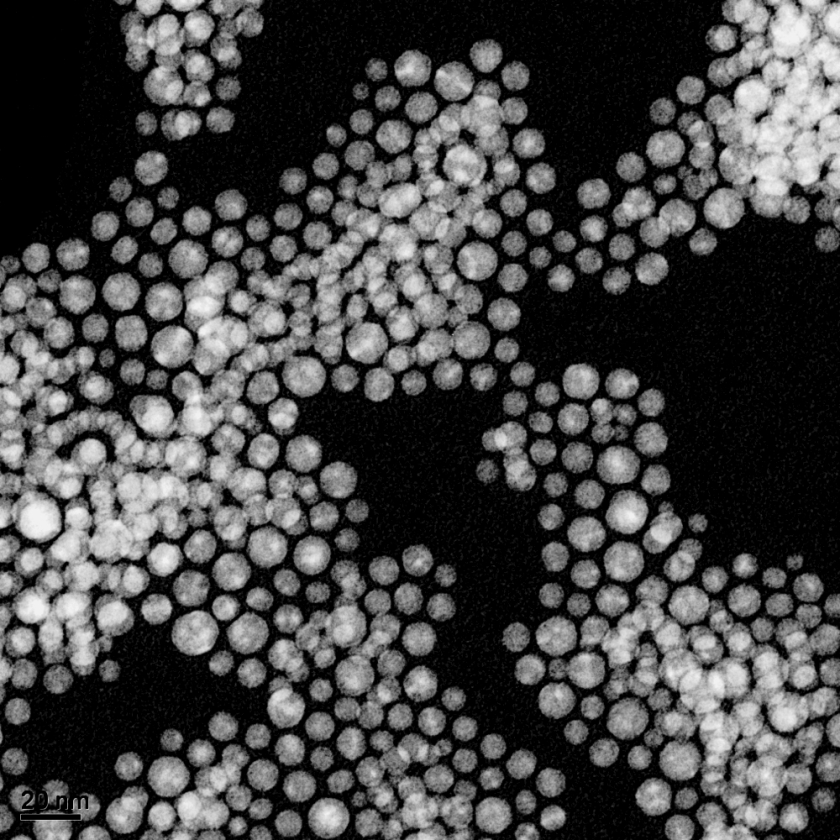
Silver nanoparticles with diameters of ~10 nm deliver the best performance as electrocatalysts. The silver particles are sprayed onto the electrode together with a conductive carbon powder. The ideal mixture consists of 20 per cent by mass silver and 80 per cent by mass carbon powder. This image was taken using a transmission electron microscope (TEM). © HZB Via electrolysis, CO₂ can be reduced to CO, a raw material for further chemical products such as fuels. Within the GreenQuest Project,...
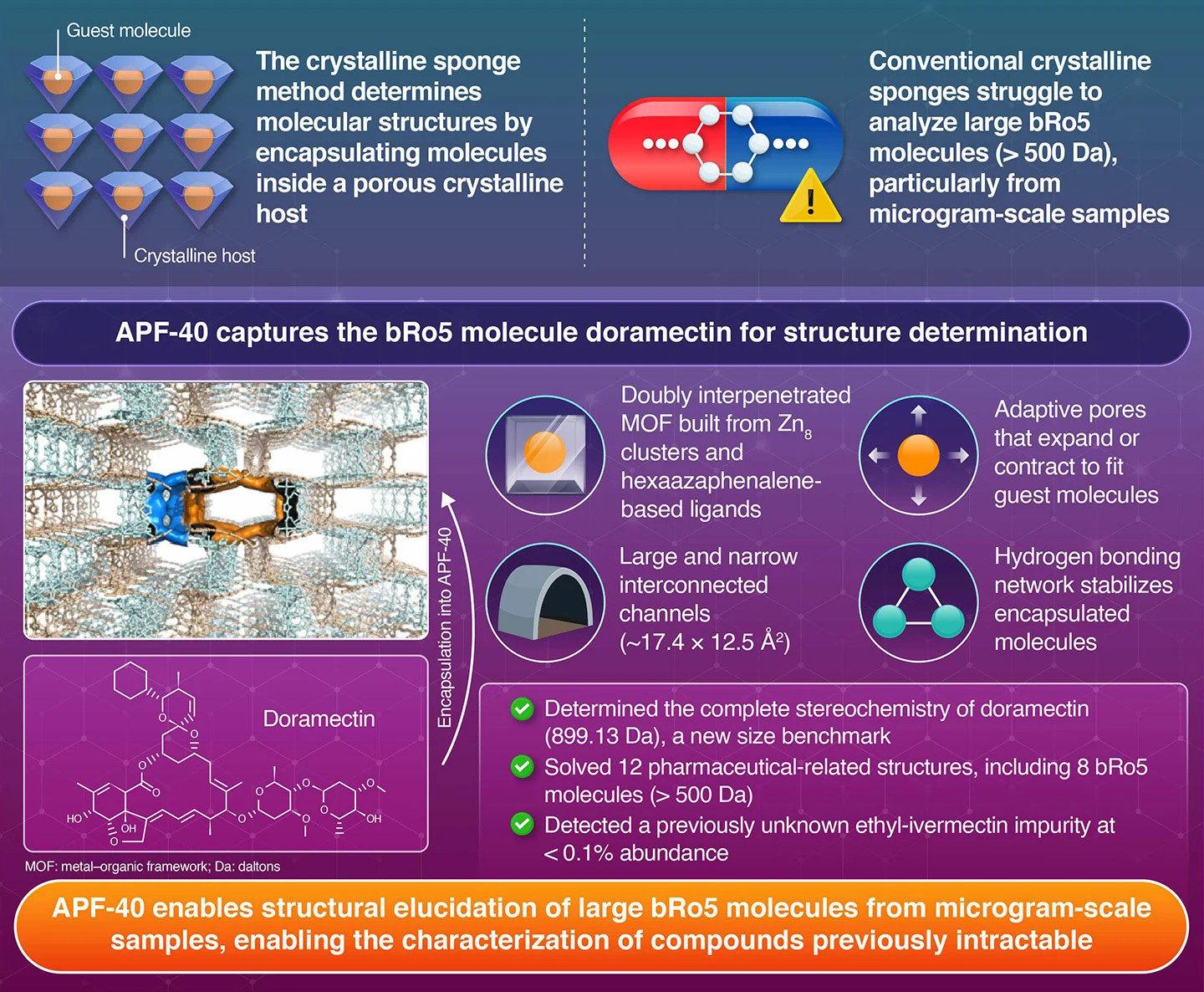
A flexible metal–organic framework developed by researchers from Institute of Science Tokyo enables the structural determination of large "beyond rule of 5" molecules from microgram-scale samples. Using APF-40 as a crystalline sponge, the researchers determined the structures of 12 pharmaceutical-related molecules, including the 899 Da drug molecule doramectin and trace ivermectin derivatives. The method could aid drug discovery, natural products research, and the characterization of rare...
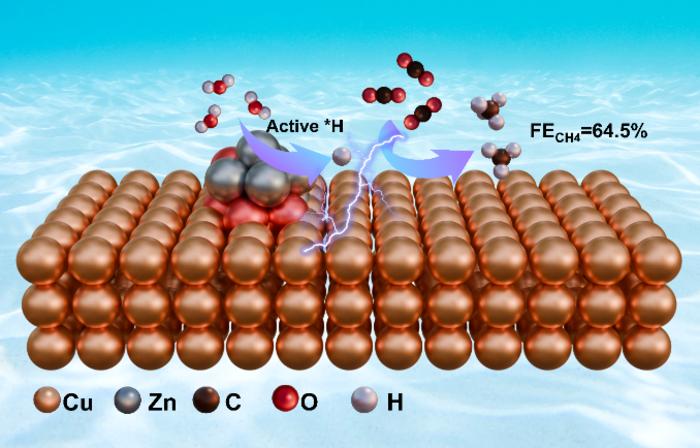
image: CuZn800@C was constructed via solvothermal method and utilizes the high-temperature volatility of zinc to prepare through calcination at different temperatures, which displays a high methane Faradaic efficiency of 64.5% and a remarkable partial current density of -551.3 mA/cm2 at -1.7 V vs. RHE, along with excellent stability. Zn and Cu form a tandem reaction system. Zn sites promote water splitting to provide protons, while Cu sites reduce the energy barrier for *CO hydrogenation....
