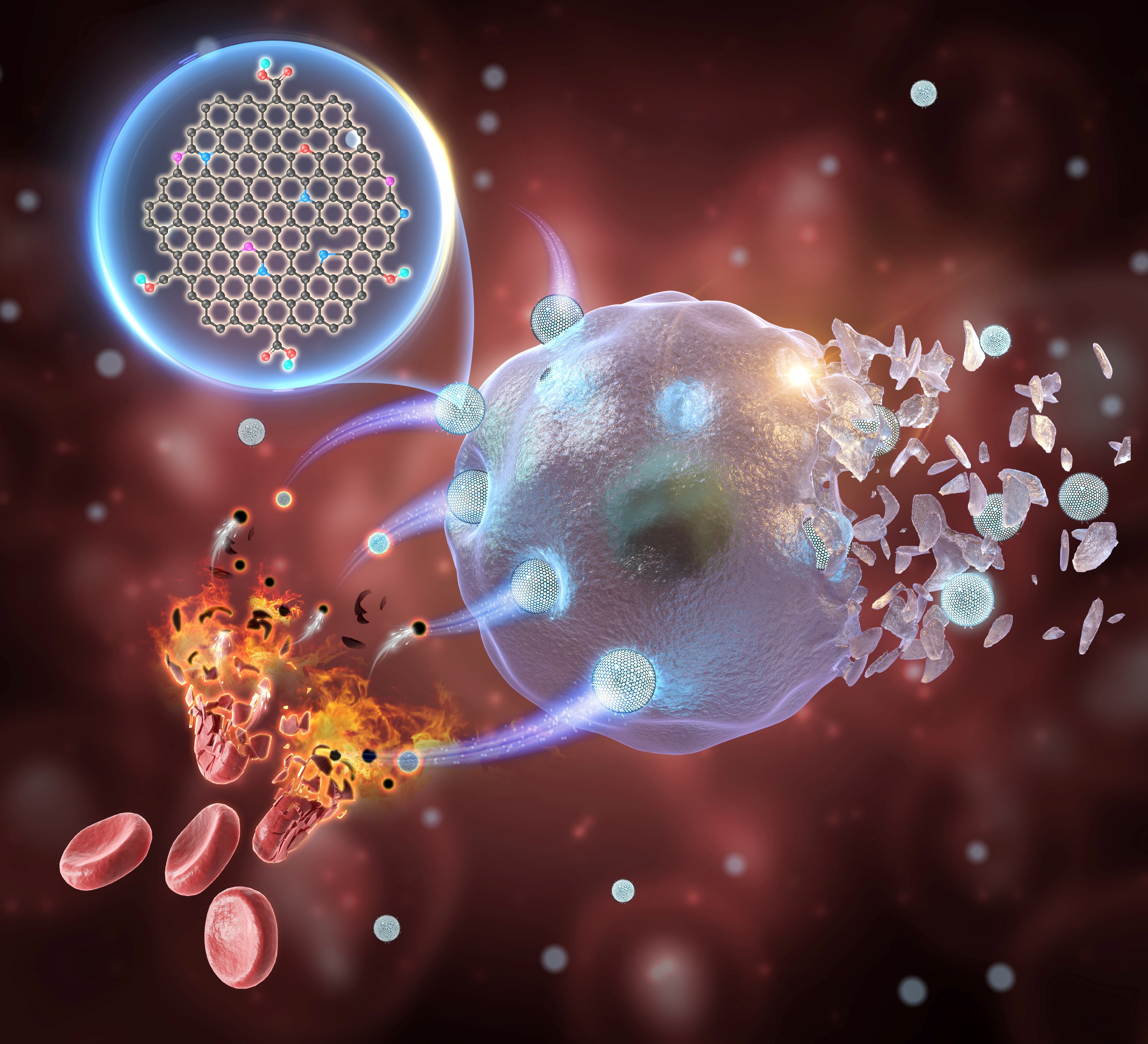
A research group led by Prof. WANG Hui from the Hefei Institutes of Physical Science of the Chinese Academy of Sciences has introduced a metal-free nanozyme based on graphene quantum dots (GQDs) for highly efficient tumor chemodynamic therapy (CDT).
The study was published in Matter.
GQDs represent a promising and cost-effective means of addressing the toxicity concerns associated with metal-based nanozymes in tumor CDT. However, the limited catalytic activity of GQDs has posed significant challenges for their clinical application, particularly under challenging catalytic conditions.
"The obtained GQDs, which are made from red blood cell membranes, are highly effective in treating tumors with few side effects," said LIU Hongji, a member of the research team. "One of the advantages is that they are metal-free. In addition, they function as excellent peroxidase-like biocatalysts."
To enhance the catalytic performance of the GQD-based nanocatalytic adjuvant, the researchers rationally designed GQDs using a diatomic doping strategy. The synergistic electron effect of introducing nitrogen and phosphorus into GQDs can generate highly localized states near the Fermi level, thus enabling efficient enzymatic activity compared to single heteroatom doping.
The obtained GQDs, derived from erythrocyte membranes, have been shown to possess impressive peroxidase-mimicking activity. As a result, the GQDs are highly effective at inducing apoptosis and ferroptosis of cancer cells in vitro. They also selectively target tumors, with a tumor inhibition rate as high as 77.71% for intravenous injection and 93.22% for intratumoral injection, with no off-target side effects.
This drug-free, target-specific, and biologically benign nanozyme has great potential as a potent biocatalyst for use in safe cancer treatment.
Reference
Graphene quantum dots as metal-free nanozymes for chemodynamic therapy of cancer
Hongji Liu, Zhiming Deng, Zonghui Zhang, Wenchu Lin, Miqin Zhang, Hui Wang
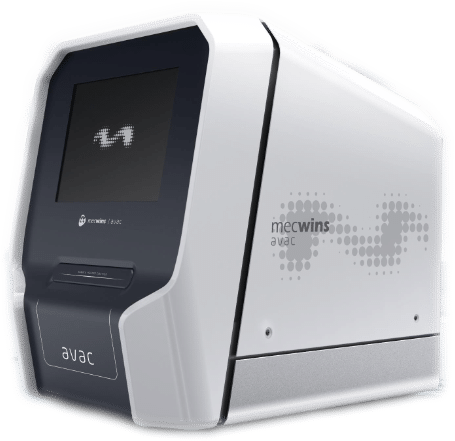
Mecwins has described its AVAC technology, which labels target proteins with plasmonic nanoparticles and counts each one individually by dark-field micro-spectrophotometry. The AVAC Analyzer reaches femtogram-range sensitivity.
Hesperos has received an SBIR Phase II grant (R44AI197758) from NIAID to expand its Malaria-on-a-Chip platform, adding support for viable, replicating parasite strains and predictive PK/PD modeling.
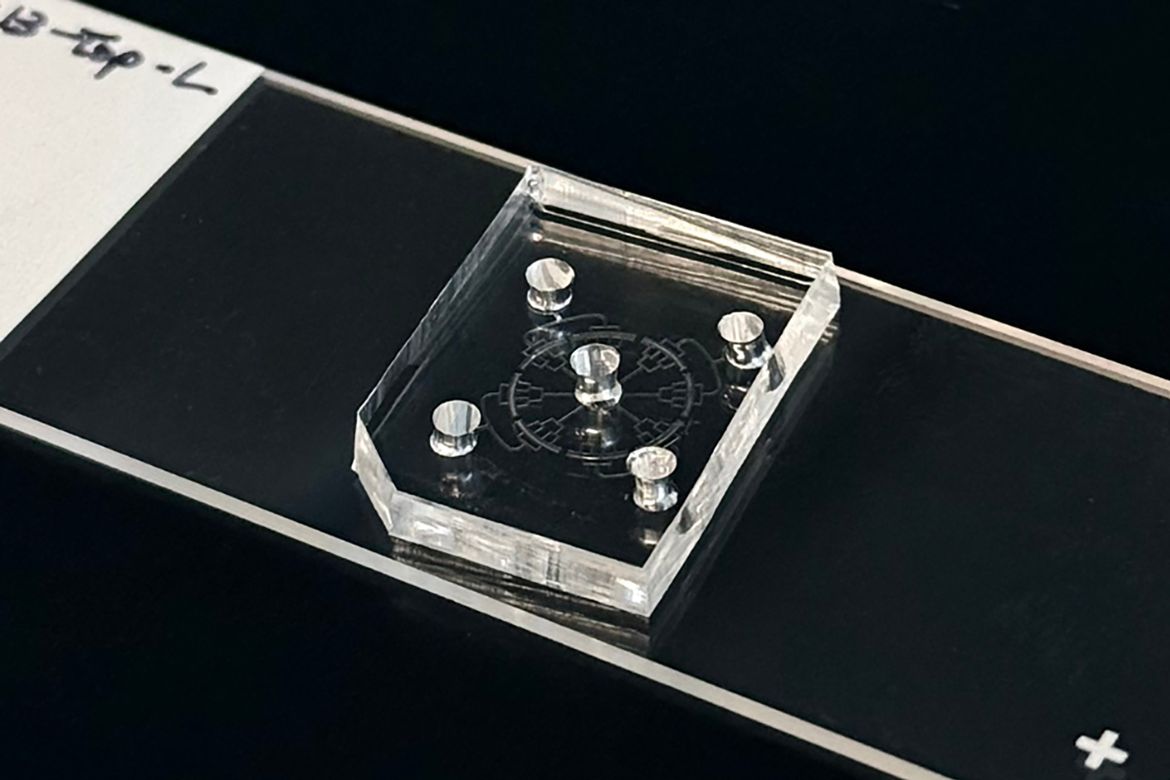
UCLA researchers have shown that briefly squeezing a cell's nucleus for milliseconds can loosen tightly packed DNA and make CRISPR activation far more effective at reprogramming cell identity. After mapping which genomic regions opened, they aimed guide RNAs at those sites, raising the share of mouse skin cells converted to neurons from about 3% to 10%. Adding a priming step that activated Oct4 pushed conversion to roughly 40%.
This week in nanotech
$108.5M raised
8 funding rounds · 46 deals tracked
New products
 Nion-compatible In Situ STEM Holders for Electrical BiasingHummingbird Scientific Featured
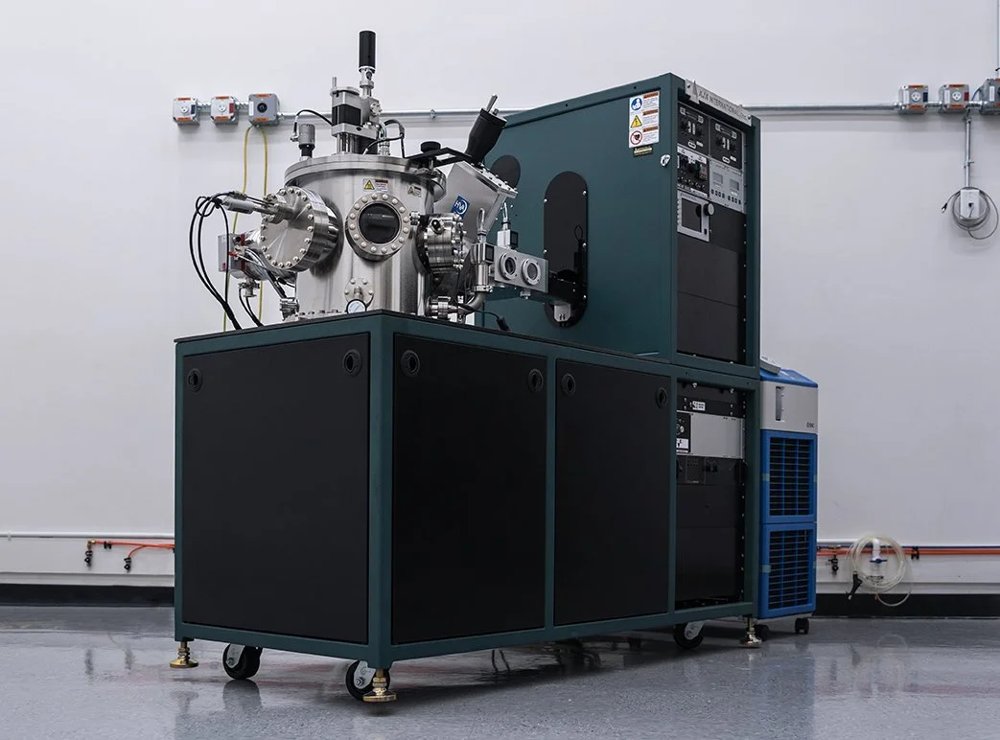 Orion Sputtering Deposition SystemsAJA International Featured
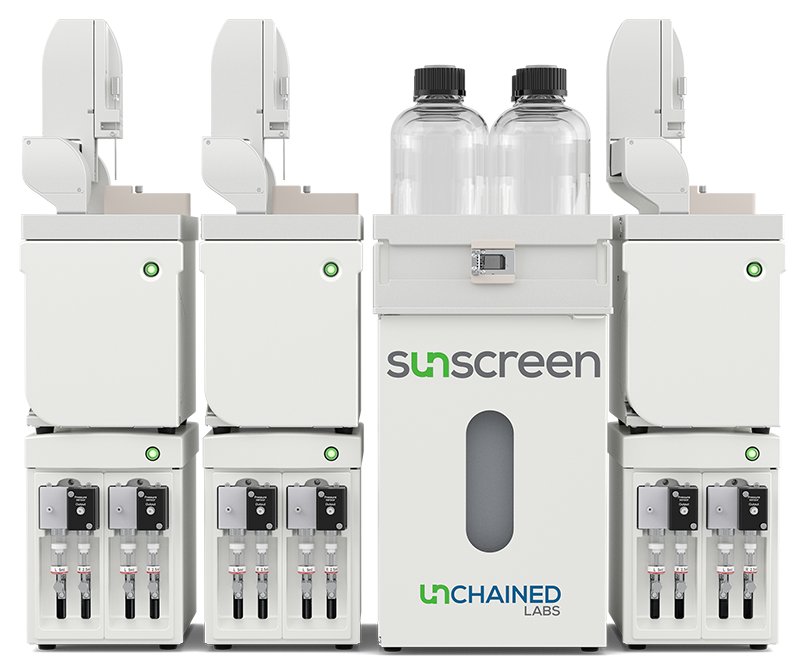 SunscreenUnchained Labs
Market insights
Last 30 days: Quantum Technologies drew the most money: $3.17B.
Money raised per month