Max Planck Institute for Polymer Research
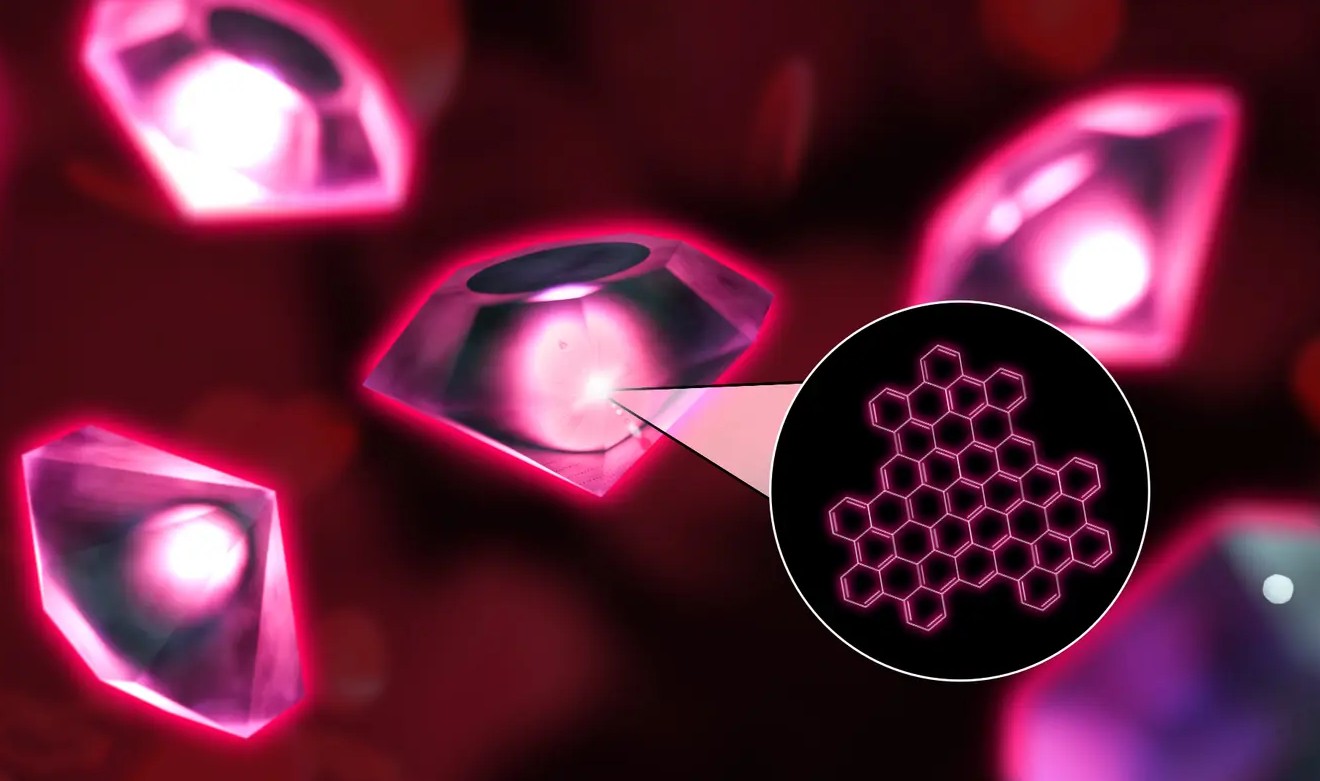
Versatile Nanodiamonds: Diamond particles of only a few nanometres in size could be used in quantum technologies, sensing and biomedical research.
New production method: A team led by the Max Planck Institute for Polymer Research has found a way to synthesize nanodiamonds from graphene scraps.
Custom-made particles: The new synthesis method makes it possible to precisely control the size and properties of the diamonds.
Nanodiamonds can be used as tiny light sources, as highly sensitive sensors for magnetic fields, or as computing elements in a quantum computer. Now they can be custom-made to the desired size and with the required chemical composition. An international research team led by Yingke Wu and Professor Tanja Weil at the Max Planck Institute for Polymer Research has now developed a new synthesis strategy, which was published in Nature: instead of breaking larger diamonds down into smaller particles, the team builds nanodiamonds from the bottom up using molecularly defined nanographene building blocks. Under high pressure and at high temperatures, these flat carbon molecules are directly converted into diamond-like, highly crystalline nanostructures.
The key advantage of this bottom-up approach lies in its control at the molecular level. Because the structure, size and composition of the starting molecules are precisely defined, the properties of the resulting nanodiamonds can be controlled much more effectively than with conventional milling or top-down methods. Using this strategy, the team was able to produce particularly small, uniform nanodiamonds measuring around three to four nanometres.
Custom made nanodiamonds for various applications
Another important aspect is that optically active colour centres can be incorporated into the diamond lattice directly during synthesis. By using suitable molecular precursors, silicon- and germanium-based emitters can be generated without the need for subsequent ion implantation, irradiation or further post-treatment. This makes it possible to produce fluorescent nanodiamonds with tailored optical properties in a single synthesis step. “We believe this platform offers a scalable foundation for developing quantum sensors, integrated photonic emitters and programmable diamond-based nanomaterials,” says Tanja Weil.
The new molecular nanodiamonds open up promising opportunities for applications in quantum technology, for example as stable single-photon sources or nanoscale sensors. They are also of interest for biological and medical research: in the long term, they could serve as robust optical reporters to visualise processes in cells or other biological environments at the smallest scales.
Reference
Bottom-up synthesis of molecular nanodiamond from nanographene
Jiaxu Liang, Christopher P. Ender, Nancy C. Forero-Martinez, Ilyes Batatia, Jingyi Liu, Xin Yang, Raul Gonzalez Brouwer, Lev Kazak, Rémi Blinder, Leonardo Cancellara, Nadezda V. Tarakina, Yizhi Liu, Tobias Eklund, Mangalika Sinha, Sarah Köster, Shrikant Bhat, Fabian Rohmann, Andreas Tangemann, Kilian Lee Gallo, Rüdiger Berger, Robert Farla, Alexander Kubanek, Katrin Amann-Winkel, Manfred Wagner, …Tanja Weil Show authors
Nature volume 655, pages102–108 (2026)
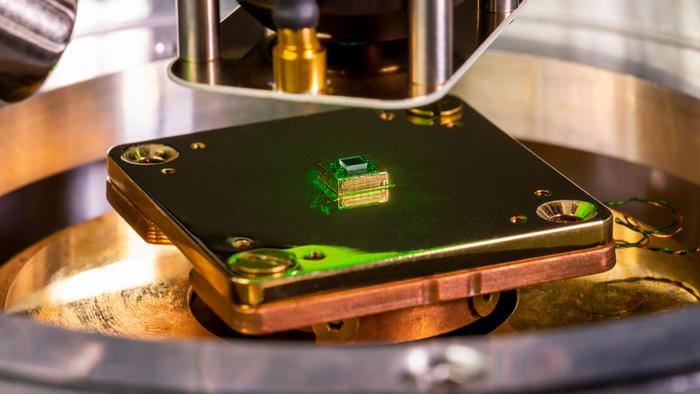
Princeton researchers have developed a diamond-based quantum sensor that reveals rich new information about magnetic phenomena at this minute scale. The technique uncovers fluctuations that are beyond the reach of existing instruments and provides key insight into materials such as graphene and superconductors. Superconductors have enabled today’s most advanced medical imaging tools and form the basis of hoped-for technologies like lossless powerlines and levitating trains. The underlying dia...
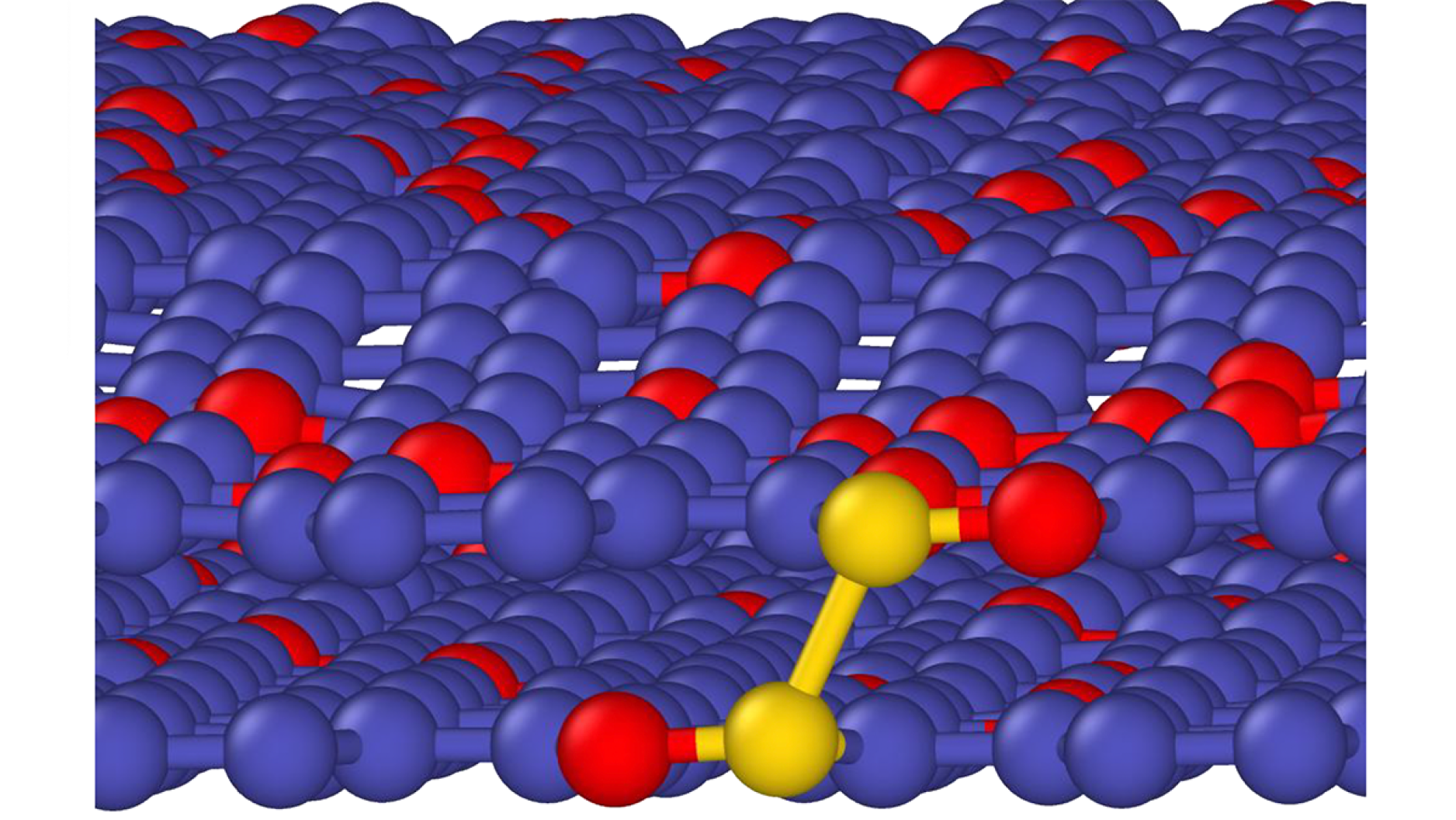
Graphene’s enduring appeal lies in its remarkable combination of lightness, flexibility, and strength. Now, researchers have shown that under pressure, it can briefly take on the traits of one of its more glamorous carbon cousins. By introducing nitrogen atoms and applying pressure, a team of scientists has coaxed bilayer graphene grown through chemical vapor deposition (CVD) into a diamond-like phase — without the need for extreme heat. The finding, reported in Advanced Materials Technologie...
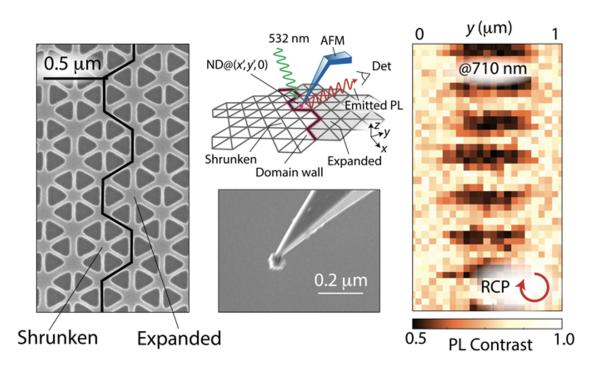
Researchers at The City College of New York have shown how a quantum emitter, the nitrogen-vacancy (NV) center in diamond, interacts in unexpected ways with a specially engineered photonic structure when moved around with a scanning tip. The study, led by Carlos A. Meriles, Martin and Michele Cohen Professor of Physics in the Division of Science and entitled “Emission of Nitrogen–Vacancy Centres in Diamond Shaped by Topological Photonic Waveguide Modes,” appears in the journal Nature Nanotech...
This week in nanotech
$271M raised
6 funding rounds · 27 deals tracked
New products
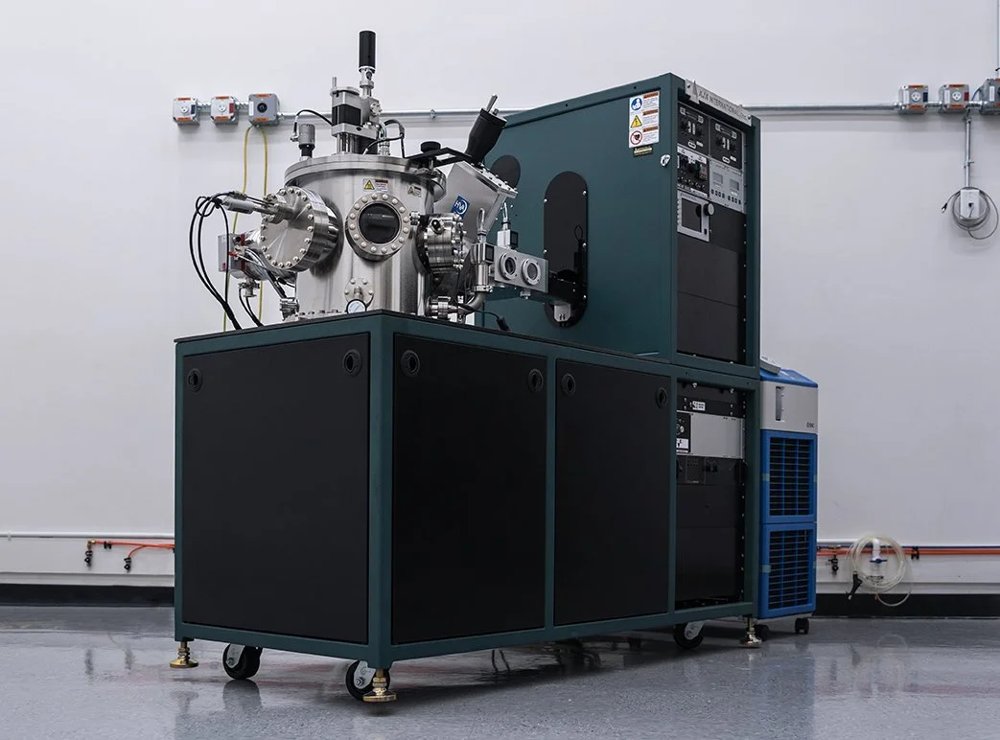 Orion Sputtering Deposition SystemsAJA International Featured
 Nion-compatible In Situ STEM Holders for Electrical BiasingHummingbird Scientific Featured
 GiiiGii
Market insights
Last 30 days: Quantum Technologies drew the most money: $3.17B.
Money raised per month
Behind the deal
Who invested in Vertical Semiconductor’s $73M Grant?
See the investors with Insights Pro →