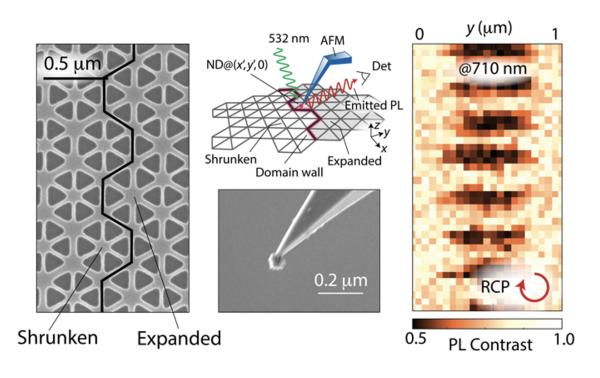
Researchers at The City College of New York have shown how a quantum emitter, the nitrogen-vacancy (NV) center in diamond, interacts in unexpected ways with a specially engineered photonic structure when moved around with a scanning tip. The study, led by Carlos A. Meriles, Martin and Michele Cohen Professor of Physics in the Division of Science and entitled “Emission of Nitrogen–Vacancy Centres in Diamond Shaped by Topological Photonic Waveguide Modes,” appears in the journal Nature Nanotechnology.
What has long been considered a drawback of the NV center—its broad and messy emission spectrum—turns out to enable a new type of coupling that reshapes its light in ways not seen before. This discovery has fundamental importance for quantum information technologies, since such coupling could help overcome long-standing challenges like spectral diffusion and open pathways toward robust spin–photon and spin–spin entanglement on a chip.
At the same time, the work demonstrates a novel sensing capability: by analyzing the NV emission, the team could reconstruct detailed, polarization-resolved images of the photonic modes with remarkable contrast.
“Beyond photonic structures, this polarization sensitivity could eventually be applied to detecting chiral molecules, which are central to biology and medicine,” said Meriles.
He added that follow-up research will continue along both directions—probing quantum emitter–structure interactions more deeply and developing new sensing applications based on the same principles.
Reference
Emission of nitrogen–vacancy centres in diamond shaped by topological photonic waveguide modes
Raman Kumar, Chandan, Gabriel I. López Morales, Richard Monge, Anton Vakulenko, Svetlana Kiriushechkina, Alexander B. Khanikaev, Johannes Flick & Carlos A. Meriles
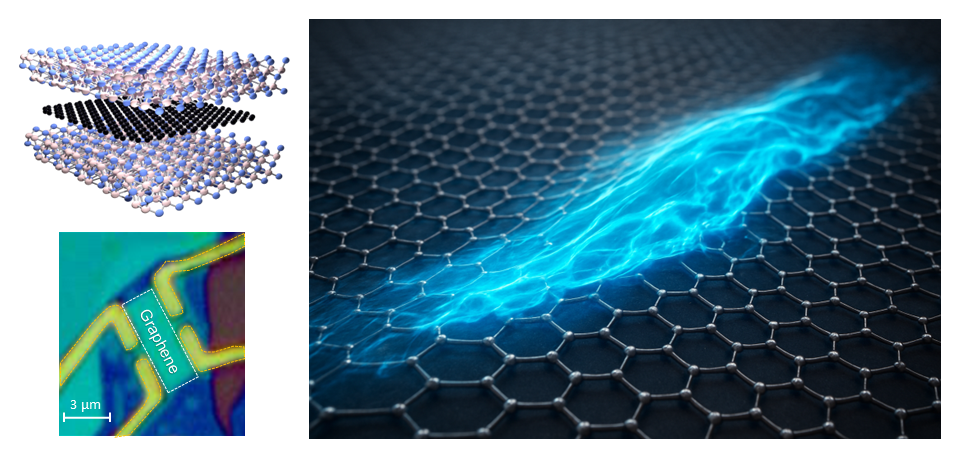
For several decades, a central puzzle in quantum physics has remained unsolved: Could electrons behave like a perfect, frictionless fluid with electrical properties described by a universal quantum number? This unique property of electrons has been extremely difficult to detect in any material so far because of the presence of atomic defects, impurities, and imperfections in the material. Researchers at the Department of Physics, Indian Institute of Science (IISc), along with collaborators fr...

Researchers from Delft University of Technology in The Netherlands have been able to see the magnetic nucleus of an atom switch back and forth in real time. They read out the nuclear ‘spin’ via the electrons in the same atom through the needle of a scanning tunneling microscope. To their surprise, the spin remained stable for several seconds, offering prospects for enhanced control of the magnetic nucleus. The research, published in Nature Communications, is a step forward for quantum sensing...
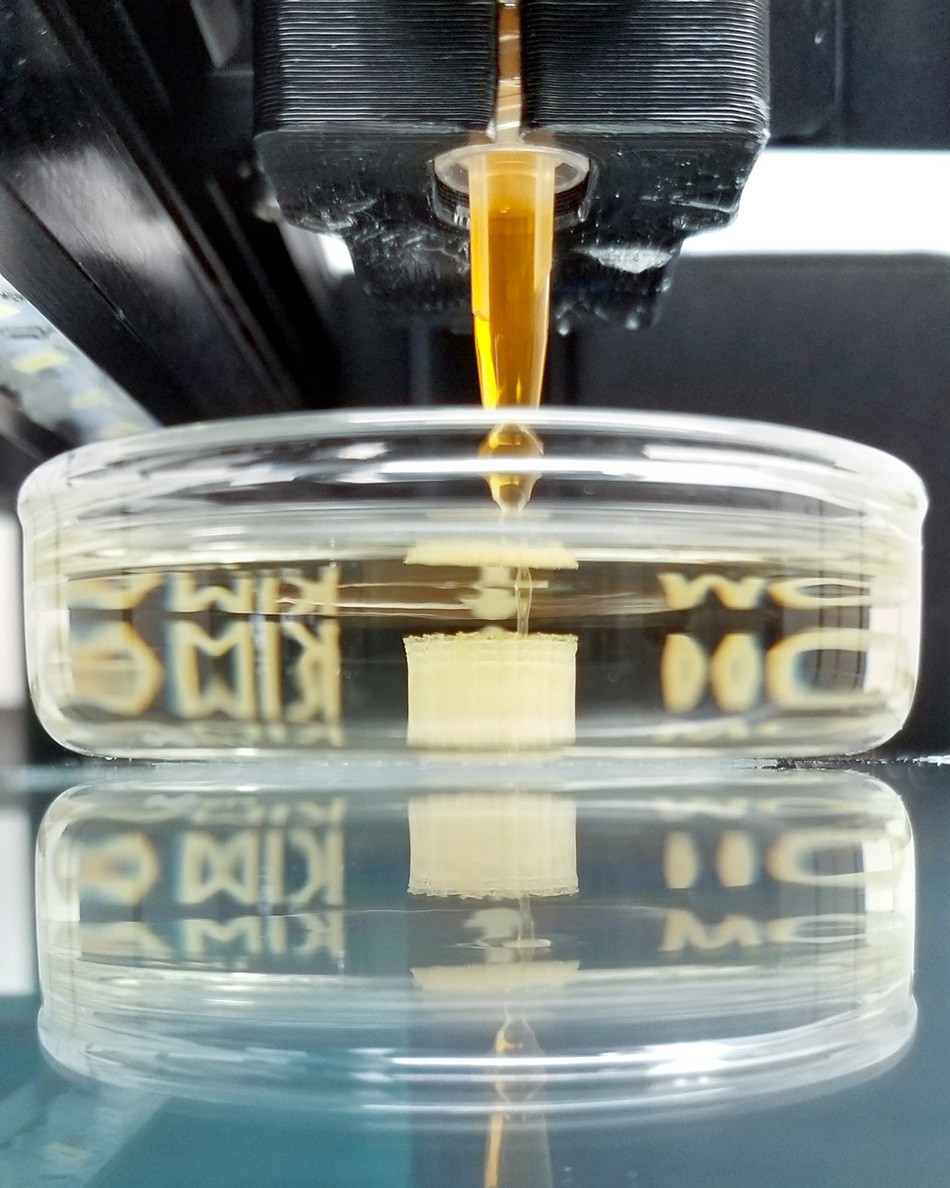
Nearly a decade after they first demonstrated that soft materials could guide the formation of superconductors, Cornell researchers have achieved a one-step, 3D printing method that produces superconductors with record properties. The advance, detailed Aug. 19 in Nature Communications, builds on years of interdisciplinary work led by Ulrich Wiesner, the Spencer T. Olin Professor in the Department of Materials Science and Engineering, and could improve technologies such as superconducting m...
This week in nanotech
$18.9M raised
4 funding rounds · 38 deals tracked
New products
 DLS-1 Mass Spectrometer for Fusion Gas AnalysisHiden Analytical Featured
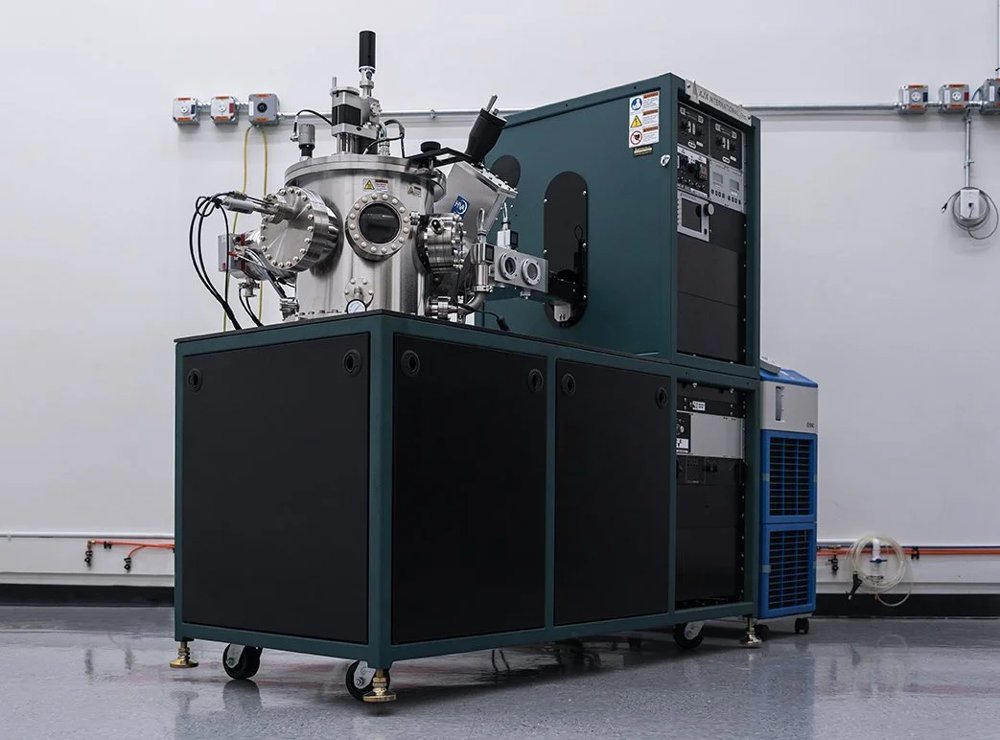 Orion Sputtering Deposition SystemsAJA International Featured
 GHK-CuPeoples Peps
Market insights
Last 30 days: Semiconductors & Electronics drew the most money: $547.7M.
Money raised per month