ETHZ
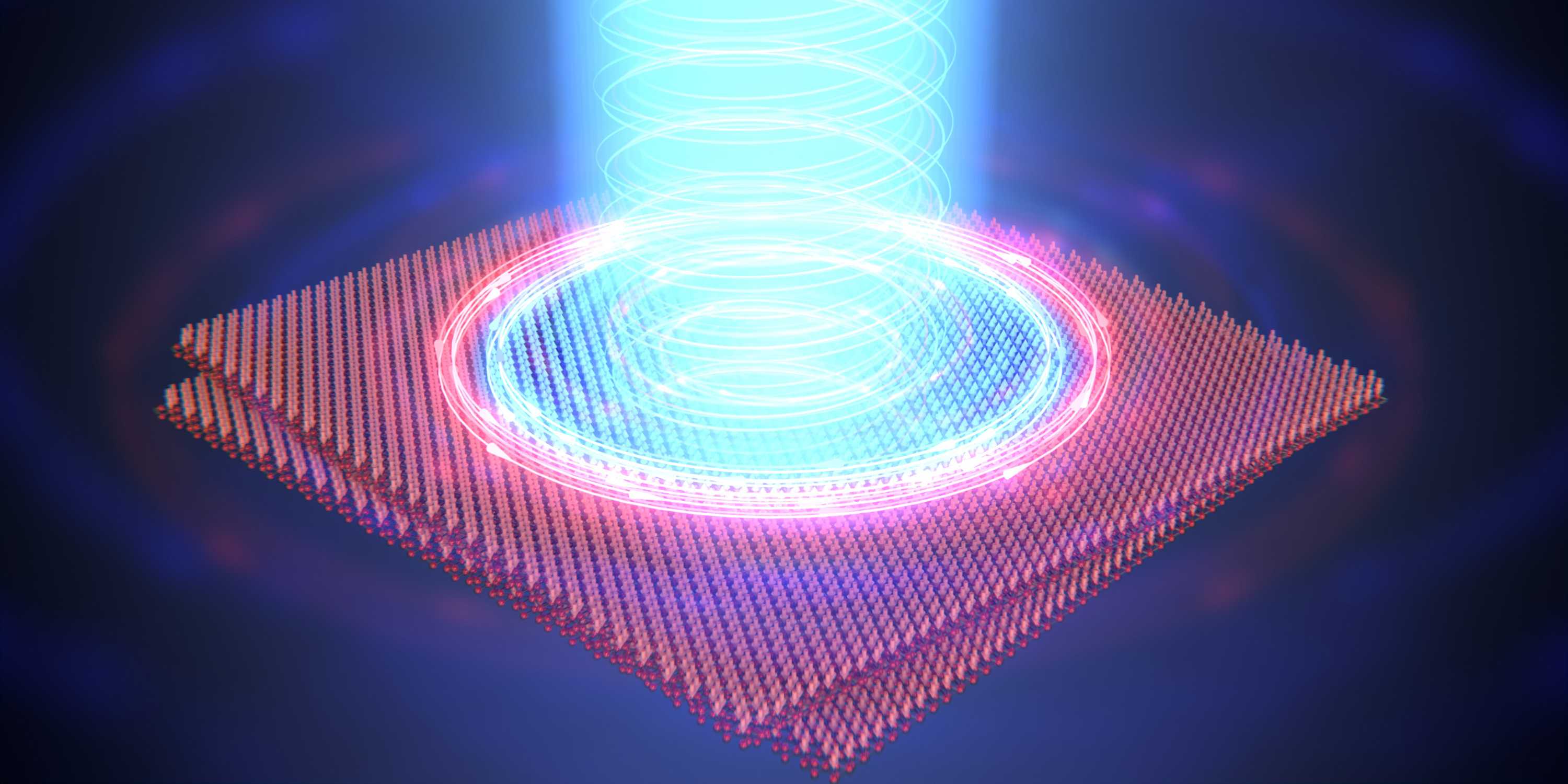
Researchers at ETH Zurich and the University of Basel have succeeded in changing the polarity of a special ferromagnet using a laser beam. In the future, this method could be used to create adaptable electronic circuits with light.
In a ferromagnet, combined forces are at work. In order for a compass needle to point north or a fridge magnet to stick to the fridge door, countless electron spins inside them, each of which only creates a tiny magnetic field, all need to line up in the same direction. This happens through interactions between the spins, which have to be stronger than the disordered thermal motion inside the ferromagnet. If the temperature of the material is below a critical value, it becomes ferromagnetic.
Conversely, to change the polarity of a ferromagnet one usually needs to first heat it up above its critical temperature. The electron spins can then re-orient themselves, and after cooling down the magnetic field of the ferromagnet eventually points in a different direction.
A team of researchers led by Ataç Imamoğlu, Professor of Physics at ETH Zurich and Tomasz Smolenski, Professor at the University of Basel, have now managed to bring about such a re-orientation using only light – without any heating. They recently published their results in the scientific journal Nature.
Interactions and topology
“What’s exciting about our work is that we combine the three big topics in modern condensed matter physics in a single experiment: strong interactions between the electrons, topology and dynamical control,” Imamoğlu says. To achieve this, the researchers used a special material consisting of two wafer-thin layers of the organic semiconductor molybdenum ditelluride which are slightly twisted with respect to each other.
In such materials, so-called topological states can form. Simply speaking, topological states can be characterized based on what they look like: a ball (no hole) or a doughnut (one hole). Importantly, a ball cannot be turned into a doughnut by a simple deformation, which means that topological states are unequivocally and permanently defined.
In the new experiments co-supervised by Smolenski and Imamoğlu, the electrons could be tuned between such topological states that are insulating and metallic states that are conducting. Remarkably, interactions cause the electron spins in both states to align parallel to each other, turning the material into a ferromagnet.
“Our main result is that we can use a laser pulse to change the collective orientation of the spins”, says Olivier Huber, a PhD student at ETH, who carried out the experiments together with his colleague Kilian Kuhlbrodt and Tomasz Smolenski. A few years ago, this had already been done for single electrons, but now the “switching” or change of polarity of the entire ferromagnet was achieved. "This switching was permanent and, moreover, the topology influences the switching dynamics.", says Smolenski.
Dynamical control of the ferromagnet
In this way, the laser pulse can also be used to draw new boundary lines, inside of which the topological ferromagnetic state is located. This can be done repeatedly, so that a dynamical control of the topological and ferromagnetic properties is possible. To show that the tiny ferromagnet, which is only a few micrometers in size, had actually changed its polarity, the researchers measured the reflection of a second, much weaker laser beam. This reflection revealed the orientation of the electron spins.
“In the future, we will be able to use our method to optically write arbitrary and adaptable topological circuits on a chip”, says Smolenski. This approach could then be used to create tiny interferometers, with which extremely small electromagnetic fields can be measured.
Reference
Optical control over topological Chern number in moiré materials
O. Huber, K. Kuhlbrodt, E. Anderson, W. Li, K. Watanabe, T. Taniguchi, M. Kroner, X. Xu, A. Imamoğlu & T. Smoleński
Nature volume 649, pages1153–1158 (2026)
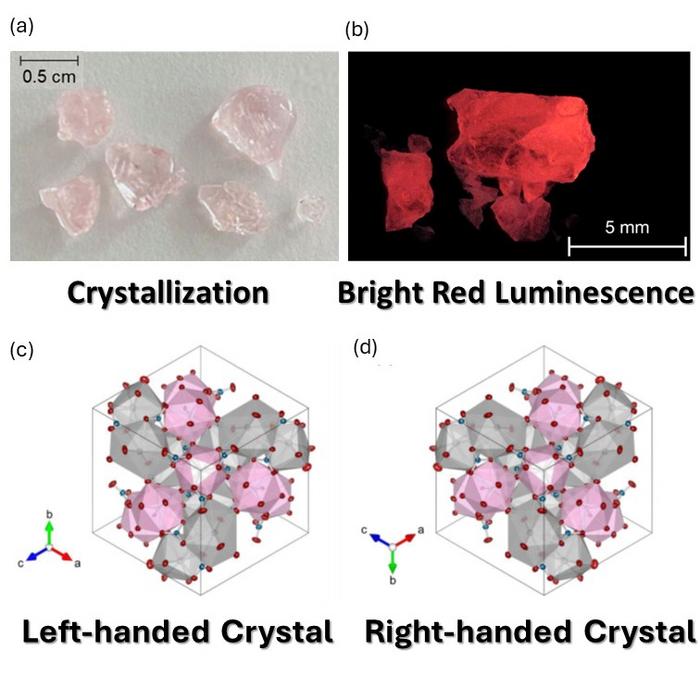
Researchers at Kumamoto University have discovered that a purely inorganic crystal grown from water solution can emit circularly polarized light, a special form of light whose “handedness” distinguishes left from right. The finding opens a new pathway toward robust optical materials for security printing, advanced displays, and photonic technologies, using simple inorganic chemistry rather than complex organic molecules.
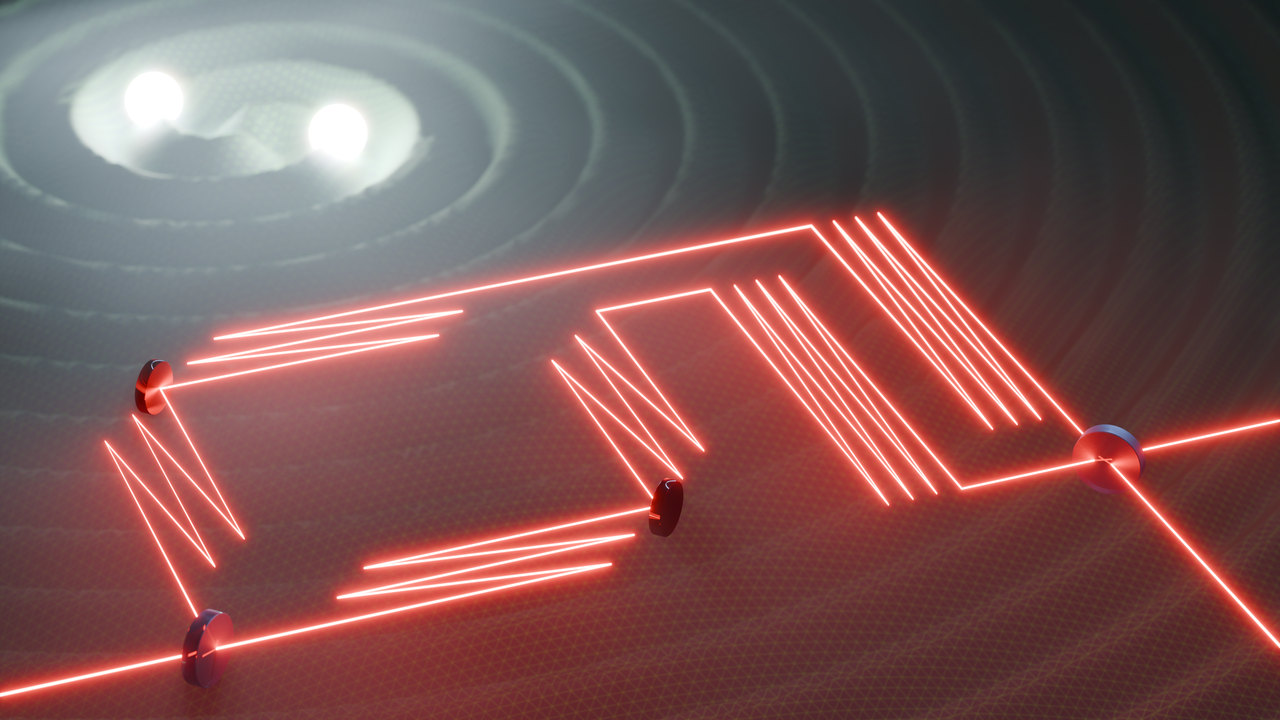
When two black holes merge or two neutron stars collide, gravitational waves can be generated. They spread at the speed of light and cause tiny distortions in space-time. Albert Einstein predicted their existence, and the first direct experimental observation dates from 2015. Now, Prof. Ralf Schützhold, theoretical physicist at the Helmholtz-Zentrum Dresden-Rossendorf (HZDR), is going one step further. He has conceived an experiment through which gravitational waves can not only be observed b...

Researchers from TU Delft and Radboud University have discovered that the two-dimensional ferroelectric material CuInP₂S₆ (‘CIPS’) can be used to control the pathway and properties of blue and ultraviolet light like no other material can. With ultraviolet light being the workhorse of advanced chipmaking, high-resolution microscopy and next-generation optical communication technologies, improving the on-chip control over such light is vital. As the researchers describe in the journal Advanced...
This week in nanotech
$10.2M raised
1 funding round · 13 deals tracked
New products
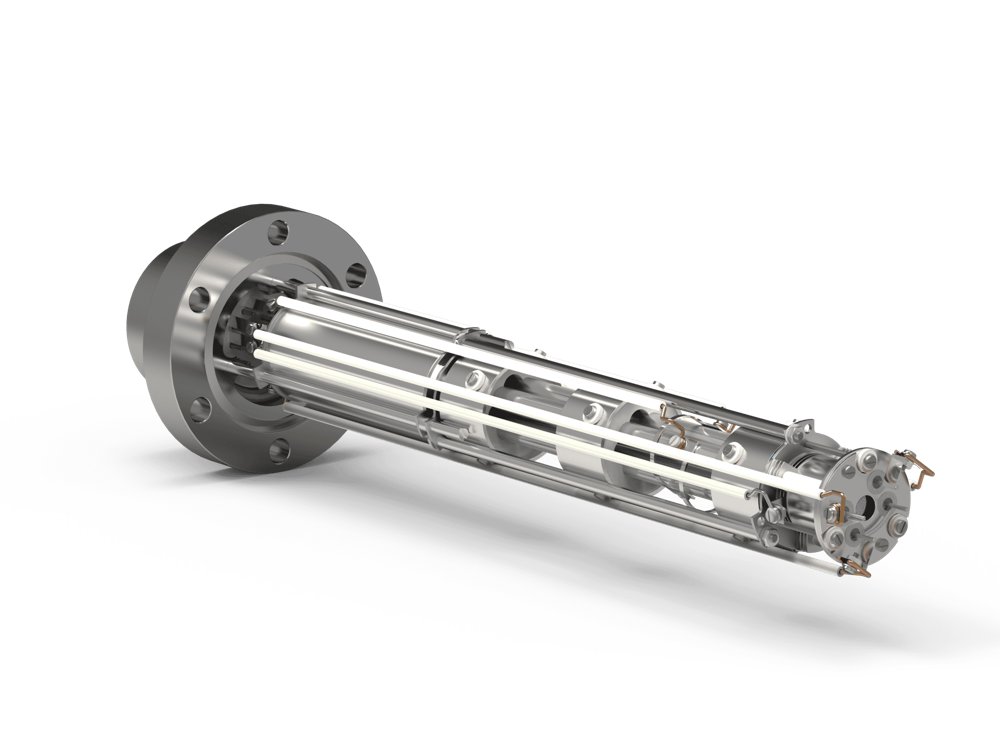 DLS-1 Mass Spectrometer for Fusion Gas AnalysisHiden Analytical Featured
 Nion-compatible In Situ STEM Holders for Electrical BiasingHummingbird Scientific Featured
 Fe85Cr4Mo8V2C1 wire filler materialLeibniz Institute for Solid State and Materials Research Dresden - IFW Dresden
Market insights
Last 30 days: Quantum Technologies was the busiest vertical: 52 of 174 events (30%).
Money raised per month