
More than a century after the Titanic sank, engineers still have hopes of someday creating “unsinkable” ships. In a step toward reaching that lofty goal, researchers at the University of Rochester’s Institute of Optics have developed a new process that turns ordinary metal tubes unsinkable—meaning they will stay afloat no matter how long they are forced into water or how heavily they are damaged.
Chunlei Guo, a professor of optics and of physics and a senior scientist at URochester’s Laboratory for Laser Energetics, and his team describe their process for creating aluminum tubes with remarkable floating abilities in a study published in Advanced Functional Materials. By etching the interior of aluminum tubes, the researchers create micro- and nano-pits on the surface that turn it superhydrophobic, repelling water and staying dry.
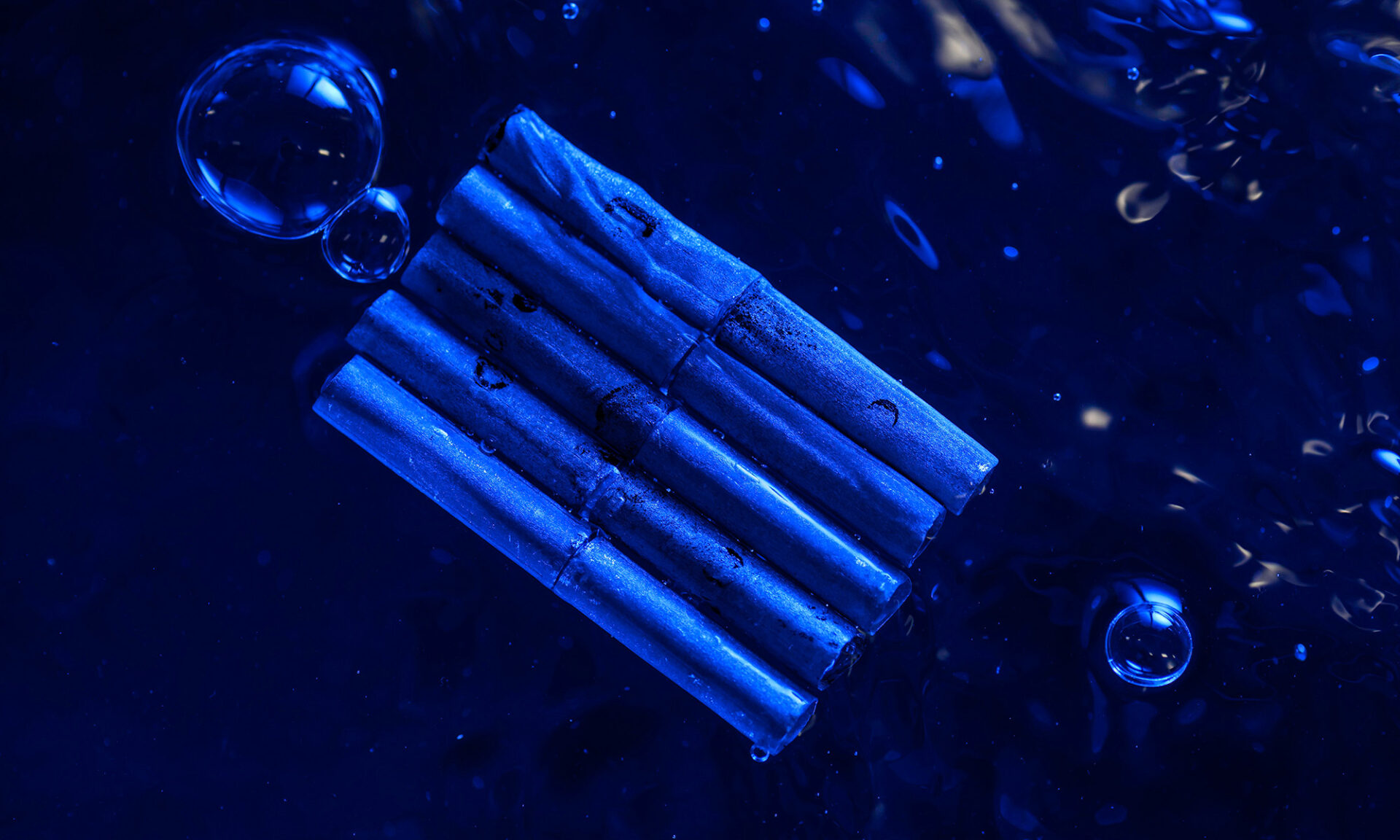
When the treated tube enters water, the superhydrophobic surface traps a stable bubble of air inside the tube, which prevents the tube from getting waterlogged and sinking. The mechanism is similar to how diving bell spiders trap an air bubble to stay buoyant underwater or how fire ants form floating rafts with their hydrophobic bodies.
“Importantly, we added a divider to the middle of the tube so that even if you push it vertically into the water, the bubble of air remains trapped inside and the tube retains its floating ability,” says Guo.
Guo and his lab first demonstrated superhydrophobic floating devices in 2019, featuring two superhydrophobic disks that were sealed together to create their buoyancy. But the current tube design simplifies and improves the technology in several key areas. The disks that the researchers previously developed could lose their ability to float when turned at extreme angles, but the tubes are resilient against turbulent conditions like those found at sea.
“We tested them in some really rough environments for weeks at a time and found no degradation to their buoyancy,” says Guo. “You can poke big holes in them, and we showed that even if you severely damage the tubes with as many holes as you can punch, they still float.”
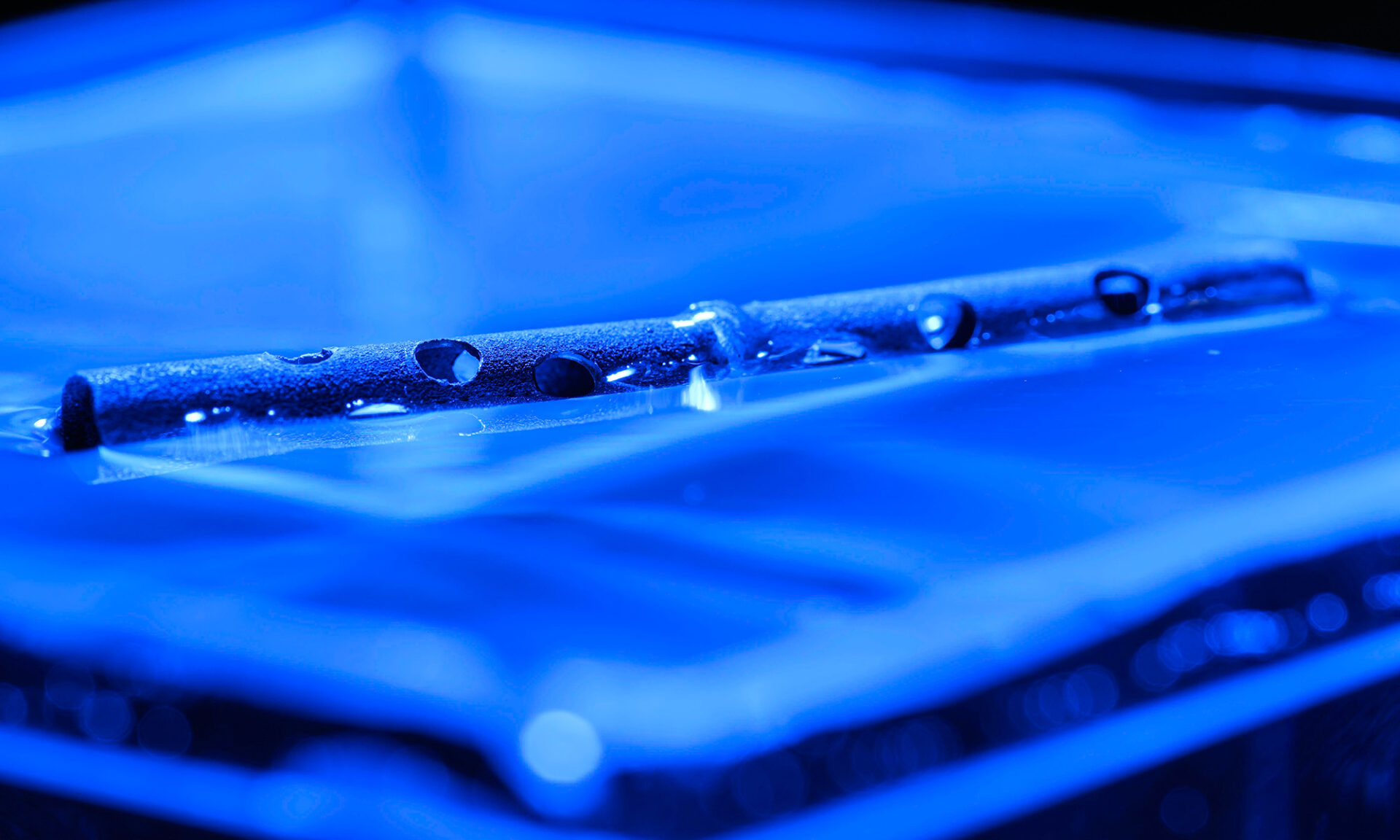
Multiple tubes can be linked together to create rafts that could be the basis for ships, buoys, and floating platforms. In lab experiments, the team tested the design using tubes of varying lengths, up to almost half a meter, and Guo says the technology could be easily scaled to the larger sizes needed for load-bearing floating devices.
The researchers also showed how rafts made from superhydrophobic tubes could be used to harvest water waves to generate electricity, offering a promising renewable energy application.
Reference
Geometry-Enabled Recoverable Floating Superhydrophobic Metallic Tubes
Tianshu Xu, Zhibing Zhan, Yichen Deng, Mohamed Akeel Faris, Subhash C. Singh, Chunlei Guo
https://advanced.onlinelibrary.wiley.com/doi/10.1002/adfm.202526033
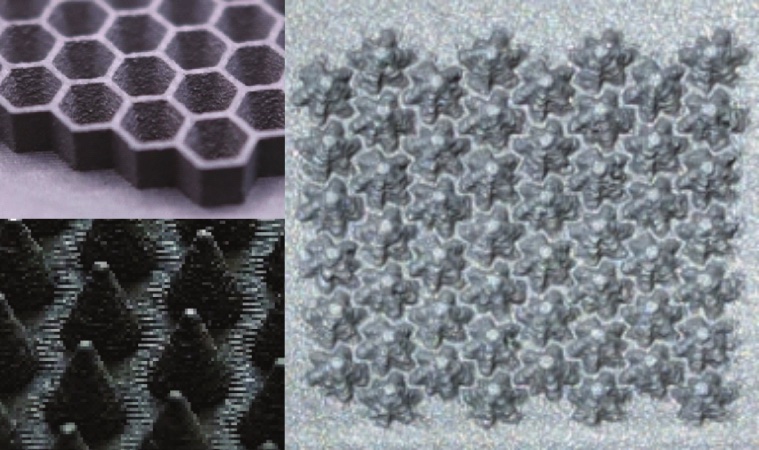
Scientists have created 3D printed surfaces featuring intricate textures that can be used to bounce unwanted gas particles away from quantum sensors, allowing useful particles like atoms to be delivered more efficiently, which could help improve measurement accuracy. The researchers from the University of Nottingham’s School of Physics and Astronomy created intricate, fine-scale surface textures that preferentially bounce incident particles in particular directions. This can help to keep unwa...

In a landmark achievement at the confluence of artificial intelligence and fundamental physics, a team of researchers from Tongji University, the Chinese university of Hong Kong and Nanyang Technological University has developed an AI algorithm capable of classifying complex topological phases of matter without relying on the mathematical tools that have limited human scientists for decades. This breakthrough, which tackles the notoriously difficult realm of non-Hermitian systems, suggests th...
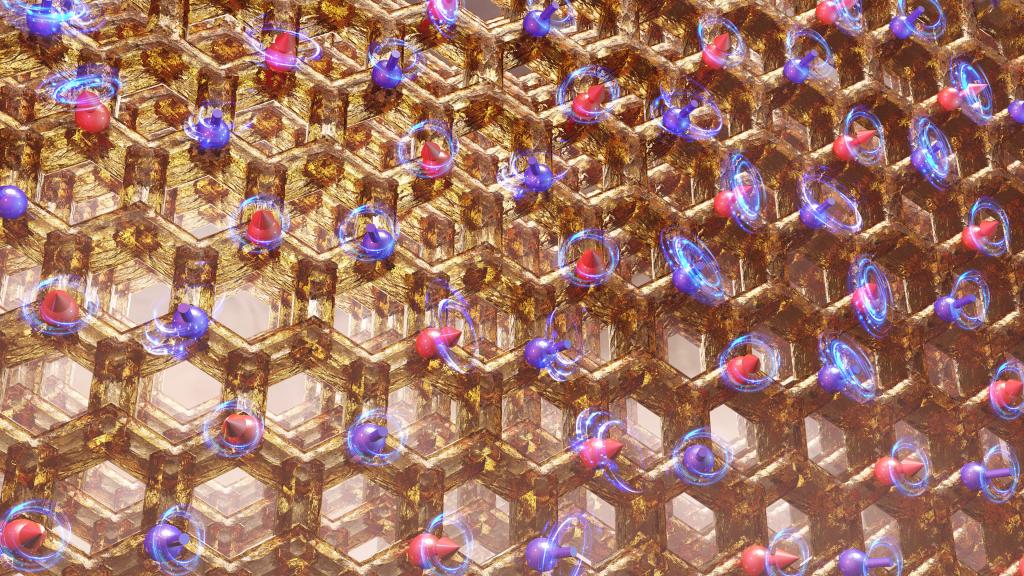
ORNL scientists design a magnetic material as a stepping stone toward revealing new quantum phenomena.
