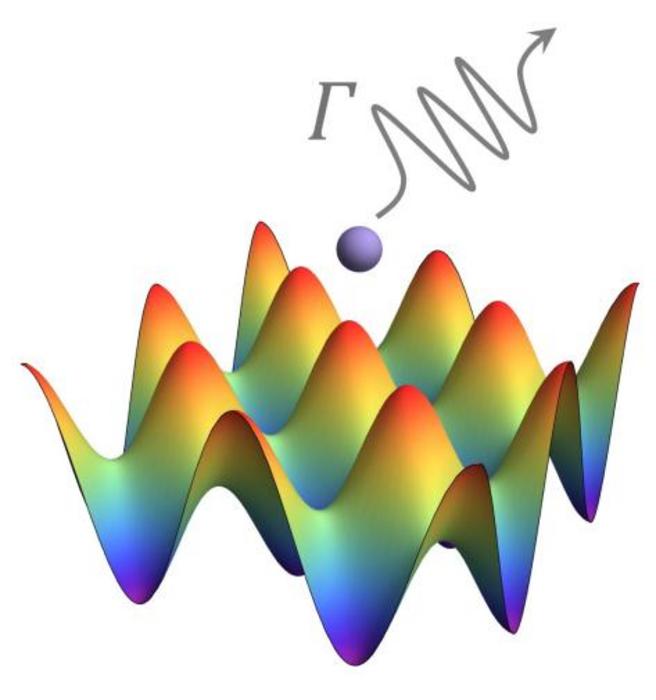
In a landmark achievement at the confluence of artificial intelligence and fundamental physics, a team of researchers from Tongji University, the Chinese university of Hong Kong and Nanyang Technological University has developed an AI algorithm capable of classifying complex topological phases of matter without relying on the mathematical tools that have limited human scientists for decades. This breakthrough, which tackles the notoriously difficult realm of non-Hermitian systems, suggests that AI can not only assist in scientific discovery but can surpass human capabilities in certain domains of abstract reasoning, a notion recently highlighted by the recognition of “AI for Science” in the 2024 Nobel Prizes.
The research addresses a profound and long-standing bottleneck in modern physics: the classification of topological phases. These phases, distinguished by global properties that are immune to local perturbations, earned the 2016 Nobel Prize in Physics. Their identification has traditionally depended on mathematical constructs known as topological invariants. However, no single invariant is universally applicable, a problem that becomes critically acute in the emerging field of non-Hermitian topology.
“Non-Hermitian systems, which describe open and dissipative processes common in nature, exhibit topological features that defy classification by the invariants we use for their Hermitian counterparts,” explained a researcher on the project. “It's like trying to use a ruler to measure weight. The tools are fundamentally mismatched to the problem.” This mathematical limitation has a tangible consequence: phases of matter that appear “trivial” under the scrutiny of all known invariants can, in fact, be topological. This has happened repeatedly in Hermitian systems, where theoretical advances later revealed “hidden” topological phases like the topological valley Hall phase and higher-order topological insulators.
The new AI-powered approach shatters this paradigm. Instead of being programmed with pre-defined mathematical rules (topological invariants), the machine-learning algorithm is designed for unsupervised learning. It analyzes the raw data of random Hamiltonians—the mathematical descriptions of quantum systems — and autonomously learns to distinguish between different topological phases.
“This is the core of the breakthrough,” the researcher emphasized. “Our algorithm guarantees that no hidden topological phases are missed because it doesn’t depend on the incomplete checklist of known invariants. It learns the underlying organizational principles directly from the data itself.” The significance of this work is manifold, marking several major milestones:
1. The First AI-Generated Topological Periodic Table for Non-Hermitian Systems:
The algorithm's most striking output is its unsupervised construction of a “topological periodic table” for non-Hermitian systems with symmetries. Traditionally, building such a table requires advanced mathematical machinery like homotopy groups and Clifford algebra, which operate on abstract Hamiltonian algebras. In contrast, the AI works directly on concrete, physical Hamiltonians, extracting the periodic table and accurately capturing key features like periodicity and dimension-dependent classifications. Furthermore, it uncovered a previously unknown relationship between the number of topological phases and the number of energy bands in a system, a fundamental aspect overlooked in prior human-derived classifications.
2. Unveiling the Role of Symmetry and Parity transformation:
The AI demonstrated remarkable flexibility by incorporating parity transformation—a fundamental symmetry operation—to generate a new, enriched topological periodic table. By analyzing the learning results, the team was able to derive a precise mathematical formula that relates the topological classifications with and without parity transformations. This discovery provides a foundational rule for future theoretical work in this area, derived not from human intuition but from machine-learned patterns.
3. Mastering Open Boundary Effects:
A defining and challenging feature of non-Hermitian topology is its extreme sensitivity to boundary conditions. Unlike in Hermitian systems, the bulk-boundary correspondence can break down, meaning the topological properties can change dramatically between a system with periodic boundaries and one with open ends. The new algorithm successfully navigates this complexity. By integrating the concept of the generalized Brillouin zone, it automatically generates boundary-dependent topological phase diagrams. This allows, for the first time in a systematic and unsupervised manner, a comprehensive exploration of how open boundaries reshape the entire topological landscape. The AI's analysis even identified the specific symmetry conditions that make such boundary-dependent diagrams possible.
This research establishes a powerful new paradigm for scientific exploration. It demonstrates that AI can overcome fundamental limitations of human-derived mathematics, not just in processing data, but in conceptualizing and organizing complex theoretical frameworks. The unsupervised generation of a topological periodic table, the discovery of new mathematical relationships, and the ability to handle intricate boundary effects collectively signal a shift in how science can be done.
These findings provide a robust and generalizable framework for classifying topological phases in the vast and physically relevant world of non-Hermitian systems. They not only uncover features previously invisible to conventional methods but also offer invaluable guidance for both future theoretical models and the experimental realization of these exotic phases of matter, firmly positioning AI as an indispensable partner in the quest to unravel the universe's deepest secrets.
Reference
Unsupervised classification of non-Hermitian topological phases under symmetries
Yang Long , Haoran Xue , Baile Zhang
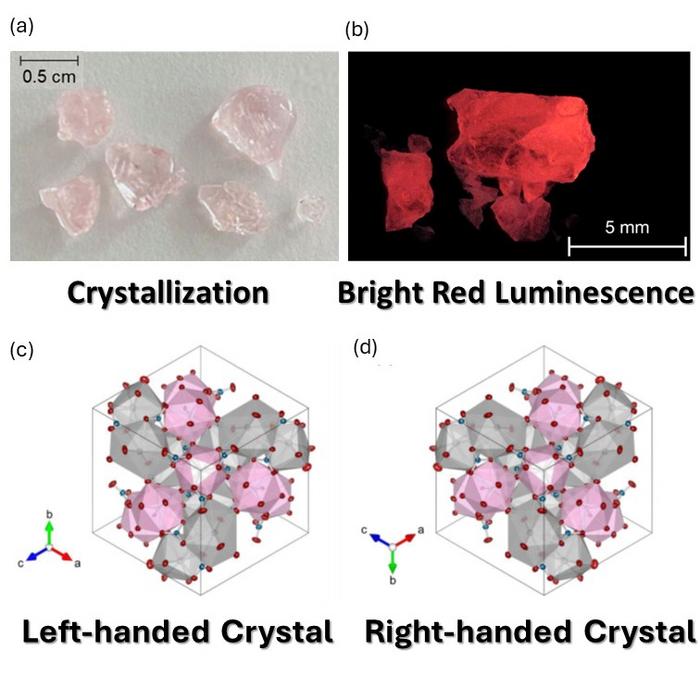
Researchers at Kumamoto University have discovered that a purely inorganic crystal grown from water solution can emit circularly polarized light, a special form of light whose “handedness” distinguishes left from right. The finding opens a new pathway toward robust optical materials for security printing, advanced displays, and photonic technologies, using simple inorganic chemistry rather than complex organic molecules.
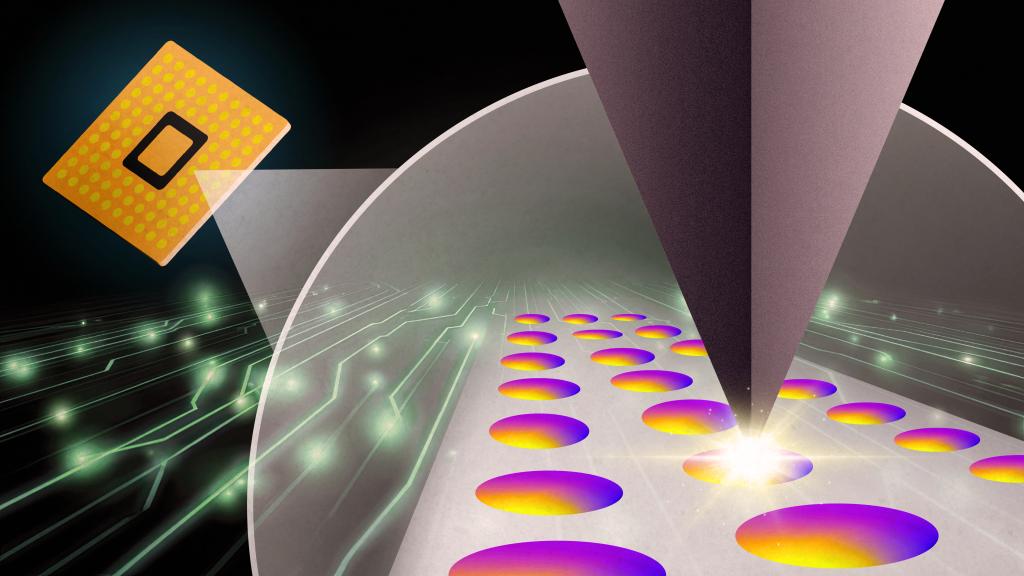
An atomic force microscope tip writes data in stable ferroelectric structures, enabling reliable multistate storage at extremely small scales in this illustration. @ Morgan Manning/ORNL, U.S. Dept. of Energy Researchers at Oak Ridge National Laboratory used specialized tools to study materials at the atomic scale and analyze defects at the materials’ surface. Results of their research help to better understand these materials used for advanced electronics, enabling innovative data storage and...
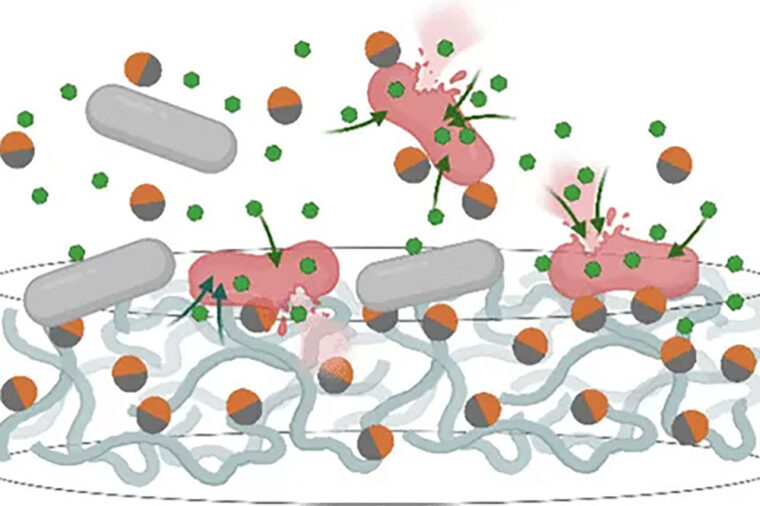
Over the decades, many strains of disease-causing bacteria have evolved defenses to even the most potent antibiotics, setting off a growing health crisis. The rise of antibiotic-resistant “superbugs” has also set off an arms race. As germs find new ways to withstand drugs, researchers are looking for new ways to break down their defenses. In a significant step forward, a research team led by Yan Yu, the Art Krieg Professor of Chemistry, in Arts & Sciences, and of biomedical engineering, at th...
This week in nanotech
$10.2M raised
2 funding rounds · 18 deals tracked
New products
 Ti-WCMBN Nanomaterialia Featured
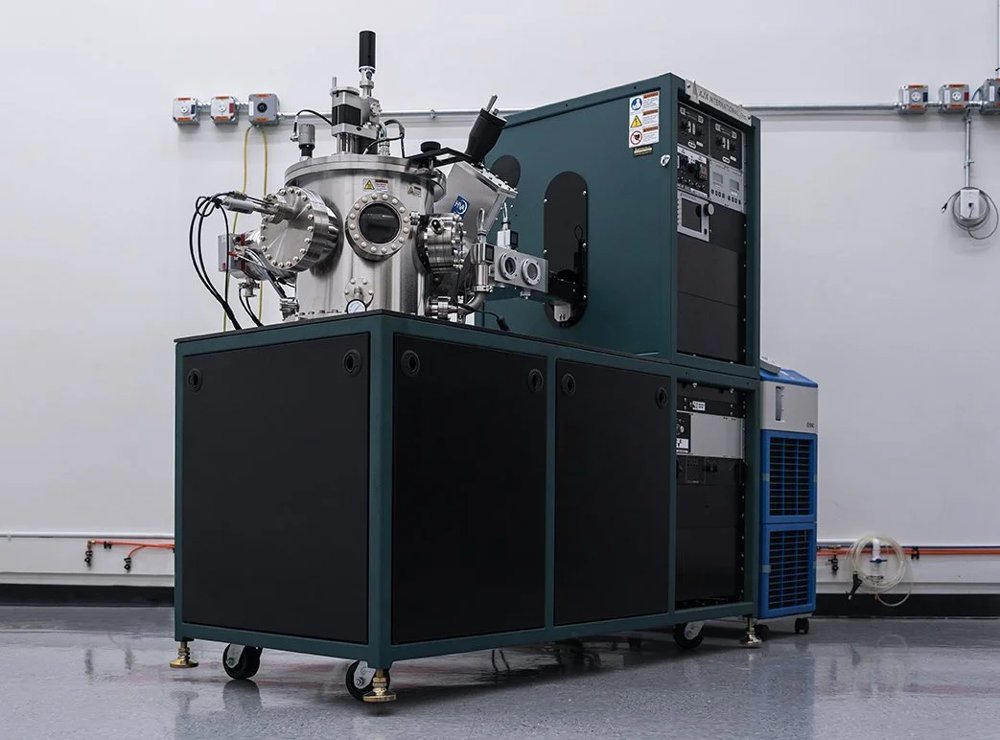 Orion Sputtering Deposition SystemsAJA International Featured
 GiiiGii
Market insights
Last 30 days: Quantum Technologies was the busiest vertical: 52 of 174 events (30%).
Money raised per month
Behind the deal
Who led Sandia National Laboratories’s $3.4M Grant?
See the investors with Insights Pro →