Max-Planck-Gesellschaft
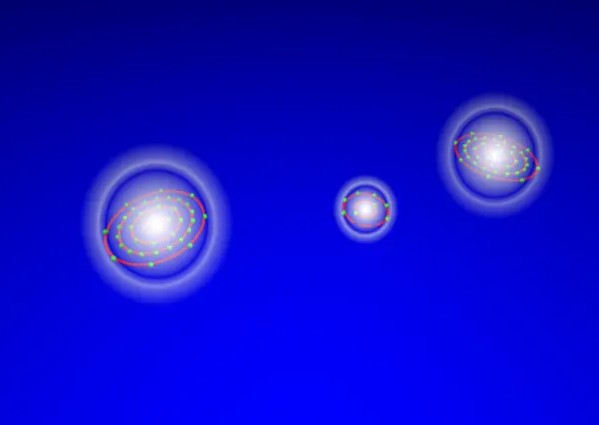
Together with an international team, researchers from the Molecular Physics Department at the Fritz Haber Institute revealed how atoms rearrange themselves before releasing low-energy electrons in a decay process initiated by X-ray irradiation. For the first time, they gain detailed insights into the timing of the process – shedding light on related radiation damage mechanisms.
Radiation-induced decay processes
High-energy radiation, for example in the X-ray range, can cause damage to our cells. This is because energetic radiation can excite atoms and molecules, which then often decay – meaning that biomolecules are destroyed and larger biological units can lose their function. There is a wide variety of such decay processes, and studying them is of great interest in order to better understand and avert radiation damage.
In a recent study, researchers from the Molecular Physics Department, together with international partners, investigated a radiation-induced decay process that plays a key role in radiation chemistry and biological damage processes: electron-transfer-mediated decay (ETMD). In this process, one atom is excited by irradiation. Afterwards, this atom relaxes by stealing an electron from a neighbor, while the released energy ionizes yet another nearby atom. The research team was able to directly track how atoms in a model system move and rearrange themselves before undergoing this exotic electronic decay process. Their work provides the most detailed real-space and real-time picture of ETMD to date.
Sophisticated combination of experiment and theory
The international team studied a simple prototype system consisting of one neon atom loosely bound to two krypton atoms (NeKr2 trimer). After ionizing the neon core with soft X-rays, the researchers followed the system for up to a picosecond – an eternity on the atomic timescale – before it finally decayed by transferring an electron between neighboring atoms and emitting a low-energy electron. Using a state-of-the-art COLTRIMS reaction microscope at the synchrotron light sources BESSY II (Berlin) and PETRA III (Hamburg), the team reconstructed the molecular geometry at the exact instant the decay occurred. To interpret the measurements, fully dimensional ab initio simulations were carried out, tracking thousands of nuclear trajectories and evaluating the decay probability along each one.
Taking a movie of the non-local electronic decay
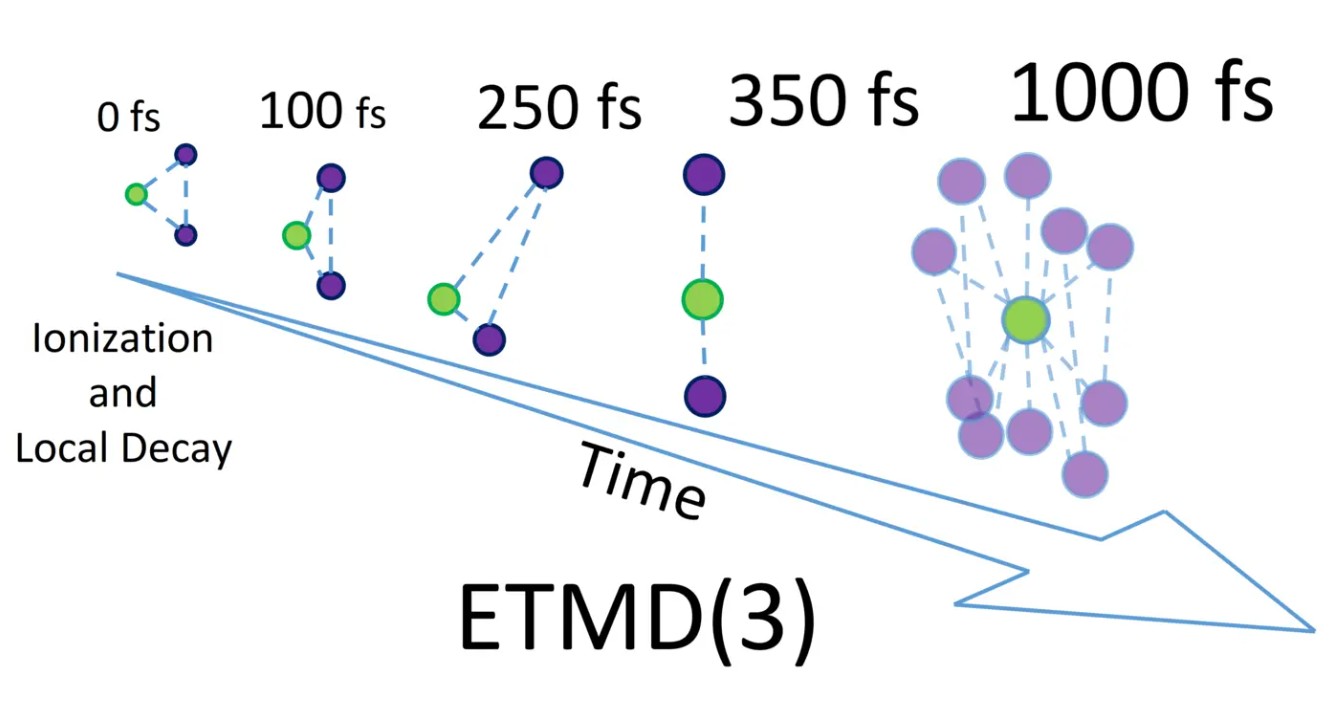
What they discovered was striking: the atoms do not remain frozen in their initial configuration. Instead, they undergo pronounced roaming-like motion, continuously reshaping the molecular geometry and strongly influencing when and how the decay occurs.
“We can literally watch how the atoms move before the decay happens,” says Florian Trinter, one of the lead authors. “The decay is not just an electronic process – it is steered by nuclear motion in a very direct and intuitive way.”
The results reveal that ETMD does not happen from a single “preferred” structure. Instead, different molecular geometries dominate at different times: At early times, the decay occurs near the ground-state geometry, while at intermediate times one krypton atom approaches the neon atom closely and the second drifts farther away – an optimal setup for electron donation and long-range energy transfer. At later times, the system explores almost linear and highly distorted configurations, reflecting a pendular, roaming-like motion of the atoms. This dynamic reshaping leads to strongly time-dependent decay rates, varying by nearly an order of magnitude depending on geometry.
“The atoms explore large regions of configuration space before the decay finally takes place,” explains Till Jahnke, senior author of the study. “This shows that nuclear motion is not a minor correction – it fundamentally controls the efficiency of non-local electronic decay.”
Why It Matters
ETMD has attracted increasing attention because it efficiently produces low-energy electrons, which are known to cause chemical damage in liquids and biological matter. Understanding how ETMD depends on molecular structure and motion is therefore crucial for modeling radiation damage in water and biomolecular environments, as well as for interpreting ultrafast X-ray experiments. Moreover, the current findings are very helpful for developing multiscale theoretical approaches that embed accurate decay rates into large, complex systems.
By providing a detailed benchmark for the smallest system that supports ETMD involving three atoms, the present study lays the groundwork for extending these ideas to liquids, solvated ions, and biological environments.
“This work shows how non-local electronic decay can be used as a powerful probe of molecular motion,” the authors conclude. “It opens the door to imaging ultrafast dynamics in weakly bound matter with unprecedented detail.”
Reference
Tracking the Complex Dynamics of Electron-Transfer-Mediated Decay in Real Space and Time
Florian Trinter*, Jaroslav Hofierka, Jonas Rist, Max Kircher, Miriam Weller, Niklas Melzer, Dimitrios Tsitsonis, Angelina GeyerJan Kruse, Gregor Kastirke, Joshua B. Williams, Tsveta Miteva, Reinhard Dörner, Markus S. Schöffler, Maksim Kunitski, Nicolas Sisourat, Lorenz S. Cederbaum, Till Jahnke*
Journal of the American Chemical Society
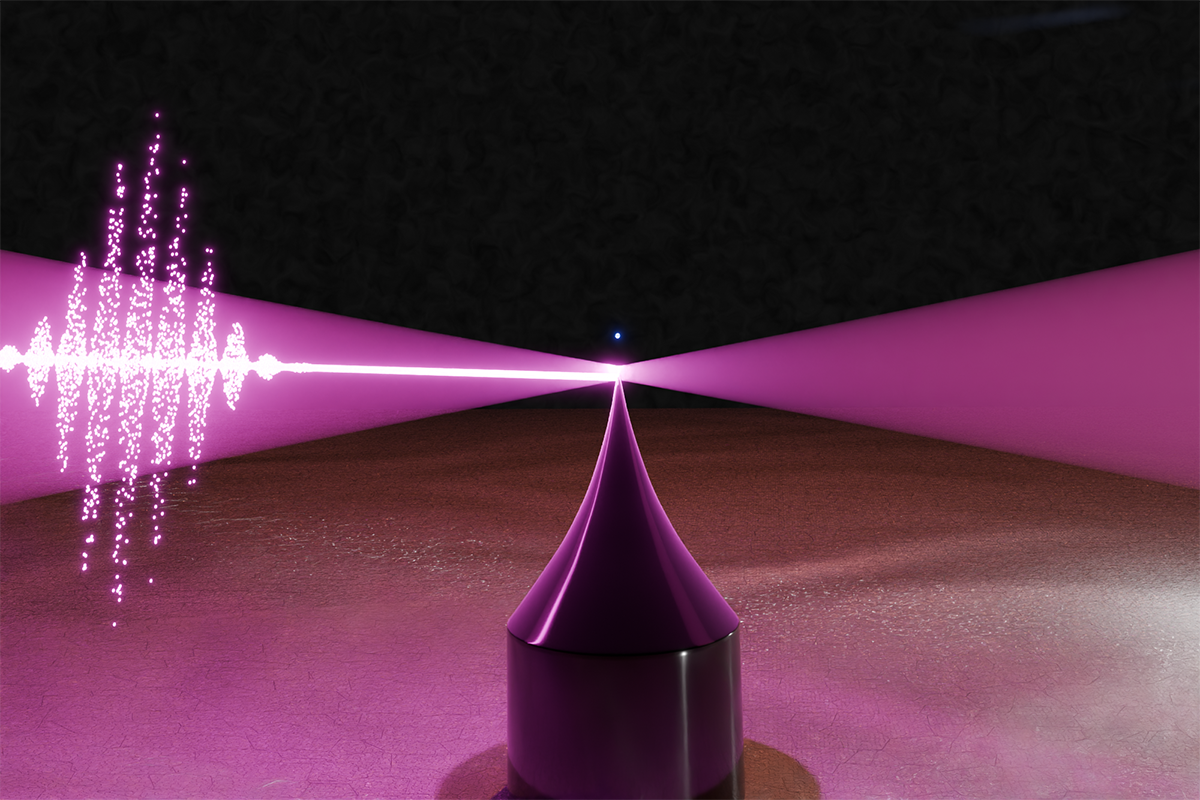
For a long time, the two areas of strong-field physics and quantum optics were considered independent areas of physics research without any significant overlaps. Whilst strong-field physics focuses on the behavior of material, such as atomic gases, in intense light fields, quantum optics focuses on researching special quantum properties of light that cannot be described within the framework of classical physics. Strong-field physics requires intense laser rays, in other words rays with innume...
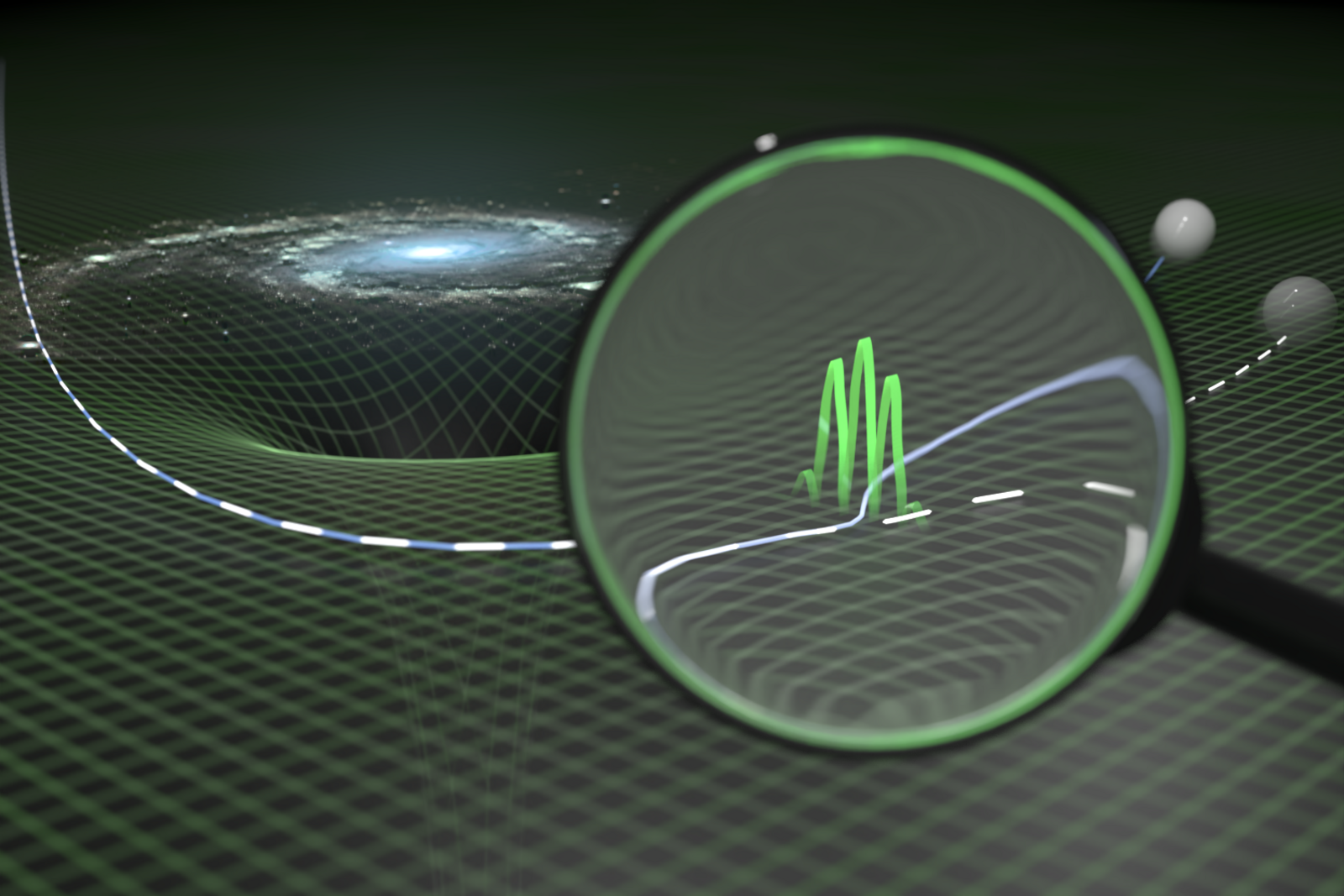
It is something like the “Holy Grail” of physics: unifying particle physics and gravitation. The world of tiny particles is described extremely well by quantum theory, while the world of gravitation is captured by Einstein’s general theory of relativity. But combining the two has not yet worked – the two leading theories of theoretical physics still do not quite fit together. There are many ideas for such a unification – with names like string theory, loop quantum gravity, canonical quantum g...
For decades, it’s been known that subtle chemical patterns exist in metal alloys, but researchers thought they were too minor to matter — or that they got erased during manufacturing. However, recent studies have shown that in laboratory settings, these patterns can change a metal’s properties, including its mechanical strength, durability, heat capacity, radiation tolerance, and more. Now, researchers at MIT have found that these chemical patterns also exist in conventionally manufactured me...
This week in nanotech
$10.2M raised
2 funding rounds · 18 deals tracked
New products
 DLS-1 Mass Spectrometer for Fusion Gas AnalysisHiden Analytical Featured
 Ti-WCMBN Nanomaterialia Featured
 Fe85Cr4Mo8V2C1 wire filler materialLeibniz Institute for Solid State and Materials Research Dresden - IFW Dresden
Market insights
Last 30 days: Quantum Technologies was the busiest vertical: 52 of 174 events (30%).
Money raised per month