
MXene is A 2D nano material with the same level of electrical conductivity (10,000 S/cm) as metals. Micrometer thick MXene films with high electrical conductivity, reported by Koo Chong-min in 2016, presented outstanding electromagnetic interference shielding. However, there were no technologies that could be used to directly apply MXene to highly integrated electronic devices, such as h5G communications and mobile devices.
A Korean research team has developed a technology to fabricate an ultrathin material for electromagnetic interference(EMI) shielding. The research team, led by Koo Chong-Min, the head of the Materials Architecturing Research Center at the Korea Institute of Science and Technology (KIST, Acting President Yoon Seok-jin), announced that it had developed an ultrathin nanometer-thick film, using MXene, a new two-dimensional nanomaterial for EMI shielding. The research was jointly conducted with a team led by Professor Kim Sang-ouk of the Department of Materials Science and Engineering at Korea Advanced Institute of Science and Technology (KAIST, President: Shin Sung-chul) and a research team led by Professor Yury Gogotsi from Drexel University, USA.
The KIST-KAIST-Drexel joint research team used self-assembly technique to fabricate an ultrathin MXene film with uniform atomic-scale thickness. MXene film is reported to have exceptional absolute electromagnetic shielding performance (shielding effectiveness relative to thickness and density) that is far greater than that of any other material reported to date.
By adding a volatile solution onto the surface of a diluted MXene solution, the research team was able to induce floating MXene flakes. Vertical convection, resulting from differences in surface tension, caused the self-assembly of the micron-sized MXene flakes, thereby creating a large-size ultrathin MXene film with uniform atomic-scale thickness. The research team found that MXene films layered to reach 55 nm in thickness provide 99% electromagnetic shielding efficiency. Ultrathin MXene films fabricated using the team's new technology can easily be transferred onto any substrate and layered multiple times for customized thickness, transmittance, and surface resistance.
"We used a self-assembly technique to fabricate an ultrathin Ti3C2Tx MXene film with uniform atomic-scale thickness. This technology helped to examine the electromagnetic shielding mechanism of nanometer-thick 2D nano materials and to develop an ultrathin electromagnetic shielding application technology for flexible electronics," said Koo Chong-Min, the head of the Materials Architecturing Research Center at KIST. "We believe that the ultrathin coated MXene technology can be applied to various electronic devices and be used for mass production, thereby facilitating research on the application of next-generation lightweight electromagnetic shielding and flexible and printable electronics."
Electromagnetic shielding of monolayer MXene assemblies
Taeyeong Yun, Hyerim Kim, Aamir Iqbal, Yong Soo Cho, Gang San Lee, Myung‐Ki Kim, Seon Joon Kim, Daesin Kim, Yury Gogotsi, Sang Ouk Kim, Chong Min Koo
Advanced Materials (2020) Volume 32, Issue 9
DOI: 10.1002/adma.201906769
Contact information:
Koo Chong-Min
Head of the Materials Architecturing Research Center at Korea Institute of Science and Technology (KIST)
koo@kist.re.kr | chongminkoo@gmail.com
Phone: +82-2-958-6872 | +82-10-8243-7414
Koo's Lab - Functional Polymer Hybrids Lab
NST – National Research Council of Science & Technology
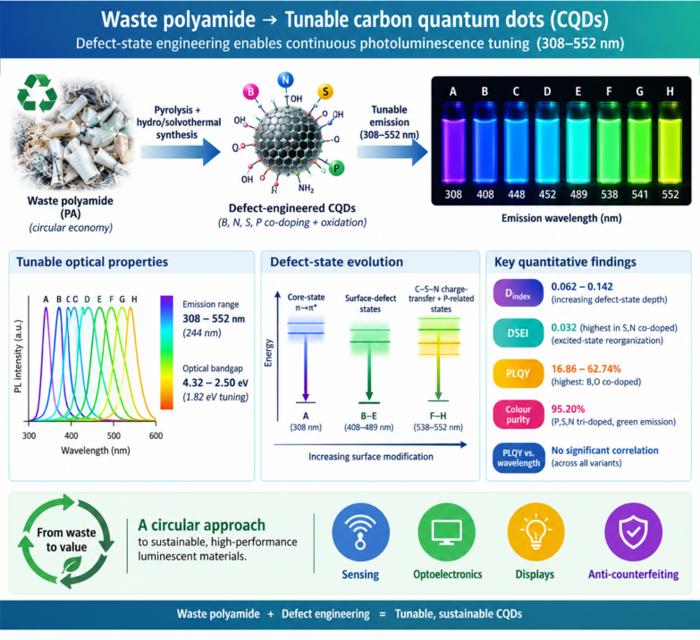
Waste polyamide-derived CQDs show continuous photoluminescence tuning from 308 to 552 nm through sequential defect-state engineering, with optical transition energies decreasing from 4.32 to 2.50 eV. @Christian Ebere Enyoh from Saitama University Carbon quantum dots (CQDs) are fluorescent carbon nanomaterials with potential applications in sensing, optoelectronics, displays, anti-counterfeiting, and environmental technologies. Their optical properties can be adjusted by modifying the carbon...
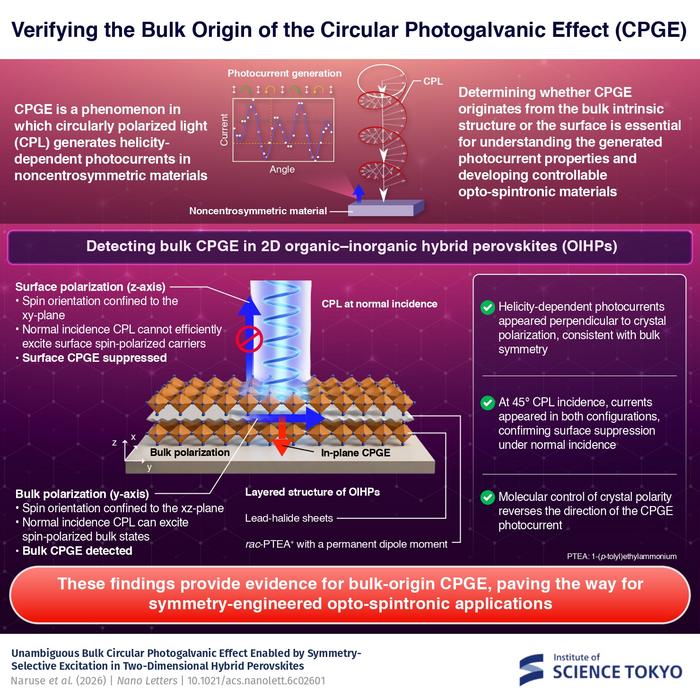
The researchers used circularly polarized light at normal incidence and found that helicity-dependent photocurrents appeared perpendicular to the crystal’s polarization but vanished when measured parallel to it, supporting a bulk origin of CPGE. @Institute of Science Tokyo The circular photogalvanic effect (CPGE), a phenomenon that generates helicity-dependent photocurrents in noncentrosymmetric materials, can originate purely from a crystal's internal structure without contribution from the...
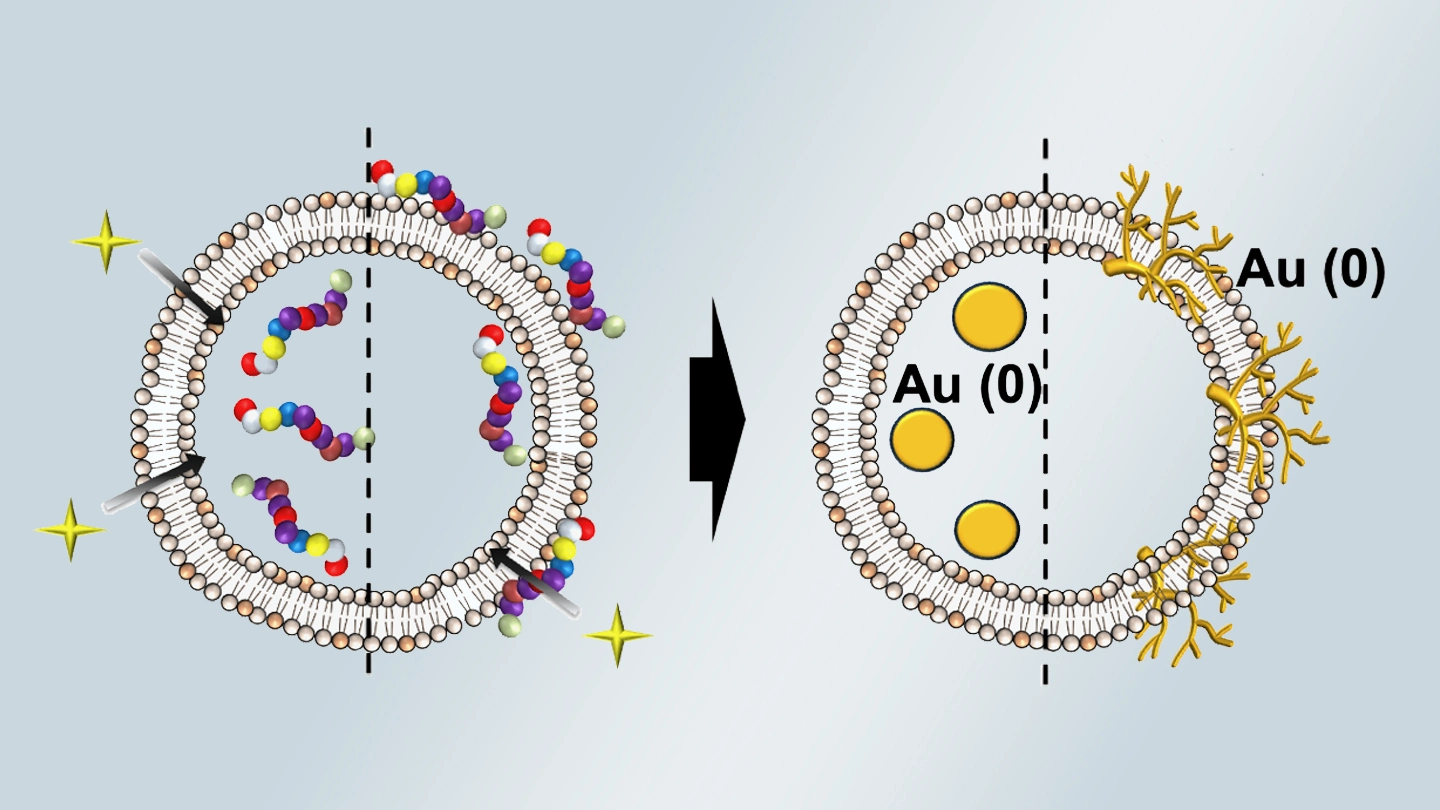
Summary of gold nanoparticle growth programming in liposome based on localization of biomineralization peptide The position of biomineralization peptides within liposomes can influence how gold nanoparticles grow, reports a research team from Institute of Science Tokyo. Peptides localized at the membrane interface promote branched structures, while those confined to the liposome interior favor spherical nanoparticles. The findings offer a new strategy for controlling nanoscale reaction...
