Hokkaido University

Hokkaido University scientists have succeeded in synthesizing an α,α-difluoroglycine derivative, a type of α-amino acid, based on a reaction path predicted by quantum chemical calculations. This novel method, combining experimental chemistry and computational chemistry, could innovate the development of new chemical reactions.
In addition to being the basic constituents of peptides and proteins in our body, α-amino acids are essential for our daily life. They are used for nutritional supplements, food additives and many other products. While natural α-amino acids can be cheaply synthesized through conventional fermentation processes, non-natural α-amino acids, which could add new properties to peptides and proteins, are generally made through chemical syntheses.
In the current study published in Chemical Science, a group of scientists at the university's Institute for Chemical Reaction Design and Discovery (WPI-ICReDD) focused on the chemical synthesis of α,α-difluoroglycine, a non-natural fluorinated α-amino acid, which could enhance the molecule's metabolic stability and biological activity. However, an effective synthesis method for the amino acid has been elusive.
Designing new reactions based on conventional organic synthesis requires numerous trials and errors in experiments and the insights of expert chemists. Consequently, a huge amount of time and money has been required to develop an innovative reaction.
To overcome this problem, WPI-ICReDD, the university's new research hub, adopted its core technology dubbed Artificial Force Induced Reaction (AFIR) method. The AFIR is a computational method applying virtual intermolecular or intramolecular forces to perform systematic search for chemical reaction pathways. The group applied the AFIR method to conduct so-called retrosynthetic analysis which uses quantum chemical calculations to find the decomposition paths of a desired product before proposing synthetic pathways in a reverse manner.
They searched for decomposition pathways of α,α-difluoroglycine and selected a group including three basic and simple compounds -- amine, difluorocarbene, and carbon dioxide. Their calculation predicted these three compounds are capable of producing the target compound in 99.99% yield.
After having fine-tuned various reaction conditions, the experimental chemists successfully synthesized an α,α-difluoroglycine derivative in 80% yield. "We first failed to obtain the target product, but we were still confident that the synthesis was successful because the computational prediction was so concrete. It encouraged us to go on," says Tsuyoshi Mita of the group. "It took only two months to achieve the synthesis, which is significantly faster than a typical development process. It saves significant research time because a computer predicts the feasibility of synthesizing target compounds and their chemical yields."
"The AFIR method is instrumental in conducting next-generation organic syntheses," says Satoshi Maeda, who devised the method. "We expect our method will be applied to effectively producing fine chemicals, functional materials, and discovering new drugs." The group is making a database of pathways found through the AFIR method and hopes to use it with information scientists to accelerate the development of novel chemical reactions.
Discovery of a synthesis method of difluoroglycine derivative based on a path generated by quantum chemical calculations
Tsuyoshi Mita, Yu Harabuchi, and Satoshi Maeda
Chemical Science (May 22, 2020)
DOI: 10.1039/DOSCO2089C
Contact information:
Satoshi Maeda
Professor, Institute for Chemical Reaction Design and Discovery (WPI-ICReDD)
smaeda@eis.hokudai.ac.jp
Phone: +81-11-706-4921
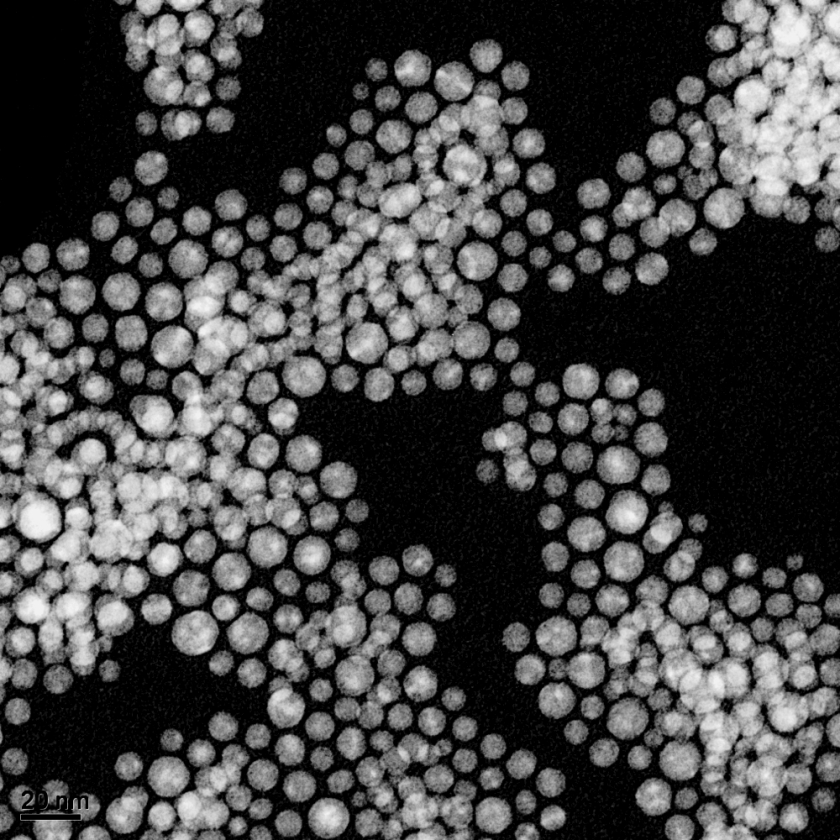
Silver nanoparticles with diameters of ~10 nm deliver the best performance as electrocatalysts. The silver particles are sprayed onto the electrode together with a conductive carbon powder. The ideal mixture consists of 20 per cent by mass silver and 80 per cent by mass carbon powder. This image was taken using a transmission electron microscope (TEM). © HZB Via electrolysis, CO₂ can be reduced to CO, a raw material for further chemical products such as fuels. Within the GreenQuest Project,...
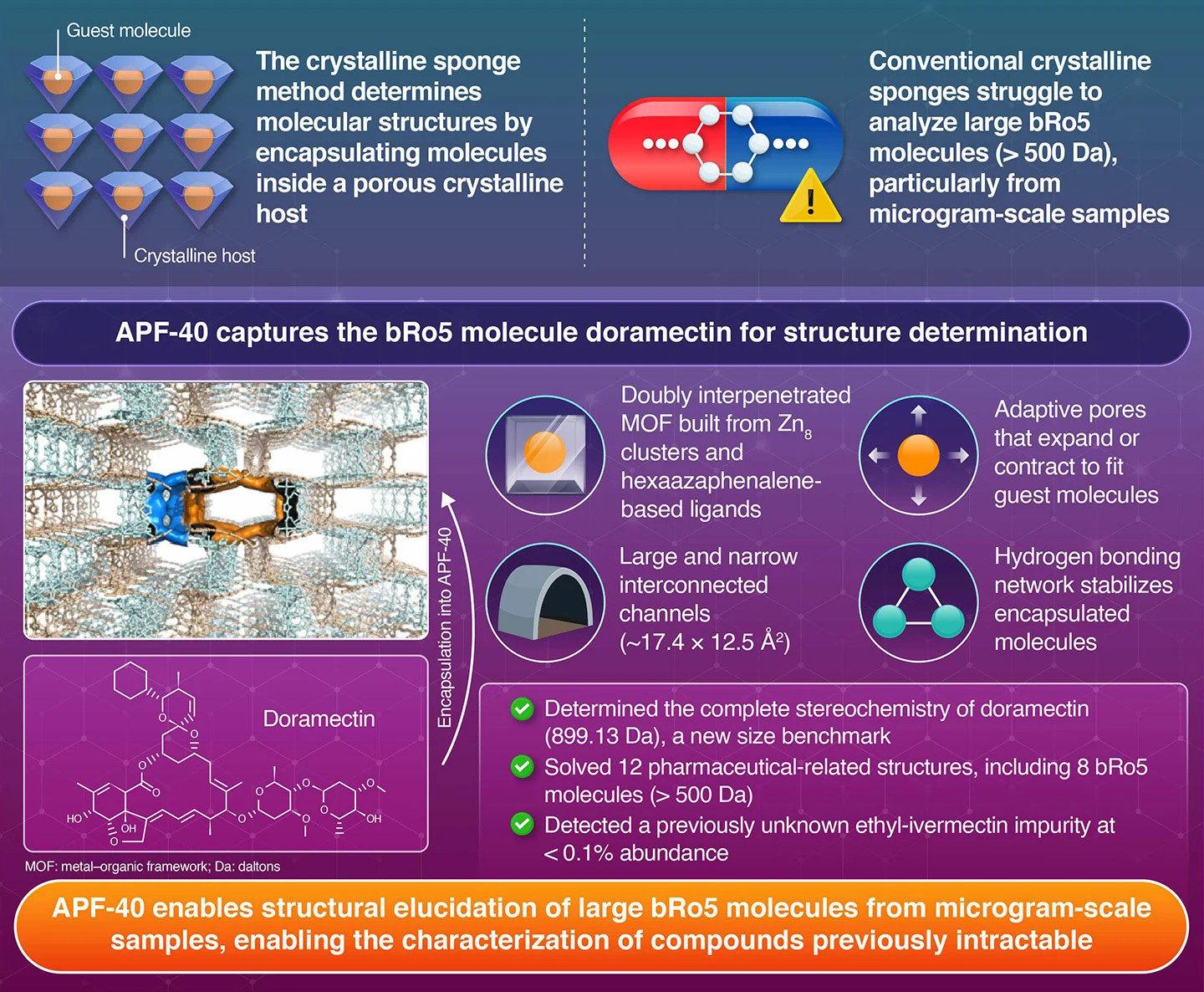
A flexible metal–organic framework developed by researchers from Institute of Science Tokyo enables the structural determination of large "beyond rule of 5" molecules from microgram-scale samples. Using APF-40 as a crystalline sponge, the researchers determined the structures of 12 pharmaceutical-related molecules, including the 899 Da drug molecule doramectin and trace ivermectin derivatives. The method could aid drug discovery, natural products research, and the characterization of rare...
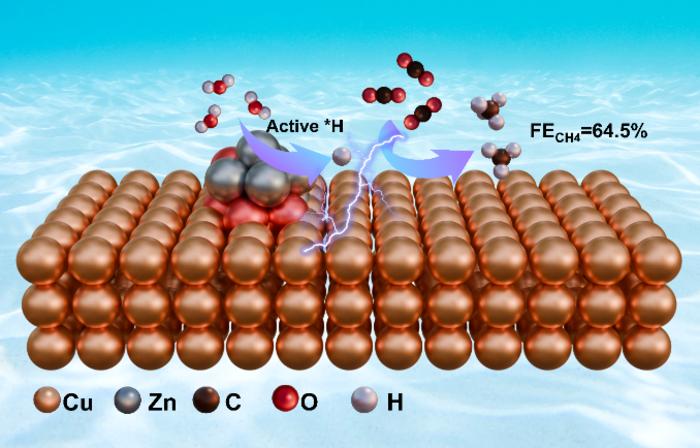
image: CuZn800@C was constructed via solvothermal method and utilizes the high-temperature volatility of zinc to prepare through calcination at different temperatures, which displays a high methane Faradaic efficiency of 64.5% and a remarkable partial current density of -551.3 mA/cm2 at -1.7 V vs. RHE, along with excellent stability. Zn and Cu form a tandem reaction system. Zn sites promote water splitting to provide protons, while Cu sites reduce the energy barrier for *CO hydrogenation....