National University of Singapore College of Design and Engineering
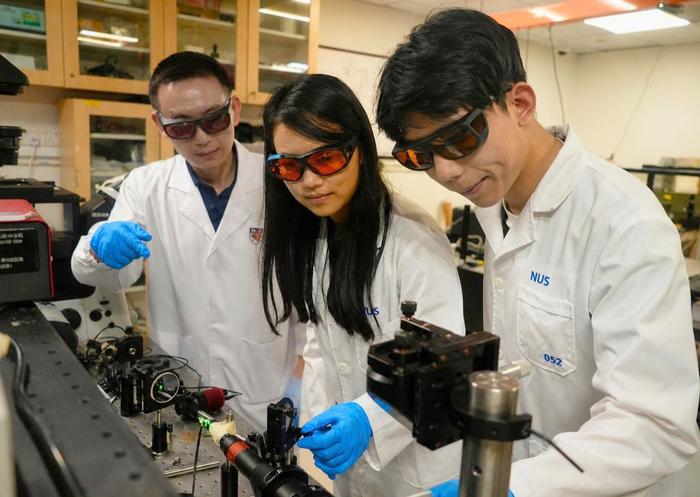
Catalysts spur chemical reactions used across industries, from producing fuels and medicines to manufacturing chemicals and treating pollutants. Improving their performance requires understanding where and how reactions happen on their surfaces. However, conventional measurements average the activity of many catalyst particles, concealing local differences that could hold clues to designing more effective materials.
Researchers at the College of Design and Engineering at the National University of Singapore (NUS CDE), have developed a novel imaging method called DELINE that makes these differences visible by tracking individual reaction events across a catalyst’s surface. Demonstrated on gold and copper catalysts in electricity-driven reactions, the approach could help researchers identify useful surface features and tailor materials to their operating conditions.
Studying water dissociation, a key step in producing hydrogen from water, the team uncovered a trade-off: surface regions where the reaction accelerates more strongly with applied voltage tend to have a slower underlying reaction rate. The finding shows that the features most useful for a catalyst can depend on the electrical conditions in which it operates.
“Knowing which parts of a catalyst are active is only the starting point. We also need to understand how their behaviour changes under different operating conditions,” said Assistant Professor Mao Xianwen from the Department of Materials Science and Engineering at NUS CDE, who led the research. “DELINE allows us to zoom into these differences. Its applicability to other electrocatalysts and reactions means it could guide the design of materials that use electricity more efficiently, with benefits extending from hydrogen production to other chemical processes.”
The findings were published in Nature Catalysis on 13 August 2026 and featured on the cover of its September issue.
Shining a light on individual reactions
Many catalytic reactions do not produce light, making individual events difficult to observe under a microscope. DELINE links the reaction being studied to a much faster follow-on reaction that produces a fluorescent signal. Recording where these signals appear reveals activity across the catalyst’s surface while it is working.
The team demonstrated this approach using thin catalytic gold plates to study water dissociation. In this step, water splits at the metal surface, leaving attached hydrogen that can subsequently form hydrogen gas. It also produces hydroxide ions, negatively charged groups containing oxygen and hydrogen.
A probe molecule reacts with the hydroxide to produce the fluorescent signals detected by DELINE. These signals sample individual events and reveal the relative activity of different regions. Control experiments confirmed that the probe did not change the gold’s catalytic activity.
Across 39 gold plates, the researchers compared 195 surface regions and found that edges and side surfaces were generally more active than the broad, flat faces — although activity also varied within those faces. These differences, hidden in conventional average measurements, prompted the team to investigate how each region responded to voltage.
Why the best design hinges on operating conditions
By varying the applied voltage, the researchers measured how strongly the reaction accelerated in each region. They also estimated a baseline reaction rate at equilibrium, when forward and reverse reactions balance.
Regions with a stronger response to voltage tended to have a lower baseline rate. These competing effects can offset one another, a relationship known as kinetic compensation. A region that performs well under one set of electrical conditions may therefore lose its advantage under another.
For hydrogen production, this distinction is crucial when increasing output. A catalyst with greater voltage sensitivity may need a smaller voltage increase to accelerate the reaction, making this property important alongside its baseline activity.
Computer simulations and additional surface imaging helped explain the trade-off. Sodium ions in the surrounding liquid accumulated unevenly near the gold, altering nearby water molecules and making the reaction more sensitive to voltage. The same accumulation could crowd the surface and slow water movement and rearrangement, reducing the baseline rate.
“DELINE advances operando characterisation by enabling the direct visualisation of catalytic heterogeneity and providing insights into the dynamic interplay between catalytic activity, local environments and interfacial processes, together offering a more comprehensive understanding of catalytic behaviour,” said first author Dr Lei Fan, a former Research Fellow in Asst Prof Mao’s group at NUS CDE.
The researchers then used their reaction maps to calculate how hollow gold plates with different rim widths would perform. In particular, widening the rim could improve or reduce activity depending on the operating voltage and the local reaction pattern, illustrating how DELINE could help researchers choose catalyst shapes suited to a device’s operating conditions.
Extending the approach to other reactions
The team also tested DELINE on copper plates during water dissociation and nitrate reduction, which converts nitrate into other nitrogen compounds. On copper, the broad, flat faces were more active than the edges, reversing the general pattern seen on gold. The result further demonstrates why useful surface features need to be identified for each material and reaction.
DELINE can analyse around 100 particles in the same microscope view during a recording of about three minutes, allowing researchers to compare many particles under the same conditions.
The team is now exploring new probe designs to expand DELINE’s applications. They aim to study other reactions driven by electricity, such as nitrogen fixation, which converts nitrogen gas into chemically useful compounds, and to visualise catalytic processes within batteries as they operate.
“Ultimately, our goal is to connect what happens on a catalyst’s surface with the choices researchers make when designing a material,” added Asst Prof Mao. “Extending DELINE to more catalysts and reactions could help us establish which design principles apply across different systems and which need to be tailored to a particular process.”
Further reading: Asst Prof Mao and Dr Fan discuss DELINE in their Nature Catalysis Research Briefing, “Single-turnover optical imaging of nonfluorescent electrocatalysis”, published on 24 August 2026.
Reference
Single-turnover subparticle imaging reveals kinetic compensation in electrocatalytic surface water dissociation
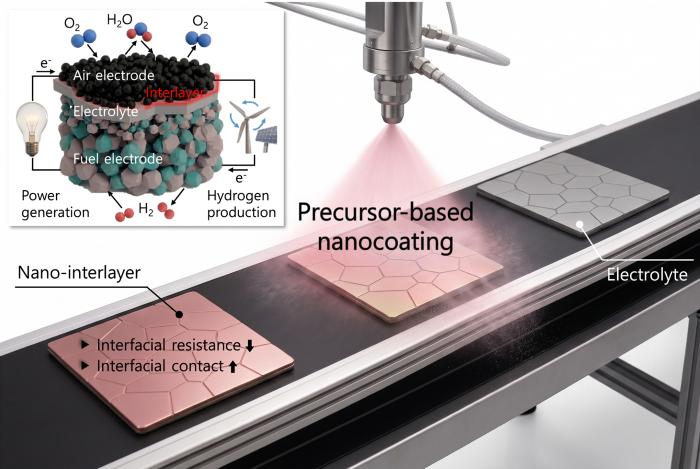
A Sungkyunkwan University team led by Professor Wonyoung Lee has tackled interfacial contact resistance in protonic ceramic electrochemical cells by quantifying how contact coverage between electrolyte and electrode governs performance. Using electrostatic spray deposition to add a dense nanometer-scale interlayer, the cells achieved higher efficiency and durability in both power generation and hydrogen production, remained stable under rapid temperature changes, and operated directly on…
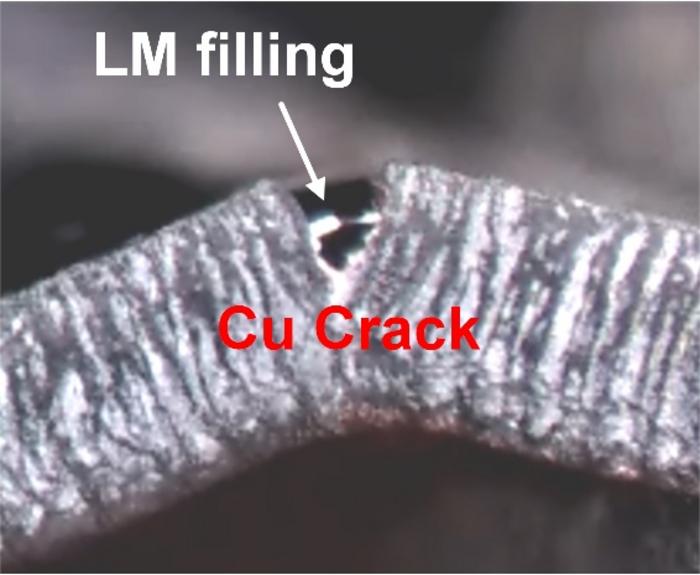
By bonding a galinstan liquid metal reservoir above commercial copper foil, researchers at Xi'an Jiaotong University created self-healing flexible circuits. Gallium reacts with copper to form a self-limiting CuGa2 barrier, leaving a pure copper core while liquid alloy wicks into cracks as they form. The hybrid traces withstood 230,000 bending cycles at 0.5 mm radius and 60,000 full folds, versus 500 for untreated copper, and held resistance nearly stable under 4 MPa compression.
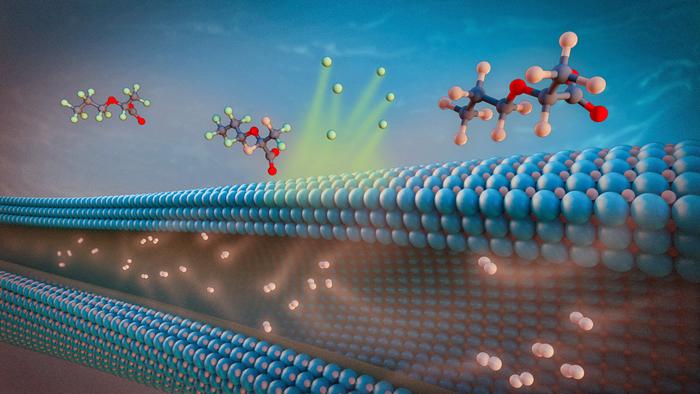
Palladium nanoparticles coated onto membrane fibers, fed with hydrogen gas from the inside, can strip fluorine from PFAS instead of merely filtering it out. In a 58 day continuous test the system removed more than 90 percent of six regulated forever chemicals and eliminated about 83 percent of the fluorine, showing the carbon-fluorine bonds were broken rather than transferred to spent filters or brines.
This week in nanotech
$2.13B raised
11 funding rounds · 67 deals tracked
New products
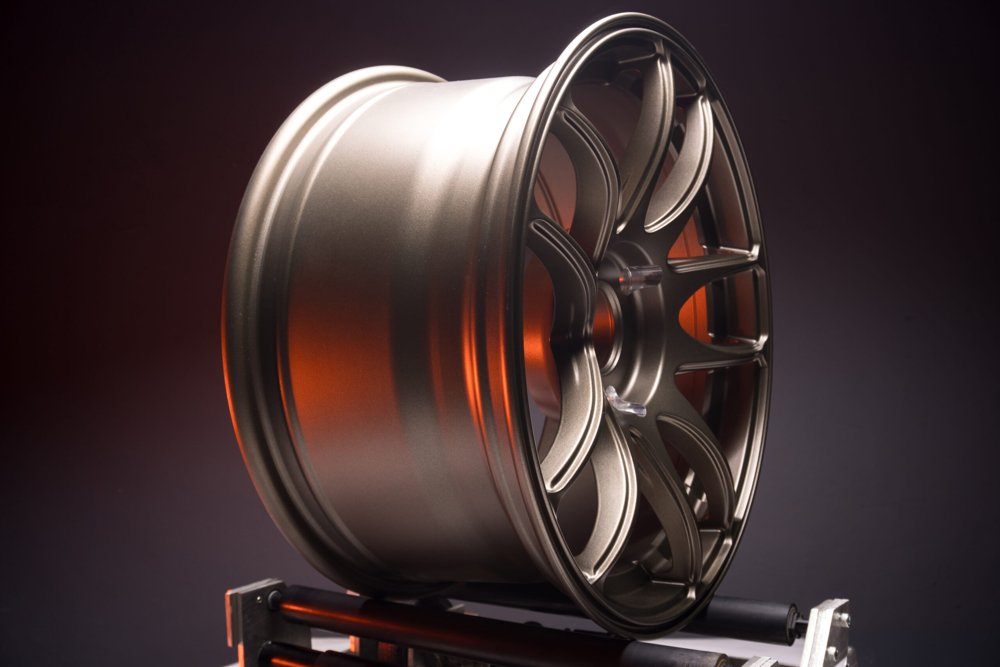 Ti-WCMBN Nanomaterialia Featured
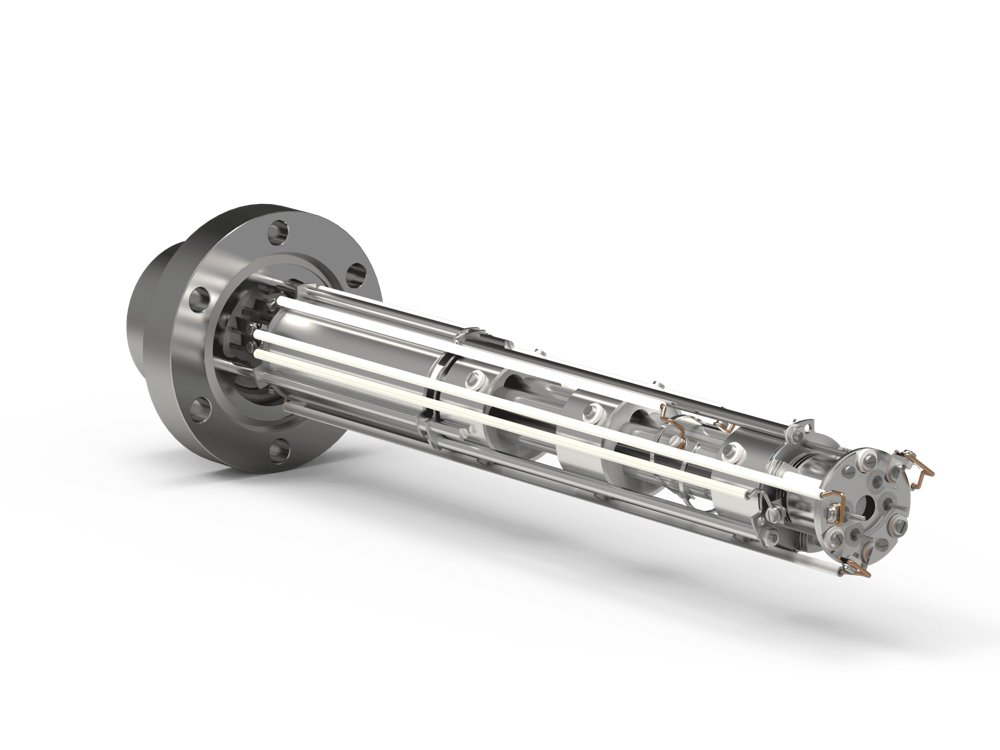 DLS-1 Mass Spectrometer for Fusion Gas AnalysisHiden Analytical Featured
 Ionic® Purification SystemBionano Genomics, Inc.
Market insights
Last 30 days: Quantum Technologies drew the most money: $3.17B.
Money raised per month