Ulm, 28 October 2026. NVision, a quantum technology company based in Ulm, Germany, announced a strategic partnership with HyperLight Corporation to integrate its thin-film molecular qubits directly onto photonic integrated circuits (PICs). The company also announced the publication of peer-reviewed research in Nature. HyperLight is described in the release as a provider of thin-film lithium niobate (TFLN) photonics.
The Nature paper, titled "A Single-Molecule Spin-Photon Interface," reports the first individually addressable organic molecular spin-photon interface, which the release describes as the key ingredient for connecting stationary qubits with photons. According to the release, molecular spins could not previously be individually and coherently controlled, which prevented their use as qubits. The work reports control of the building block at the single-molecule level.
Under the partnership, NVision's molecular qubits will be deposited as a thin film onto photonic chips, extending HyperLight's TFLN Chiplet technology into quantum applications. The release says the approach allows molecular qubits to be deposited much like OLED materials on top of PICs. NVision said the milestone moves its Photonic Integrated Quantum Circuits (PIQC) platform from foundational physics into commercial hardware development.
NVision said it combined large-scale computational screening with targeted synthesis, evaluating more than 150 candidate molecules, of which 40 were synthesized in the laboratory. The resulting carbene molecules operate at cryogenic temperatures of 2K to 4K and emit photons at precise optical frequencies, enabling intra-chip and inter-chip quantum entanglement. The platform tolerates up to 70% photon loss, the release states, allowing operation with standard silicon photonics rather than specialized ultra-low-loss optical infrastructure.
Following initial chip deliveries from foundry partners, NVision is targeting a live demonstration of on-chip performance on PICs by the end of 2026. First prototype integrated chips resulting from the collaboration are expected in Q4 2026. The company's long-term roadmap targets scaling to 1,000 physical qubits, progressing toward 1,000 logical, fault-tolerant qubits on chip by 2030 in a deployable data-center form factor.
The release says the PIQC architecture uses optical links to decouple qubits from local spatial constraints, in contrast to monolithic architectures that require tight physical proximity. The Nature study carries DOI 10.1038/s41586-026-11147-6.
Source: NVision news
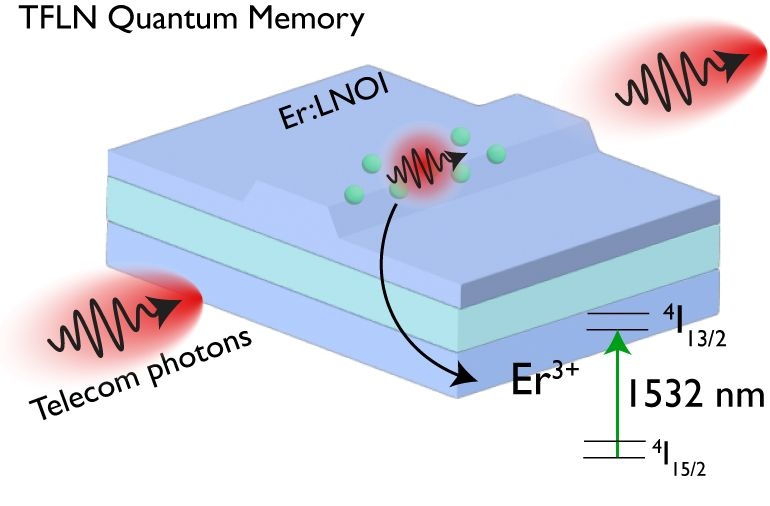
A chip-based quantum memory built from erbium-doped thin-film lithium niobate shows that photons can be held on an integrated nanophotonic platform for more than a microsecond. Using spectral hole burning to form an atomic frequency comb, the device preserves quantum information at high fidelity and stores multiple photons at once. Because the platform supports wafer-scale manufacturing, it points toward practical quantum memories for scalable quantum computers and communication networks.
Infleqtion operated its Tiqker optical atomic clock continuously for two weeks aboard the U.S. Navy's RV Merlin during the Maritime Big Play Pacific exercise, in the Southern California operating area.

IQM Quantum Computers said its cloud-accessible IQM Emerald system fully entangled all 54 qubits simultaneously. The company reported a fidelity of 0.516 at the full 54 qubits with readout error mitigation applied.
This week in nanotech
$558.4M raised
6 funding rounds · 36 deals tracked
New products
 Ti-WCMBN Nanomaterialia Featured
 Nion-compatible In Situ STEM Holders for Electrical BiasingHummingbird Scientific Featured
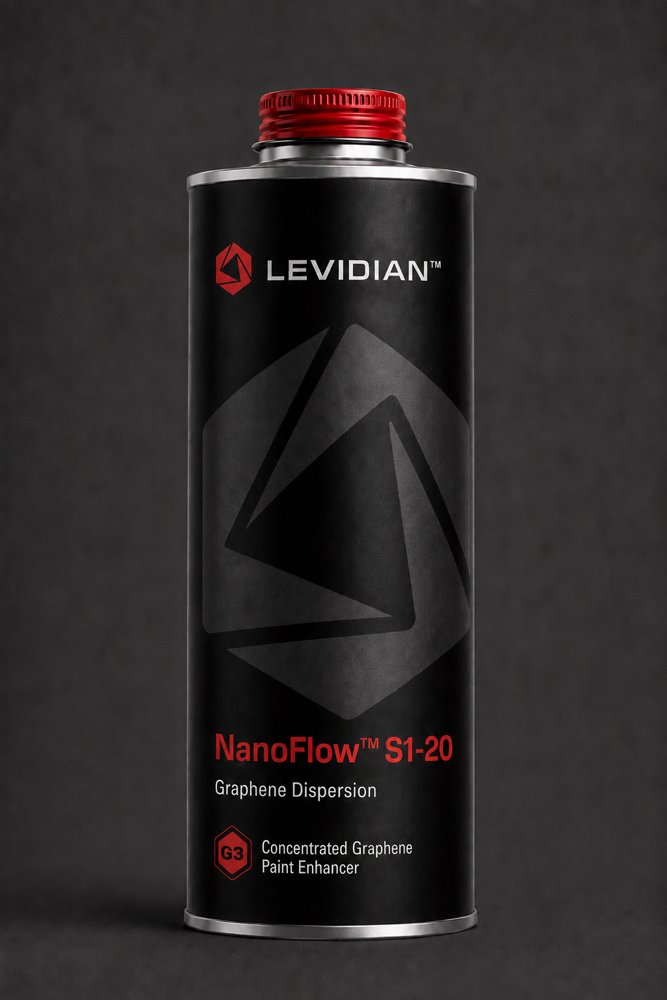 NanoFlow® S1-20Levidian
Market insights
Last 30 days: Quantum Technologies drew the most money: $2.15B.
Money raised per month