12 November 2026. Pasqal has created a joint laboratory, AtomIQ-Lab, with CNRS and Institut d'Optique Graduate School. The lab was inaugurated in November 2025. It turns a long-standing relationship between the company and its founding research group into a shared research program.
Pasqal's technology comes from experiments developed at Laboratoire Charles Fabry, a joint research unit of CNRS, Institut d'Optique and Université Paris-Saclay, hosted by Institut d'Optique on the Université Paris-Saclay campus. Physicists Antoine Browaeys and Thierry Lahaye, who led that work, were among the co-founders of Pasqal in 2019. They remain scientific advisors to the company. Six joint CIFRE PhD theses have been carried out between the company and the group, four of which are still underway. Since October 2025, a Pasqal Research Chair at Institut d'Optique has added a dedicated academic position for a physicist working on topics shared by both teams.
In 2025, a first IOGS-Pasqal workshop brought together some 50 to 60 researchers from both sides. They identified two priority topics: lossless measurement of atomic states, needed for fault-tolerant operation, and continuous reloading of atom registers. Pasqal said both are among the most important improvements ahead for neutral-atom QPUs.
The joint lab also covers longer-range work. One example is PANDA, a project funded in 2022 by a European Innovation Council Pathfinder grant, which explores new schemes for quantum computing based on light-matter interactions. Pasqal said the lab gives it an early view of ideas that may shape quantum computing beyond its current roadmap.
Pasqal contributes resources, people, specialized knowledge and engineering capabilities. According to the company, this support allows the Laboratoire Charles Fabry team to upgrade its experimental platforms. Pasqal said building and validating a new experimental setup can take years, and that its engineering expertise can often bring that timeline down to a few months.
Source: Pasqal news
Atom Computing has signed an agreement for up to $100 million with the U.S. Department of Commerce to accelerate R&D of fault-tolerant, utility-scale quantum computers, following an earlier Letter of Intent.
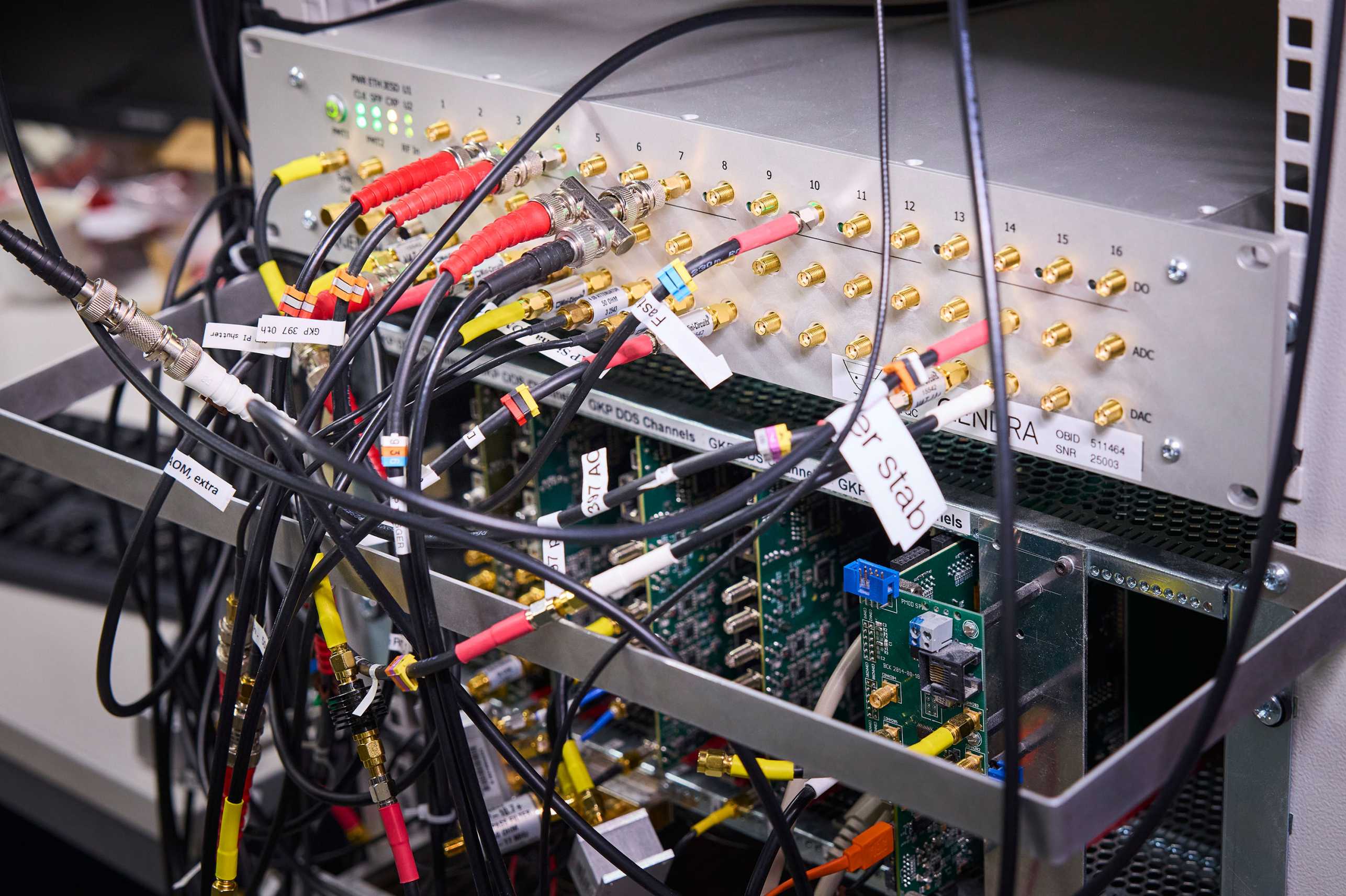
Qendra, an ETH Zurich spin-off, is building a compact control system that generates and coordinates the radio-frequency and laser signals driving trapped-ion and neutral-atom qubits. The device synchronises lasers, cameras and detectors and can evaluate measurements continuously to trigger corrective pulses during a calculation, addressing the lack of real-time error correction in existing controllers.
QuiX Quantum, Artilux and Brillink have received TechBridge funding for QSPAD, a 36-month project starting January 2027 to develop near-room-temperature GeSi single-photon detectors for photonic quantum computing.
This week in nanotech
$111.7M raised
4 funding rounds · 18 deals tracked
New products
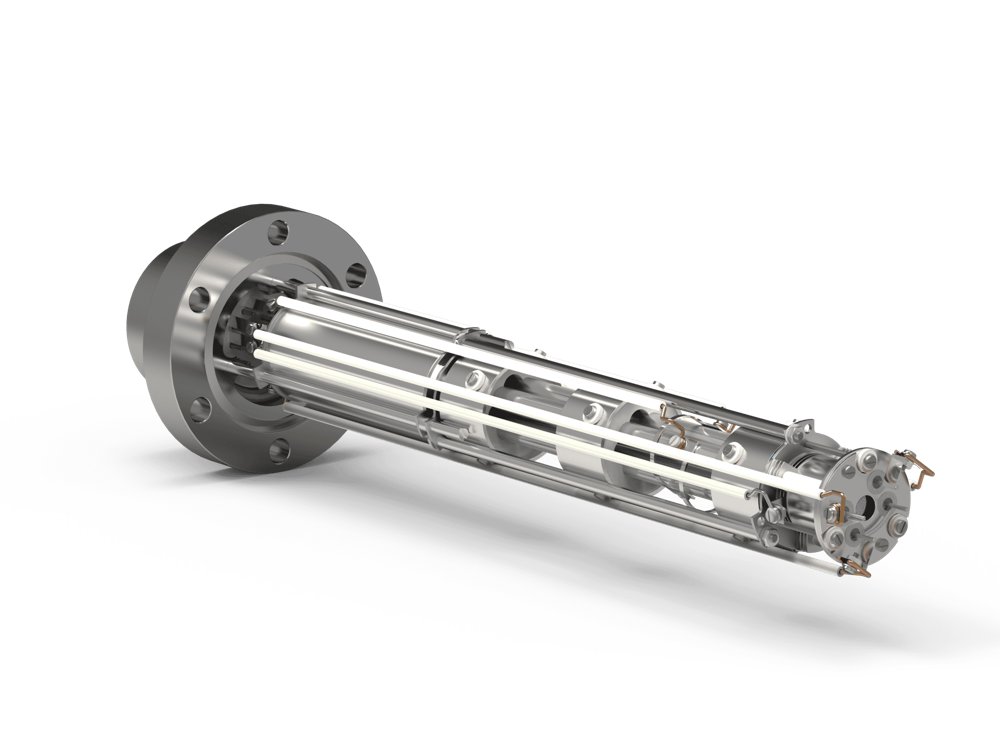 DLS-1 Mass Spectrometer for Fusion Gas AnalysisHiden Analytical Featured
 Nion-compatible In Situ STEM Holders for Electrical BiasingHummingbird Scientific Featured
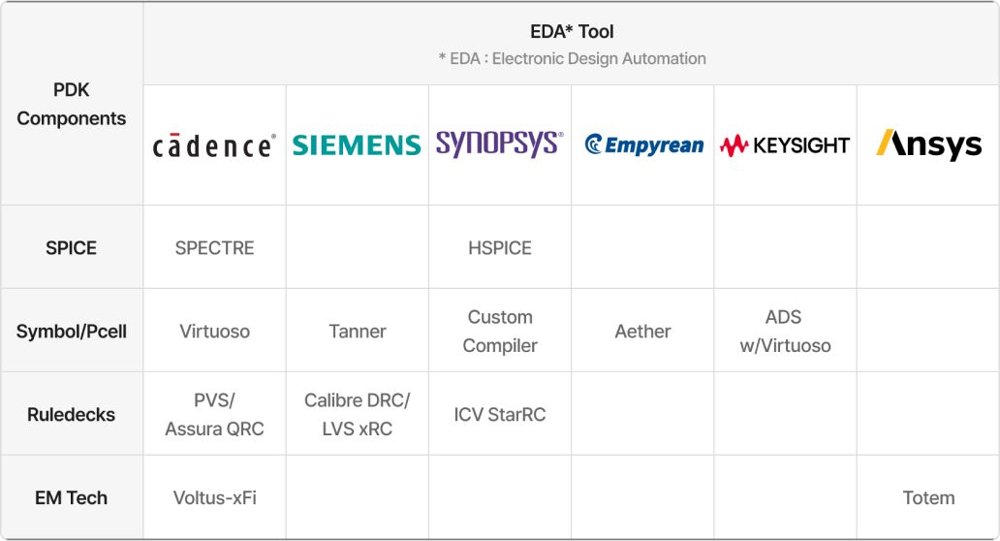 PDK (Process Design Kit)DB HiTek
Market insights
Last 30 days: Semiconductors & Electronics drew the most money: $547.7M.
Money raised per month