29 October 2026. Pasqal researchers used a 256-qubit Rydberg-atom quantum processing unit to study the relaxation of a two-dimensional quantum magnet after a quench, the company reported in a blog post by Alexandre Dauphin, VP Quantum Materials. The system showed three relaxation paths: rapid thermalization, a long-lived prethermal state, and a slow relaxation much slower than expected. The study is available as a preprint on arXiv under the title Exploring the Relaxation Landscape of a 2D Quantum Magnet on a 256-Qubit Processor.
The team arranged 256 rubidium atoms in a 16 x 16 square lattice, encoding the two spin states of the transverse-field Ising model in their ground and Rydberg states. Laser coupling produced the transverse field and interactions between Rydberg atoms provided the ferromagnetic coupling. The array was prepared in a fully polarized state, then the transverse field was changed suddenly. Repeating this quench at different field strengths allowed the team to follow magnetization and correlations across the phase diagram.
Three forms of relaxation appeared as the transverse field increased. At comparable field and interaction strengths, the system thermalized quickly. At intermediate field strengths, correlations moved toward equilibrium much more slowly, and the origin of this slowdown remains unresolved. At large transverse field, rapid spin precession produced dynamics governed by an effective XY model, with a prethermal plateau that lasted throughout the experimentally accessible timescale.
The slow regime appeared where three leading tensor-network calculations stopped agreeing at late times. Their mutual disagreement became as large as their disagreement with the QPU, so they no longer gave a controlled description of late-time dynamics. The QPU results remained consistent across system sizes and continued to show a slow approach toward thermal equilibrium. Exact state-vector simulations on 5 x 5 lattices recovered the same three regimes in the absence of noise.
The researchers modeled state-preparation and measurement errors, fluctuations in Hamiltonian parameters and dephasing, using strengths from independent calibrations. Simulations including these effects were consistent with the QPU measurements. Noise and system size affect the measured relaxation rate, especially in the slow regime, but do not account for the qualitative separation between the three regimes. The study makes no computational-advantage claim.
The work was carried out by researchers at Pasqal, the Flatiron Institute, the University of Augsburg, Forschungszentrum Jülich, the University of Regensburg and Institut d'Optique-CNRS. The authors state that separating intrinsic many-body relaxation from experimental effects will require measurements across larger system sizes and longer evolution times. They also aim to identify compounds described by Ising- or XY-like models and compare QPU observables with experimental measurements, following earlier work on TmMgGaO4.
Source: Pasqal news
Quantinuum and GE Vernova's Advanced Research Center are collaborating on quantum computing research into high-temperature superconductivity, focusing on Fermi-Hubbard modeling with access to Quantinuum's Helios computer.
Infleqtion has been awarded £9 million (~$12M) by Innovate UK to continue development of a deployable quantum radio frequency direction finding system under the Quantum Missions Primer programme.

Oxford physicists used a hybrid quantum computer, pairing trapped-ion qubits with quantum oscillators, to simulate the Aharonov-Bohm effect inside a lattice gauge theory. Encoding magnetic flux in entangled qubits made the gauge field dynamical, and the resulting destructive interference froze matter tunneling entirely.
This week in nanotech
$740.7M raised
5 funding rounds · 36 deals tracked
New products
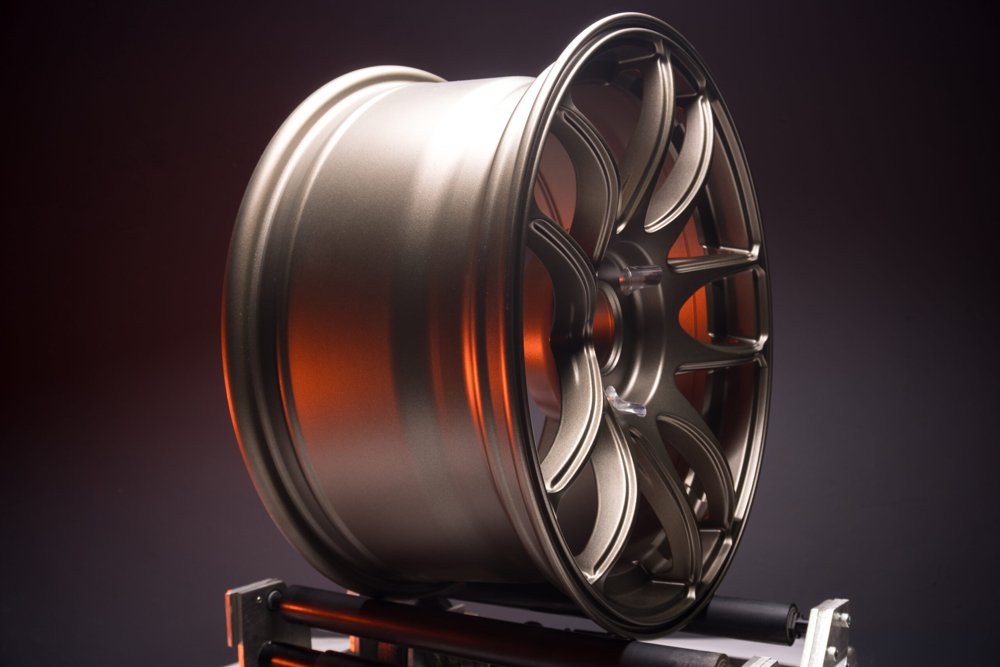 Ti-WCMBN Nanomaterialia Featured
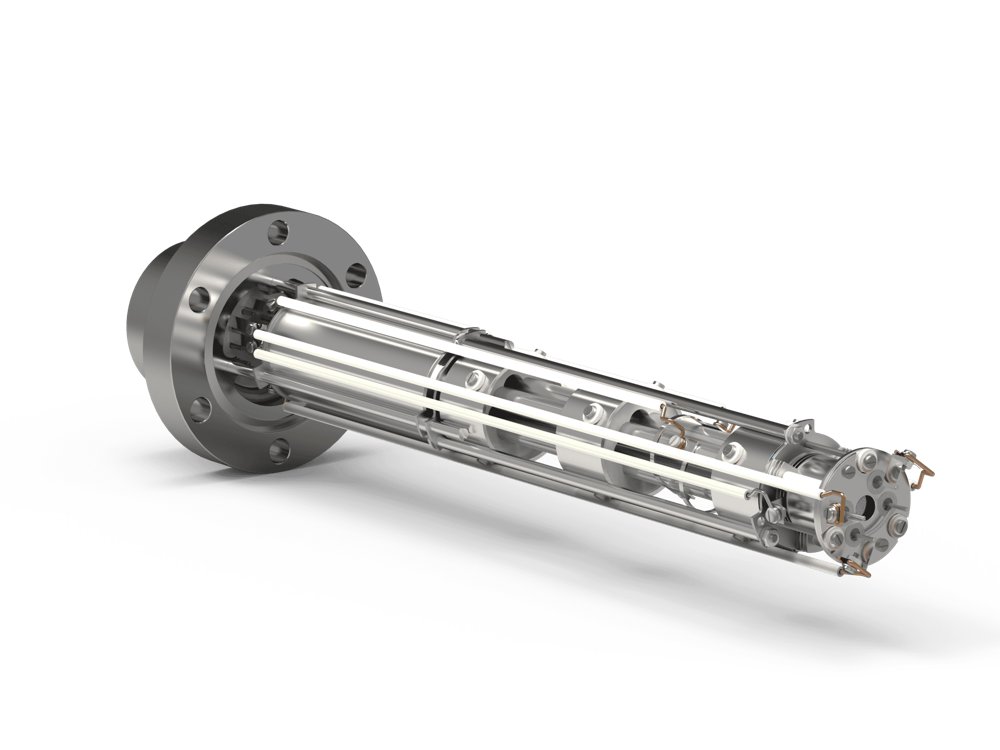 DLS-1 Mass Spectrometer for Fusion Gas AnalysisHiden Analytical Featured
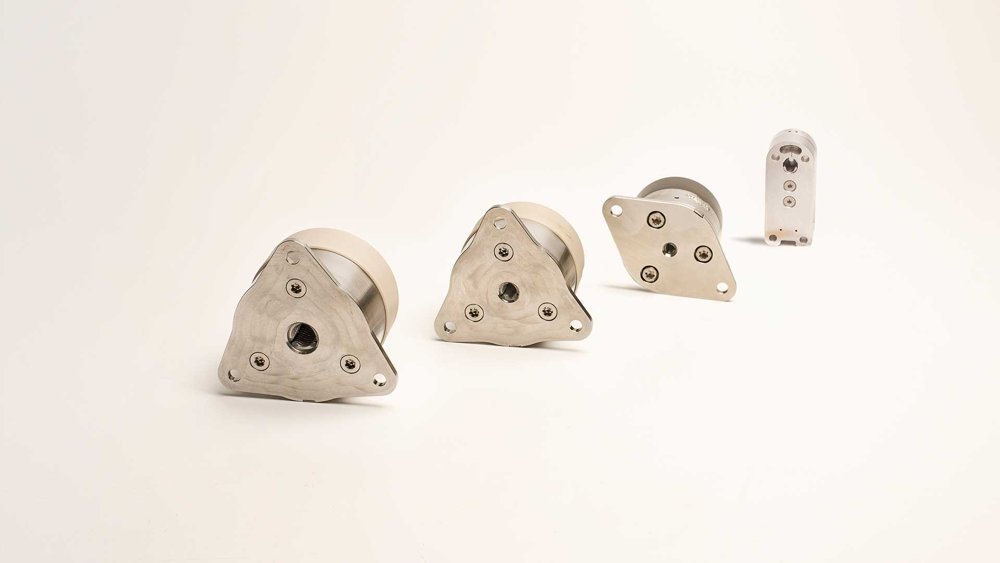 Hold Down & Release Mechanisms (HDRM) REACT – 5KN, 15KN and 35KN space qualified resettable mechanismsARQUIMEA
Market insights
Last 30 days: Quantum Technologies drew the most money: $3.18B.
Money raised per month
Behind the deal
Who invested in Photon Bridge’s $11.2M Series A?
See the investors with Insights Pro →