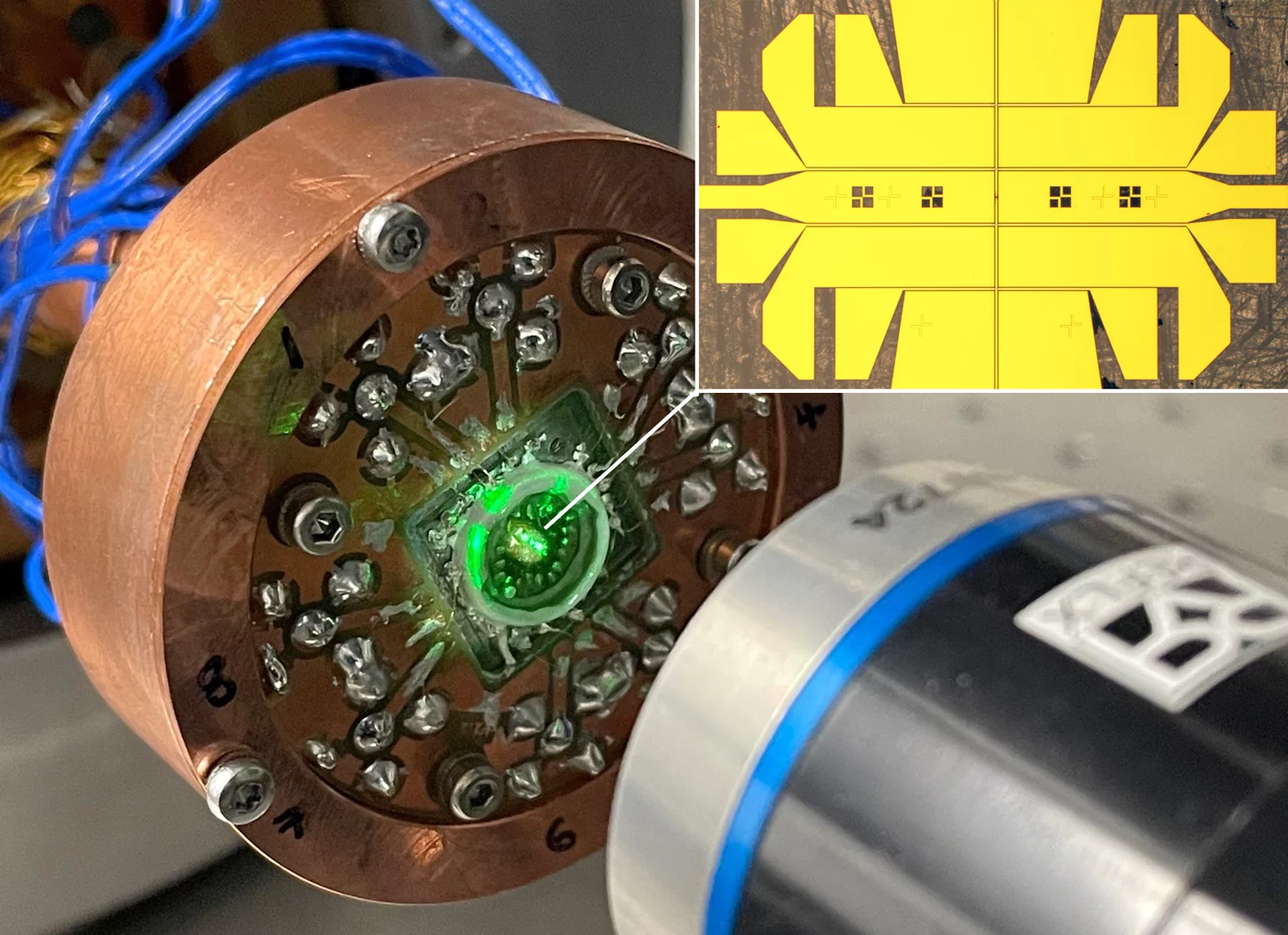
Researchers at the MPSD have shown that a previously demonstrated ability to turn on superconductivity with a laser beam can be integrated on a chip, opening up a route toward opto-electronic applications. Their work, now published in Nature Communications, also shows that the electrical response of photo-excited K3C60 is not linear, that is, the resistance of the sample depends on the applied current. This is a key feature of superconductivity, validates some of the previous observations and provides new information and perspectives on the physics of K3C60 thin films.
The optical manipulation of materials to produce superconductivity at high temperatures is a key research focus of the MPSD. So far, this strategy has proven successful in several quantum materials, including cuprates, k-(ET)2-X and K3C60. Enhanced electrical coherence and vanishing resistance have been observed in previous studies on the optically driven states in these materials.
In this study, researchers from the Cavalleri group deployed on-chip non-linear THz spectroscopy to open up the realm of picosecond transport measurements (a picosecond is a trillionth of a second). They connected thin films of K3C60 to photo-conductive switches with co-planar waveguides. Using a visible laser pulse to trigger the switch, they sent a strong electrical current pulse lasting just one picosecond through the material. After travelling through the solid at around half the speed of light, the current pulse reached another switch which served as a detector to reveal important information, such as the characteristic electrical signatures of superconductivity.
By simultaneously exposing the K3C60 films to mid-infrared light, the researchers were able to observe non-linear current changes in the optically excited material. This so-called critical current behavior and the Meissner effect are the two key features of superconductors. However, neither has been measured so far – making this demonstration of critical current behavior in the excited solid particularly significant. Moreover, the team discovered that the optically driven state of K3C60 resembled that of a so-called granular superconductor, consisting of weakly connected superconducting islands.
The MPSD is uniquely placed to carry out such measurements on the picosecond scale, with the on-chip set-up having been designed and built in-house. “We developed a technique platform which is perfect for probing non-linear transport phenomena away from equilibrium, like the non-linear and anomalous Hall effects, the Andreev reflection and others,” says lead author Eryin Wang, a staff scientist in the Cavalleri group. In addition, the integration of non-equilibrium superconductivity into optoelectronic platforms may lead to new devices based on this effect.
Andrea Cavalleri, who has founded and is currently leading the research group, adds: “This work underscores the scientific and technological developments within the MPSD in Hamburg, where new experimental methods are constantly being developed to achieve new scientific understanding. We have been working on ultrafast electrical transport methods for nearly a decade and are now in a position to study so many new phenomena in non-equilibrium materials, and potentially to introduce lasting changes in technology.”
Reference
Superconducting nonlinear transport in optically driven high-temperature K3C60
E. Wang, J. D. Adelinia, M. Chavez-Cervantes, T. Matsuyama, M. Fechner, M. Buzzi, G. Meier & A. Cavalleri

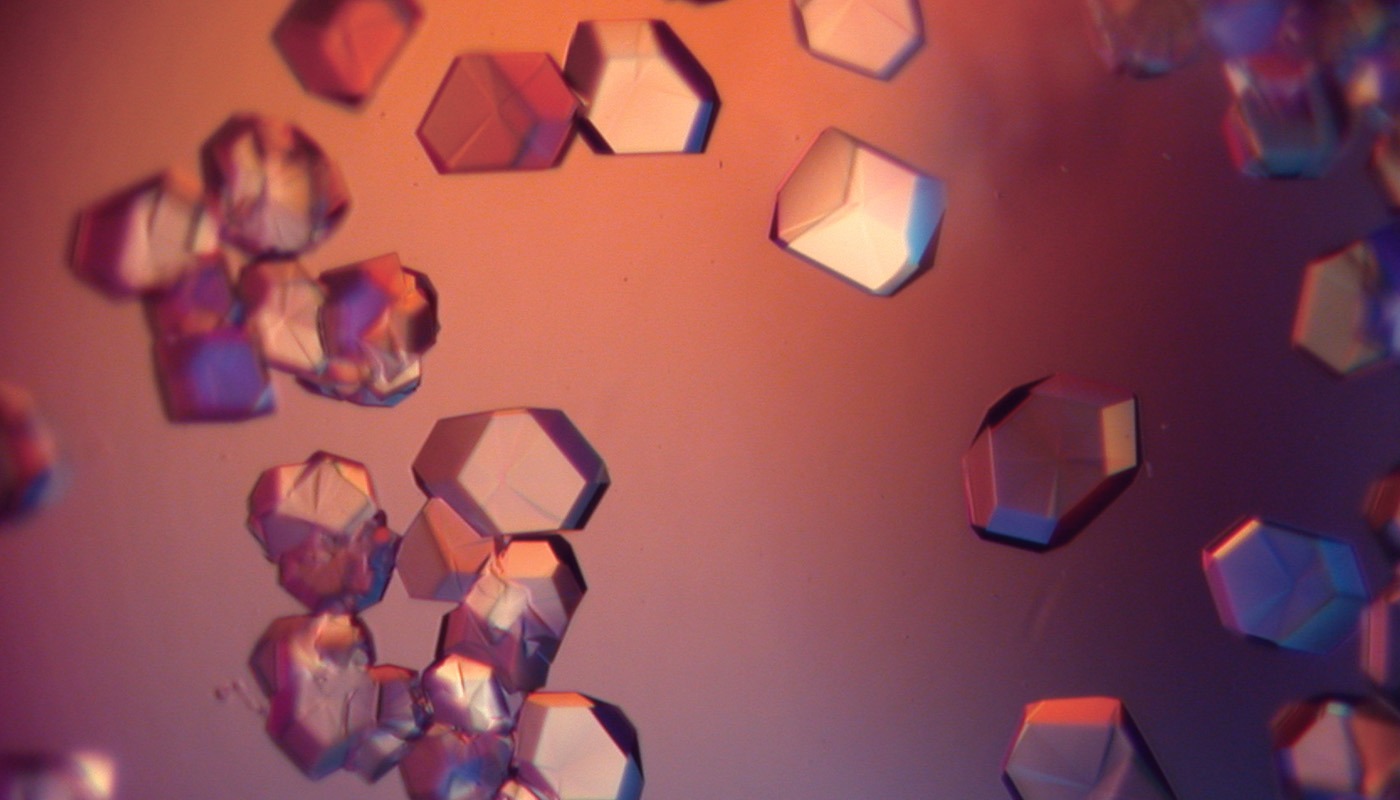
Cornell and Pacific Northwest National Laboratory researchers have developed a predictive model for how crystals such as calcite incorporate silica nanoparticles, revealing that the energy needed to cross water layers at the crystal surface strongly governs uptake, and that amines rather than carboxylic acids bind best.
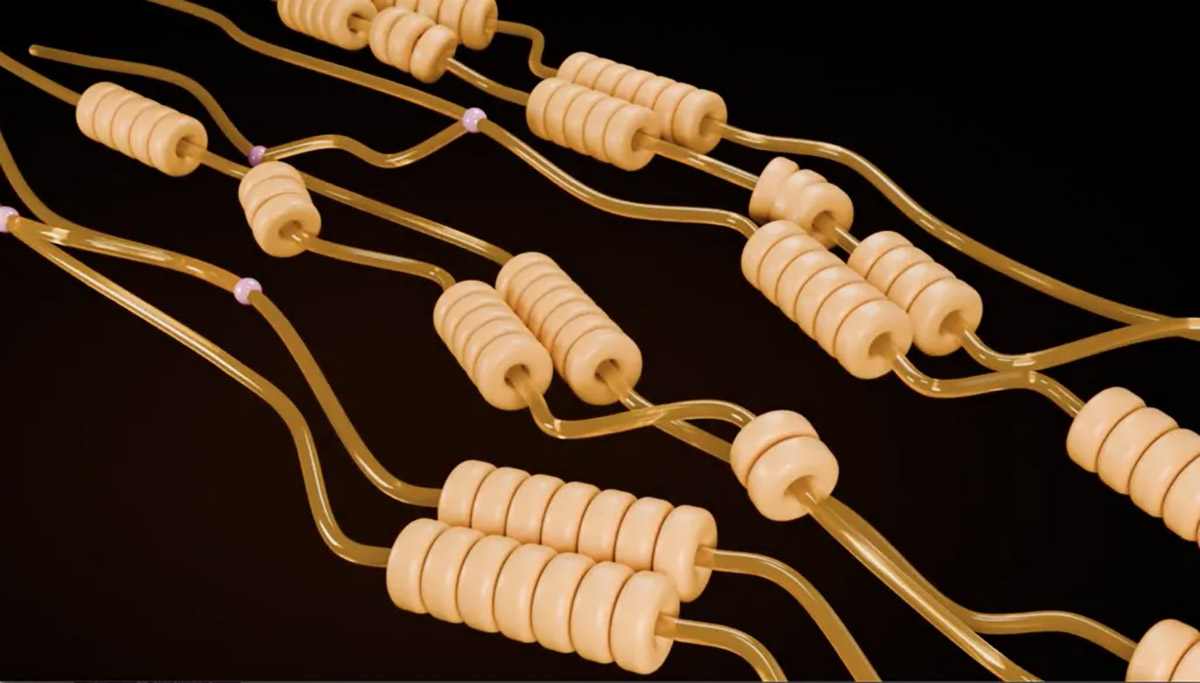
A polymer hydrogel that grows stronger under repeated bending and strain has been developed by chemists, who report the material survived 10,000 bending cycles in tests on a knee-like joint. Made from a biodegradable blend of sugar crystals and polyethylene glycol, the 3D printable material uses sliding cyclodextrin rings to reinforce stressed regions, mimicking collagen.
Rigaku has introduced the PhotonJetMAX-S microfocus sealed-tube X-ray source for the XtaLAB Synergy-S, delivering more than twice the diffracted intensity of the PhotonJet-S at a peak power of 50 W.
This week in nanotech
$18.9M raised
4 funding rounds · 31 deals tracked
New products
 Nion-compatible In Situ STEM Holders for Electrical BiasingHummingbird Scientific Featured
 DLS-1 Mass Spectrometer for Fusion Gas AnalysisHiden Analytical Featured
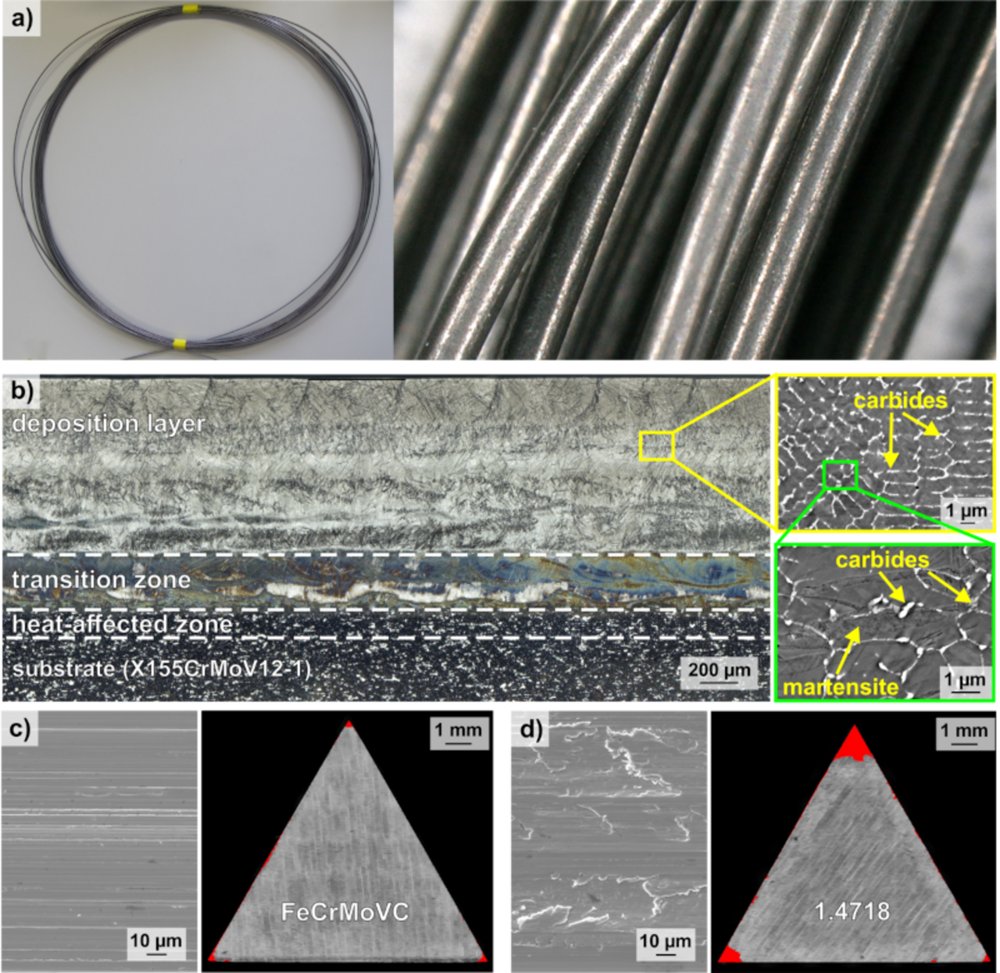 Fe85Cr4Mo8V2C1 wire filler materialLeibniz Institute for Solid State and Materials Research Dresden - IFW Dresden
Market insights
Last 30 days: Semiconductors & Electronics was the busiest vertical: 52 of 170 events (31%).
Money raised per month