Innovation Press
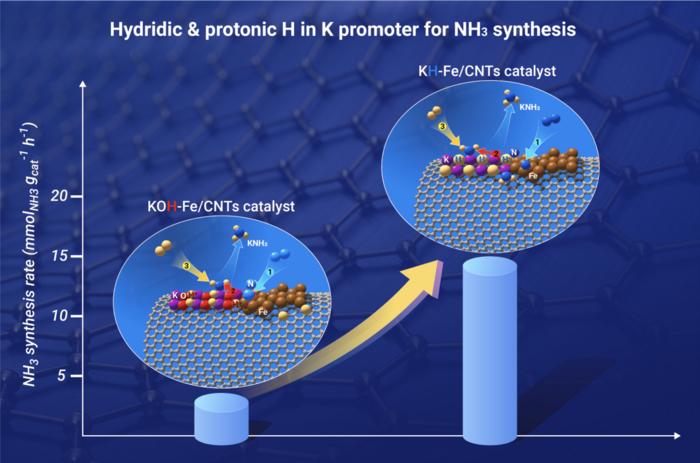
Potassium has been a fixture of industrial ammonia catalysts for a century. Add it to iron, and the rate of ammonia synthesis climbs—an effect so reliable that generations of catalyst makers used it without agreeing on why. The textbook answer is electronic: potassium donates electrons to iron, loosening the bond in nitrogen gas. A study in The Innovation argues that the story is more literal, because the hydrogen carried by potassium takes part in the reaction itself.
Ammonia synthesis is among the largest chemical processes on Earth, and it consumes enormous amounts of energy. Understanding how promoters work is therefore not academic housekeeping—it is the basis for designing catalysts that operate under milder conditions, which would suit ammonia made from renewable electricity.
The question the Dalian team set out to answer was deceptively simple: does it matter which potassium compound you start with? Under reaction conditions, potassium precursors can convert among hydride, hydroxide, imide, and other forms. The researchers therefore compared two well-defined cases on an iron catalyst supported on carbon nanotubes—potassium hydride (KH) and potassium hydroxide (KOH)—at 300 degrees Celsius and 1 megapascal.
The gap was large. KH raised the ammonia formation rate by two orders of magnitude relative to potassium-free iron; KOH, by only about fivefold. Measured against each other, the hydride system was roughly six times faster, with about three times the turnover frequency—the rate per active site, which strips out differences in how much iron each sample exposes.
Isotope tracing explained part of the difference. Hydrogen originating in both KH and KOH appeared in the ammonia produced first, showing that the lattice hydrogen of the promoter is consumed, not merely catalytic decoration. The two compounds then diverge. In the KH system, hydridic hydrogen (H−) reduces iron nitride, forming a KNH2 intermediate and leaving a clean iron surface for the next round of nitrogen activation. In the KOH system, protonic hydrogen (H+) protonates nitrogen adsorbed on iron, passing through K–Fe–O and KNH2 species.
“Based on our earlier finding that hydride H− can markedly activate many transition metals, we asked whether H+ and H− in the potassium promoter play different roles,” the authors write.
The experiments use a model catalyst—iron on carbon nanotubes, at 1 megapascal, not the multiply promoted fused iron of industrial reactors—so the quantitative gains are not a prediction for plant performance. The evidence establishes that promoter hydrogen enters ammonia and identifies the intermediates; the proposed cycles rest on those observations.
Even so, the implication is pointed: if hydrogen delivery is half the job of a potassium promoter, then promoters should be chosen and designed for how they hand over hydrogen, not only for how they shift electron density.
Reference
Reactive hydrogen in KH or KOH for catalytic NH3 synthesis
Peikun Wang, Wenbo Gao, Yanbo Deng, Fei Chang, Qianru Wang, Sheng Feng, Jianping Guo, and Ping Chen
Birla Carbon will showcase its conductive carbon portfolio at The Battery Show North America 2026, held October 12–15, 2026, at Huntington Place in Detroit, Michigan, at Booth 3029.
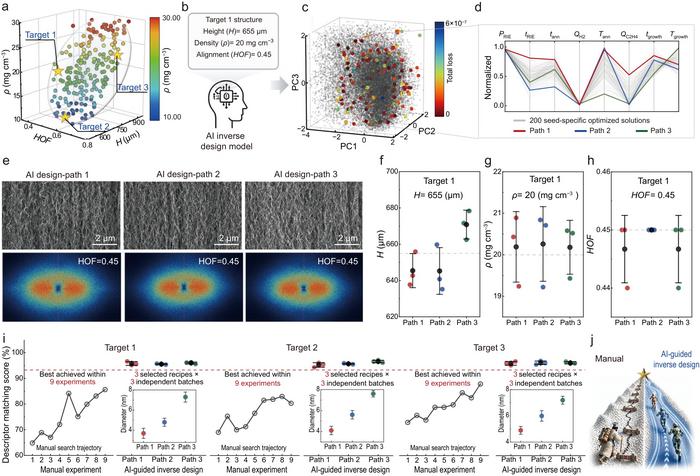
An AI-assisted inverse-design framework has identified multiple distinct growth recipes that reach the same prescribed height, density and alignment in carbon nanotube forests. Trained on 200 water-assisted chemical vapour deposition experiments, the model searched backward from structural targets; 26 of 27 validation batches scored above 95% descriptor matching, yet nanotube diameters and wall structures differed.
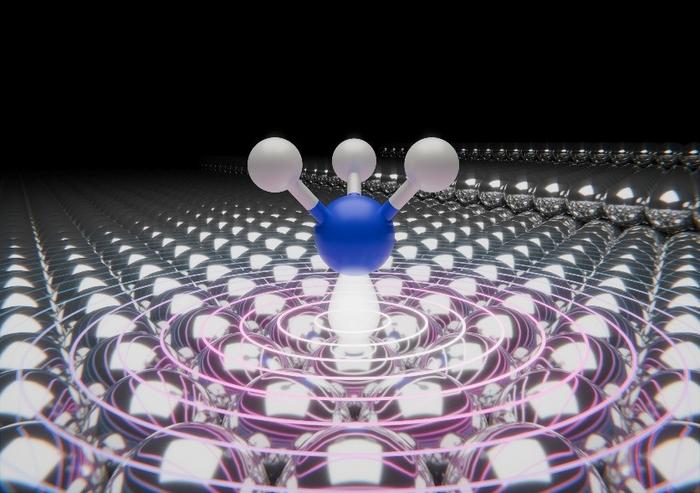
Researchers at MPI-NAT and QNS have shown that chemical bonding on metal surfaces reaches far beyond the atoms touching a molecule. On precisely structured platinum surfaces, moving an atomic step roughly 10 nanometers away changed adsorption energies by up to 0.2 electron volts, with effects persisting over 4 to 7 nanometers depending on the molecule. A new Frontier Orbital-Band Model explains the molecule-specific response.
This week in nanotech
$13.6M raised
2 funding rounds · 22 deals tracked
New products
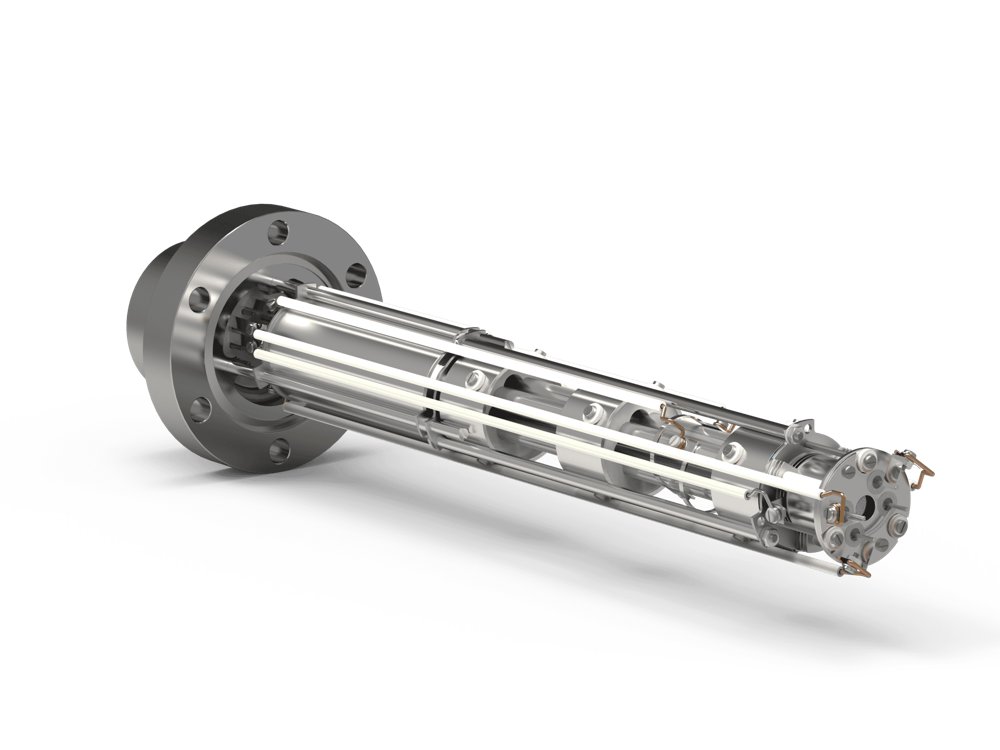 DLS-1 Mass Spectrometer for Fusion Gas AnalysisHiden Analytical Featured
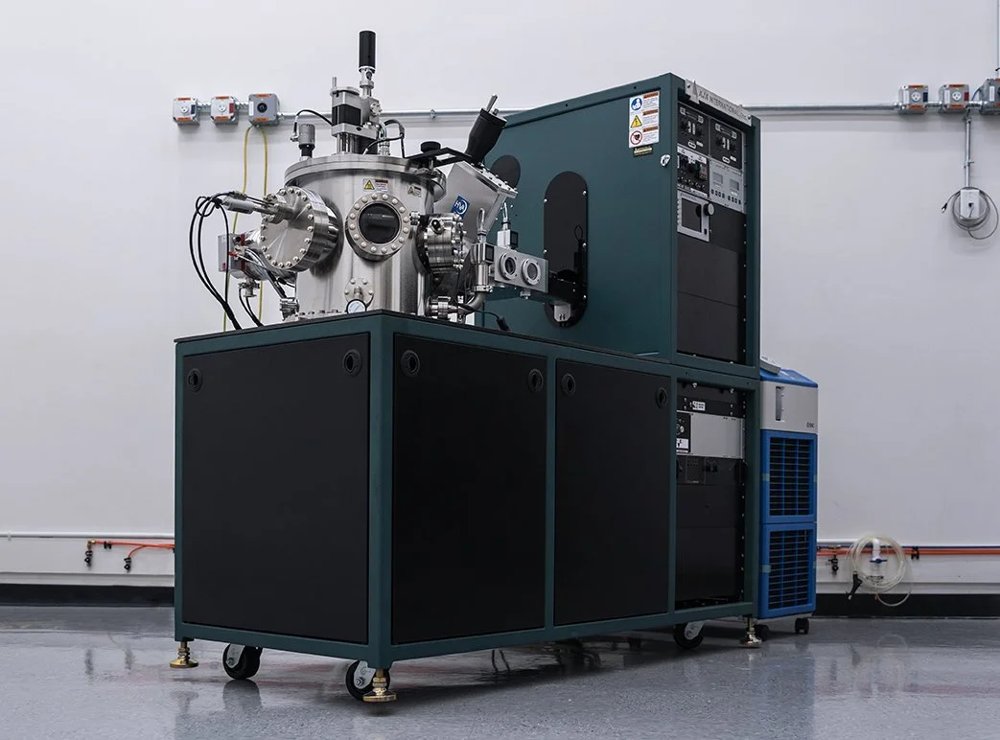 Orion Sputtering Deposition SystemsAJA International Featured
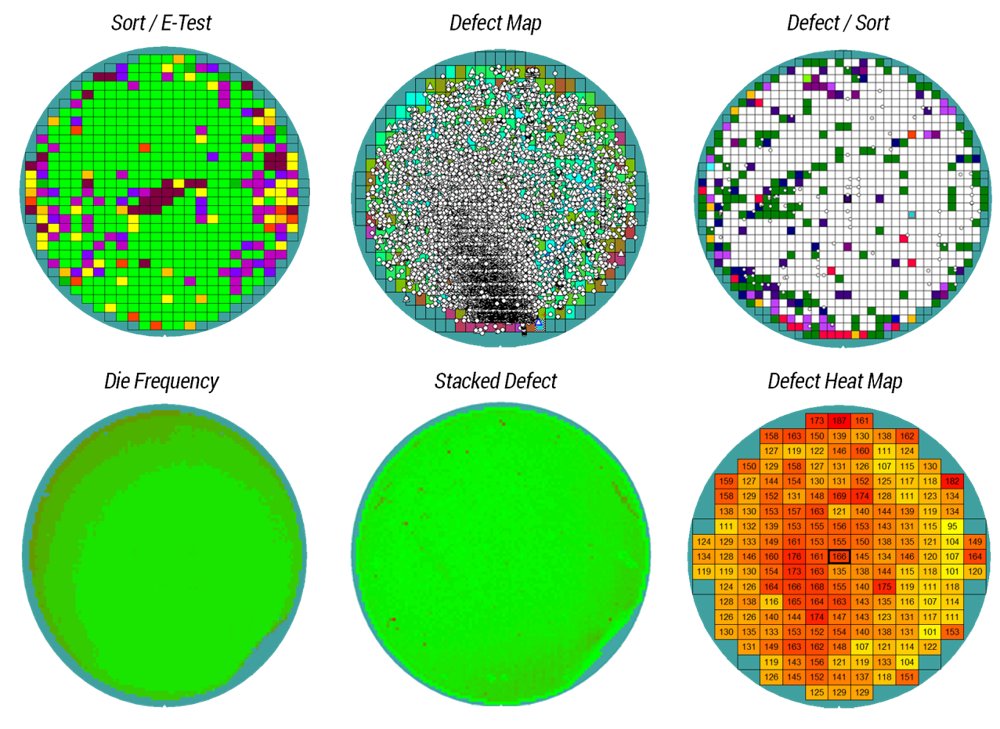 Discover Mapping SuiteOnto Innovation
Market insights
Last 30 days: Quantum Technologies was the busiest vertical: 63 of 197 events (32%).
Money raised per month