Q.ANT, Innovally and Horizon Flevoland celebrated a Memorandum of Understanding (MoU) at SEMICON Europa in Munich. Under the agreement, the partners will develop, test and scale applications of photonic computing in and from Almere and Flevoland.
Q.ANT's photonic processors compute with light instead of electrons. They work as co-processors alongside existing CPUs and GPUs in the data centre, need far less energy and help make AI models leaner, according to the company. The partners say the reason for the cooperation is that AI needs ever more computing power and, with it, ever more energy.
Each partner brings its own role. Q.ANT contributes its technology and expertise and leads the technical objectives of the pilots. Innovally, the innovation platform behind High Tech Almere, and Horizon Flevoland, the province's regional development agency, open doors to end users, partners, talent and funding opportunities in the region.
A joint roadmap for the next 12 to 18 months covers use cases, pilots and demonstrators in digital infrastructure, logistics, healthcare and the public sector, as well as commercialisation and talent. The partnership began with Q.ANT's visit to Almere in July.
Michiel Sweers, Director-General for Foreign Economic Relations at the Dutch Ministry of Foreign Affairs, Toon van Dijk, Regional Minister for Economic Affairs of the Province of Flevoland, and Eric-Mark Huitema, CEO of High Tech NL, spoke at the event alongside Michael Förtsch, CEO of Q.ANT. "Europe needs its own energy-efficient AI infrastructure, and it will not catch up in conventional processors. But the next category, computing with light, is still open," Förtsch said.
Q.ANT describes the cooperation as a long-term commitment and brings its research, technology and commercial work into it. The next step is turning the roadmap into the first pilots.
Source: Q.ANT news
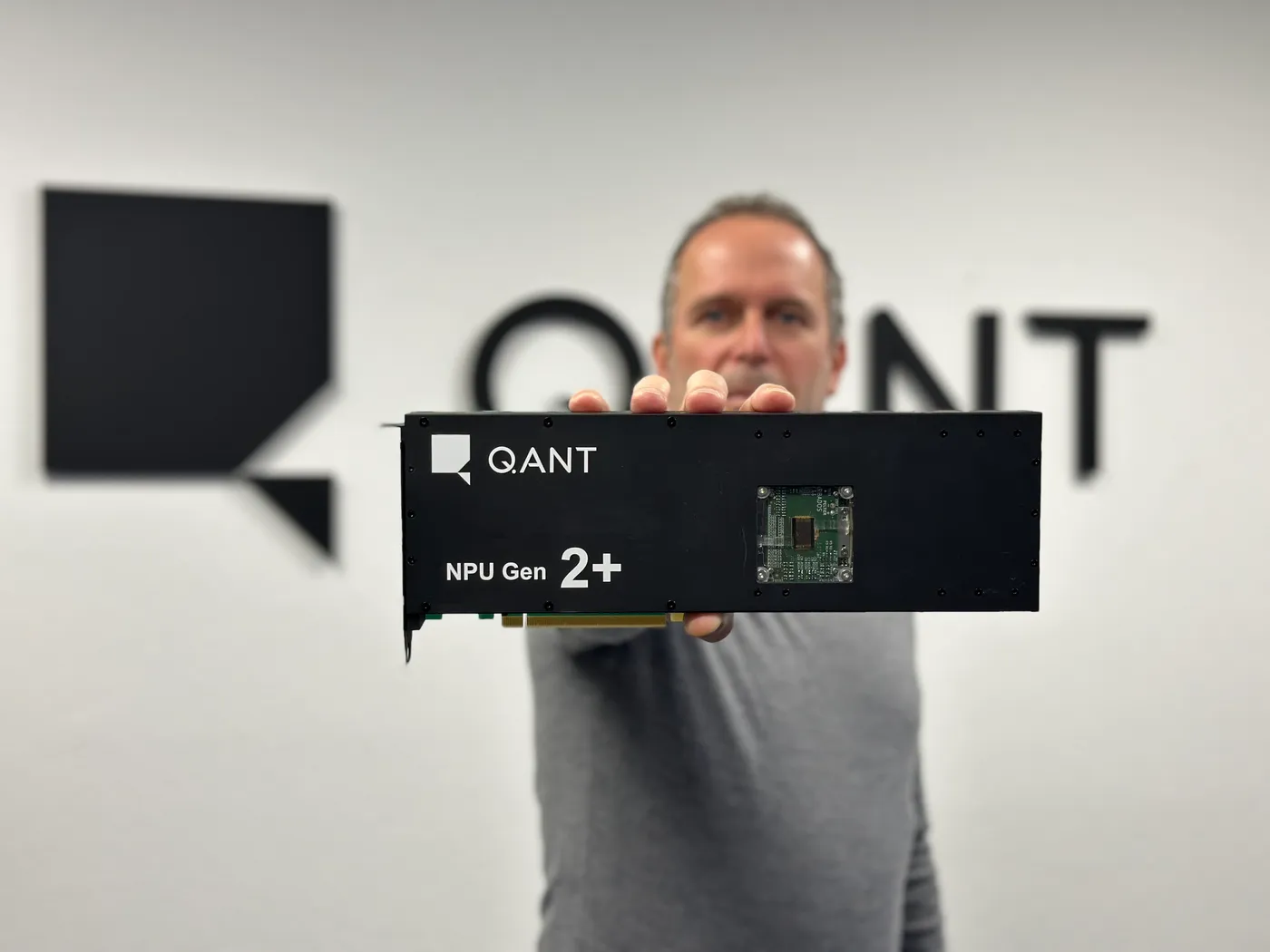
Q.ANT unveiled the NPU Gen 2+ at SC26, adding optical Discrete Fourier Transforms to its photonic processor. The company demonstrated a hybrid system with an AMD GPU running a large language model.
Q.ANT and IONOS launched a joint pilot program giving developers access to Q.ANT's second-generation photonic NPU through bare metal servers in a German IONOS data center. The pilot begins in November 2026 and is free to selected participants.
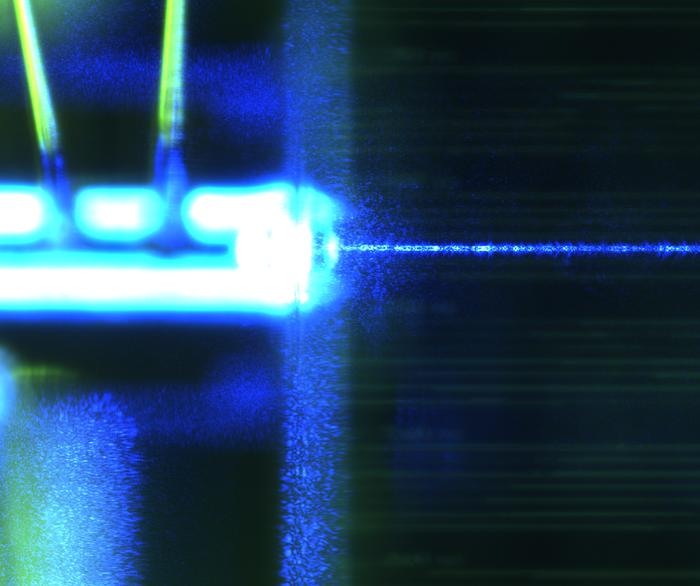
Researchers from EPFL, Purdue University and Aarhus University have demonstrated a chip-based blue laser that combines strong noise suppression with rapid electronic frequency tuning. Using waveguides just 25 nanometres thick, the design lets more light travel away from microscopic imperfections that cause fluctuations, achieving linewidths below 30 kilohertz and a tuning range approaching 900 megahertz.
This week in nanotech
$118.9M raised
5 funding rounds · 36 deals tracked
New products
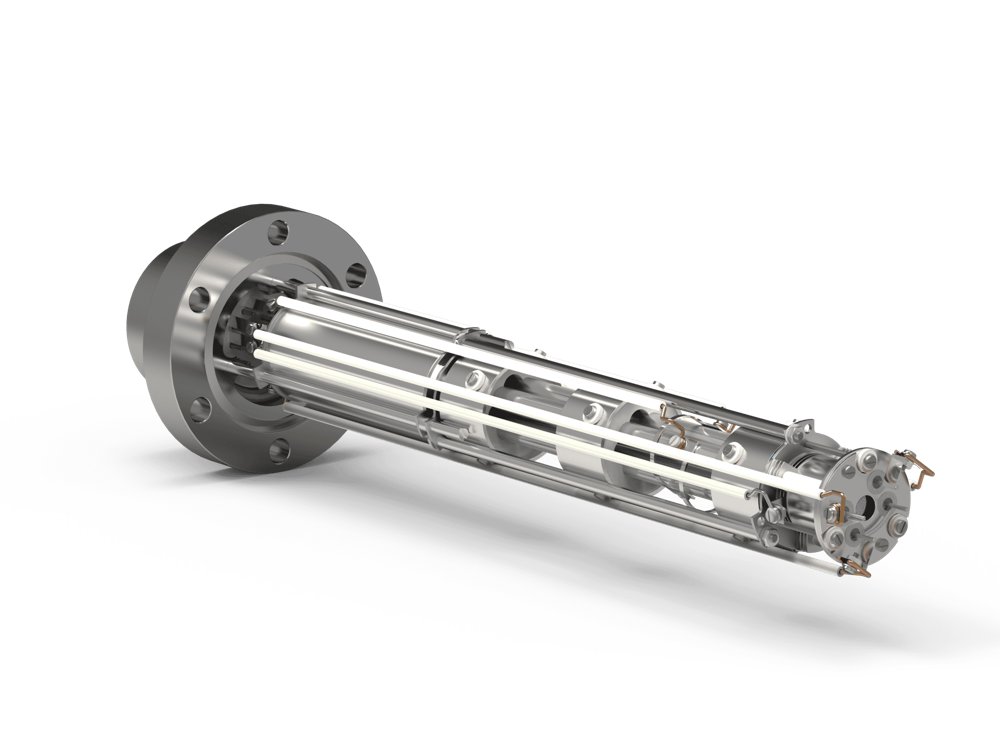 DLS-1 Mass Spectrometer for Fusion Gas AnalysisHiden Analytical Featured
 Nion-compatible In Situ STEM Holders for Electrical BiasingHummingbird Scientific Featured
 Aether®Lam Research
Market insights
Last 30 days: Semiconductors & Electronics was the busiest vertical: 51 of 165 events (31%).
Money raised per month