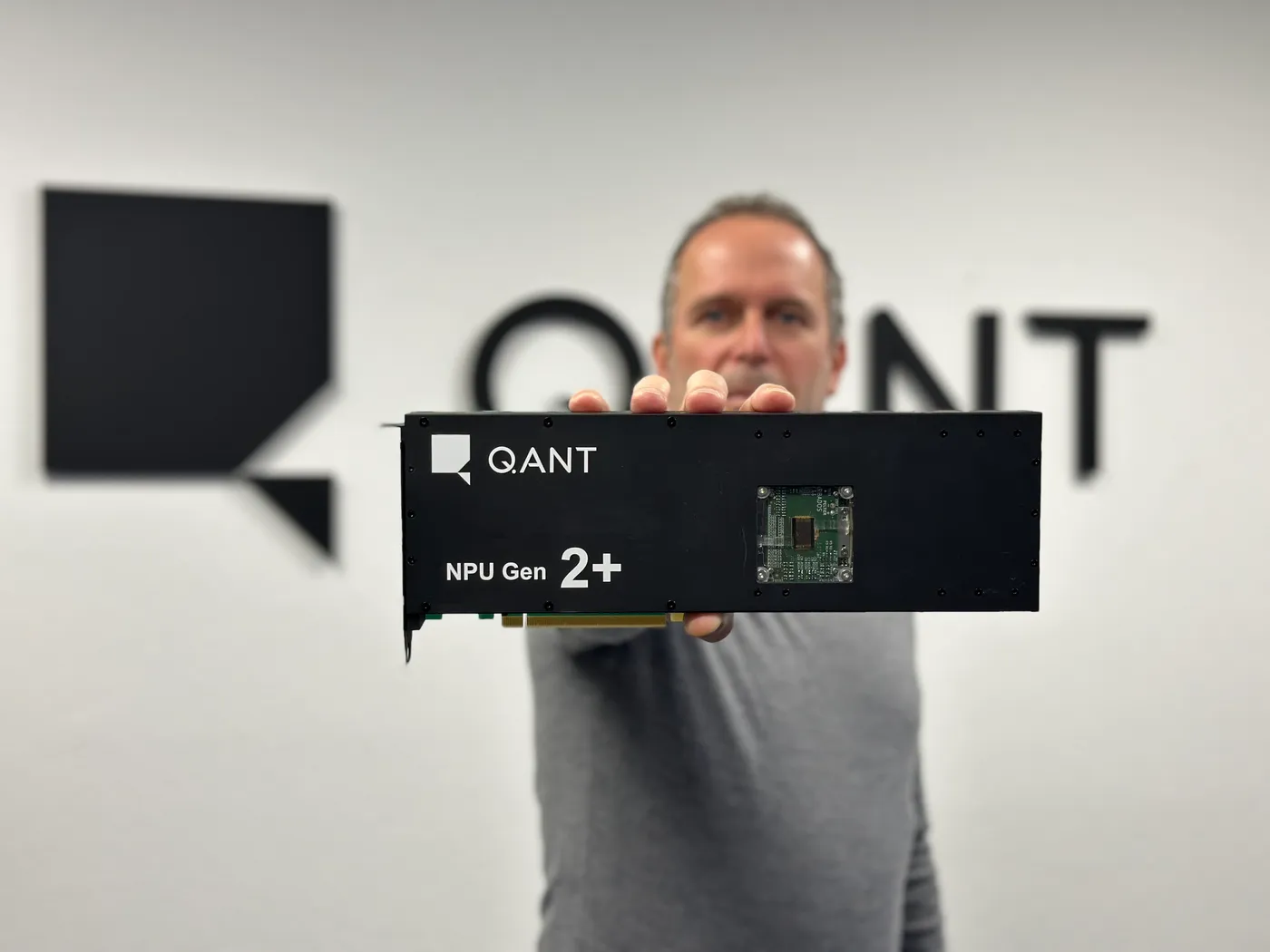
Chicago, 17 November 2026. Q.ANT unveiled the NPU Gen 2+ at SC26 in Chicago, the latest generation of its Native Processing Unit technology. The processor adds optical Discrete Fourier Transforms (DFTs), which expands the set of mathematical functions developers can run directly in light. The company also demonstrated a hybrid system pairing the NPU Gen 2+ with an AMD GPU to run a large language model with optics for the first time.
The NPU Gen 2+ performs DFTs in a single operation using the physical properties of light, instead of the sequence of electronic calculations that classical computing requires. At the heart of the processor is an optical component on the photonic chip that allows it to perform DFTs directly. DFTs are a mathematical operation used in signal and image processing, simulations and data analysis. The company says the function lets AI models work with fewer parameters and less data.
In the SC26 demonstration, the functions performed in light replace a computationally intensive attention layer in the language model. Q.ANT says this addresses a computational bottleneck in generative AI. The processor is built to work as a co-processor alongside CPUs and GPUs, so developers can distribute the most intensive workloads to where they can be processed most efficiently. The NPU Gen 2+ retains PCIe integration into standard rack-mountable server systems.
"With Gen 2+, we're opening the door to software that uses what light does naturally. That allows leaner AI models with fewer parameters and less data, and that is what will make the next wave of AI affordable," said Michael Förtsch, CEO of Q.ANT.
The NPU Gen 2+ builds on the NPU Gen 2, launched in 2025, which focused on matrix multiplication and non-linear operations. Q.ANT is extending its open-source software development kit, launched in September 2026 with C and Python APIs, example applications and a CPU-based simulation environment, to support the new processor. Developers can experiment with Fourier-based algorithms through the SDK or through the company's photonic pilot with IONOS, which provides access to real hardware.
Q.ANT plans to offer commercial systems combining Gen 2 and Gen 2+ processors in the second half of 2027. The company says it is exploring how multiple optical functions can be combined on its chips to support more complex workflows. Q.ANT was founded in 2018 and operates a Thin-Film Lithium Niobate chip pilot line in Stuttgart, Germany.
Source: Q.ANT news
Q.ANT and IONOS launched a joint pilot program giving developers access to Q.ANT's second-generation photonic NPU through bare metal servers in a German IONOS data center. The pilot begins in November 2026 and is free to selected participants.
SAXON Q has announced Quantum Watchdog, a hardware-agnostic safety and diagnostic architecture that detects physical hardware failures in quantum processors during live operation and moves compromised units into a safe state.
IBM plans to collaborate with NVIDIA and Fermilab on a modular quantum computing co-design platform that co-locates NVIDIA DGX B200 systems with IBM quantum computers, including systems powered by IBM Quantum Nighthawk.
This week in nanotech
$129.9M raised
6 funding rounds · 39 deals tracked
New products
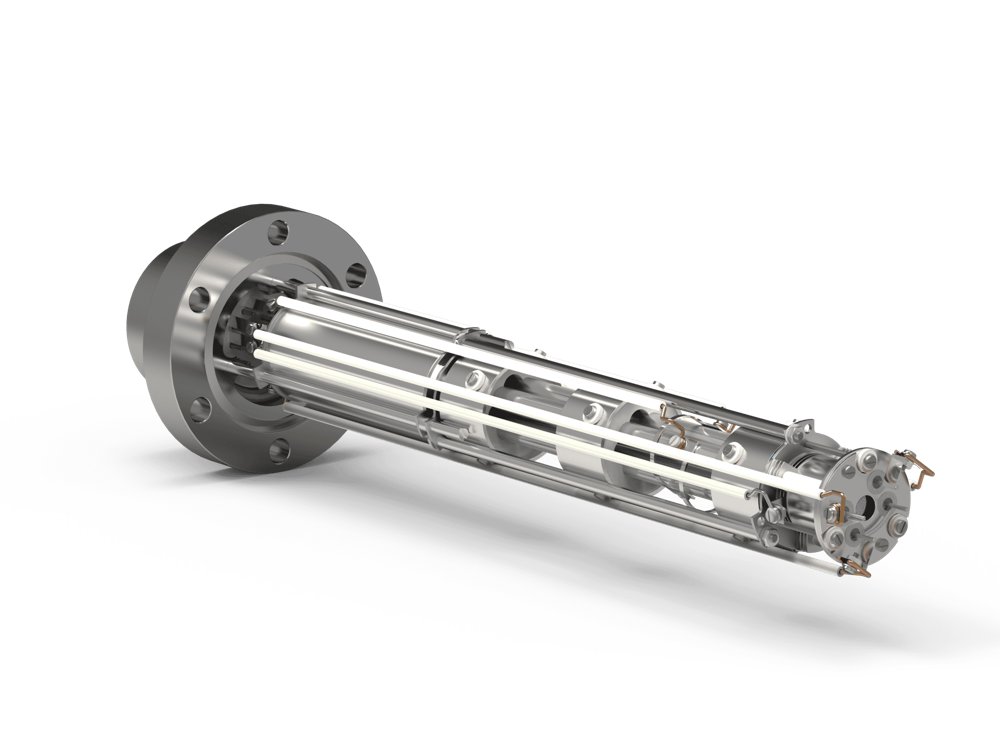 DLS-1 Mass Spectrometer for Fusion Gas AnalysisHiden Analytical Featured
 Ti-WCMBN Nanomaterialia Featured
 Aether®Lam Research
Market insights
Last 30 days: Semiconductors & Electronics drew the most money: $547.7M.
Money raised per month