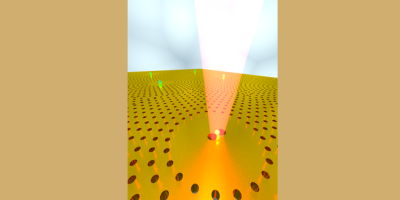
Vanderbilt researchers have developed a way to more quickly, and precisely, trap nanoscale objects such as potentially cancerous extracellular vesicles using a cutting-edge plasmonic nanotweezer.
The practice by Justus Ndukaife, assistant professor of electrical engineering, and Chuchuan Hong, a recently graduated Ph.D. student from the Ndukaife Research Group, and currently a postdoctoral research fellow at Northwestern University, has been published in Nature Communications.
Optical tweezers, as acknowledged with a 2018 Physics Nobel Prize, have proven adept at manipulating micron-scale matter like biological cells. But their effectiveness wanes when dealing with nanoscale objects. This limitation arises from the diffraction limit of light that precludes focusing of light to the nanoscale.
A breakthrough concept in nanoscience, called plasmonics, is being used to surpass the diffraction limit and confine light to the nanoscale. However, trapping the nanoscale objects near plasmonic structures can be a lengthy process because of the wait for nanoparticles to randomly approach the structures.
But Ndukaife and Hong have provided a speedier solution with the introduction of a high-throughput plasmonic nanotweezer technology termed “Geometry-induced Electrohydrodynamic Tweezers” (GET), which enables the rapid and parallel trapping and positioning of single nanoscale biological objects like extracellular vesicles near plasmonic cavities in a matter of seconds without any harmful heating effects.
“This achievement … marks a significant scientific milestone and charts a new era for optical trapping at the nanoscale using plasmonics,” says Ndukaife. “The technology may be used to trap and analyze single extracellular vesicles with high throughput to understand their fundamental roles in diseases such as cancer.”
Ndukaife recently had a paper published in Nano Letters Scientific journal that discusses using optical anapoles to more effectively trap nanosized extracellular vesicles and particles to analyze their roles in cancer, and neurodegenerative diseases.
Reference
Scalable trapping of single nanosized extracellular vesicles using plasmonics
Chuchuan Hong & Justus C. Ndukaife
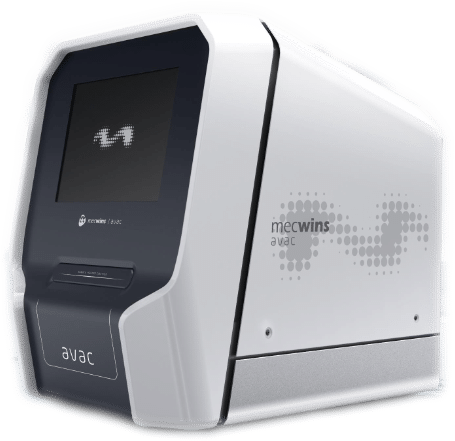
Mecwins has described its AVAC technology, which labels target proteins with plasmonic nanoparticles and counts each one individually by dark-field micro-spectrophotometry. The AVAC Analyzer reaches femtogram-range sensitivity.
Hesperos has received an SBIR Phase II grant (R44AI197758) from NIAID to expand its Malaria-on-a-Chip platform, adding support for viable, replicating parasite strains and predictive PK/PD modeling.
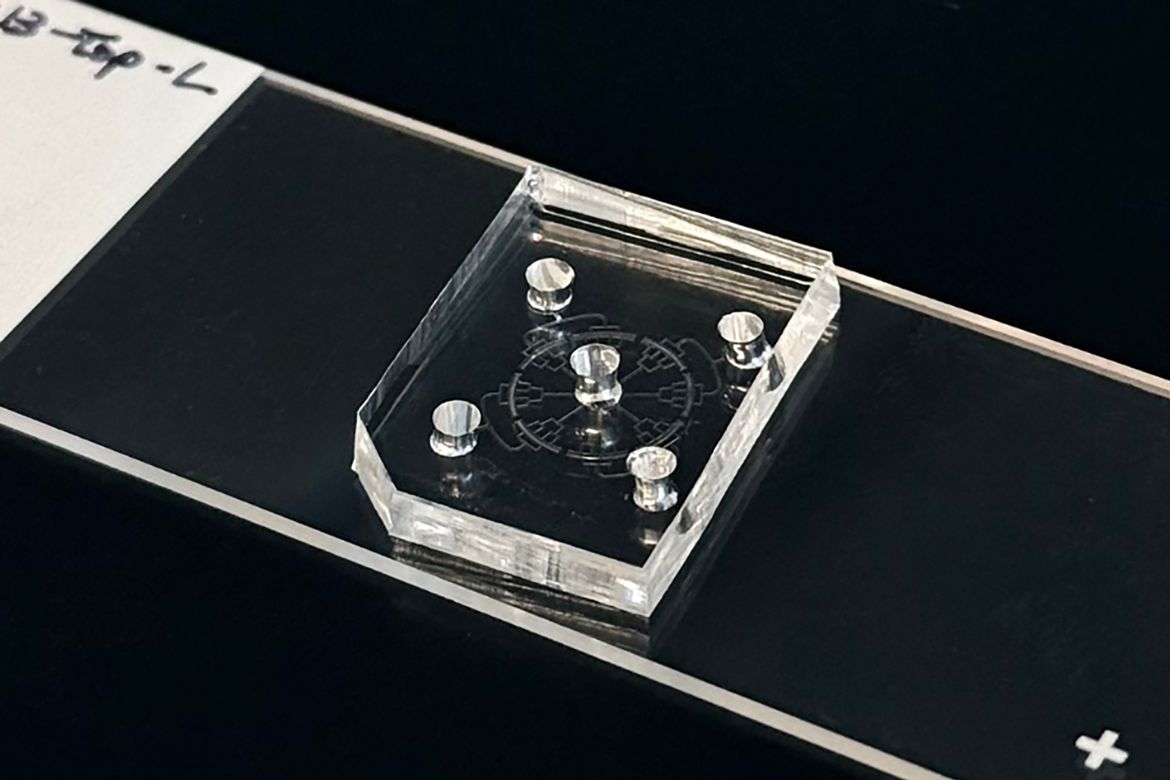
UCLA researchers have shown that briefly squeezing a cell's nucleus for milliseconds can loosen tightly packed DNA and make CRISPR activation far more effective at reprogramming cell identity. After mapping which genomic regions opened, they aimed guide RNAs at those sites, raising the share of mouse skin cells converted to neurons from about 3% to 10%. Adding a priming step that activated Oct4 pushed conversion to roughly 40%.
This week in nanotech
$108.5M raised
8 funding rounds · 46 deals tracked
New products
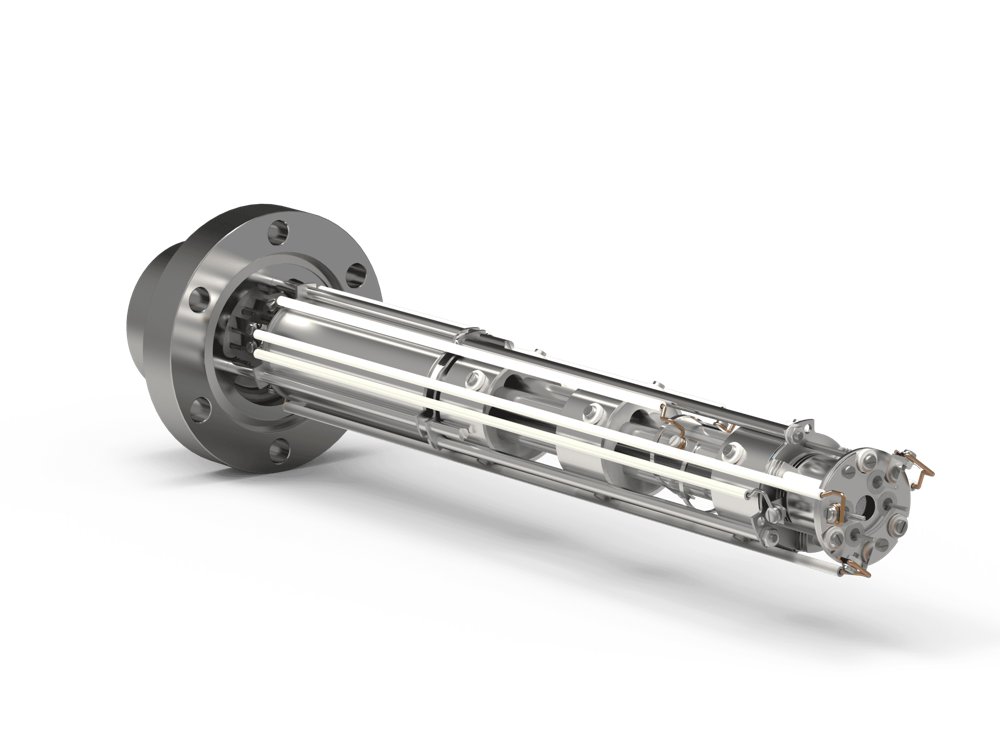 DLS-1 Mass Spectrometer for Fusion Gas AnalysisHiden Analytical Featured
 Orion Sputtering Deposition SystemsAJA International Featured
 SunscreenUnchained Labs
Market insights
Last 30 days: Quantum Technologies drew the most money: $3.17B.
Money raised per month