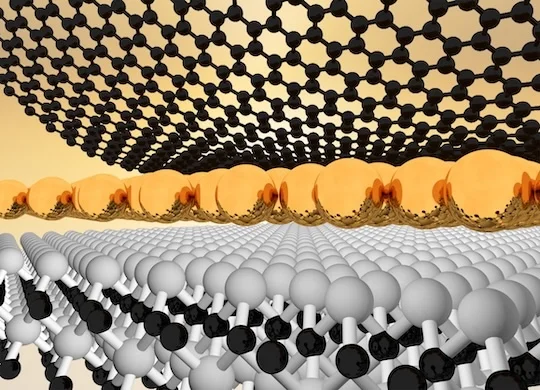
Just as overlapping ripples on a pond can amplify or cancel each other out, waves of many kinds — including light, sound and atomic vibrations — can interfere with one another. At the quantum level, this kind of interference powers high-precision sensors and could be harnessed for quantum computing.
In a new study published in Science Advances, researchers at Rice University and collaborators have demonstrated a strong form of interference between phonons — the vibrations in a material’s structure that constitute the tiniest units, or quanta, of heat or sound in that system. The phenomenon where two phonons with different frequency distributions interfere with each other, known as Fano resonance, was two orders of magnitude greater than any previously reported.
“While this phenomenon is well-studied for particles like electrons and photons, interference between phonons has been much less explored,” said Kunyan Zhang, a former postdoctoral researcher at Rice and first author on the study. “That is a missed opportunity, since phonons can maintain their wave behavior for a long time, making them promising for stable, high-performance devices.”
By showing that phonons can be harnessed as effectively as light or electrons, the study paves the way for a new generation of phonon-based technologies. The team’s breakthrough hinges on the use of a two-dimensional metal on top of a silicon carbide base. Using a technique called confinement heteroepitaxy, the researchers intercalated just a few layers of silver atoms between a layer of graphene and silicon carbide, producing a tightly bound interface with remarkable quantum properties.
“The 2D metal triggers and strengthens the interference between different vibrational modes in silicon carbide, reaching record levels,” Zhang said.
The research team studied how phonons interfere with each other by looking at the shape of their signal in Raman spectroscopy, a technique that measures the vibrational modes of a material. The spectrum revealed a sharply asymmetric line shape and in some cases showed a complete dip, forming an antiresonance pattern characteristic of intense interference.
The effect proved highly sensitive to the specificities of the silicon carbide surface. The comparison between three different surface terminations of silicon carbide revealed a clear link between each surface and its unique Raman line shape. Moreover, when the researchers introduced a single dye molecule to the surface, the spectral line shape changed dramatically.
“This interference is so sensitive that it can detect the presence of a single molecule,” Zhang said. “It enables label-free single-molecule detection with a simple and scalable setup. Our results open up a new path for using phonons in quantum sensing and next-generation molecular detection.”
Exploring the dynamic of the effect at low temperatures, the researchers confirmed that the interference stemmed purely from phonon interactions and not electrons, marking a rare case of phonon-only quantum interference. The effect has only been observed in the particular 2D metal/silicon carbide system used in the study and is absent in regular bulk metals. This is due to the special transition pathways and surface configurations enabled by the atomically thin metal layer.
The study also explored the possibility of using other 2D metals, such as gallium or indium, to induce similar effects. By fine-tuning the chemical composition of these intercalated layers, researchers could design custom interfaces with tailored quantum properties.
“Compared to conventional sensors, our method offers high sensitivity without the need for special chemical labels or complicated device setup,” said Shengxi Huang, associate professor of electrical and computer engineering and materials science and nanoengineering at Rice and corresponding author on the study. “This phonon-based approach not only advances molecular sensing but also opens up exciting possibilities in energy harvesting, thermal management and quantum technologies, where controlling vibrations is key.”
Reference
Tunable phononic quantum interference induced by two-dimensional metals
Kunyan Zhang, Rinu Abraham Maniyara, Yuanxi Wang, Arpit Jain, Maxwell T. Wetherington, Thuc T. Mai, Chengye Dong, Timothy Bowen, Ke Wang, Slava V. Rotkin, Angela R. Hight Walker, Vincent H. Crespi, Joshua Robinson, Shengxi Huang
https://www.science.org/doi/10.1126/sciadv.adw1800
Rice University

Publishing in Nature Materials, researchers at Kyushu University report that they have succeeded in developing a new SOFC with an efficient operating temperature of 300℃. The team expects that their new findings will lead to the development of low-cost, low-temperature SOFCs and greatly accelerate the practical application of these devices. The heart of an SOFC is the electrolyte, a ceramic layer that carries charged particles between two electrodes. In hydrogen fuel cells, the electrolyte tr...
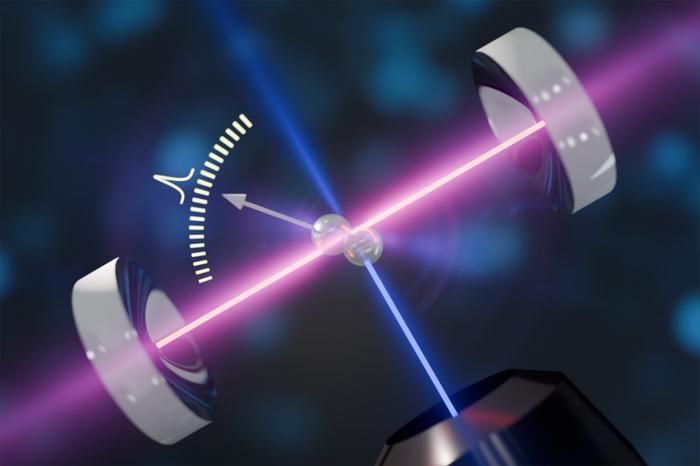
What are the limits of quantum physics? This is a question that has been researched around the world for decades. If we want to make the properties of the quantum world technically usable, we need to understand whether objects that are significantly larger than atoms and molecules can also exhibit quantum phenomena.For example, small glass spheres with a diameter of one hundred nanometres can be examined – still over a thousand times smaller than a grain of sand, but huge by quantum standards...
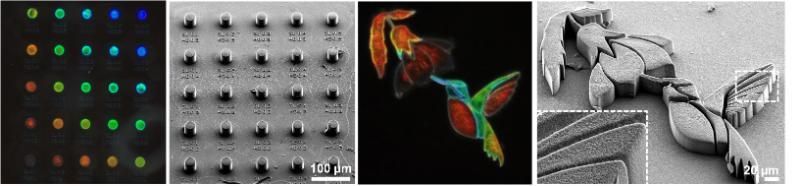
Half a billion years ago nature evolved a remarkable trick: generating vibrant, shimmering colours via intricate, microscopic structures in feathers, wings and shells that reflect light in precise ways. Now, researchers from Trinity have taken a major step forward in harnessing it for advanced materials science. A team, led by Professor Colm Delaney from Trinity’s School of Chemistry and AMBER, the Research Ireland Centre for Advanced Materials and BioEngineering Research, has developed a pio...
This week in nanotech
$10.2M raised
2 funding rounds · 19 deals tracked
New products
 Ti-WCMBN Nanomaterialia Featured
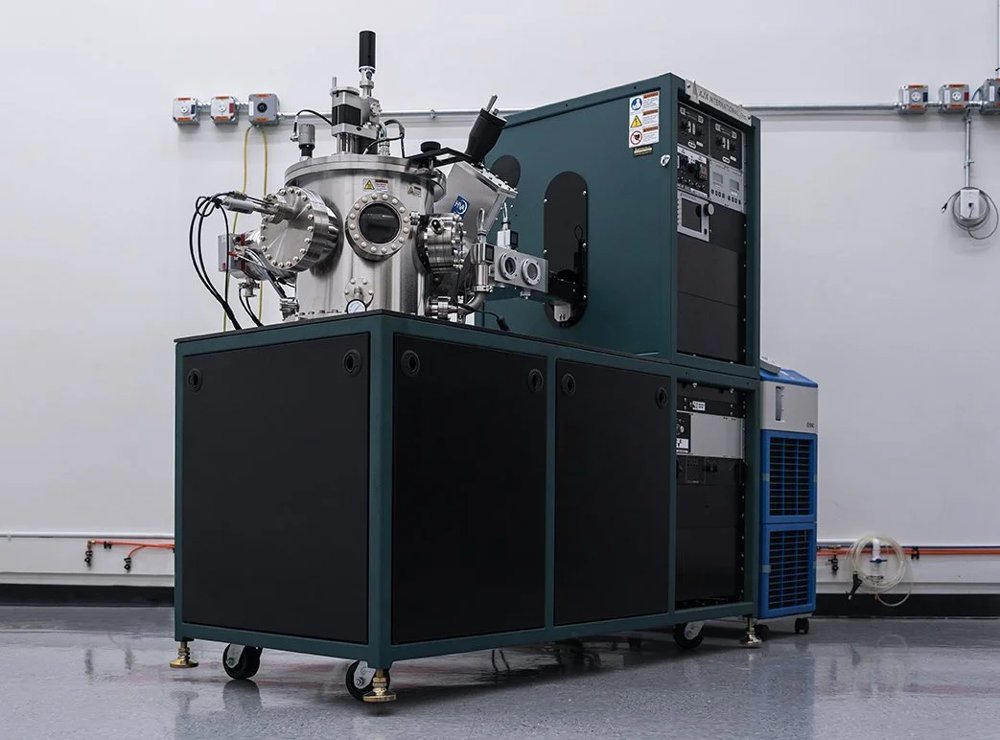 Orion Sputtering Deposition SystemsAJA International Featured
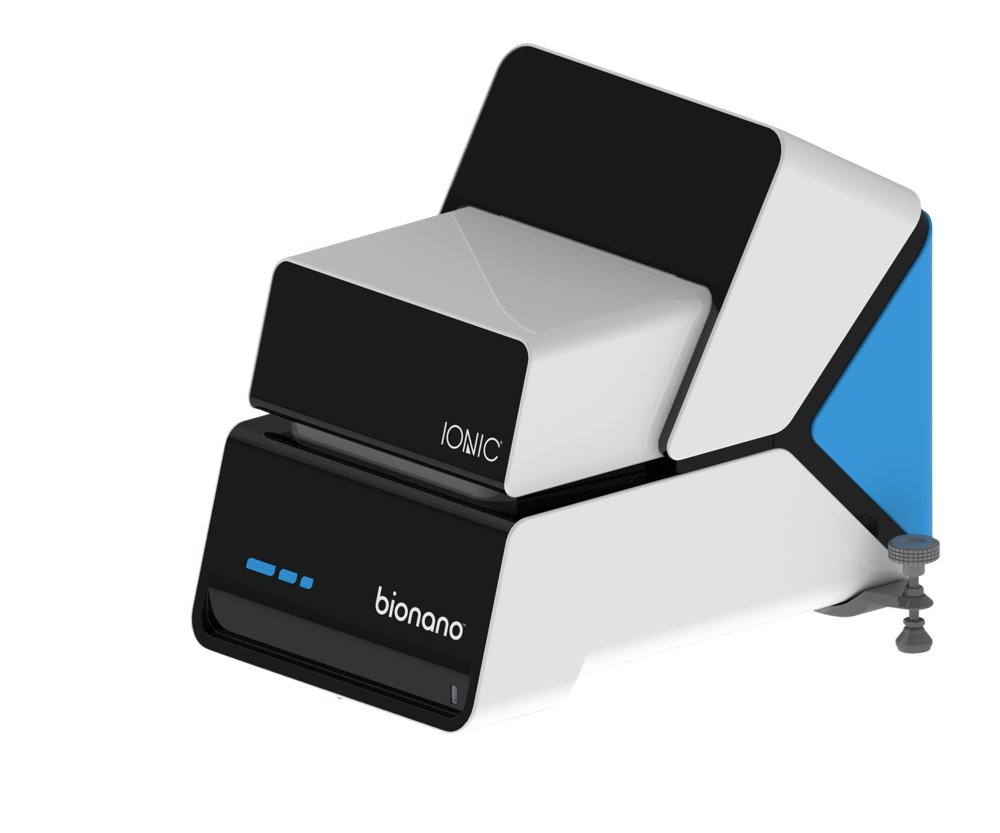 Ionic® Purification SystemBionano Genomics, Inc.
Market insights
Last 30 days: Quantum Technologies was the busiest vertical: 53 of 180 events (29%).
Money raised per month