15 October 2026. Riverlane and NVIDIA are collaborating on the use of AI and NVIDIA accelerated computing for quantum error correction (QEC), including how GPUs can make decoder calibration faster. A decoder is the part of a QEC system that interprets the signals produced by a quantum processor, works out which errors are most likely to have occurred and tells the system how to correct them.
Riverlane has developed an AI-based calibration loop that learns improved decoder settings directly from experimental data. As part of the collaboration, Riverlane uses NVIDIA H100 GPU to test how well different decoder settings perform. Using Riverlane's Local Clustering Decoder (LCD), adapted for high-throughput GPU processing, a training cycle on the surface code that previously took three minutes using a single-core CPU now takes just 2.8 seconds.
The H100 GPU can decode more than four million surface code syndromes per second, compared with around 59,000 per second on a single CPU core.
"Quantum error correction is the key technology that will enable useful quantum computers," Steve Brierley, founder and CEO of Riverlane, adds. Sam Stanwyck, Director of Quantum Product at NVIDIA, said: "Riverlane is using AI to help error correction keep pace with changing quantum hardware."
Riverlane will continue to investigate how NVIDIA accelerated computing can help make quantum error correction faster, more adaptive and more practical for utility-scale quantum computers.
Source: The Quantum Insider
Google researchers reduced errors in magic states by about 40-fold, demonstrating magic-state cultivation on the Willow processor. The team reported T-states with a logical fidelity of 99.99%.
D-Wave Quantum Inc. announced its Advantage2 annealing quantum computer has arrived in Lombardy, Italy, for installation at Villa Saporiti in Como. The system is funded by Swiss Quantum Technology SA under a €10 million agreement.
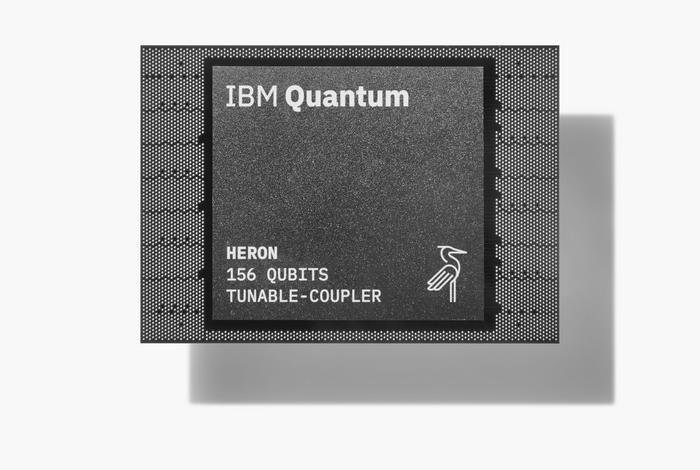
Researchers from Rutgers, IBM and collaborators demonstrated real-time quantum feedback control on a 156-qubit Heron processor, using up to 100 connected qubits. By alternately scrambling information and resetting qubits nearly 5,000 times each, they steered the system from chaos to an ordered state, revealing a sharp phase transition.