Delft, 22 October 2026. Qblox has integrated NVIDIA DGX Spark with a quantum system controller using NVIDIA NVQLink. The Delft-based company said the Qblox Cluster has been integrated with multiple NVIDIA GPUs, enabling real-time control for hybrid quantum-classical computing.
Qblox reported measured roundtrip latency below 4.0 µs on NVIDIA RTX PRO 6000 Blackwell and below 7.2 µs on NVIDIA DGX Spark. A single desktop system can host quantum, AI and simulation workloads via NVIDIA CUDA-Q, and the same code carries over to data center graphics processing unit (GPU) servers as systems scale.
The integration brings GPU acceleration into the real-time control loop. Qblox said its Q1 sequence processors and LINQ deliver the low latency and high throughput the Qblox Cluster needs to work with the GPU. GPU-accelerated calibration routines update qubit parameters while experiments run, instead of between them. For quantum error correction, syndrome data reaches GPU-based decoders with low latency.
The announcement builds on Qblox work with NVIDIA NVQLink announced in October 2025 and on Qblox support for the NVIDIA CUDA-Q realtime API in March 2026. Qblox said the step moves the integration from architecture to measured hardware performance.
"Quantum computers will scale only as fast as the classical control systems around them," said Niels Bultink, CEO and Co-founder of Qblox. "With these developments, the GPUs become part of that control loop, giving quantum systems access to the computing power they need in real time."
"DGX Spark puts an AI supercomputer on a quantum researcher's desk," said Sam Stanwyck, director of quantum product at NVIDIA. "Qblox's integration with NVQLink and CUDA-Q connects that computing power to quantum hardware, bringing simulation, real-time calibration and error correction into a single development platform."
Source: Qblox news
Riverlane and NVIDIA are collaborating on AI and NVIDIA accelerated computing for quantum error correction. Using the Local Clustering Decoder, a surface code training cycle that took three minutes on a single-core CPU now takes 2.8 seconds.
Researchers from Rutgers, IBM and collaborating institutions showed a quantum computer can repeatedly check and reset parts of itself while running. The experiment used a 156-qubit IBM Quantum Heron processor with a chain of up to 100 qubits.
Quantinuum achieved a logical fidelity of 99.9995% on its Helios computer, equivalent to five errors per million operations. The company said the logical error rate is 10 times lower than its record set last month.
This week in nanotech
$108.5M raised
8 funding rounds · 46 deals tracked
New products
 Nion-compatible In Situ STEM Holders for Electrical BiasingHummingbird Scientific Featured
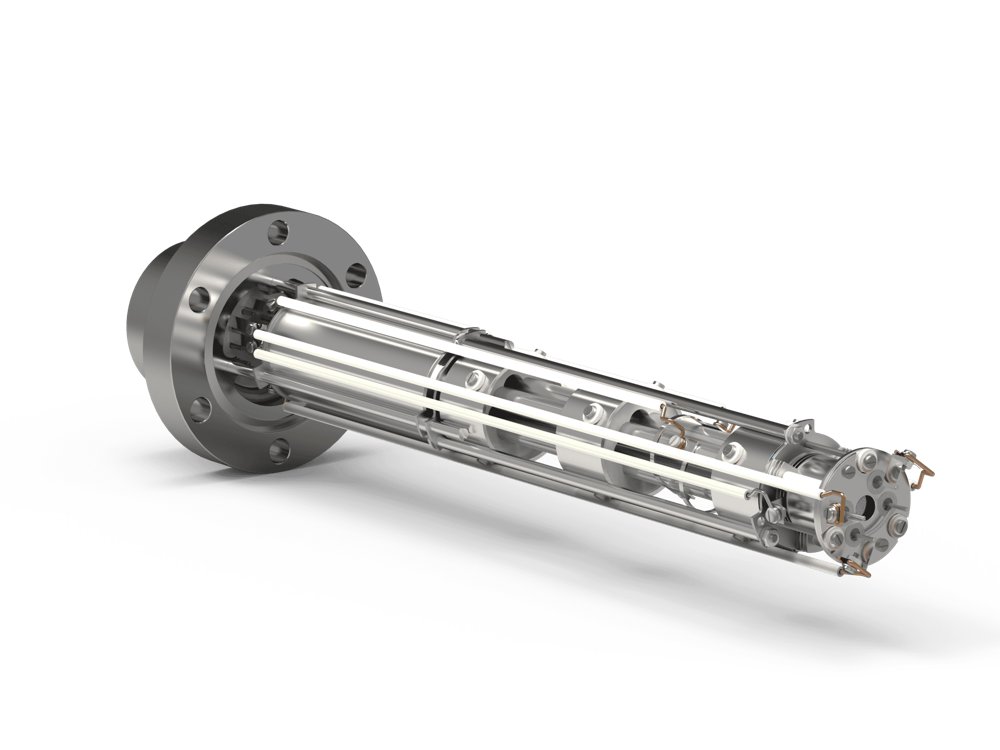 DLS-1 Mass Spectrometer for Fusion Gas AnalysisHiden Analytical Featured
 GHK-CuPeoples Peps
Market insights
Last 30 days: Quantum Technologies drew the most money: $3.17B.
Money raised per month
Behind the deal
Who invested in Photon Bridge’s $11.2M Series A?
See the investors with Insights Pro →