If you often find yourself off by one when counting your socks after doing the laundry, you might want to sit down for this.
Scientists in Japan have now counted the number of extra—or missing—charges down to a precision of just one electron in single platinum nanoparticles having diameters only one-tenth those of common viruses.
This new process for precisely studying differences in net charge on metal nanoparticles will aid in the further understanding and development of catalysts for breaking down greenhouse and other harmful gases into fuels and benign gases or for efficiently producing ammonia needed for fertilizers used in agriculture.
Led by Kyushu University and Hitachi Ltd., the research team achieved this feat of extreme counting through hardware and software improvements that increased tenfold the sensitivity of a technique called electron holography.
While transmission electron microscopy uses a beam of electrons to observe materials down to the atomic level, electron holography utilizes the wave-like properties of electrons to probe electric and magnetic fields.
Interaction of an electron with fields causes a phase shift in its wave that can be identified by comparing it with a reference wave of an unaffected electron.
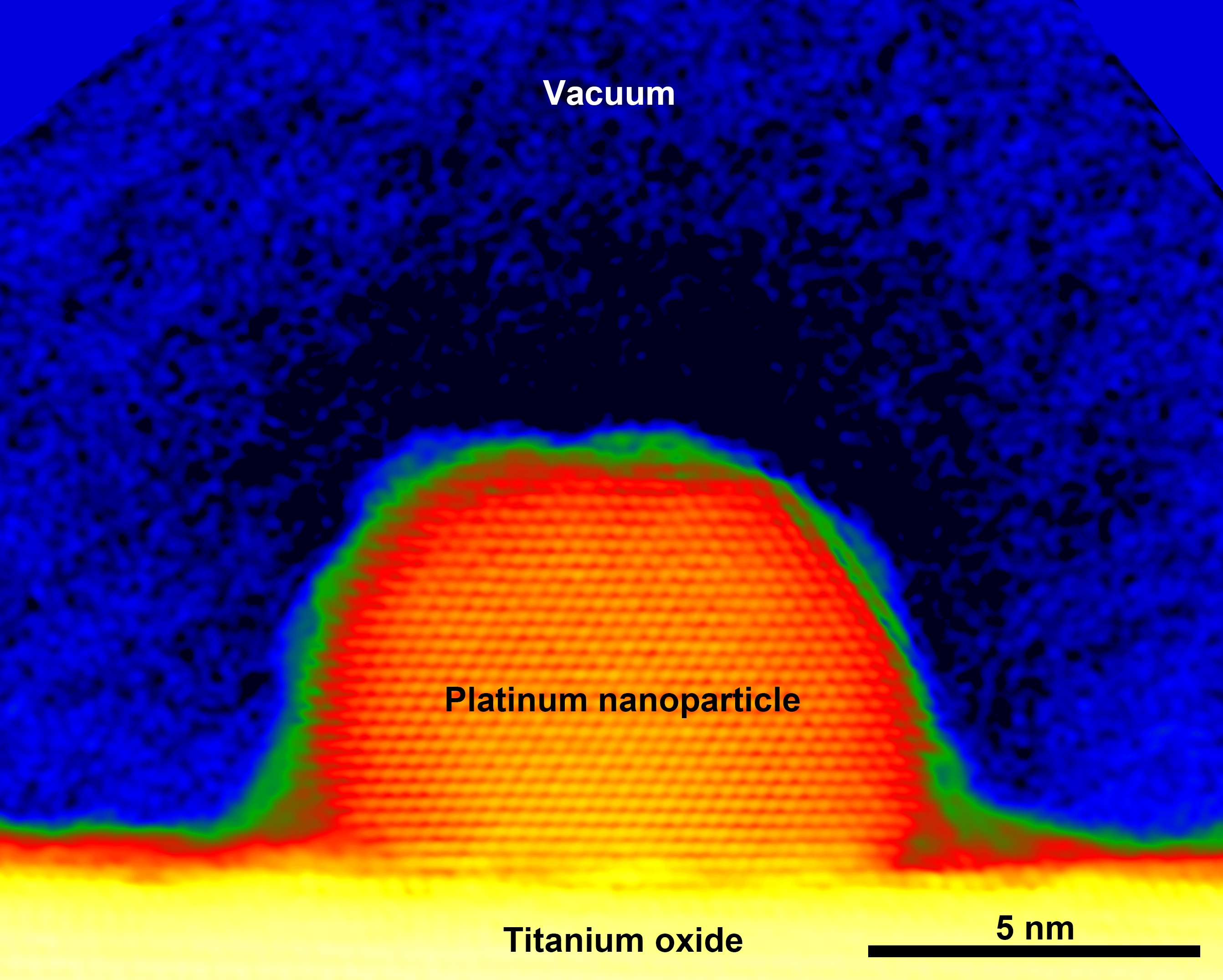
In the new work, the researchers focused their microscopes on single nanoparticles of platinum on a surface of titanium oxide, a combination of materials that is already known to act as a catalyst and speed up chemical reactions.
On average, the platinum nanoparticles had diameters of only 10 nm—so small that it would take nearly 100,000 to span one millimeter.
“While each particle contains a few tens of thousands of atoms of platinum, the addition or removal of just one or two negatively charged electrons causes significant changes in the behavior of the materials as catalysts,” says Ryotaro Aso, associate professor at Kyushu University’s Faculty of Engineering and first author on the paper in the journal Science reporting the work.
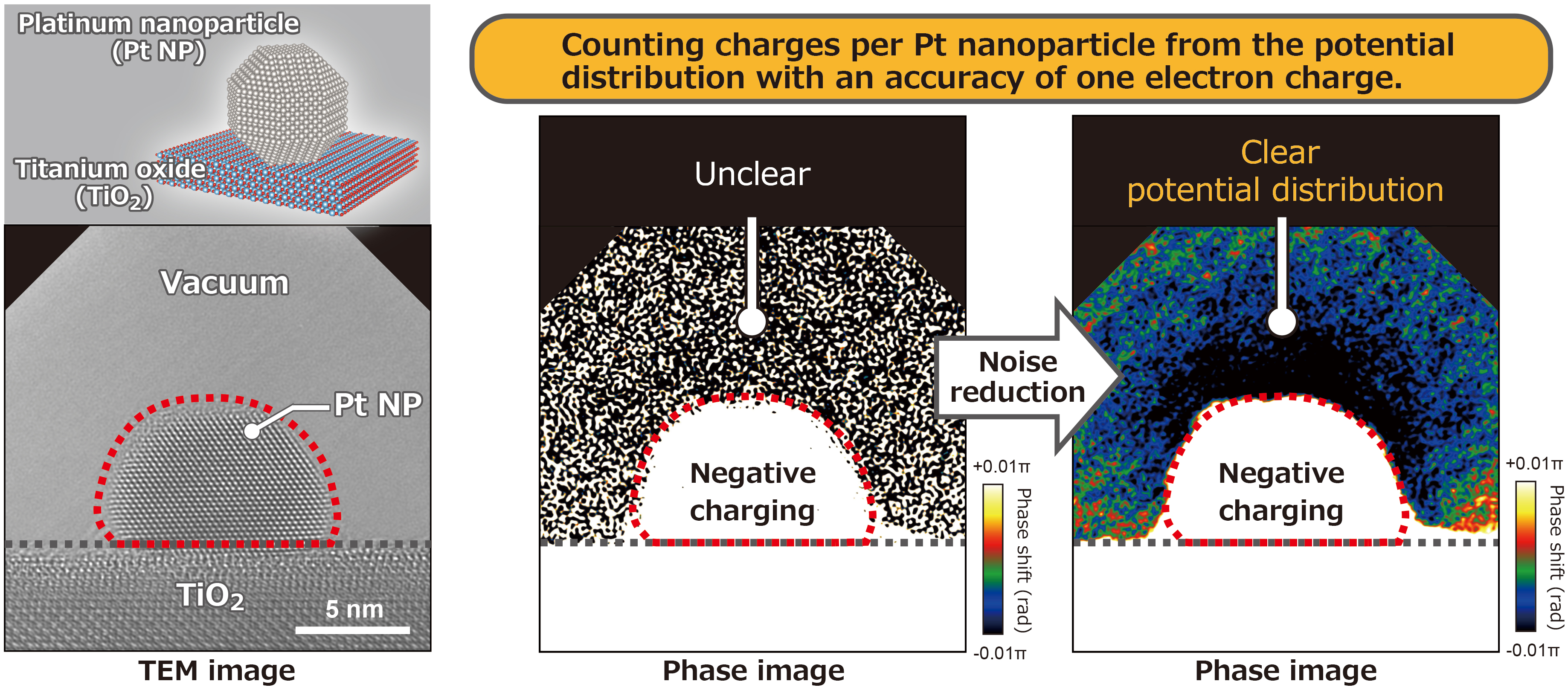
Measuring the fields just around a platinum nanoparticle—which vary depending on the imbalance of positive and negative charges in the particle—in an environment free of air, the researchers could determine the number of extra or missing electrons that are creating the fields.
“Amongst the millions of positively charged protons and negatively charged electrons balancing each other out in the nanoparticle, we could successfully tell if the number of protons and electrons was different by just one,” explains Aso.
Although the fields are too weak to observe with previous methods, the researchers improved sensitivity by using a state-of-the-art 1.2-MV atomic-resolution holography microscope developed and operated by Hitachi that reduces mechanical and electrical noise and then processing the data to further tease out the signal from the noise.
Developed by Osaka University’s Yoshihiro Midoh, one of the paper’s co-authors, the signal processing technique utilized the so-called wavelet hidden Markov model (WHMM) to reduce the noise without also removing the extremely weak signals of interest.
In addition to identifying the charge state of individual nanoparticles, the researchers were able to relate differences in the number of electrons, which ranged from one to six, to differences in the crystal structure of the nanoparticles.
While the number of electrons per area has been previously reported by averaging over a large-area measurement of many particles, this is the first time scientists could measure a single electron difference in a single particle.
“By combining breakthroughs in microscopy hardware and signal processing, we are able to study phenomenon on increasingly smaller levels,” comments Yasukazu Murakami, professor at Kyushu University’s Faculty of Engineering and supervisor of the Kyushu U team.
“In this first demonstration, we measured the charge on a single nanoparticle in vacuum. In the future, we hope to overcome the challenges that currently prevent us from doing the same measurements in the presence of gas to get information in environments closer to actually applications.”
Reference
Direct identification of the charge state in a single platinum nanoparticle on titanium oxide
Ryotaro Aso, Hajime Hojo, Yoshio Takahashi, Tetsuya Akashi, Yoshihiro Midoh, Fumiaki Ichihashi, Hiroshi Nakajima, Takehiro Tamaoka, Kunio Yubuta, Hiroshi Nakanishi, Hisahiro Einaga, Toshiaki Tanigaki, Hiroyuki Shinada, Yasukazu Murakami
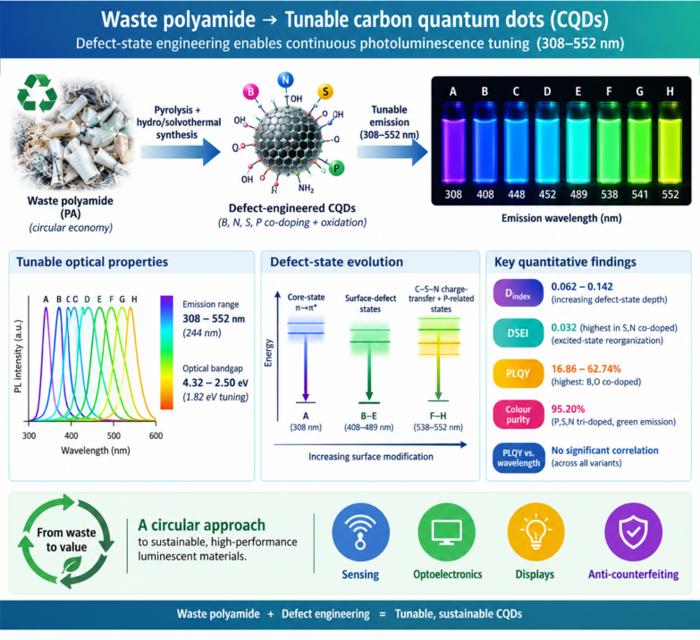
Waste polyamide-derived CQDs show continuous photoluminescence tuning from 308 to 552 nm through sequential defect-state engineering, with optical transition energies decreasing from 4.32 to 2.50 eV. @Christian Ebere Enyoh from Saitama University Carbon quantum dots (CQDs) are fluorescent carbon nanomaterials with potential applications in sensing, optoelectronics, displays, anti-counterfeiting, and environmental technologies. Their optical properties can be adjusted by modifying the carbon...
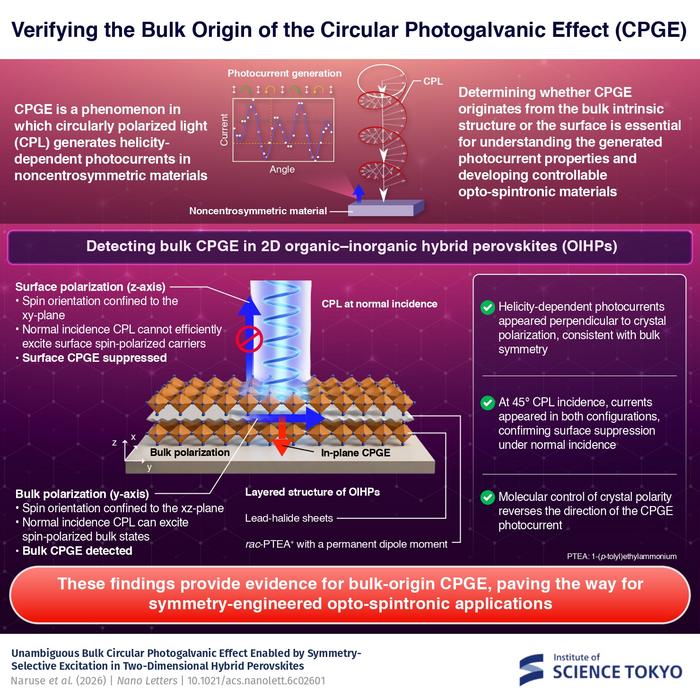
The researchers used circularly polarized light at normal incidence and found that helicity-dependent photocurrents appeared perpendicular to the crystal’s polarization but vanished when measured parallel to it, supporting a bulk origin of CPGE. @Institute of Science Tokyo The circular photogalvanic effect (CPGE), a phenomenon that generates helicity-dependent photocurrents in noncentrosymmetric materials, can originate purely from a crystal's internal structure without contribution from the...
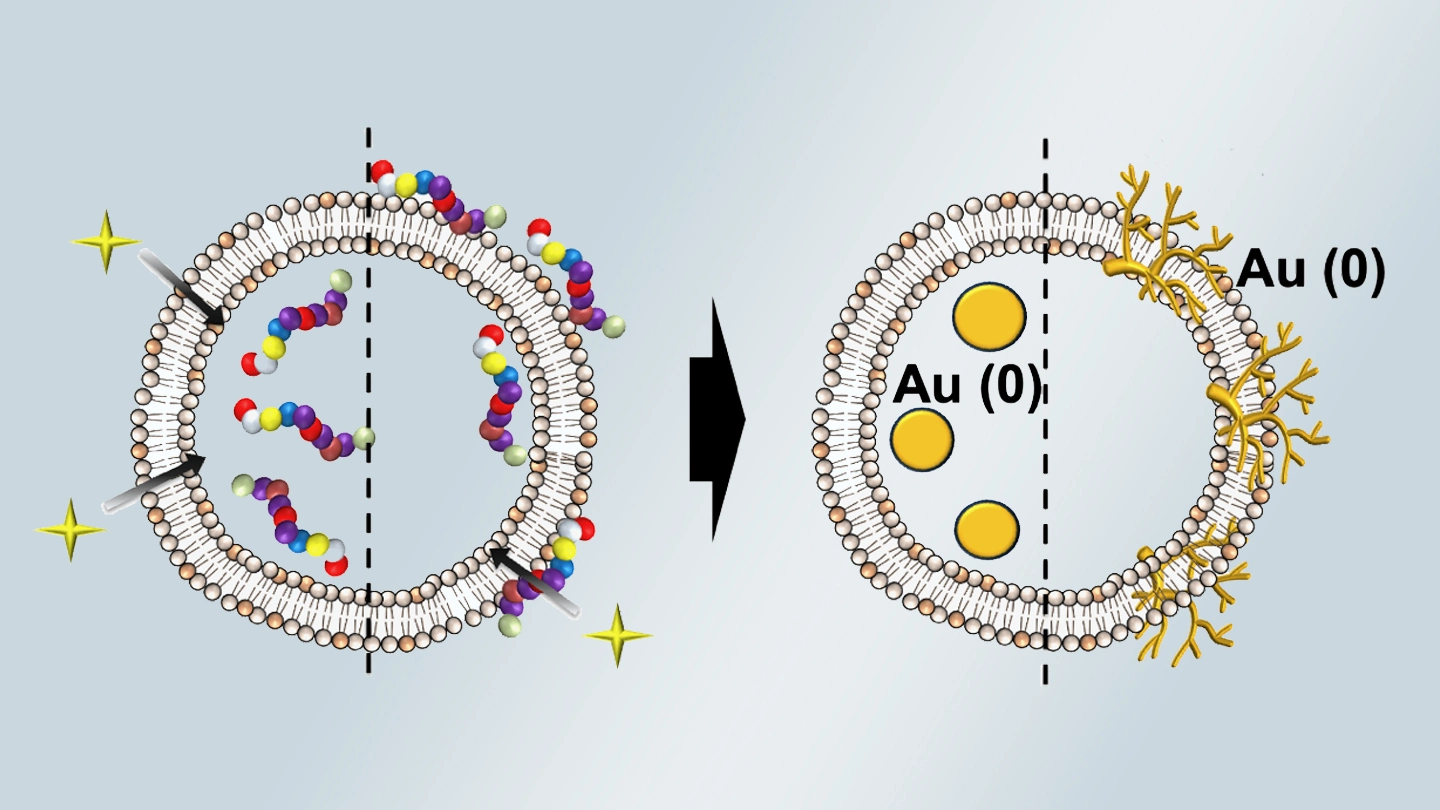
Summary of gold nanoparticle growth programming in liposome based on localization of biomineralization peptide The position of biomineralization peptides within liposomes can influence how gold nanoparticles grow, reports a research team from Institute of Science Tokyo. Peptides localized at the membrane interface promote branched structures, while those confined to the liposome interior favor spherical nanoparticles. The findings offer a new strategy for controlling nanoscale reaction...
