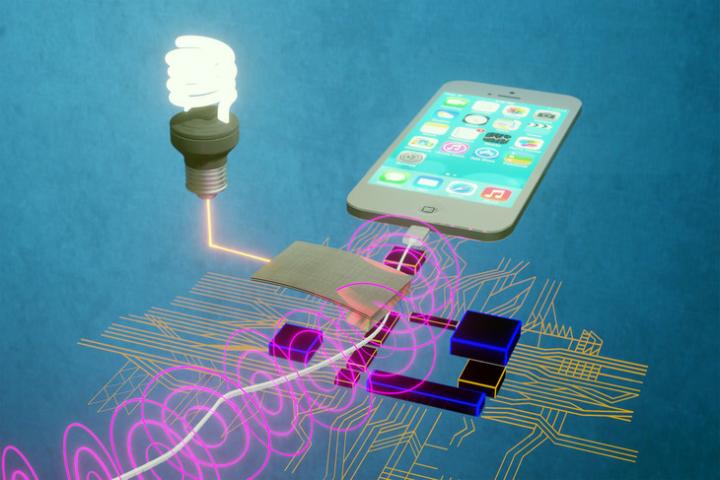
The electricity that lights our homes and powers our appliances also creates small magnetic fields that are present all around us. Scientists have developed a new mechanism capable of harvesting this wasted magnetic field energy and converting it into enough electricity to power next-generation sensor networks for smart buildings and factories.
"Just like sunlight is a free source of energy we try to harvest, so are magnetic fields," said Shashank Priya, professor of materials science and engineering and associate vice president for research at Penn State. "We have this ubiquitous energy present in our homes, office spaces, work spaces and cars. It's everywhere, and we have an opportunity to harvest this background noise and convert it to useable electricity."
A team led by Penn State scientists developed a device that provides 400 percent higher power output compared to other state-of-the-art technology when working with low-level magnetic fields, like those found in our homes and buildings.
The technology has implications for the design of smart buildings, which will require self-powered wireless sensor networks to do things like monitor energy and operational patterns and remotely control systems, the scientists said.
"In buildings, it's known that if you automate a lot of functions, you could actually improve the energy efficiency very significantly," Priya said. "Buildings are one of the largest consumers of electricity in the United States. So even a few percent drop in energy consumption could represent or translate into megawatts of savings. Sensors are what will make it possible to automate these controls, and this technology is a realistic way to power those sensors."
Researchers designed paper-thin devices, about 1.5 inches long, that can be placed on or near appliances, lights, or power cords where the magnetic fields are strongest. These fields quickly dissipate away from the source of flowing electric current, the scientists said.
When placed 4 inches from a space heater, the device produced enough electricity to power 180 LED arrays, and at 8 inches, enough to power a digital alarm clock. The scientists reported the findings in the journal Energy and Environmental Science.
"These results provide significant advancements toward sustainable power for integrated sensors and wireless communication systems," said Min Gyu Kang, an assistant research professor at Penn State and co-lead author on the study.
The scientists used a composite structure, layering two different materials together. One of these materials is magnetostrictive, which converts a magnetic field into stress, and the other is piezoelectric, which converts stress, or vibrations, into an electric field. The combination allows the device to turn a magnetic field into an electric current.
The device has a beam-like structure with one end clamped and the other free to vibrate in response to an applied magnetic field. A magnet mounted at the free end of the beam amplifies the movement and contributes toward a higher production of electricity, the scientists said.
"The beauty of this research is it uses known materials, but designs the architecture for basically maximizing the conversion of the magnetic field into electricity," Priya said. "This allows for achieving high power density under low amplitude magnetic fields."
Rammohan Sri Ramdas, an assistant research professor at Penn State, participated in the research.
Also contributing were Hyeon Lee and Prashant Kumar, research assistants at Virginia Tech, and Mohan Sanghadasa, senior research scientist at the Aviation and Missile Center, U.S. Army Combat Capabilities Development Command.
Some of the team members in this study were funded through the Office of Naval Research and the others through National Science Foundation.
Maximizing power generation from ambient stray magnetic fields around smart infrastructures enabling self-powered wireless devices
Hyeon Lee,Rammohan Sriramdas, Prashant Kumar, Mohan Sanghadasa, Min Gyu Kang and Shashank Priya
Energy & Environmental Science (2020)
DOI: 10.1039/C9EE03902C
Contact information:
Shashank Priya
Professor of materials science and engineering at Penn State
sup103@psu.edu
Phone: 814-863-9657
Priya Group
Pennsylvania State University (Penn State)
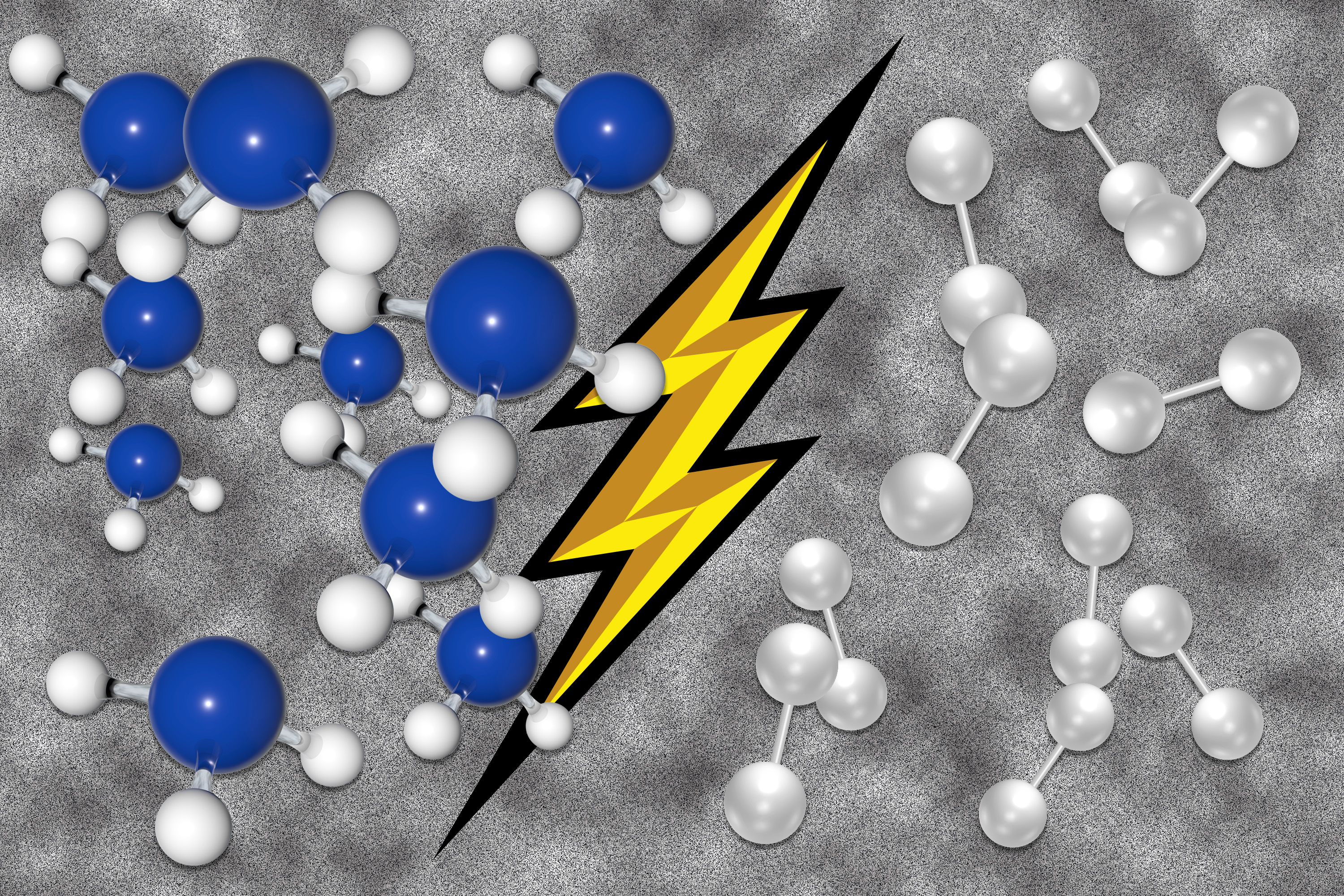
MIT researchers have developed a new way to extract pure hydrogen gas from ammonia and other hydrogen carrier molecules. Their strategy, which uses electricity to speed up the extraction, reduces the temperature and energy required to recover hydrogen from these molecules. As a liquid that is easily stored and transported, ammonia (NH3) is an attractive carrier for hydrogen, which is used in fuel cells, semiconductor manufacturing, chemical processing, and other applications. However,...
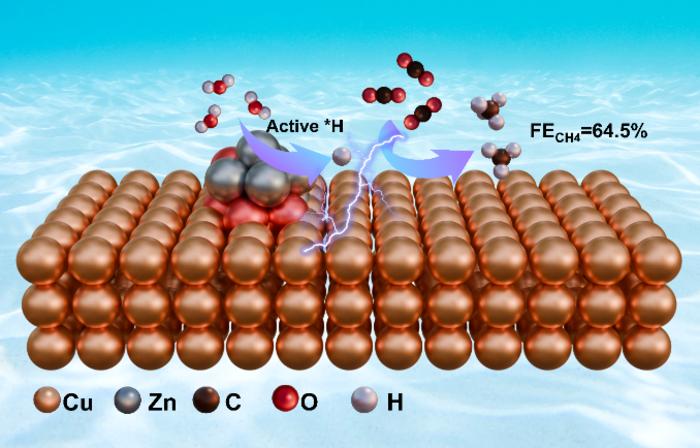
image: CuZn800@C was constructed via solvothermal method and utilizes the high-temperature volatility of zinc to prepare through calcination at different temperatures, which displays a high methane Faradaic efficiency of 64.5% and a remarkable partial current density of -551.3 mA/cm2 at -1.7 V vs. RHE, along with excellent stability. Zn and Cu form a tandem reaction system. Zn sites promote water splitting to provide protons, while Cu sites reduce the energy barrier for *CO hydrogenation....
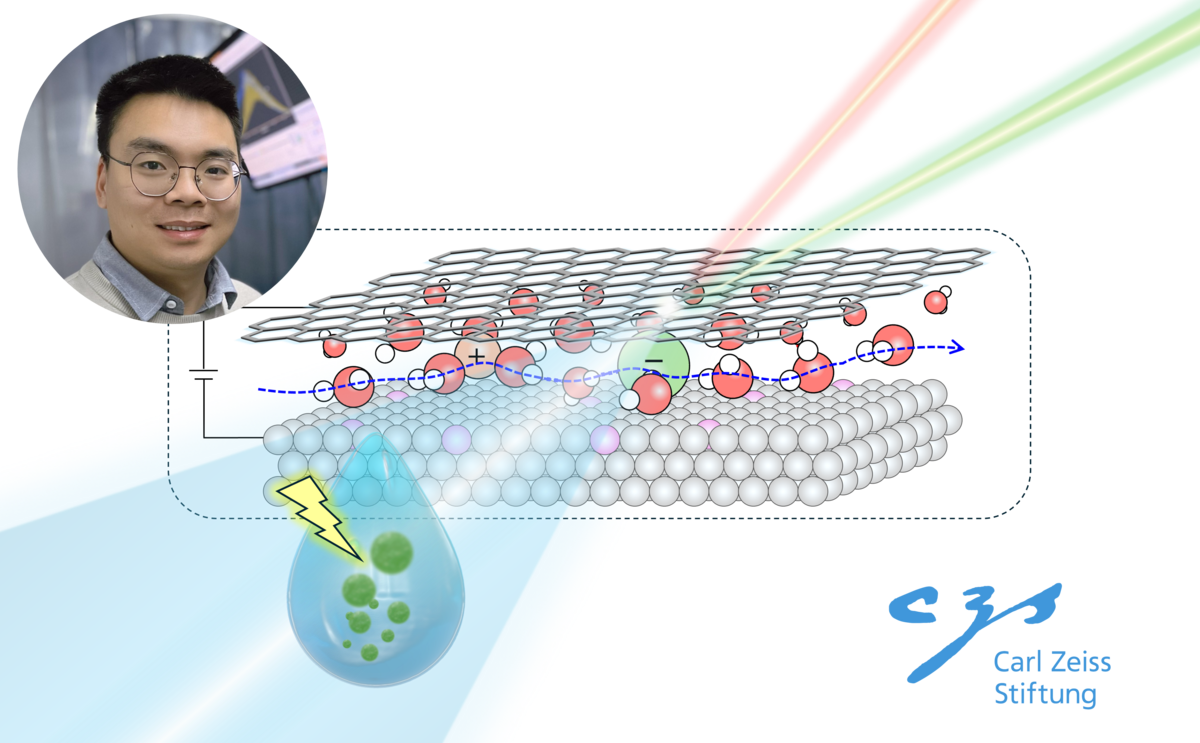
Electrochemical water splitting powered by renewable electricity is a promising pathway to sustainable hydrogen production, but its efficiency and scalability remain limited by costly catalysts and slow reaction kinetics. With €1.5 million in funding from the Carl-Zeiss-Stiftung for five years, Dr. Yongkang Wang and his team will pursue a new approach by visualizing and controlling water at the molecular level, using nanoscale confinement to shape its structure and dynamics at catalytic...
