Harvard John A. Paulson School of Engineering and Applied Science (Harvard SEAS)
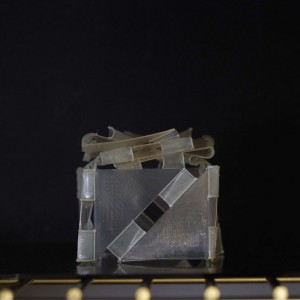
The majority of soft robots today rely on external power and control, keeping them tethered to off-board systems or rigged with hard components. Now, researchers from the Harvard John A. Paulson School of Engineering and Applied Sciences (SEAS) and Caltech have developed soft robotic systems, inspired by origami, that can move and change shape in response to external stimuli, paving the way for fully untethered soft robots.
"The ability to integrate active materials within 3D-printed objects enables the design and fabrication of entirely new classes of soft robotic matter," said Jennifer A. Lewis, the Hansjorg Wyss Professor of Biologically Inspired Engineering at SEAS and co-lead author of the study.
The researchers turned to origami to create multifunctional soft robots. Through sequential folds, origami can encode multiple shapes and functionalities in a single structure. Using materials known as liquid crystal elastomers that change shape when exposed to heat, the research team 3D-printed two types of soft hinges that fold at different temperatures and thus can be programmed to fold in a specific order.
"With our method of 3D printing active hinges, we have full programmability over temperature response, the amount of torque the hinges can exert, their bending angle, and fold orientation. Our fabrication method facilitates integrating these active components with other materials," said Arda Kotikian, a graduate student at SEAS and the Graduate School of Arts and Sciences and co-first author of the paper.
"Using hinges makes it easier to program robotic functions and control how a robot will change shape. Instead of having the entire body of a soft robot deform in ways that can be difficult to predict, you only need to program how a few small regions of your structure will respond to changes in temperature," said Connor McMahan, a graduate student at Caltech and co-first author of the paper.
To demonstrate this method, Kotikian, McMahan, and the team built several soft devices, including an untethered soft robot nicknamed the "Rollbot." The Rollbot begins as a flat sheet, about 8 centimeters long and 4 centimeters wide. When placed on a hot surface, about 200°C, one set of hinges folds and the robot curls into a pentagonal wheel.
Another set of hinges is embedded on each of the five sides of the wheel. A hinge folds when in contact with the hot surface, propelling the wheel to turn to the next side, where the next hinge folds. As they roll off the hot surface, the hinges unfold and are ready for the next cycle.
"Many existing soft robots require a tether to external power and control systems or are limited by the amount of force they can exert. These active hinges are useful because they allow soft robots to operate in environments where tethers are impractical and to lift objects many times heavier than the hinges," said McMahan.
Another device, when placed in a hot environment, can fold into a compact folded shape resembling a paper clip and unfold itself when cooled.
"These untethered structures can be passively controlled," said Kotikian. "In other words, all we need to do is expose the structures to specific temperature environments and they will respond according to how we programmed the hinges."
While this research only focused on temperature responses, liquid crystal elastomers can also be programmed to respond to light, pH, humidity and other external stimuli.
"This works demonstrates how the combination of responsive polymers in an architected composite can lead to materials with self-actuation in response to different stimuli. In the future, such materials can be programmed to perform ever more complex tasks, blurring the boundaries between materials and robots," said Chiara Daraio, Professor of Mechanical Engineering and Applied Physics at Caltech and co-lead author of the study.
Untethered soft robotic matter with passive control of shape morphing and propulsion
Arda Kotikian, Connor McMahan, Emily C. Davidson, Jalilah M. Muhammad, Robert D. Weeks, Chiara Daraio and Jennifer A. Lewis
Science Robotics 21 Aug 2019: Vol. 4, Issue 33, eaax7044
DOI: 10.1126/scirobotics.aax7044
Contact information:
Jennifer Lewis
Professor of Biologically Inspired Engineering at Harvard SEAS
jalewis@seas.harvard.edu
Phone: (617) 496-0233
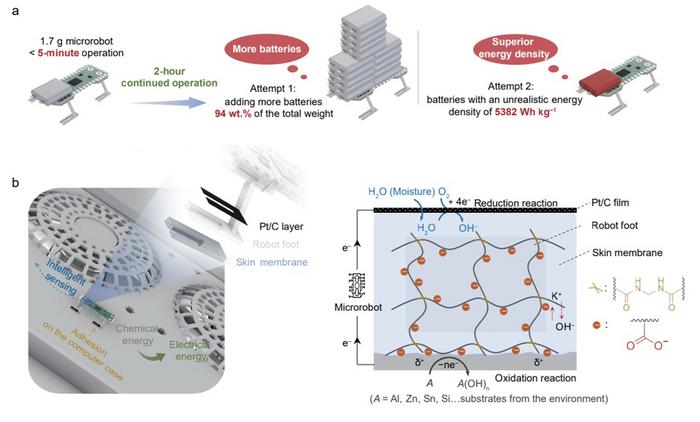
A Fudan University team has built a microrobot skin that generates electricity from the surface it walks on, eliminating onboard batteries. The crosslinked potassium polyacrylate membrane, as thin as 135 micrometres, reacts with aluminum, zinc and other active substrates plus atmospheric moisture and oxygen, reaching 133 mW cm−2 on zinc, roughly ten times typical microbatteries.

In northeastern Brazil, termites have transformed an area about the size of Great Britain by sensing their environment, communicating with each other about it and working together to build vast tunnel systems. Inspired by this and other instances of the small but mighty collective activity in nature, Cornell physics researchers have made robots that for the first time can sense the temperature of their surroundings and react together to change it. “Little things can have a large impact,” said...
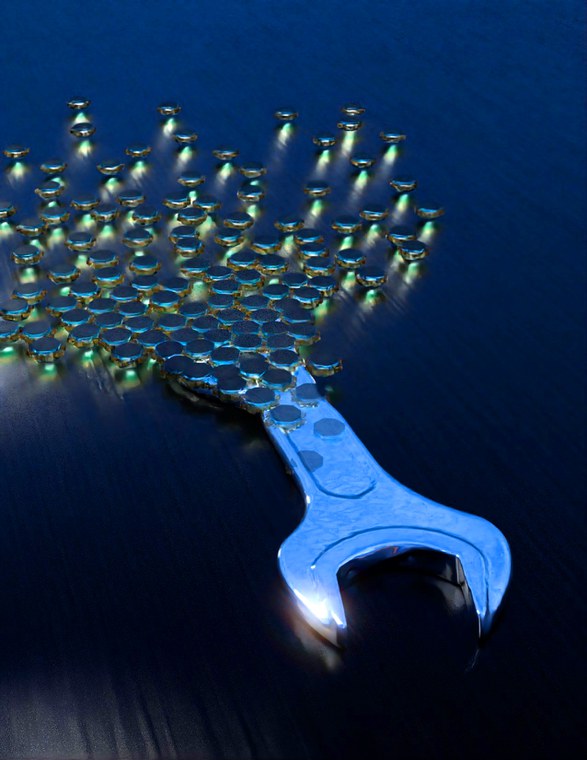
In the world of robots, the equivalent of cell-cell adhesion is achieved with magnets, which are incorporated into the perimeter of the robo
This week in nanotech
$24.4M raised
5 funding rounds · 33 deals tracked
New products
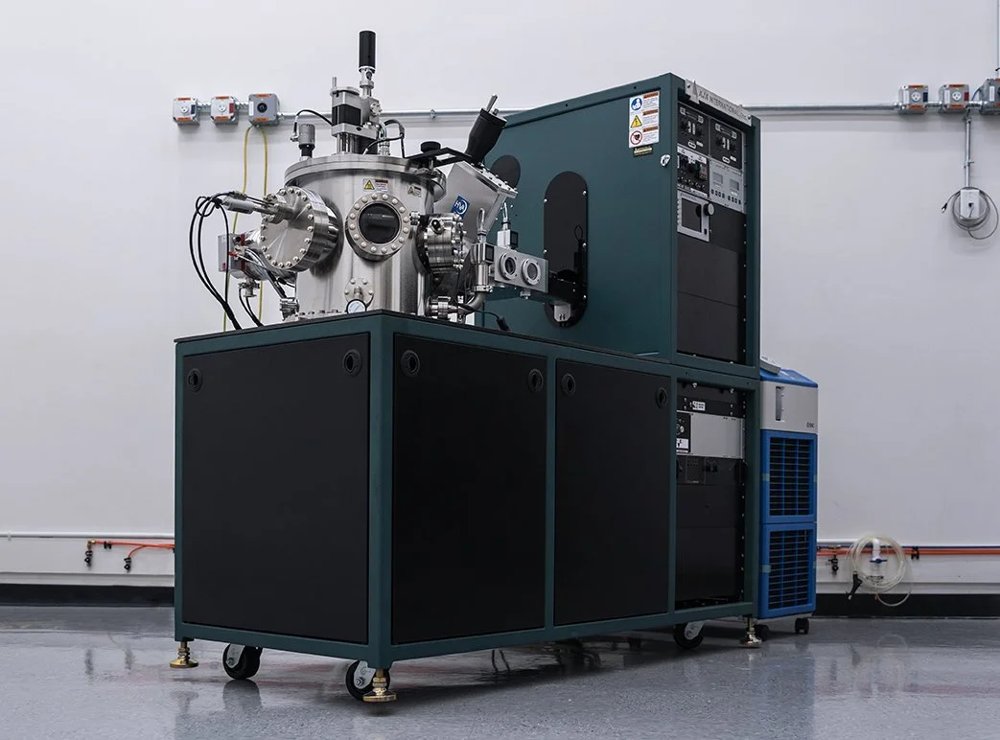 Orion Sputtering Deposition SystemsAJA International Featured
 DLS-1 Mass Spectrometer for Fusion Gas AnalysisHiden Analytical Featured
 GiiiGii
Market insights
Last 30 days: Quantum Technologies drew the most money: $3.17B.
Money raised per month
Behind the deal
Who led Xanadu Quantum Technologies Limited’s $10M Grant?
See the investors with Insights Pro →