King Abdullah University of Science and Technology (KAUST)
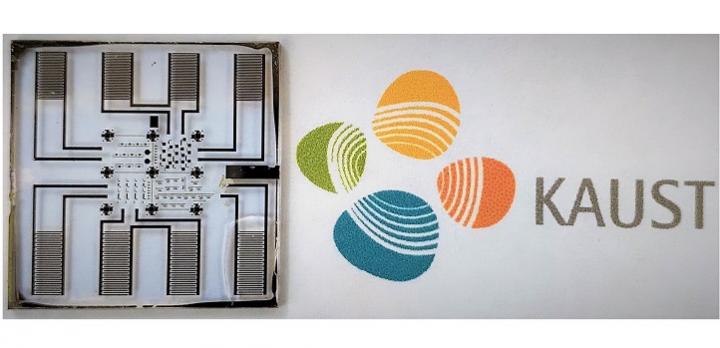
The ability to combine many functions into a single microchip is a significant advance in the quest to perfect the tiny, self-powered sensors that will expand the Internet of things. KAUST researchers have managed to combine sensing, energy-harvesting, current-rectifying and energy-storage functions into a single microchip.
"Previously, researchers had to use bulky rectifiers that converted intermittent harvested electrical energy into steady direct current for storage in electrochemical microsupercapacitors," says Mrinal K. Hota, research scientist at KAUST and lead author of the study.
Hota explains that the key to integrating everything into a single chip was the development of ruthenium oxide (RuO2) as the common electrode material connecting all devices in the microcircuits. The team envisages a broad range of applications from monitoring personal health indications directly from the human body to environmental and industrial sensing.
"Our achievement simplifies device fabrication and realizes significant miniaturization of self-powered sensor devices," says project leader Husam Alshareef.
The ruthenium-oxide contacts are laid onto a glass or silicon substrate to connect sensing, energy-harvesting and current-rectifying electronics with one or more electrochemical microsupercapacitors that store the electrical energy. This creates a tiny system that can operate without any battery power. Instead it uses available body movement or machinery vibrations as the reliable and continual source of energy.
"Unlike a battery, electrochemical microsupercapacitors can last for hundreds of thousands of cycles rather than just a few thousand," Hota points out. They can also deliver a significantly higher power output from a given volume.
A key to creating electrode material suitable for connecting all devices was to make optimal ruthenium-dioxide surfaces with controlled roughness, defects and conductivity. These features enabled the team to use RuO2 for both electronics and electrochemical microsupercapacitors.
Another crucial innovation was to use a gel that, after application, solidifies into the supercapacitors' electrolyte. This is a material that transports electric charge in the form of ions. The solidified gel was chosen to avoid any damage to rectifiers and thin-film transistors.
The researchers now plan to work to optimize the RuO2 electrodes further and explore linking many different types of sensors into their chips. They also want to investigate adding wireless communication into the device. This would allow biosensors and environmental sensors to send data remotely to any wireless receivers, including mobile phones and personal computers.
Integration of Electrochemical Microsupercapacitors with Thin Film Electronics for On‐Chip Energy Storage
Mrinal K. Hota Qiu Jiang Zhenwei Wang Zhong Lin Wang Khaled N. Salama Husam N. Alshareef
Advanced Materials 31, 1807450 First published: 06 May 2019
Contact information:
Husam Alshareef
Professor of Materials Science and Engineering at KAUST
husam.alshareef@kaust.edu.sa
Teledyne DALSA has launched the Rad-icon 2329HS X-ray detector, featuring a 27 Mp CMOS sensor, 10X faster frame rate and 3X higher sensitivity than the previous model. It was shown at the NDTMA conference.
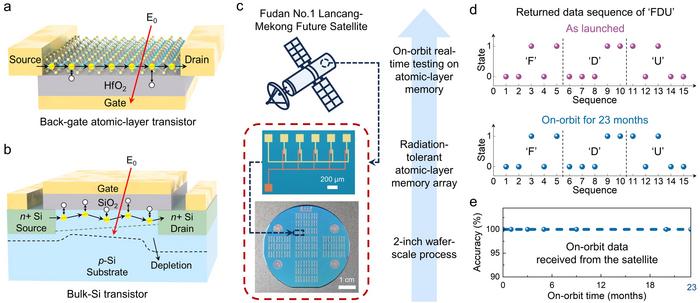
A monolayer MoS2 memory array fabricated at wafer scale on the Fudan No.1 satellite has returned stored data with 100% accuracy after 23 months in low Earth orbit, marking the first on-orbit real-time test of atomic-layer memory. Ground Co-60 gamma irradiation up to 20 Mrad left on/off current ratios stable across roughly eight orders of magnitude and preserved low-noise readout at picoampere levels.
GE HealthCare expanded global clinical and research collaborations to evaluate Photonova Spectra, its photon-counting CT system, across institutions in North America, Europe and Asia.
This week in nanotech
$18.9M raised
4 funding rounds · 31 deals tracked
New products
 Orion Sputtering Deposition SystemsAJA International Featured
 Ti-WCMBN Nanomaterialia Featured
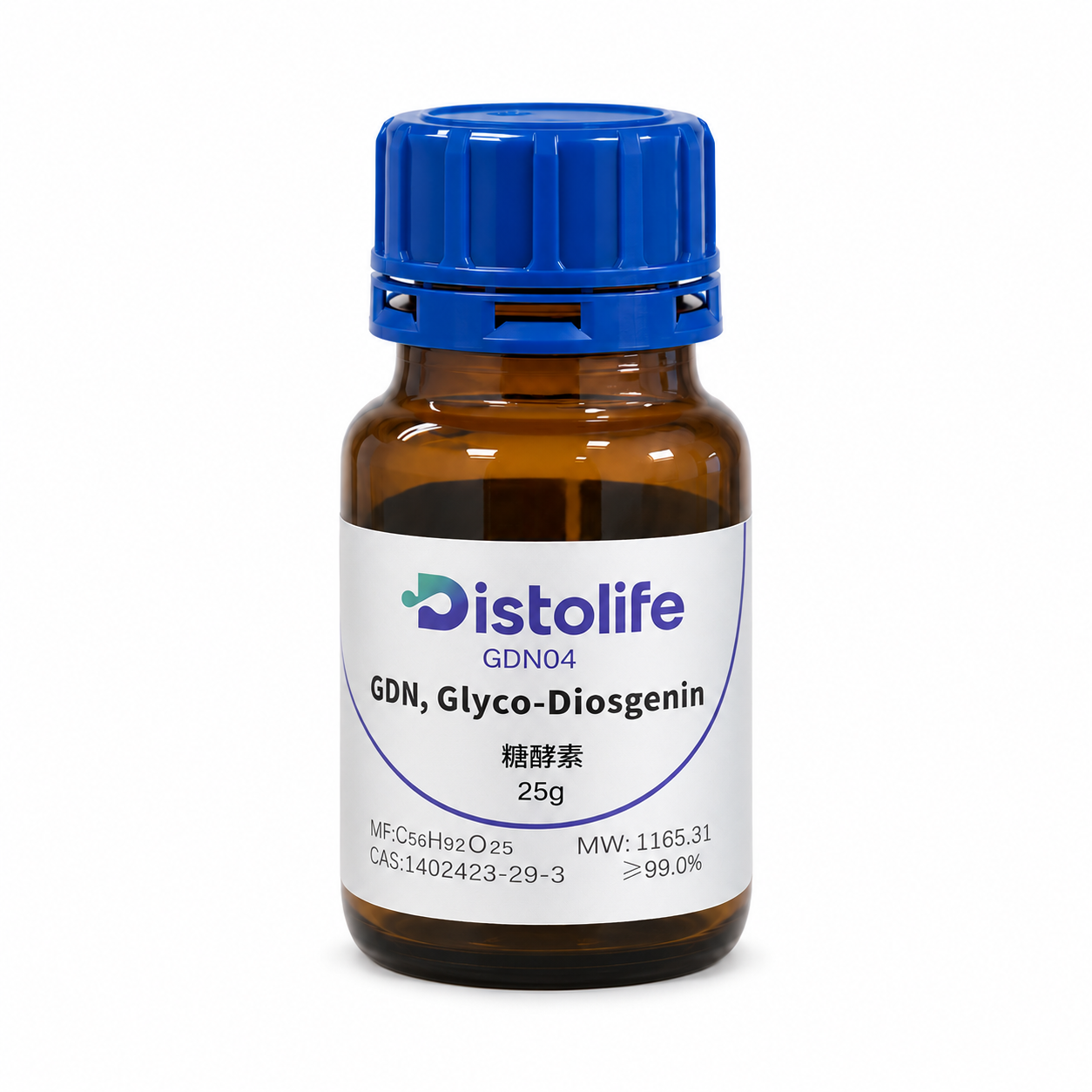 GDN (Glyco-Diosgenin)Distolife Shanghai Co., Ltd
Market insights
Last 30 days: Semiconductors & Electronics was the busiest vertical: 52 of 170 events (31%).
Money raised per month
Behind the deal
Who led Eindhoven University of Technology’s $1.1M Grant?
See the investors with Insights Pro →