Chicago, 16 November 2026. GE HealthCare (Nasdaq: GEHC) announced an expansion of its global clinical and research collaborations to advance Photonova Spectra, its next-generation photon-counting CT system. Seven highly respected institutions across three continents will evaluate the system's clinical applications, quantitative imaging and diagnostic capabilities in diverse clinical settings and care areas.
The expanded efforts follow Photonova Spectra's CE Mark, U.S. FDA 510(k) clearance and Japan Pharmaceuticals and Medical Devices Agency regulatory approval. GE HealthCare said the system is CE marked and 510(k) cleared with the U.S. FDA but is not available for sale in all regions.
Photonova Spectra is powered by the company's proprietary Deep Silicon detector technology. GE HealthCare said the system is designed to deliver ultra-high definition (UHD) and spectral imaging through a one-scan, universal workflow, combining high spatial resolution with advanced material characterization capabilities. The company said this creates opportunities in quantitative imaging, tissue characterization, spectral biomarker research and simplified imaging protocols.
Through structured clinical and research programs, the network will assess image quality, spectral performance, workflow efficiency and diagnostic utility. The collaborations bring together academic medical centers, specialty hospitals and research institutions with expertise in cardiovascular imaging, quantitative imaging, medical physics and translational research. GE HealthCare engineers, scientists and product specialists will work alongside the institutions to translate evidence into future product enhancements.
"Realizing that potential requires close collaboration with the research and clinical community," said Chad Rowland, Executive Director, Global CT, GE HealthCare. "By working alongside leading healthcare institutions around the world, we're generating the clinical evidence and real-world experience needed to help define the future of photon-counting CT and ultimately improve care for patients."
"Photon-counting CT offers exciting opportunities to advance coronary imaging by combining high spatial resolution with spectral information," said Professor Philipp Kaufmann, Director of the Department of Nuclear Medicine at Universitätsspital Zürich. "We aim to determine how best to translate these capabilities into robust, dose-efficient CCTA protocols that support confident clinical decision-making."
Source: GE HealthCare news

Delmic launched SPARC 3.0, its latest cathodoluminescence platform for SEM, at IMC21 in Liverpool. The system supports up to eight imaging modes and spectral coverage from 185 nm to 1700 nm.
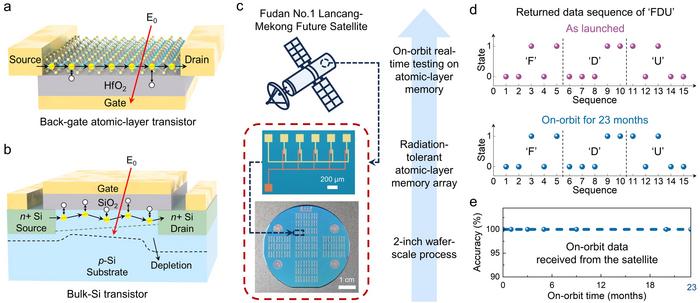
A monolayer MoS2 memory array fabricated at wafer scale on the Fudan No.1 satellite has returned stored data with 100% accuracy after 23 months in low Earth orbit, marking the first on-orbit real-time test of atomic-layer memory. Ground Co-60 gamma irradiation up to 20 Mrad left on/off current ratios stable across roughly eight orders of magnitude and preserved low-noise readout at picoampere levels.
Kopin Corporation has secured an $18.6 million sole source award from the Office of the Secretary of War through the U.S. Army Contracting Command under the IBAS program. The award brings Kopin's total IBAS funding to $34 million.
This week in nanotech
$129.9M raised
6 funding rounds · 39 deals tracked
New products
 DLS-1 Mass Spectrometer for Fusion Gas AnalysisHiden Analytical Featured
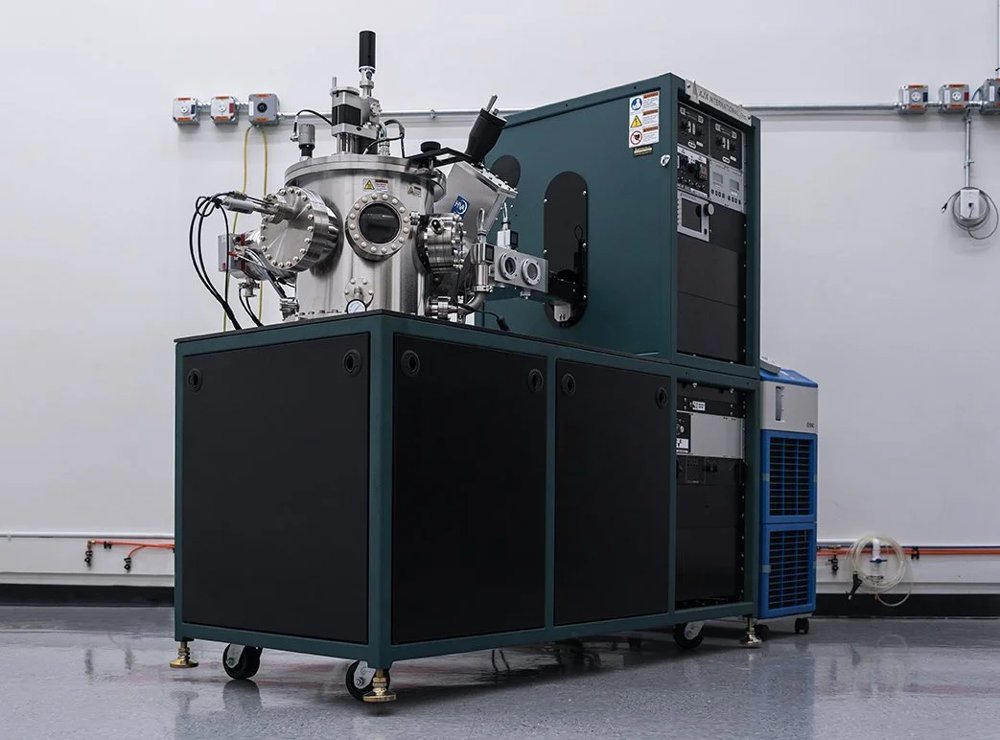 Orion Sputtering Deposition SystemsAJA International Featured
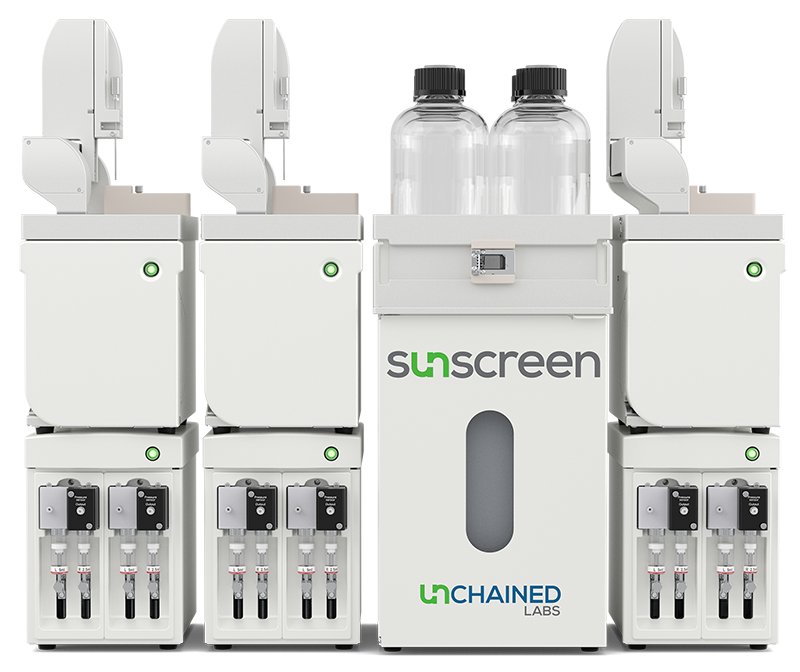 SunscreenUnchained Labs
Market insights
Last 30 days: Semiconductors & Electronics drew the most money: $547.7M.
Money raised per month