Kista, 20 October 2026. Sivers Semiconductors AB (STO: SIVE) announced that its strategic LiDAR customer has initiated production orders for its automotive and industrial sensing customers. Shipments will begin in Q4 2026 against rolling production orders as the programs move into production phase in 2027.
Sivers will supply continuous-wave distributed feedback (CW DFB) lasers and optical amplifiers for the customer's LiDAR platforms. The program, announced in March 2026, has an estimated cumulative revenue potential of USD 53 million to USD 138 million over the customer's product lifecycle.
"We are pleased to see this strategic program advance from design-win to production, with our customer placing first production orders," said Alex McCann, Managing Director of Sivers Semiconductors' photonics business. "This key milestone reflects confidence in our technology, our production facility and its reliability to meet the customer's requirements for volume production."
The company cited Yole Group projections that the global automotive LiDAR market will expand from USD 861 million in 2024 to USD 3.8 billion by 2030, a compound annual growth rate of 28 percent. LiDAR is also gaining traction in industrial markets, including robotics and autonomous machinery.
Source: Sivers Semiconductors news
ZEISS has agreed to acquire Ceres Holographics, a Scottish maker of thin-film holographic optical elements for automotive windshield displays. Ceres will join ZEISS Microoptics. The price was not disclosed.
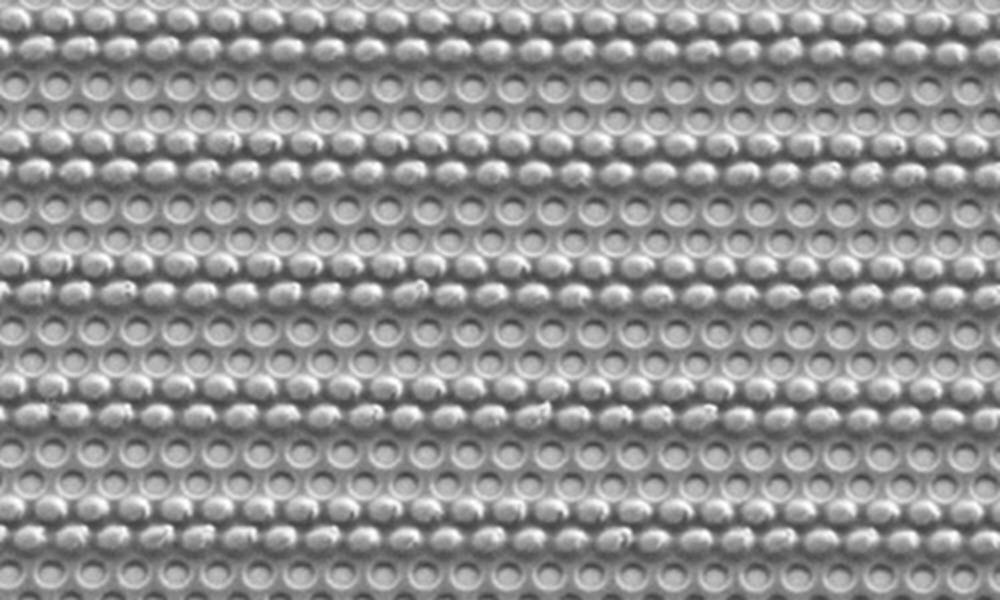
Most space missions rely on chemical rockets for propulsion. Rockets must carry fuel, which increases spacecraft mass and limits their speed and travel distance. For decades, researchers have explored light sails as an alternative. These devices use radiation pressure—the force exerted when light reflects from a surface—to generate thrust. When driven by a powerful laser, a light sail can accelerate continuously without onboard propellant, enabling faster travel across the solar system. Conve...
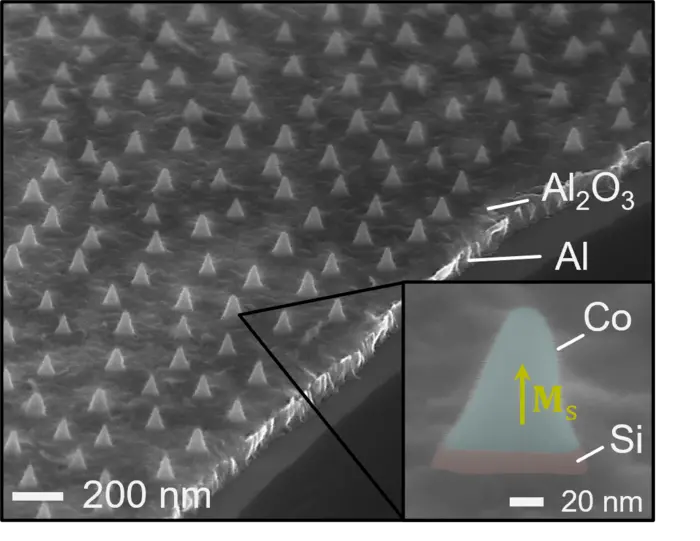
Nonreciprocal interactions between light and matter lie at the heart of many exotic physical phenomena, from magnet-free optical isolation to axion-inspired electrodynamics. One particularly intriguing example is the Tellegen effect, a nonreciprocal magnetoelectric coupling predicted more than 75 years ago but long considered weak and negligible at optical frequencies. “In natural materials, the optical Tellegen effect is extraordinarily weak, making it challenging to observe experimentally,”...
This week in nanotech
$110M raised
9 funding rounds · 58 deals tracked
New products
 Nion-compatible In Situ STEM Holders for Electrical BiasingHummingbird Scientific Featured
 Ti-WCMBN Nanomaterialia Featured
 GiiiGii
Market insights
Last 30 days: Quantum Technologies drew the most money: $3.17B.
Money raised per month
Behind the deal
Who led Qilimanjaro Quantum Tech’s $21.9M Series A?
See the investors with Insights Pro →