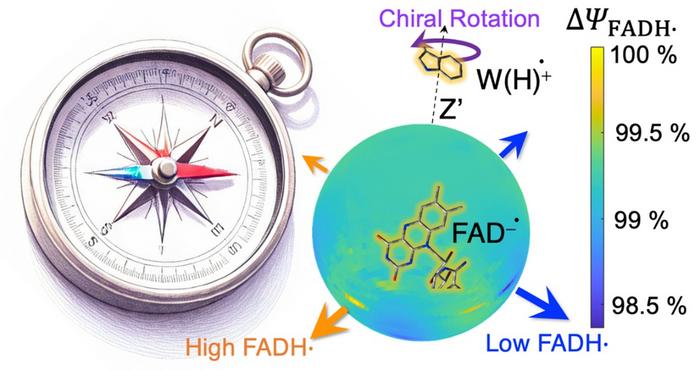
KOBE, JAPAN — A collaborative research team led by KOBORI Yasuhiro at Kobe University, together with researchers from Toho University, Saitama University, Nagoya Institute of Technology and the University of Freiburg, has identified a potential molecular mechanism that could enhance magnetic compass responses in cryptochrome, a blue-light-sensitive protein implicated in magnetoreception.
Using time-resolved electron paramagnetic resonance (EPR) spectroscopy, the team identified structural rearrangements in light-induced intermediates and a contribution from chirality-induced spin selectivity (CISS). Their analysis suggests that chiral rotational motion of a tryptophan residue can influence electron-spin polarization and enhance the directional dependence of downstream chemical reactions.
How might living organisms sense Earth’s magnetic field?
Migratory birds and other organisms are thought to use Earth’s magnetic field for directional information. Cryptochrome contains flavin adenine dinucleotide (FAD), which absorbs blue light and initiates sequential electron transfer from tryptophan residues. The resulting charge-separated radical pairs have two unpaired electron spins whose singlet–triplet dynamics can depend on the external magnetic field.
CISS links molecular chirality to preferential spin transport. Whether motion within cryptochrome can produce this effect and influence a radical-pair compass has remained largely unexplored.
Tracking molecular motion and electron-spin dynamics
The researchers examined Xenopus laevis cryptochrome-DASH using time-resolved EPR following pulsed laser excitation, at temperatures from −153 °C to −33 °C. Quantum-mechanical simulations incorporated CISS, exchange coupling, electron–electron dipolar coupling and hyperfine interactions.
The spectra supported a structural rearrangement involving chiral rotation of the oxidized tryptophan WB(H)•+ in the second charge-separated state, FAD•−···WB(H)•+, with an estimated CISS contribution of 8%. A smaller contribution, no greater than 6%, was inferred for the longer-range FAD•−···WC(H)•+ state. The findings support transfer of spin coherence generated during the earlier charge-separation step to the terminal radical pair.
Small spin selectivity, stronger directional response
Calculations of the signaling-state reaction yield predicted a normalized anisotropy of approximately 0.3% without CISS. Including a 6% CISS contribution increased the predicted anisotropy to 1.6%. The model also predicted differences between responses to reversed magnetic-field directions, reflecting the coupling of chiral spin polarization to radical-pair dynamics.
The enhanced directional response is a theoretical prediction based on spectroscopic analysis, not a direct demonstration of magnetic navigation in living animals.
Implications and next steps
The results connect local conformational motion to quantum spin dynamics and suggest a route by which subtle protein motion could strengthen magnetic-field sensitivity. Future studies will test the predicted reversal of spin-polarization signals and measure how molecular dynamics affect signaling yields. The findings may inform biomolecular magnetic sensors and research on biological magnetoreception.
Reference
Chirality-Induced
Spin Selectivity in Photoinduced
Charge-Separations of Cryptochrome: Potential Role in Magnetoreception
Yasuhiro Kobori, Misato Hamada, Tatsuya Iwata, Hiroki Nagashima, Masaaki Fuki, Hideki Kandori, and Stefan Weber
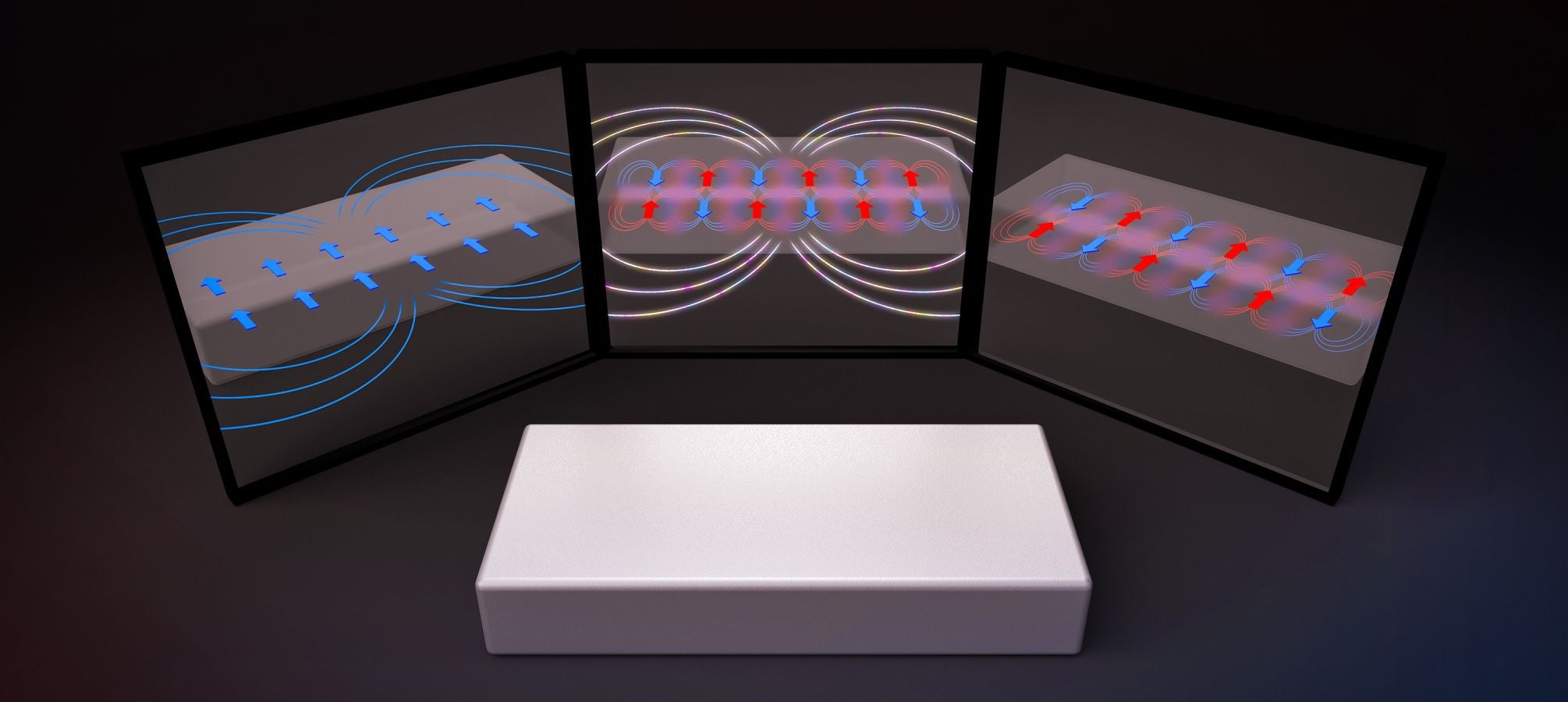
Physicists had long recognized only ferromagnetism and antiferromagnetism, but a SLAC-led team has now delivered conclusive experimental proof of a third phase: altermagnetism. Using circularly polarized X-rays at the European Synchrotron Radiation Facility, the researchers detected chirality in manganese telluride, a signature that conventional antiferromagnets cannot produce.

Physicists in Regensburg, Marburg and Jülich have directly imaged Landau-Zener-Majorana transitions in graphene, capturing electrons as they jump across energy band gaps under intense light fields. Their slow-motion electron camera pairs laser technology with a photoemission momentum microscope to track these ultrafast quantum dynamics in real time, with tunneling probabilities approaching 100 percent.
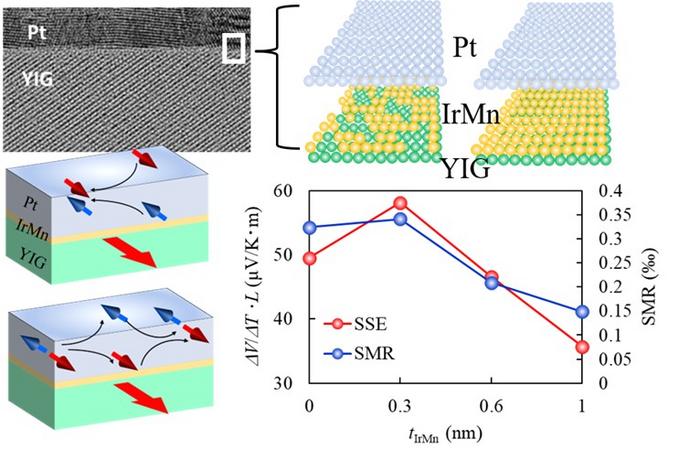
An ultrathin iridium manganese layer between yttrium iron garnet and platinum strengthens two spin-related signals, the spin Seebeck effect and spin Hall magnetoresistance, according to researchers at Kyushu University. A 0.3 nm layer produced the strongest responses, with spin mixing conductance values derived from both effects agreeing closely.
This week in nanotech
$740.7M raised
5 funding rounds · 36 deals tracked
New products
 Nion-compatible In Situ STEM Holders for Electrical BiasingHummingbird Scientific Featured
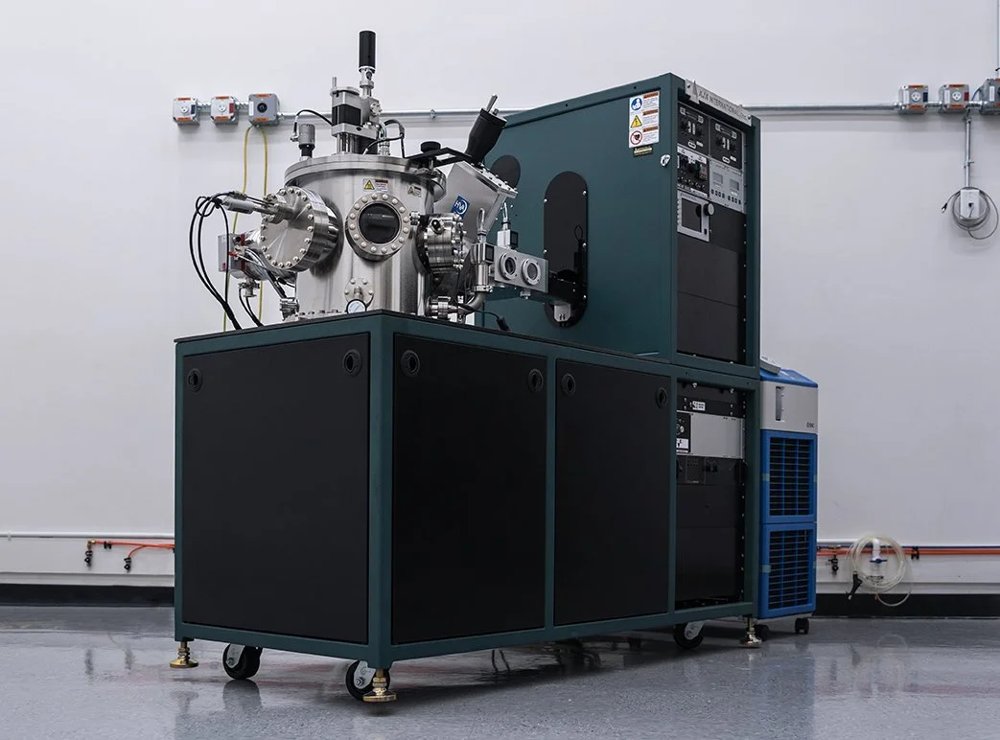 Orion Sputtering Deposition SystemsAJA International Featured
 Talphene™ Graphene AdditivesTalga Group
Market insights
Last 30 days: Quantum Technologies drew the most money: $3.18B.
Money raised per month
Behind the deal
Who invested in Vertical Semiconductor’s $73M Grant?
See the investors with Insights Pro →